
Polyrhachis abbreviata
- Sci. Name
- Polyrhachis abbreviata
- Subgenus
- Cyrtomyrma
- Tribe
- Camponotini
- Subfamily
- Formicinae
- Author
- Kohout, 2006
- Distribution
- Found in 1 countries
Introduction
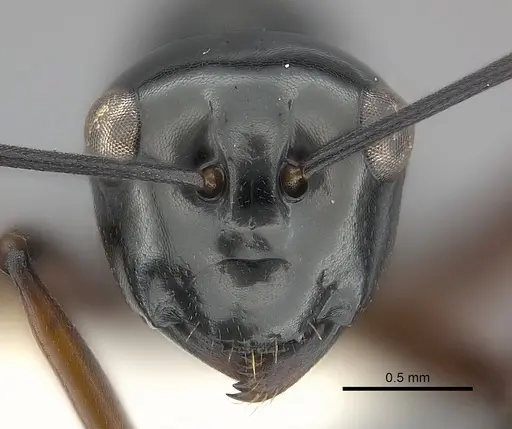
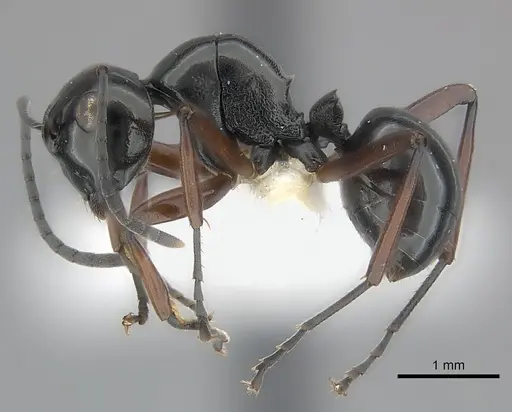
Polyrhachis abbreviata is a small, dark ant native to Queensland's Wet Tropics in Australia. Workers measure 4.7-5.5 mm in total length with a black body and yellow, orange, or reddish-brown legs . The queen reaches about 7.2 mm and closely resembles workers except for her larger size . This species belongs to the subgenus Cyrtomyrma, which builds unique silk nests woven between leaves in rainforest trees and shrubs . They are closely related to Polyrhachis yorkana but can be distinguished by their smaller size and lighter-colored legs . The most interesting aspect is their arboreal nesting behavior using larval silk to bind leaves, characteristic of the subgenus Cyrtomyrma .
Quick Summary
- Difficulty: Medium
- Origin & Habitat: Queensland Wet Tropics, Australia. These ants live in rainforest environments where they build nests between leaves using larval silk and vegetation debris [1].
- Colony Type: Colony structure is unconfirmed. Based on related Polyrhachis species, they likely form single-queen colonies, but this has not been directly documented.
- Size & Growth:
- Antkeeping:
- Temperature: Keep at 24-28°C, based on general Polyrhachis care [1].
- Humidity: Keep the nest substrate consistently moist but not waterlogged, as they are from humid rainforests [1].
- Diapause: No, tropical species, no hibernation needed.
- Nesting: Arboreal nests using silk and vegetation. Provide vertical space and materials for weaving [2][3].
- Behavior: Generally calm and non-aggressive. They are arboreal, spending time in elevated nests. Workers are active foragers. Escape risk is moderate due to small size, ensure tight enclosures. Defense mechanism: they lack a functional sting but can spray formic acid.
- Common Issues: high humidity requirements can lead to mold problems if ventilation is poor, balance is key, arboreal setup is more complex than ground-nesting ant enclosures and requires more maintenance, their small size and escape-prone nature mean you need excellent barrier protection, rare species means finding colony founders can be difficult, silk nest building requires specific materials, provide leaves, moss, or artificial vegetation
Nest Preferences and Housing
Polyrhachis abbreviata is an arboreal species that naturally builds silk nests between the leaves of rainforest vegetation. In captivity, you need to replicate this by providing materials they can weave together. The key is giving them vertical space and suitable nest-building materials. A naturalistic setup works best, use an arboreal formicarium or a tall enclosure with live or artificial plants, twigs, and leaf pieces. Workers will use larval silk to bind these materials together into protective nests, just like they do in the wild. You can also provide materials like cotton wool, moss, or small fabric pieces that they can manipulate. Avoid fully enclosed acrylic nests without weaving materials, as these do not suit their natural behaviors. The enclosure should have multiple horizontal platforms or branches where they can build their nests [2][3]. Unlike some ant species, their pupae do not have cocoons, which is characteristic of the subgenus Cyrtomyrma [2][3].
Feeding and Diet
Like most Polyrhachis species, these ants are omnivorous. They likely forage for honeydew, nectar, and small insects in their natural rainforest habitat. In captivity, offer a varied diet including sugar water or honey as a constant energy source, and protein sources like small crickets, mealworms, or fruit flies. They are small ants, so prey items should be appropriately sized, tiny fruit flies and springtails are ideal. Feed protein 2-3 times per week and keep sugar water available at all times. Remove uneaten prey after 24-48 hours to prevent mold. Some Polyrhachis species also accept fruit and nectar, so you can occasionally offer small pieces of ripe fruit [1].
Temperature and Humidity
These tropical rainforest ants need warm, humid conditions to thrive. Maintain temperatures between 24-28°C year-round, they do not tolerate cool conditions. A small heating cable placed on part of the nest or enclosure helps maintain optimal temperatures, especially in cooler climates. Humidity is critical: keep the nest substrate consistently moist but not waterlogged. Use a moisture reservoir in your formicarium or mist regularly, but ensure good ventilation to prevent stagnant air and mold. Because they are arboreal, they prefer vertical humidity gradients rather than uniform moisture [1].
Behavior and Colony Dynamics
Polyrhachis abbreviata is a relatively calm, non-aggressive species that makes its home in elevated vegetation. Workers are active foragers that will explore their enclosure searching for food. Unlike ground-nesting ants, they prefer to travel along branches and vertical surfaces rather than across open ground. Their silk-nesting behavior is observable, workers work together to bind leaves and debris into protective chambers. The colony will likely grow slowly at first, with the queen producing eggs that develop through larvae and pupae into workers. Unlike some ant species, their pupae do not have cocoons, which is characteristic of the subgenus Cyrtomyrma [2][3]. The queen likely remains in the nest tending to brood, while workers handle foraging, nest maintenance, and defense. They lack a functional sting but can spray formic acid as a defense mechanism.
Frequently Asked Questions
Can I keep Polyrhachis abbreviata in a test tube?
A test tube alone is not ideal. These are arboreal ants that need vertical space and materials to weave silk nests. Use an arboreal formicarium or a naturalistic setup with plants, twigs, and leaves instead. A test tube can serve as a founding chamber, but you will need to move them to a proper arboreal setup once the colony grows.
How long does it take for the first workers to appear?
The exact development time is unknown for this species. No specific data is available.
Are Polyrhachis abbreviata good for beginners?
They are rated as medium difficulty. While not aggressive, their arboreal nature and high humidity requirements make them more challenging than typical ground-nesting ants. Beginners should have some antkeeping experience before attempting this species.
What do Polyrhachis abbreviata eat?
They are omnivores. Offer sugar water or honey constantly, and protein sources like small crickets, fruit flies, or mealworms 2-3 times per week. They may also accept small pieces of fruit.
Do they need hibernation?
No. As a tropical species from Queensland's Wet Tropics, they do not require hibernation. Keep them warm year-round at 24-28°C.
How big do Polyrhachis abbreviata colonies get?
Colony size data is not available for this rare species. Based on related Polyrhachis species, colonies likely reach several hundred workers at maturity, but growth is relatively slow.
Why are my Polyrhachis abbreviata dying?
Common causes include: low humidity, temperatures below 24°C, poor ventilation causing mold, or escape through small gaps. Check your setup and ensure their needs are being met. Also ensure you are not overfeeding, as uneaten prey mold can be harmful.
Can I keep multiple queens together?
This has not been documented for this species. Combining unrelated queens is not recommended as it can lead to aggression. Start with a single founding queen for best results.
When should I move them to a formicarium?
Move them when the colony reaches a reasonable size and you see them building active silk nests. A naturalistic arboreal setup is best, avoid closed acrylic nests without weaving materials.
Report an Issue
The current care sheet is based fully on literature. See inconsistencies, or something that's incorrect? Please , it will be resolved after review from an admin. Contributing to the blogs tab also helps providing information, to make us be able to further improve the caresheets. Thank you for your support!
References

This caresheet is licensed under CC BY-SA 4.0 .
Community Blogs
CASENT0217419
View on AntWeb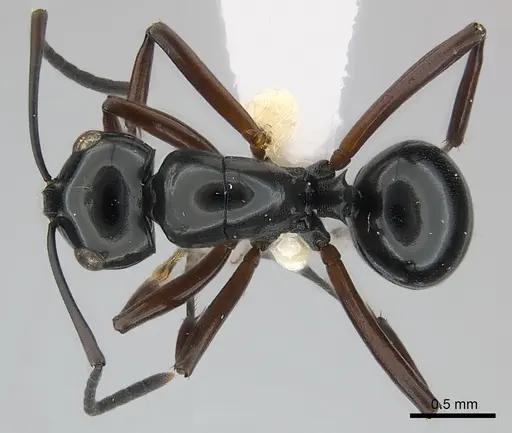
Literature
Loading distribution map...Loading products...