
Pogonomyrmex stefani
- Sci. Name
- Pogonomyrmex stefani
- Tribe
- Pogonomyrmecini
- Subfamily
- Myrmicinae
- Author
- Lattke, 2006
- Distribution
- Found in 2 countries
Introduction
Pogonomyrmex stefani is a small harvester ant endemic to the gallery forests of the Orinoco Watershed in Venezuela . Workers are dark brown with golden hairs and measure roughly 4-8mm in total length, inferred from Pogonomyrmex genus patterns . This species is unique among its genus for inhabiting lowland mesic forests rather than the arid or cloud forest habitats preferred by its relatives . Nest entrances are simple, exposed openings in moist, very fine soil beneath the closed shade of gallery forests with sparse understory plants . Workers are relatively abundant and conspicuous on the ground, and some have been collected foraging on low herbaceous vegetation . The queen has not been described, making this a particularly mysterious species in the genus .
Quick Summary
- Difficulty: Unknown, species too poorly studied for a reliable difficulty rating
- Origin & Habitat: Endemic to gallery forests of the Orinoco Watershed in Venezuela, found at low elevations of 165-470m in mesic lowland forests with moist, very fine soil and closed canopy shade [1][2]
- Colony Type: Colony structure is unconfirmed. Based on related species Pogonomyrmex mayri, colonies are likely small with up to several hundred workers [2]
- Size & Growth:
- Queen: Unknown, queen has not been described [1]
- Worker: Size data unavailable, inferred from Pogonomyrmex genus (~4-8mm) [2]
- Colony: Up to several hundred workers [2]
- Growth: Unknown
- Development: Unknown, no development data exists for this species (Development timeline has not been studied. Related Pogonomyrmex species typically take 6-10 weeks from egg to worker at optimal temperatures.)
- Antkeeping:
- Temperature: Keep at warm room temperature (22-26°C) as a starting point. This is a lowland tropical species from Venezuela, so it likely prefers warmer conditions than temperate Pogonomyrmex species [1].
- Humidity: Requires high humidity, they nest in moist, very fine soil beneath closed forest shade. Keep the nest substrate consistently damp but not waterlogged. Provide a gradient from moist to slightly drier areas [1].
- Diapause: Unknown, likely no true diapause given their tropical lowland habitat. They may show reduced activity during cooler periods but probably do not require hibernation [1].
- Nesting: Use a naturalistic setup with moist substrate like a soil-based formicarium or Y-tong (AAC) nest [1]. They prefer fine, moist soil similar to their gallery forest habitat. Avoid dry conditions [1].
- Behavior: Workers are active foragers, relatively conspicuous on the ground and low vegetation. They likely scavenge on dead arthropods and plant material rather than harvesting seeds heavily (based on related species Pogonomyrmex mayri) [2]. Escape risk is moderate, they are small ants but not tiny. Standard escape prevention measures should suffice [1].
- Common Issues: queen unknown, you cannot breed this species in captivity without wild-caught colonies., escape prevention is important, though not as critical as for tiny species., high humidity requirements may lead to mold if you do not provide adequate ventilation., very little is known about their care, so you must use an experimental approach., limited availability since they are rarely collected.
Natural History and Habitat
Pogonomyrmex stefani is one of the most unusual species in its genus because it inhabits mesic (damp) lowland forests rather than the arid or cloud forest habitats typical of most South American Pogonomyrmex [1]. It was discovered in gallery forests along the Orinoco Watershed in Venezuela at elevations between 165-470m [1]. Gallery forests are narrow strips of forest along rivers, characterized by closed canopy shade and sparse understory plants [1]. The species appears to be endemic to this region, sampling in other forested areas of the same region failed to find additional specimens, suggesting restricted distribution [1]. Workers are relatively abundant and conspicuous on the ground surface, and some have been observed foraging on low herbaceous vegetation [1]. Nest entrances are simple, exposed openings leading into moist, very fine soil beneath the forest's closed shade [1]. This is quite different from the more elaborate crater mounds that some Pogonomyrmex species build in arid habitats [1].
Identification and Distinguishing Features
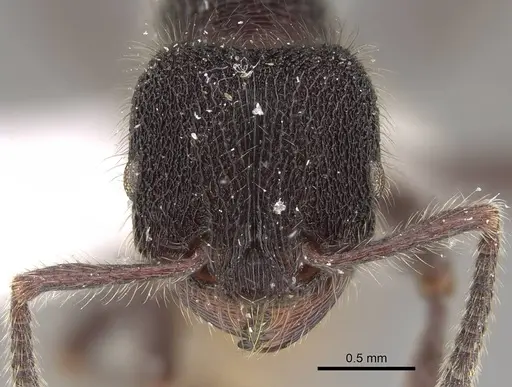
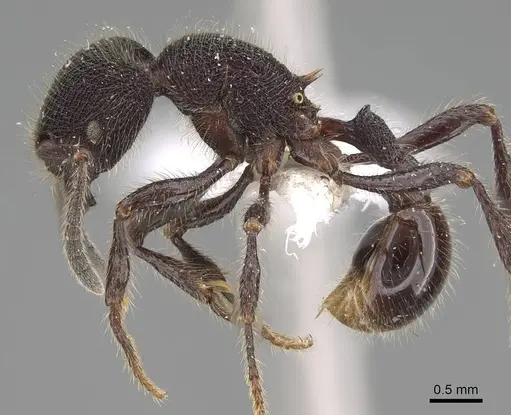
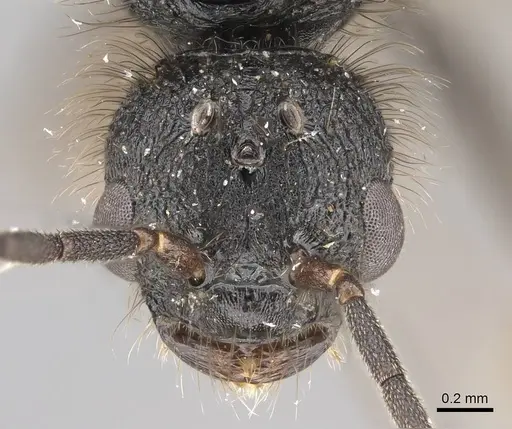
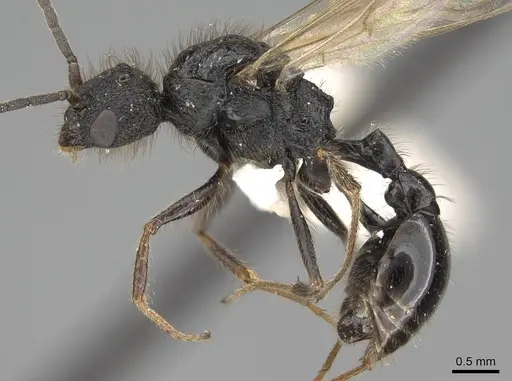
Workers of Pogonomyrmex stefani can be identified by several unique characteristics within the Pogonomyrmex sylvestris species group [1]. They have six mandibular teeth, and the compound eyes have 5-9 hairs between the ommatidia (the tiny lens units that make up the compound eye) [1]. The dorsal propodeal tooth is slender and sharply pointed, more than twice as long as the broadly triangular ventral tooth [1]. The head is nearly square (subquadrate) with coarse longitudinal striations, and the scape (the long first antennal segment) has longitudinal striations with suberect hairs [1]. The body is dark brown with golden hairs, and the procoxa (first leg segment) has fine transverse striae visible in side view [1]. This species is easily separated from the common Pogonomyrmex naegeliii by its darker color, stiffer bristle-like pilosity, and the presence of a shallow metanotal groove [1]. The related species Pogonomyrmex sylvestris and Pogonomyrmex striatinodus are cloud forest species found at much higher elevations (1000-1525m) [1].
Related Species and Biology Inferences
Very little is known specifically about Pogonomyrmex stefani biology, but researchers predict it is similar to the related species Pogonomyrmex mayri, which has been studied more thoroughly [2]. Based on this comparison, colonies are likely small, probably no more than several hundred workers [2]. Their diet probably consists mostly of dead arthropods and plant material, with relatively few seeds compared to other Pogonomyrmex species that are known seed harvesters [2]. The Pogonomyrmex sylvestris group (including Pogonomyrmex stefani, Pogonomyrmex sylvestris, and Pogonomyrmex striatinodus) is evolutionarily ancient within Pogonomyrmex, it and its sister group together form the clade that is sister to all other Pogonomyrmex species [2]. This makes understanding their biology particularly valuable for understanding how the genus evolved [2]. The fact that the queen of Pogonomyrmex stefani remains unknown is a significant gap in our knowledge [1].
Keeping Pogonomyrmex stefani in Captivity
Since this species has never been kept in captivity (as far as published records show), any care recommendations are speculative and should be approached experimentally [1]. Based on their natural habitat, provide high humidity with consistently moist but not waterlogged substrate [1]. Use fine soil or a soil-based formicarium that holds moisture well [1]. A Y-tong (AAC) or plaster nest works well for maintaining the necessary moisture levels [1]. Room temperature around 22-26°C is a reasonable starting point, they come from a tropical lowland environment so they likely prefer warmer conditions than temperate Pogonomyrmex species [1]. For feeding, offer small insects (fruit flies, small crickets, mealworms) and plant-based foods [1]. Based on related species Pogonomyrmex mayri, they likely prefer dead arthropods and plant material over seeds [2]. Provide a shallow water source [1]. Since workers forage on vegetation in the wild, include some climbing space in the setup [1]. The biggest challenge is obtaining this species, it is rarely collected and has never been found in large numbers [1]. If you do obtain wild-caught workers, be aware that colony structure (single queen vs multiple queen) is completely unknown [1].
Frequently Asked Questions
How do I identify Pogonomyrmex stefani workers?
Workers have six mandibular teeth, eyes with visible hairs between the lens units, and a distinctive dark brown body with golden hairs [1]. The head is nearly square with coarse longitudinal striations, and the dorsal propodeal spine is long and slender, more than twice the length of the ventral tooth [1]. They are small ants, with total body size inferred from the Pogonomyrmex genus to be around 4-8mm [2].
Where does Pogonomyrmex stefani live in the wild?
This species is only known from gallery forests of the Orinoco Watershed in Venezuela, at low elevations of 165-470m [1]. It is suspected to be endemic to this region, meaning it is found nowhere else on Earth [1].
What do Pogonomyrmex stefani eat?
Their exact diet is unknown, but based on the related species Pogonomyrmex mayri, they likely eat mostly dead arthropods and plant material rather than seeds [2]. They are not typical seed harvesters like many other Pogonomyrmex species [2].
How big do Pogonomyrmex stefani colonies get?
Colony size has not been documented, but based on related species Pogonomyrmex mayri, colonies are likely small, probably up to several hundred workers at most [2]. This is much smaller than many other Pogonomyrmex species that can have thousands of workers [2].
Can I keep Pogonomyrmex stefani in a test tube?
A test tube setup may work for a small colony, but their natural habitat is moist fine soil in gallery forests [1]. You would need to maintain high humidity and provide moist substrate [1]. A naturalistic setup with soil or a digging formicarium would likely be more appropriate than a dry test tube setup [1].
Do Pogonomyrmex stefani queens have wings?
The queen of this species has not been described and remains unknown to science [1]. The related species Pogonomyrmex mayri has ergatoid (wingless) queens, so it's possible Pogonomyrmex stefani may have similar wingless queens, but this has not been confirmed [1].
What temperature should I keep Pogonomyrmex stefani at?
Since they come from lowland tropical Venezuela, aim for warm conditions around 22-26°C [1]. This is warmer than what most temperate Pogonomyrmex species need [1]. Room temperature in most homes should work as a starting point [1].
Is Pogonomyrmex stefani a good species for beginners?
No, this species is not recommended for beginners [1]. It is extremely poorly studied, the queen is unknown, and no captive care guidelines exist [1]. This is an experimental species for advanced antkeepers who want to contribute to our knowledge of a rarely kept ant [1].
How long does it take for Pogonomyrmex stefani to develop from egg to worker?
This has not been studied [1]. Development times for related Pogonomyrmex species typically range from 6-10 weeks at optimal temperatures, but Pogonomyrmex stefani may differ significantly since its biology is unstudied [1].
Where can I get Pogonomyrmex stefani ants?
This species is extremely rare in the antkeeping hobby [1]. It is only known from a few collections in Venezuela and has rarely been observed even by researchers [1]. You would need to find specialized importers or collectors working in the Orinoco region, and export/import would require proper permits [1].
Do Pogonomyrmex stefani need hibernation?
Probably not [1]. They come from tropical lowland forests where temperatures remain warm year-round [1]. They likely do not require a diapause or hibernation period, though they may reduce activity during cooler periods [1].
Report an Issue
The current care sheet is based fully on literature. See inconsistencies, or something that's incorrect? Please , it will be resolved after review from an admin. Contributing to the blogs tab also helps providing information, to make us be able to further improve the caresheets. Thank you for your support!
References

This caresheet is licensed under CC BY-SA 4.0 .
Community Blogs
CASENT0914135
View on AntWeb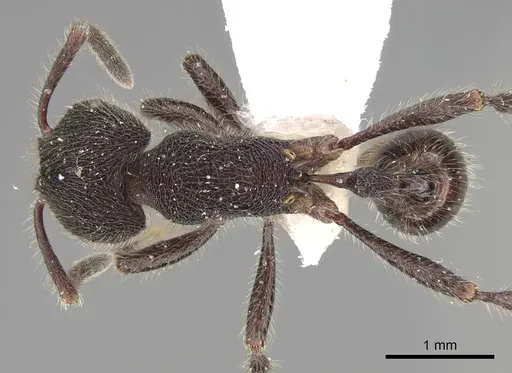
CASENT0914136
View on AntWeb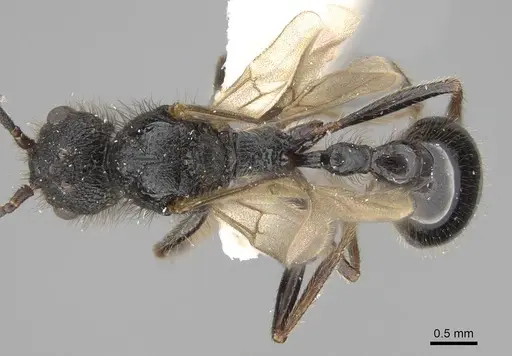
Literature
Loading distribution map...Loading products...