
Pogonomyrmex saucius
- Sci. Name
- Pogonomyrmex saucius
- Tribe
- Pogonomyrmecini
- Subfamily
- Myrmicinae
- Author
- Wheeler & Mann, 1914
- Distribution
- Found in 2 countries
Introduction
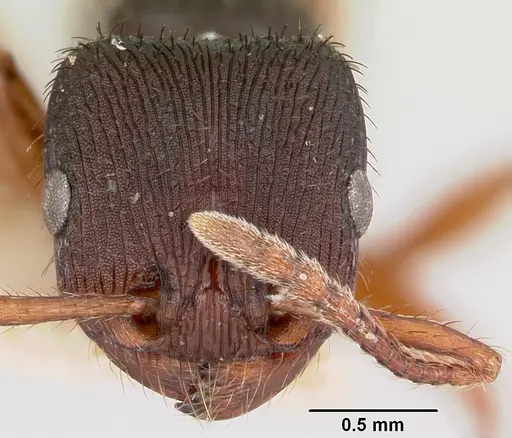
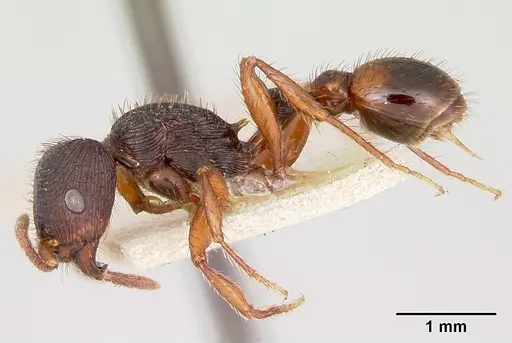
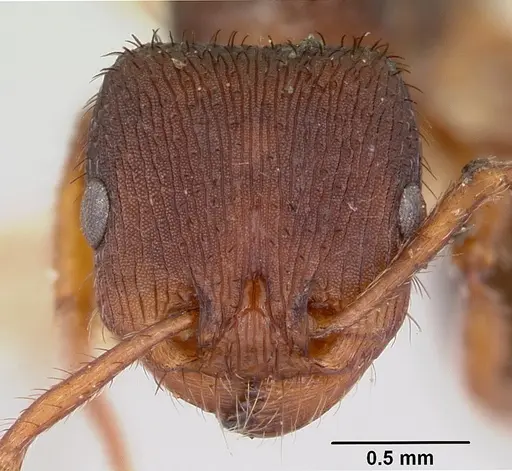
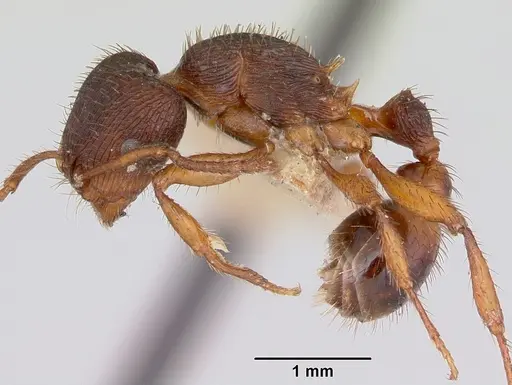
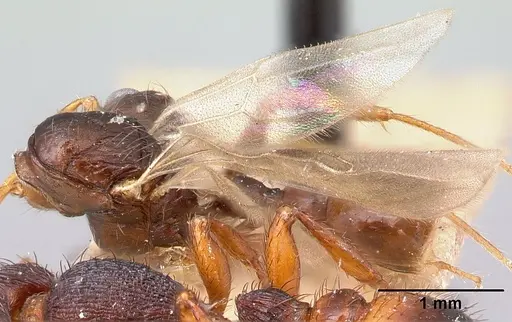
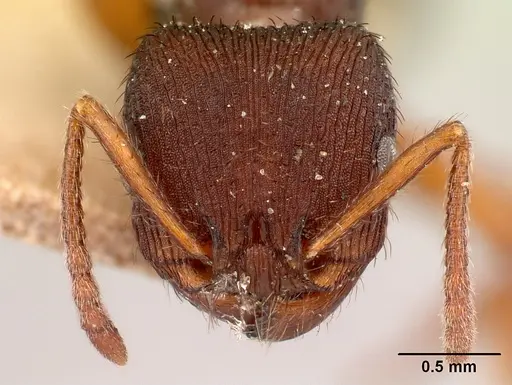
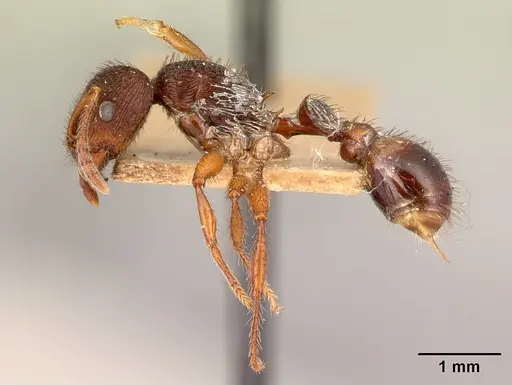
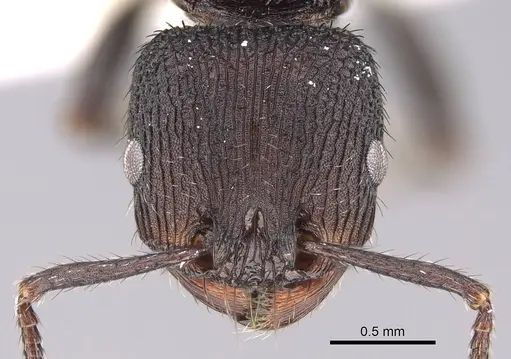
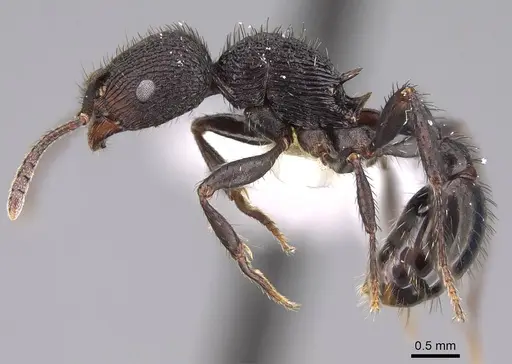
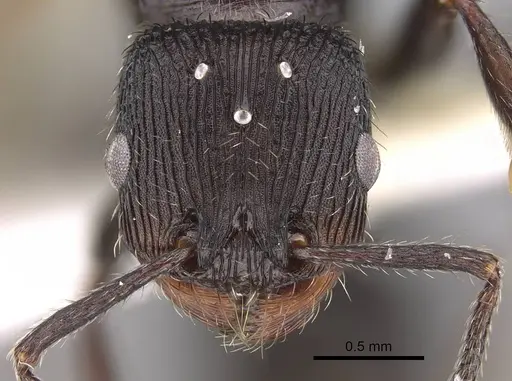
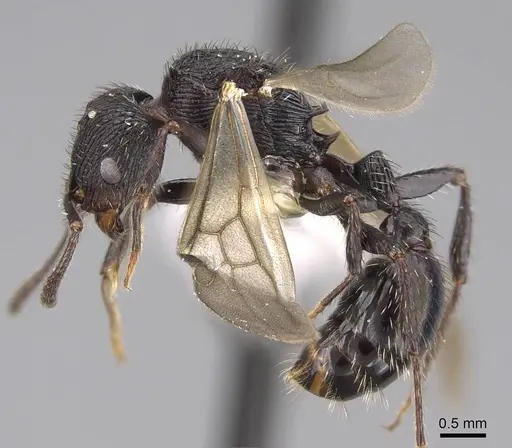
Pogonomyrmex saucius is a small seed-harvester ant endemic to Hispaniola (Haiti and the Dominican Republic) . Workers are 5–5.5 mm long with distinctive coarse, wavy ridges (rugae) running lengthwise on the upper body, and they have a brownish-black colour with reddish legs and antennae . Queens are unusually small – about the same size as workers – and often have an iridescent blue-to-purple sheen on the abdomen . This ant lives under stones in arid, semi-desert habitats at low elevations, so it’s a warmth-loving species from a dry Caribbean environment . It is more timid than its relative *Pogonomyrmex schmitti* and may play dead when disturbed – the name ‘saucius’ (Latin for ‘wounded’ or ‘injured’) probably refers to this behaviour .
Quick Summary
- Difficulty: Medium
- Origin & Habitat: Endemic to Hispaniola (Haiti and Dominican Republic), found in arid, semi-desert habitats at low elevations (5–128 m). Nests under stones in very dry areas with desert vegetation like cacti and thorny bushes [1][2][3].
- Colony Type: Social structure unconfirmed, but likely monogyne based on typical *Pogonomyrmex* patterns. Queens are unusually small, similar in size to workers, one intermorph-like queen with wing buds has been documented [1].
- Size & Growth:
- Queen: ~5–5.5 mm (queen similar in size to workers, inferred from worker description) [1]
- Worker: 5–5.5 mm (from original description) [1]
- Colony: Up to 300 workers (estimated from field data) [1]
- Growth: Moderate – based on typical *Pogonomyrmex* patterns
- Development: Estimated 6–10 weeks at 24–30 °C (no species‑specific data, inferred from genus patterns) [1] (Development time is not documented for this species. The estimate is based on typical *Pogonomyrmex* patterns and assumes warm temperatures.)
- Antkeeping:
- Temperature: Keep warm year‑round,24–30 °C. Use a heating cable on one side of the nest to create a gradient [1].
- Humidity: Low to moderate. The natural habitat is arid, so keep the nest relatively dry – let areas dry out between waterings. Think desert edge, not rainforest.
- Diapause: No – this tropical species from Hispaniola does not require hibernation. Keep warm all year [1].
- Nesting: In the wild they nest under stones in dry open areas. In captivity, a naturalistic setup with a flat stone over compact dry soil works well, or a Y‑tong/plaster nest with narrow chambers scaled to their small size. Avoid humid setups [1][2].
- Behavior: Timid and less aggressive than other *Pogonomyrmex*. Workers may feign death when disturbed (thanatosis). They are seed‑harvesters and will collect and store seeds. They have a stinger but are small (5 mm) and very unlikely to sting unless handled roughly. Escape risk is moderate – use standard barriers [1].
- Common Issues: tropical species needs warmth year‑round – cold temperatures slow or stop development, arid habitat means they prefer dry conditions – overwatering causes mold and colony stress, small colony size (up to 300 workers) means slower growth – don’t overfeed to avoid pest infestations, seed‑storing behaviour can lead to mold if uneaten seeds are left – remove leftovers regularly, wild‑caught colonies may carry parasites – quarantine and observe new colonies carefully
Housing and Nest Setup
Because Pogonomyrmex saucius comes from arid Caribbean habitats, set up a dry, warm enclosure. In the wild they nest under stones in open areas, so a naturalistic setup with a flat stone over compact dry soil works well. Alternatively, a Y‑tong or plaster nest with narrow chambers (scaled to their 5 mm size) is good. Create a temperature gradient with a heating cable on one side of the nest, keeping the warm side around 24–30 °C. Keep the nest relatively dry – let the substrate dry out between waterings. An outworld for foraging lets them collect seeds and small prey. They will store seeds in the nest, just like in the wild [1][2].
Feeding and Diet
P. saucius is a seed‑harvester. Wheeler and Mann (1914) found small heaps of stored grain in their nests [1]. Offer a variety of small seeds (grass seeds, millet, poppy seeds). They also need protein – give small insects like fruit flies, pinhead crickets, or mealworm pieces. Sugar water or honey can be offered occasionally, but seeds and protein should be the main foods. Remove uneaten seeds regularly to prevent mold, which can harm the colony. Feed every 2–3 days, adjusting to colony size [1].
Temperature and Seasonal Care
This tropical ant needs warmth year‑round. Keep the nest at 24–30 °C – this is critical for brood development. Unlike temperate species, they do not need hibernation or a diapause period. Use a heating cable on top of the nest (never underneath, where it can dry out the water reservoir). Room temperature is likely too cold unless your home is very warm. If workers seem sluggish, increase the temperature slightly. They are adapted to arid conditions, so avoid high humidity [1].
Behaviour and Colony Dynamics
P. saucius is more timid than other Pogonomyrmex species like P. schmitti. When disturbed, workers may play dead (thanatosis) – the species name ‘saucius’ (wounded) probably refers to this [1]. Colonies stay small, probably maxing out around 200–300 workers. The queen is unusually small – about the same size as workers – and one queen with wing buds (intermorph) has been recorded [1]. This species is not aggressive and has a mild sting, making it easier to handle than some relatives. They are calm seed‑harvesters [1].
Frequently Asked Questions
How long does it take for Pogonomyrmex saucius to get first workers?
Based on typical Pogonomyrmex development, expect the first workers (nanitics) about 6–10 weeks after the queen lays eggs, provided temperatures stay at 24–30 °C. No species‑specific data is available, so this is an estimate [1].
What do Pogonomyrmex saucius eat?
They are seed‑harvesters. Offer small seeds (grass seed, millet, poppy seeds) as the main food, plus protein from small insects (fruit flies, pinhead crickets, mealworm pieces). Occasional sugar water or honey is accepted but should not be the main source [1].
What temperature do Pogonomyrmex saucius need?
Keep them warm at 24–30 °C. They are tropical ants from low‑elevation arid habitats in Hispaniola and need warmth year‑round. A heating cable on the nest creates the proper gradient [1].
Do Pogonomyrmex saucius need hibernation?
No, they do not require hibernation. As a tropical species, they need warmth all year. Cold temperatures will slow or stop their development [1].
How big do Pogonomyrmex saucius colonies get?
Colonies are small – probably up to 200–300 workers in the wild. This is smaller than many other Pogonomyrmex species. Expect moderate growth over time [1].
Can I keep multiple Pogonomyrmex saucius queens together?
Social structure is unconfirmed, but the species is likely monogyne. Combining unrelated queens is not recommended because it has not been documented and could lead to fighting. Start with one queen per colony [1].
Are Pogonomyrmex saucius good for beginners?
They are rated Medium difficulty. They are more timid and less aggressive than other Pogonomyrmex, but they need year‑round warmth and specific arid conditions. They are a good choice if you can maintain proper temperature [1].
What type of nest is best for Pogonomyrmex saucius?
A naturalistic setup with stones over dry soil works well because they nest under stones in the wild. Alternatively, a Y‑tong or plaster nest with dry conditions and narrow chambers scaled to their 5 mm size is good. Avoid humid setups [1][2].
Where is Pogonomyrmex saucius found in the wild?
They are endemic to Hispaniola (Haiti and the Dominican Republic), living in arid, semi‑desert habitats at low elevations (5–128 m) with cacti and thorny bushes [1][2][3].
Report an Issue
The current care sheet is based fully on literature. See inconsistencies, or something that's incorrect? Please , it will be resolved after review from an admin. Contributing to the blogs tab also helps providing information, to make us be able to further improve the caresheets. Thank you for your support!
References

This caresheet is licensed under CC BY-SA 4.0 .
Community Blogs
CASENT0103398
View on AntWeb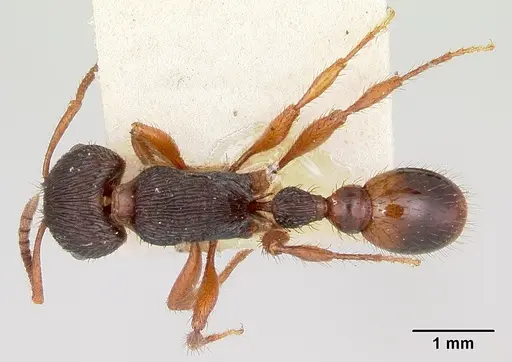
CASENT0103399
View on AntWeb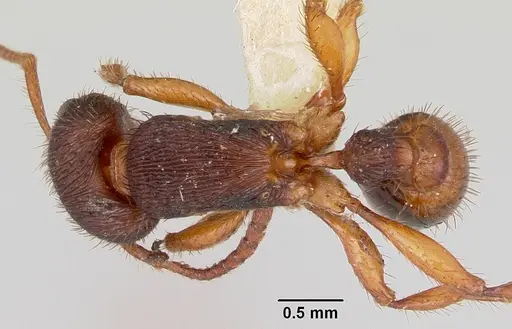
CASENT0217245
View on AntWeb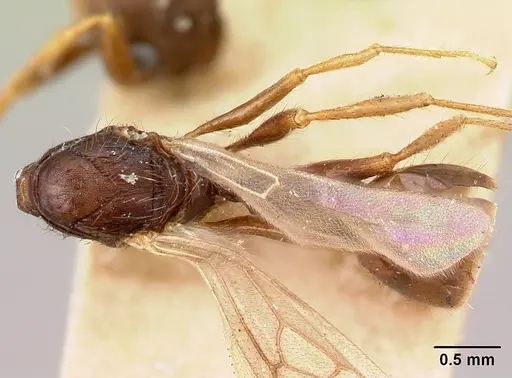
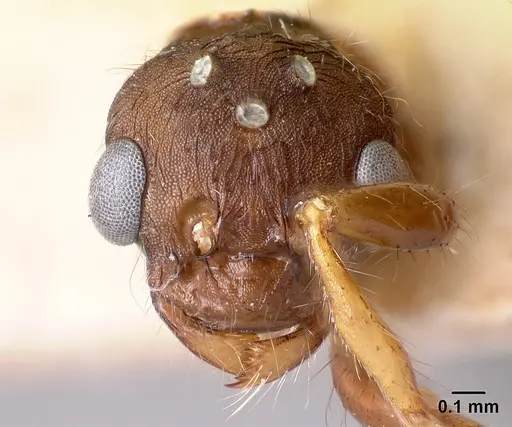
LACMENT181990
View on AntWeb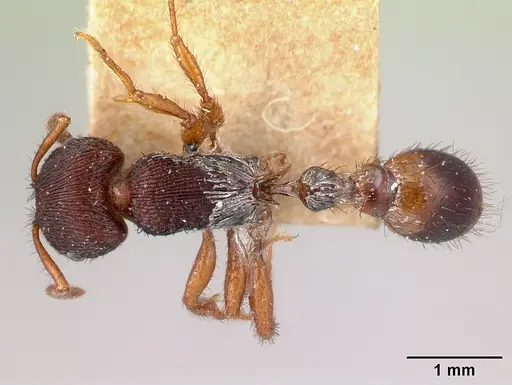
MCZ-ENT00511548
View on AntWeb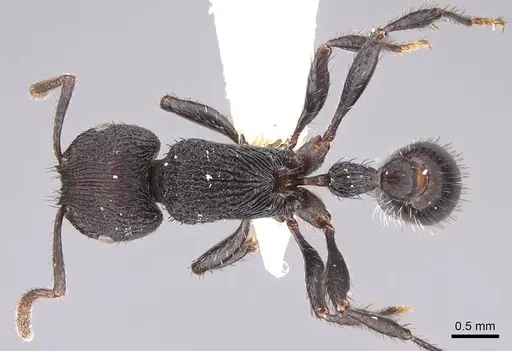
MCZ-ENT00511553
View on AntWeb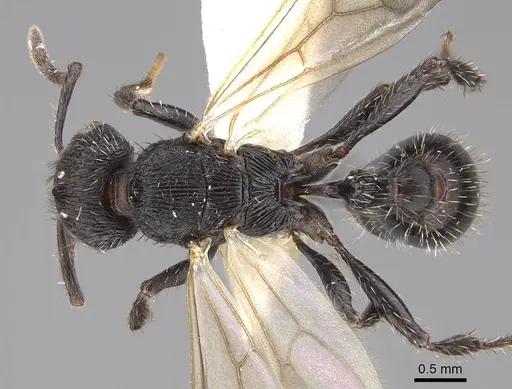
Literature
Loading distribution map...Loading products...