
Pogonomyrmex meridionalis
- Sci. Name
- Pogonomyrmex meridionalis
- Tribe
- Pogonomyrmecini
- Subfamily
- Myrmicinae
- Author
- Kusnezov, 1951
- Distribution
- Found in 1 countries
Introduction
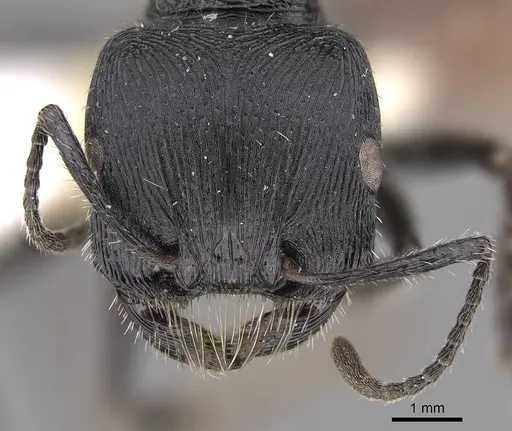
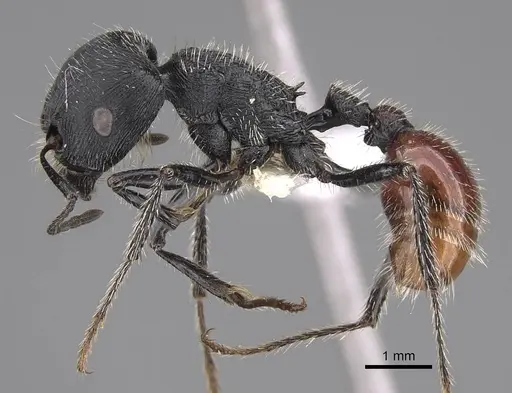
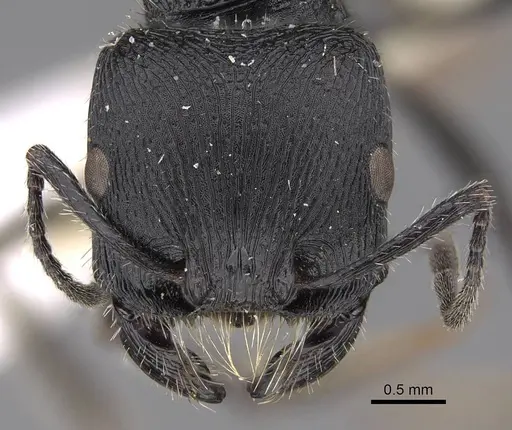
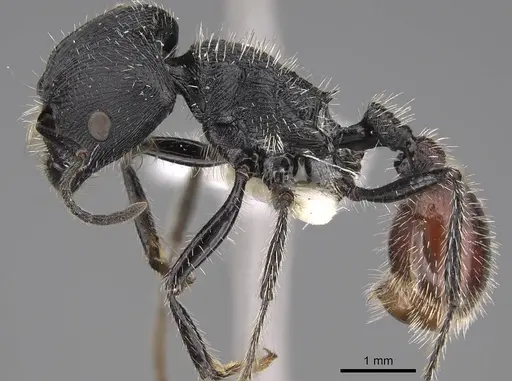
Pogonomyrmex meridionalis is a seed-harvester ant from the Patagonian steppe in Argentina . Workers have a blackish head and thorax with a light to dark orange abdomen . They inhabit elevations between 385-540 meters, nesting in sandy-gravelly soil with a tumulus . Workers forage individually for seeds . Body size data is unavailable from the research.
Quick Summary
- Difficulty: Medium
- Origin & Habitat: Argentina (Patagonian steppe ecoregion),385-540m elevation, sandy-gravelly soils [1].
- Colony Type: Based on typical Pogonomyrmex patterns, likely monogyne (single-queen colonies).
- Size & Growth:
- Queen: size data unavailable
- Worker: size data unavailable
- Colony: up to 700 workers [1]
- Growth: Moderate
- Development: Approximately 8-12 weeks at 20-25°C, inferred from Pogonomyrmex genus patterns (Development may vary with temperature.)
- Antkeeping:
- Temperature: Keep between 18-24°C during active season, based on Patagonian climate [1].
- Humidity: Keep nest substrate consistently moist but not waterlogged, as they nest in sandy-gravelly soils [1].
- Diapause: Yes, required for 3-4 months during winter, inferred from habitat [1].
- Nesting: Use sandy-loam substrate in a vertical or sloped formicarium with a seed storage chamber [1].
- Behavior: Solitary foragers that search for seeds individually [1]. Moderate escape risk, ensure tight lid seals and use barriers for small ants.
- Common Issues: mold growth in seed storage chambers if humidity is too high., difficulty establishing in captivity if collected as mature colonies from the wild., overheating due to Patagonian adaptation to cooler climates., insufficient seed variety leading to poor colony nutrition., workers escaping through gaps if lid seals are not tight.
Natural History and Habitat
Pogonomyrmex meridionalis inhabits the Patagonian steppe ecoregion of southern Argentina, specifically found at elevations between 385-540 meters [1]. This region has cool, windy conditions and sandy-gravelly soils. In nature, they construct nests in sandy substrates, creating a tumulus, a crater-like mound, that measures 10-15 cm in diameter at the entrance [1]. This helps regulate nest temperature and humidity in the exposed steppe.
Nest Setup and Substrate
In captivity, use a mix of sand and loam in a vertical or sloped formicarium to replicate their sandy-gravelly soil preference [1]. The substrate should be well-drained to prevent waterlogging. Include a dedicated seed storage chamber, a slightly larger, dry area for seed piles. Ensure the nest has adequate depth (15-20 cm) as these ants nest moderately deep in the wild.
Diet and Seed Harvesting
As seed-harvesters [1], P. meridionalis requires a steady supply of seeds. Offer a variety of small seeds such as grass seeds, chia, millet, and crushed sunflower hearts. They store excess seeds in a granary chamber, so adjust quantities to prevent mold. Provide protein from small insects twice weekly to support brood development. Sugar water can be offered occasionally, but seeds are their primary carbohydrate source.
Temperature and Seasonal Care
Native to the Patagonian steppe [1], these ants prefer cooler temperatures. Maintain the nest at 18-24°C during the active season. They require a winter diapause period of 3-4 months at 5-10°C, inferred from their natural cycle [1]. Gradually reduce temperatures in autumn and warm in spring. During diapause, keep the nest slightly drier and do not offer food, but provide water.
Foraging Behavior and Outworld Design
P. meridionalis workers are solitary foragers [1]. Each worker leaves the nest individually to search for seeds and returns alone. This requires a spacious outworld with scattered seed sources rather than centralized feeding stations. The outworld substrate can be dry sand or gravel. Ensure excellent escape prevention, as workers can climb smooth surfaces.
Frequently Asked Questions
Can I keep Pogonomyrmex meridionalis in a test tube?
Yes, for the founding stage, a test tube setup works well. Use a standard test tube with water reservoir and cotton plug. However, once workers arrive, move them quickly to a sandy substrate nest as they need to excavate and establish seed storage chambers.
Do Pogonomyrmex meridionalis need hibernation?
Yes, they require a winter diapause period of 3-4 months at 5-10°C, inferred from their Patagonian habitat [1]. This is essential for their natural cycle.
What seeds should I feed my Pogonomyrmex meridionalis colony?
Offer a mix of small seeds like grass seeds, chia, millet, and amaranth. Crushed sunflower hearts and flax seeds are also accepted. Provide variety for different nutrients, and remove moldy seeds.
How big do Pogonomyrmex meridionalis colonies get?
Wild colonies contain up to 700 workers [1]. In captivity, expect similar numbers with good care. They are not supercolonial and maintain discrete nest boundaries.
Are Pogonomyrmex meridionalis good for beginners?
They are medium difficulty. While hardy, they require specific seasonal care (diapause), a specialized seed diet, and patience due to moderate growth rate. Beginners might find easier success with temperate Lasius or Formica species.
How long until Pogonomyrmex meridionalis get their first workers?
Based on related Pogonomyrmex species, expect approximately 8-12 weeks from egg to first worker at 20-25°C. Cooler temperatures will extend this timeline.
Why are my Pogonomyrmex meridionalis dying?
Common causes include overheating (they prefer cooler temperatures), lack of winter diapause disrupting their cycle, moldy seeds causing fungal infections, or insufficient protein for the queen during founding. Ensure proper ventilation and avoid high humidity in seed storage areas.
Report an Issue
The current care sheet is based fully on literature. See inconsistencies, or something that's incorrect? Please , it will be resolved after review from an admin. Contributing to the blogs tab also helps providing information, to make us be able to further improve the caresheets. Thank you for your support!
References

This caresheet is licensed under CC BY-SA 4.0 .
Community Blogs
CASENT0914367
View on AntWeb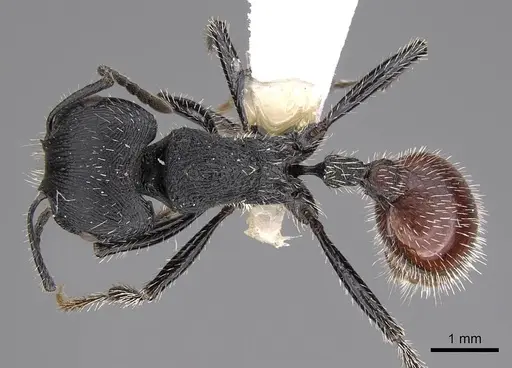
CASENT0914368
View on AntWeb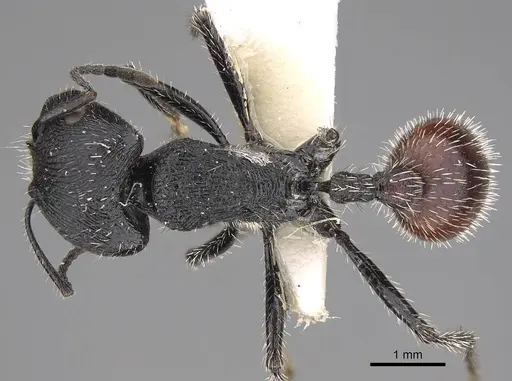
Literature
Loading distribution map...Loading products...