
Pogonomyrmex lobatus
- Sci. Name
- Pogonomyrmex lobatus
- Tribe
- Pogonomyrmecini
- Subfamily
- Myrmicinae
- Author
- Santschi, 1921
- Distribution
- Found in 1 countries
Introduction
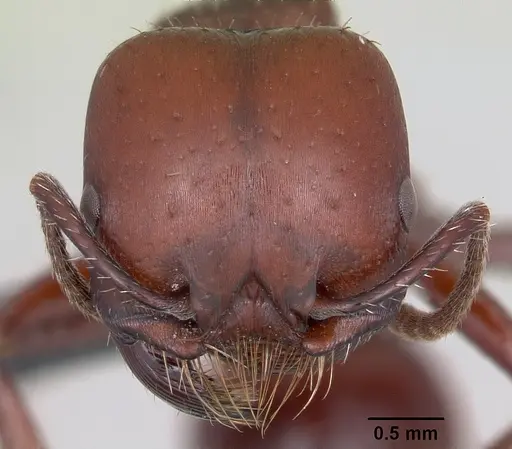
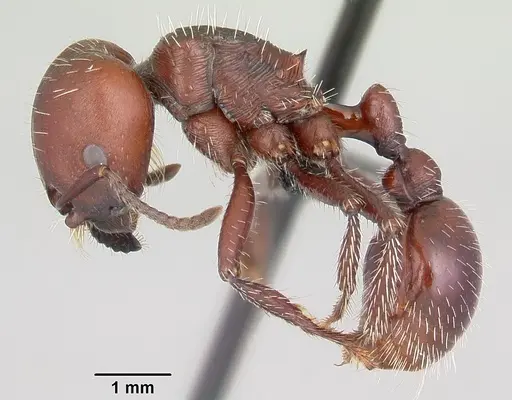
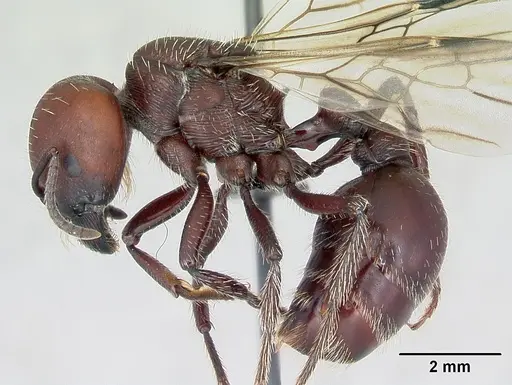
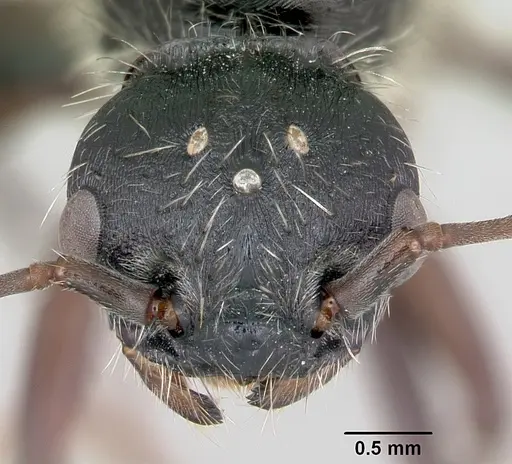
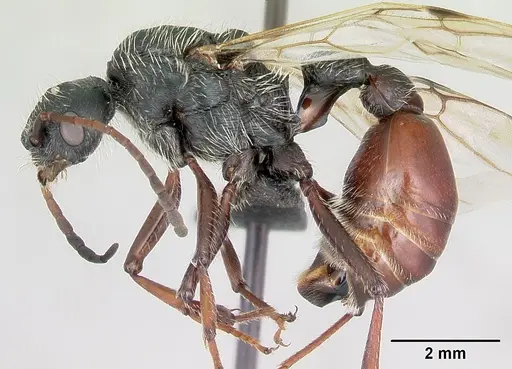
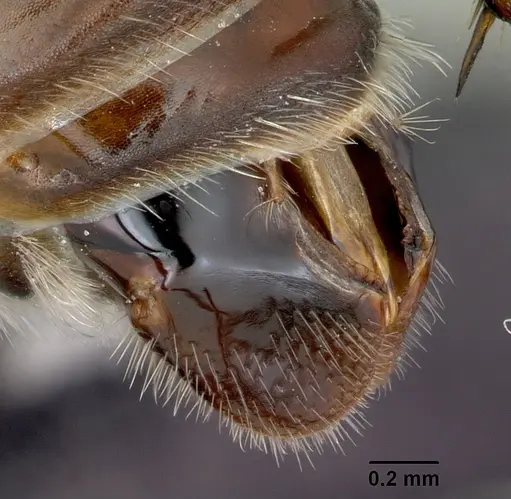
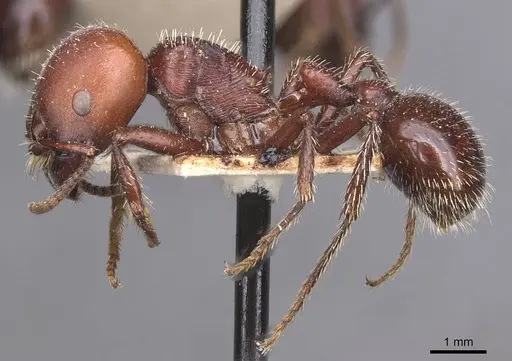
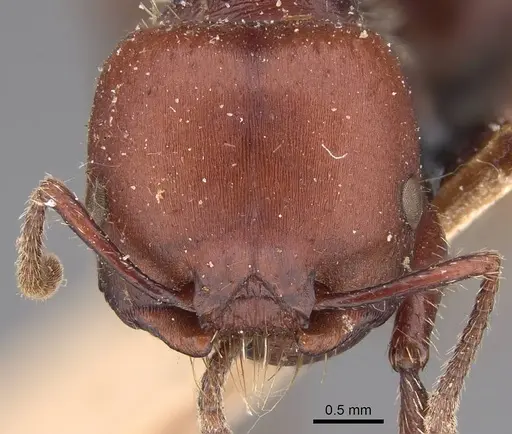
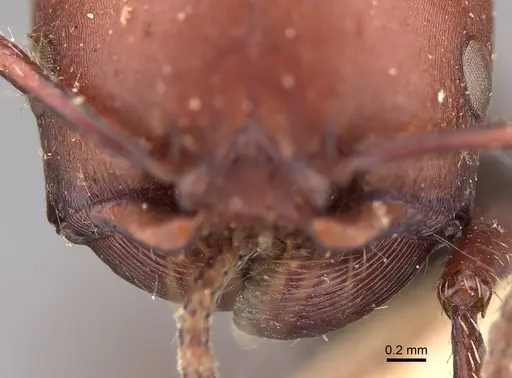
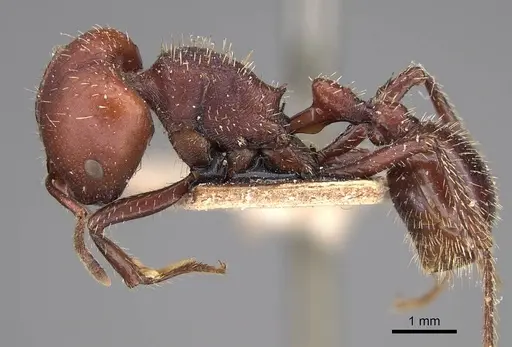
Pogonomyrmex lobatus is a seed-harvester ant native to southern South America, found in Argentina, Brazil, and Uruguay . It belongs to the coarctatus-group and is distinguished by its massively enlarged lateral lobe of the clypeus, which nearly contacts the frontal lobe - the feature that gives it the species name 'lobatus' meaning 'lobed' in Latin . Colonies reach up to approximately 2000 workers . Nests feature a small tumulus (dirt mound) up to 15cm tall with a cryptic entrance and sometimes a small midden of seed chaff . This species is a solitary forager, though it sometimes forms very loose foraging columns with scattered workers .
Quick Summary
- Difficulty: Medium
- Origin & Habitat: Lowland species from the Uruguayan Savanna, northern Espinal, southern Humid Chaco, and southeastern Dry Chaco ecoregions at elevations of 45-555m [2][1]. Found in Argentina, Brazil, and Uruguay [1].
- Colony Type: Based on Pogonomyrmex genus patterns, likely monogyne (single-queen colonies) [1].
- Size & Growth:
- Queen: size data unavailable
- Worker: size data unavailable
- Colony: Up to 2000 workers [1]
- Growth: Moderate
- Development: 6-10 weeks (estimated based on genus patterns) (Development time is inferred from typical Pogonomyrmex development, no specific study exists for this species)
- Antkeeping:
- Temperature: Keep at room temperature, roughly 22-26°C. They are a warm-climate species from lowland South American habitats [2].
- Humidity: Low to moderate. These are dryland ants from savanna and Chaco regions, avoid overly damp conditions [1].
- Diapause: Unknown. Based on their subtropical to tropical distribution, they likely do not require true hibernation, but no specific study exists.
- Nesting: Test tube setup works well for founding colonies. They prefer dry to moderately moist substrate. A naturalistic setup with a small dirt mound or Y-tong nest with chambers scaled to their size is appropriate [1].
- Behavior: Solitary foragers, though they sometimes form very loose foraging columns with scattered workers [1]. They are seed-harvesters and will collect and process seeds. Like other Pogonomyrmex, they have a painful sting and should be handled with care. Medium-sized workers mean escape prevention should be moderate, they cannot squeeze through standard test tube barriers but may escape from loosely fitted setups. They are aggressive defenders of their nest [1].
- Common Issues: sting pain, Pogonomyrmex ants have potent stings, handle carefully and use proper protection, escape through gaps, medium size means they can escape through loose-fitting lids or gaps in tubing, overfeeding, seed-harvester ants can become obese and colony growth can stall if overfed, fungal issues, too-moist conditions can cause mold in nests, harmful to colonies, slow colony growth during founding phase, queens sealed in chambers can take months, beginners may disturb too soon
Nest Preferences and Setup
In the wild, Pogonomyrmex lobatus nests in soil, creating a small tumulus (dirt mound) up to 15cm tall with a cryptic entrance. They sometimes build a small midden of seed chaff near the nest entrance [1]. For captive care, a test tube setup works well for founding colonies. The founding behavior is unconfirmed, but queens may seal themselves into a chamber until first workers emerge. Once the colony reaches 10-20 workers, you can move them to a formicarium. A Y-tong nest or a naturalistic setup with soil chambers works well for established colonies. Keep the nest relatively dry, these are ants from dry to semi-arid regions and do not need high humidity. Provide a water tube but ensure the nest area stays mostly dry.
Feeding and Diet
Pogonomyrmex lobatus is a seed-harvester ant, they collect seeds from the wild and use them as their primary food source. In captivity, you should provide a mix of seeds suitable for small ant species. Commercial ant seeds (millet, chia, flax, sesame) work well. They will also accept protein sources like small insects (fruit flies, small mealworms, crickets). Sugar water or honey can be offered occasionally but is not their primary diet. Feed seeds constantly and protein 1-2 times per week. Remove uneaten seeds to prevent mold. The workers will crack open seeds and feed the kernel to larvae, this is normal harvesting behavior. [1]
Temperature and Seasonal Care
As a lowland species from warm regions of Argentina, Brazil, and Uruguay, Pogonomyrmex lobatus prefers temperatures in the low-to-mid 20s°C (roughly 22-26°C) [2]. Room temperature within this range is typically suitable. They occur in subtropical to tropical savanna and Chaco habitats at elevations of 45-555m [2], so they are adapted to warm conditions year-round. Based on their distribution, they likely do not require a true hibernation period but may reduce activity during cooler months. If your room temperature drops below 18°C in winter, you might consider light heating, but avoid overheating. The nuptial flight occurs in December (austral summer) based on dealate queens found on the ground at that time [1].
Behavior and Temperament
Pogonomyrmex lobatus is a solitary forager, though they sometimes form very loose foraging columns with scattered workers, similar to P. coarctatus [1]. Unlike some Pogonomyrmex species that form dense foraging trails, these ants tend to forage individually or in small groups. They are seed-harvesters and will actively collect and process seeds. Like all Pogonomyrmex species, they have a potent sting and are aggressive defenders of their nest. When threatened, workers will readily attack and deliver a painful sting. You should always use caution when working with this species, gloves and eye protection are recommended during nest maintenance. They are medium-sized ants, so escape prevention should be moderate. Standard test tube barriers and properly fitted lids are usually sufficient once the colony reaches established size.
Colony Founding
The founding behavior of Pogonomyrmex lobatus is unconfirmed. Based on Pogonomyrmex genus patterns, queens may seal themselves into a chamber and not forage during founding, relying on stored fat reserves. The founding chamber should be dark and undisturbed. Do not check on the queen frequently during this period as disturbance can cause her to abandon or consume the brood. The first workers (nanitics) will be smaller than mature workers but will immediately begin helping with colony tasks. Once workers emerge, the colony enters the claustral phase and the queen will begin laying eggs again. The colony grows gradually over the first few months as more workers emerge.
Frequently Asked Questions
How long does it take for Pogonomyrmex lobatus to have first workers?
Based on typical Pogonomyrmex development, expect first workers (nanitics) approximately 6-10 weeks after the queen lays eggs. This timeline is inferred from genus patterns since specific development data for P. lobatus is not available. Factors like temperature can affect development speed, warmer conditions within the acceptable range may speed development slightly.
Can I keep multiple Pogonomyrmex lobatus queens together?
Pogonomyrmex lobatus is likely monogyne based on genus patterns, so multiple unrelated queens will fight until only one remains. Only combine foundresses if you want to observe initial interactions, but this is not recommended as it typically results in queen mortality. In established colonies, only one queen should be present.
What do Pogonomyrmex lobatus eat?
They are seed-harvesters. Their primary diet in captivity should be seeds suitable for small ant species (millet, chia, flax, sesame). They also accept protein sources like small insects (fruit flies, small mealworms, crickets). Sugar water or honey can be offered occasionally but is not required. Remove uneaten seeds to prevent mold issues.
Are Pogonomyrmex lobatus good for beginners?
They are rated as medium difficulty. They are harder than simple species like Lasius but more straightforward than some exotic ants. The main challenges are their sting (requiring careful handling), their seed-harvesting diet (needing appropriate food), and the founding period requiring patience. If you are comfortable with medium-sized ants and can handle them carefully, they are a rewarding species.
What temperature do Pogonomyrmex lobatus need?
Keep them at room temperature, roughly 22-26°C. They are a warm-climate species from lowland South American habitats and do best in these conditions. Room temperature within this range is typically suitable without additional heating.
Do Pogonomyrmex lobatus need hibernation?
Based on their subtropical to tropical distribution in southern South America, they likely do not require true hibernation. They may reduce activity during cooler months, but a formal diapause period is probably not necessary. If your colony becomes less active in winter, simply reduce feeding and allow them to slow down naturally.
How big do Pogonomyrmex lobatus colonies get?
Colonies reach approximately up to 2000 workers [1]. This is a moderately sized colony compared to some other Pogonomyrmex species that can reach much larger numbers. Growth is moderate, expect several months to reach 50 workers, and over a year or more to approach full colony size.
When do Pogonomyrmex lobatus have nuptial flights?
Mating flights occur during the austral summer, with dealate queens found on the ground on 19 December [1]. This indicates flights happen in December (Southern Hemisphere summer). If you are keeping this species in the Northern Hemisphere, timing would be reversed to match seasonal patterns.
What type of nest should I use for Pogonomyrmex lobatus?
Start with a test tube setup for founding colonies. Once the colony reaches 10-20 workers, you can move them to a formicarium. A Y-tong nest with medium-sized chambers works well, or a naturalistic setup with soil chambers. Keep the nest relatively dry, these are dryland ants that do not need high humidity.
Why are my Pogonomyrmex lobatus dying?
Common causes include: too-high humidity (they are dryland ants), disturbance during founding (queen may abandon brood), overfeeding leading to obesity or mold, and poor escape prevention. Also ensure they have access to water. If workers are dying outside the nest in small numbers, this is normal, older workers naturally die off. If you see mass die-offs, check humidity levels and for signs of mold or contamination.
Report an Issue
The current care sheet is based fully on literature. See inconsistencies, or something that's incorrect? Please , it will be resolved after review from an admin. Contributing to the blogs tab also helps providing information, to make us be able to further improve the caresheets. Thank you for your support!
References

This caresheet is licensed under CC BY-SA 4.0 .
Community Blogs
CASENT0103259
View on AntWeb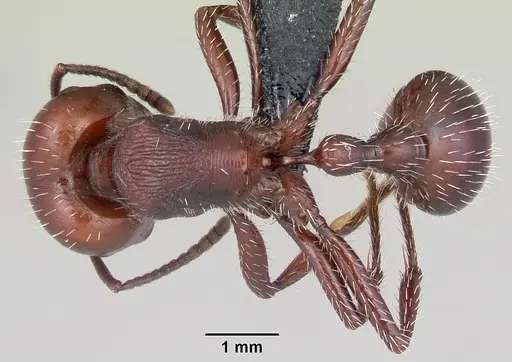
CASENT0172684
View on AntWeb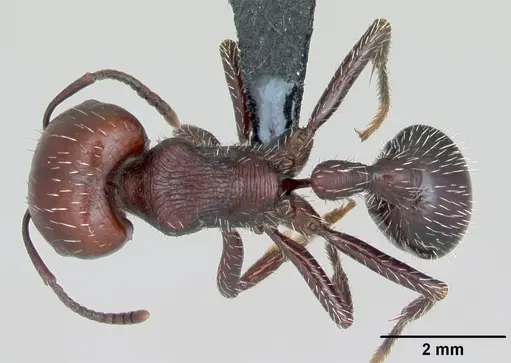
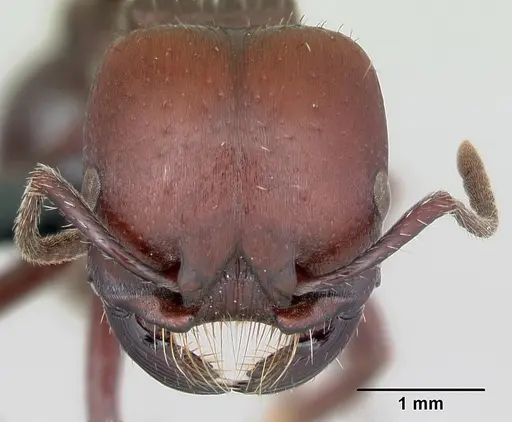
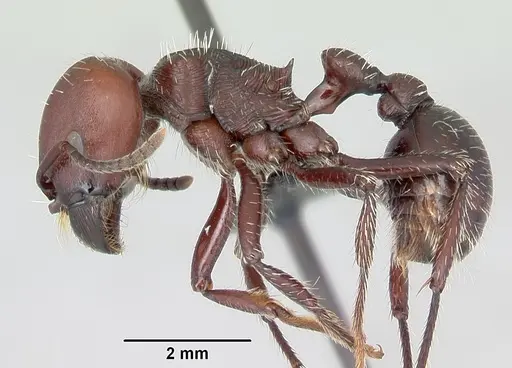
CASENT0172685
View on AntWeb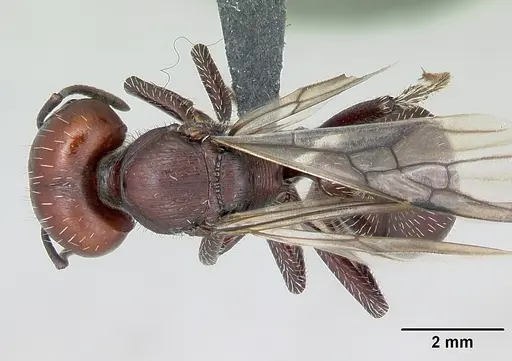
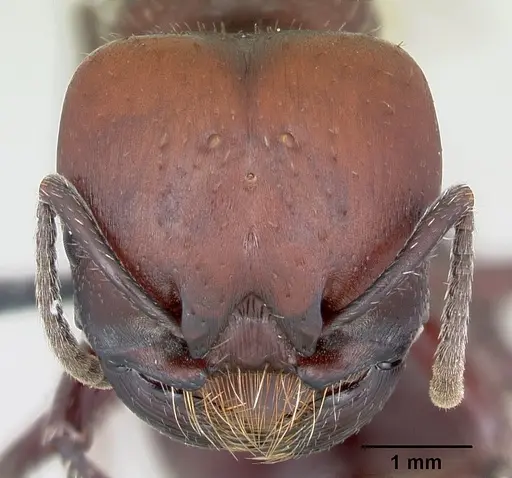
CASENT0172686
View on AntWeb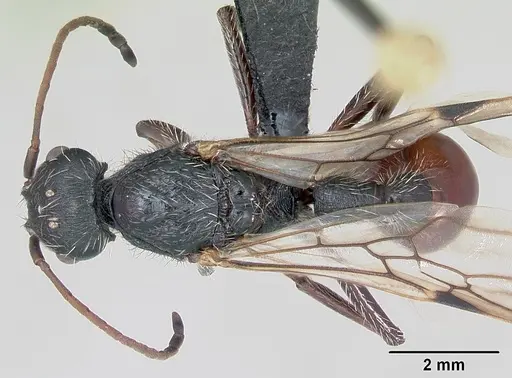
CASENT0217260
View on AntWeb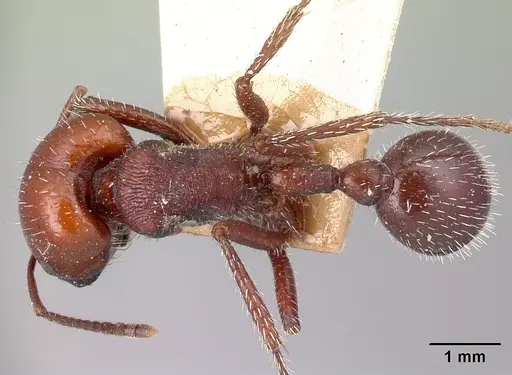
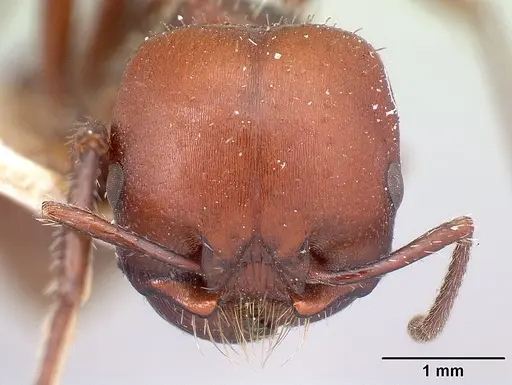
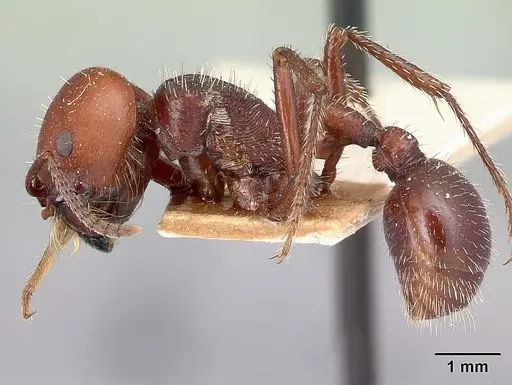
CASENT0869788
View on AntWeb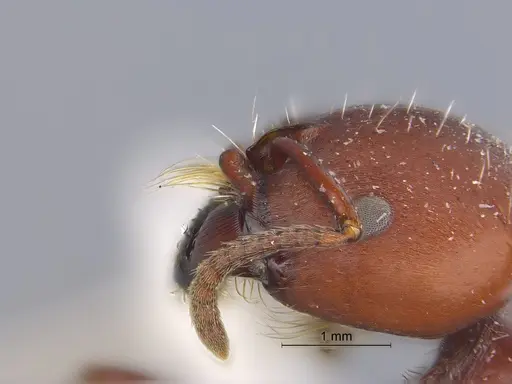
CASENT0904103
View on AntWeb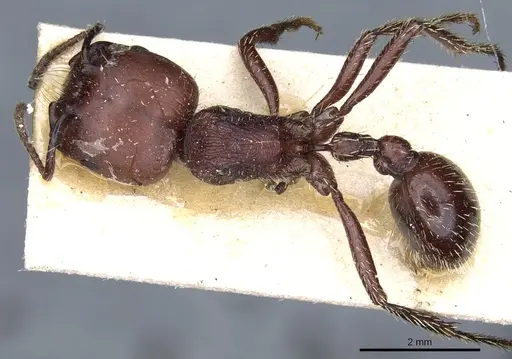
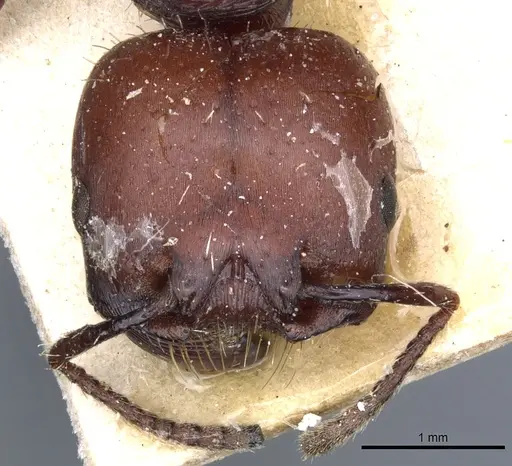
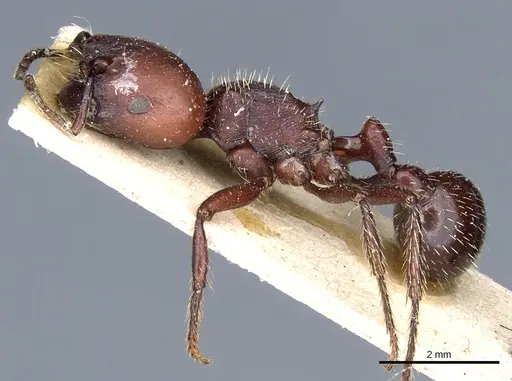
CASENT0913098
View on AntWeb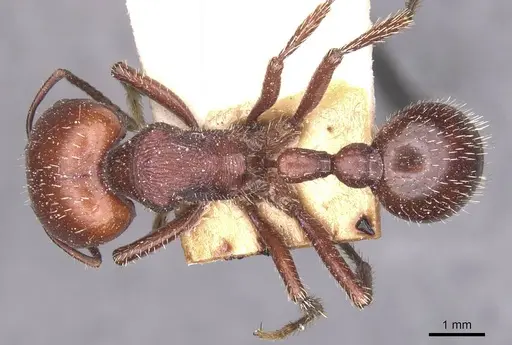
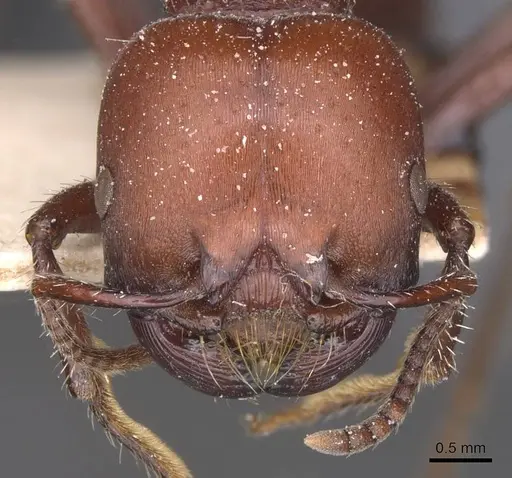
CASENT0914387
View on AntWeb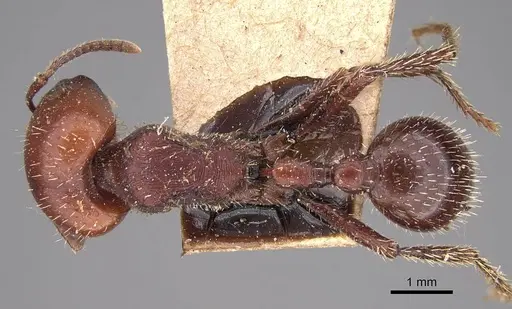
Literature
Loading distribution map...Loading products...