
Pogonomyrmex imberbiculus
- Sci. Name
- Pogonomyrmex imberbiculus
- Tribe
- Pogonomyrmecini
- Subfamily
- Myrmicinae
- Author
- Wheeler, 1902
- Distribution
- Found in 2 countries
Introduction
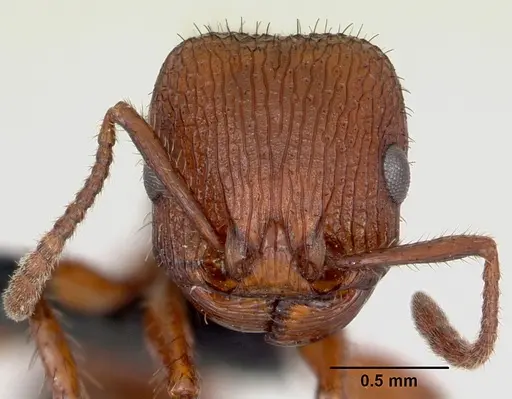
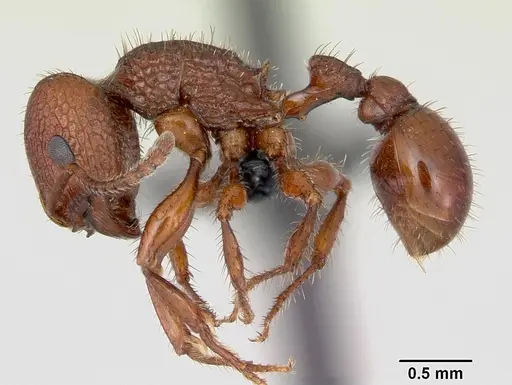
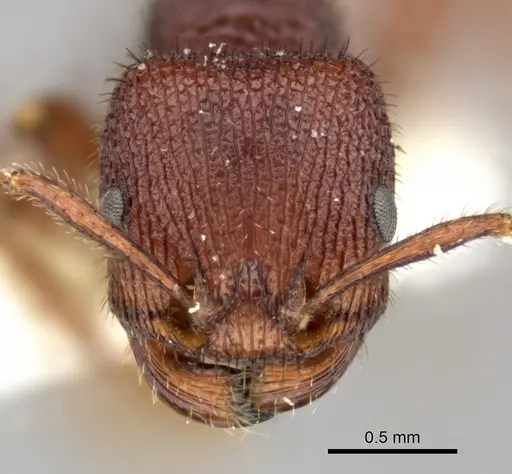
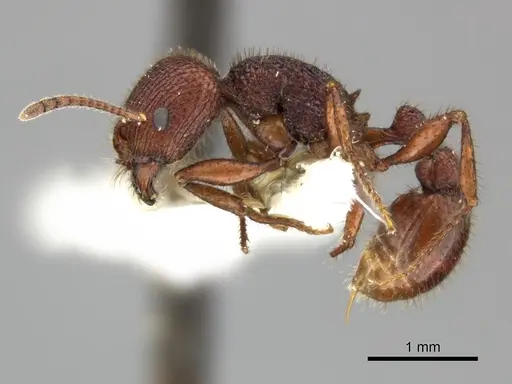
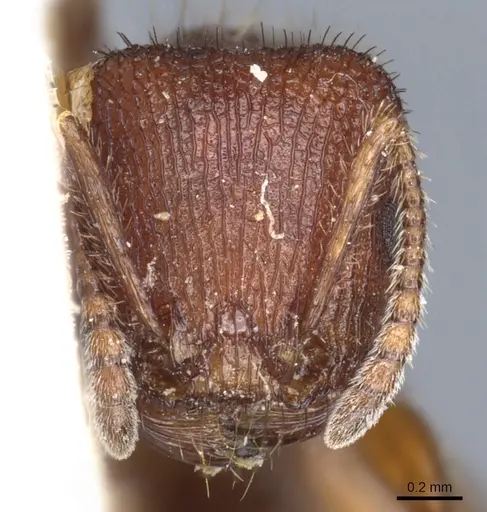
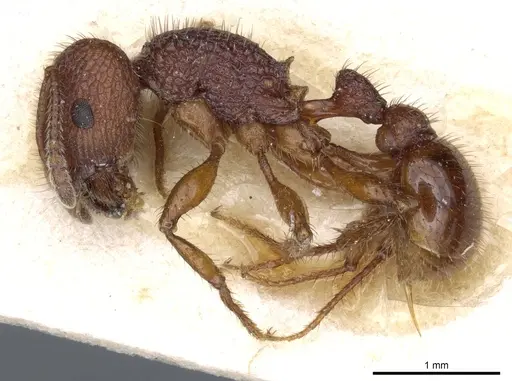
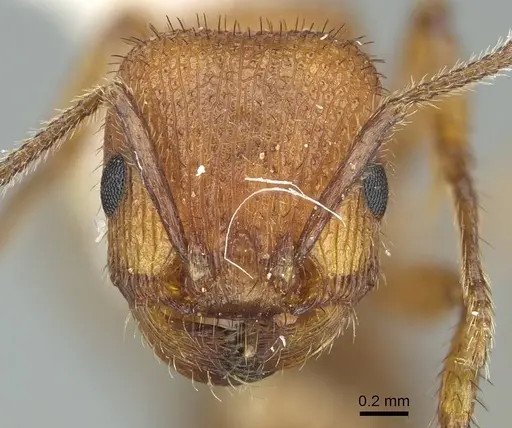
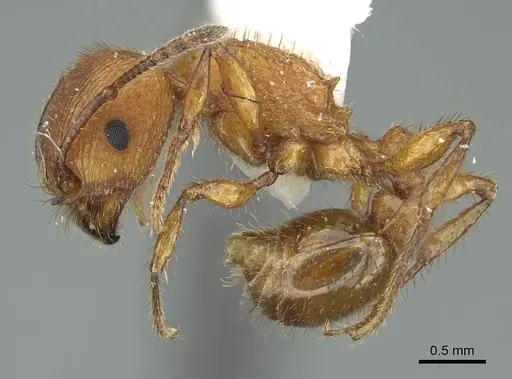
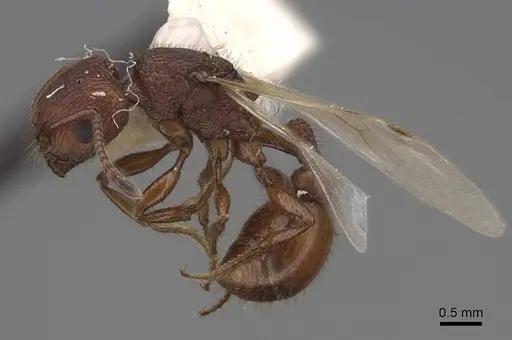
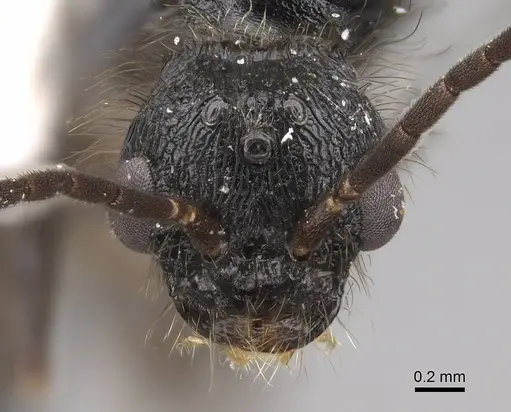
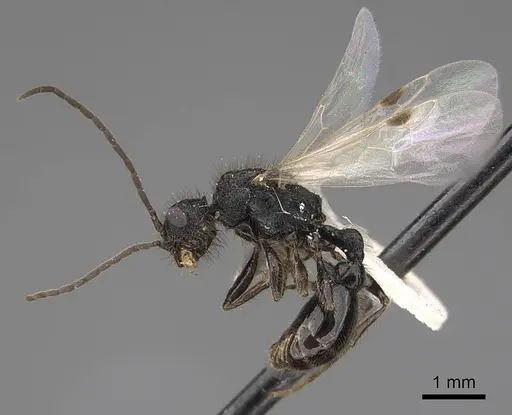
Pogonomyrmex imberbiculus is a small harvester ant native to the southwestern United States and northern Mexico. It is easily recognized by a unique clypeal projection that sticks out in front of the antennae, making it the only North American Pogonomyrmex species with this feature . Colonies are small, typically containing up to 100 workers . This species is notable for its extremely docile behavior and the ability of its larvae to eat solid seeds, an unusual adaptation where workers crack seeds open and feed pieces to larvae .
Quick Summary
- Difficulty: Easy
- Origin & Habitat: Southwestern United States (Oklahoma, Texas, New Mexico, Colorado, Arizona, Nevada, California) and northern Mexico (Sonora, Chihuahua, Durango, Coahuila) [4][5][6]. Inhabits Chihuahuan Desert grasslands, open weedy areas, creosotebush scrub, and juniper or oak forests [2][3]. Nests are in sandy or rocky soils, under stones or in open ground, sometimes with a small crater mound [1].
- Colony Type: Single-queen colonies (monogyne), with documented wingless intermorph queens that can head colonies. Some nests may contain multiple inseminated intermorph-queens [1].
- Size & Growth:
- Antkeeping:
- Temperature: Warm conditions preferred, around 24-28°C with a gradient to mimic desert habitat
- Humidity: Keep nest substrate dry to slightly moist, avoiding damp conditions
- Diapause: Unknown, but based on geographic range, likely requires a winter diapause period
- Nesting: Shallow nests with broad chambers connected to deeper galleries, use Y-tong, plaster, or soil nests with a small outworld [1]
- Behavior: Extremely docile, show no defensive behavior when disturbed [1]. Workers forage individually at a slow, steady pace, traveling up to 3 meters from the nest with average trips around 0.9 meters [7]. Foraging occurs in morning and late afternoon, avoiding midday heat [2]. Escape risk is moderate due to small size, use Fluon and tight lids for prevention.
- Common Issues: small colony size means slow growth, beginners may lose patience, desert species prone to mold in overly humid conditions, their docile nature may lead to rough handling, always use gentle techniques, wild-caught colonies may have parasites that can devastate captive colonies
Housing and Nest Setup
Pogonomyrmex imberbiculus does well in modest setups. Use a Y-tong, plaster, or soil nest with chambers scaled to their small size. Nests should be shallow with broad chambers connected to deeper galleries, reflecting natural behavior under stones or in open soil [1]. A small outworld with sandy or gravel substrate is sufficient. Escape prevention is critical due to their small size, use Fluon on edges and ensure tight connections [1].
Feeding and Diet
This species is primarily a seed harvester, preferring grass seeds, but also collects dead insects and arthropods [2][8]. In captivity, offer small seeds like millet or flax, which workers crack open to feed to larvae. Supplement with fruit flies or pinhead crickets. Larvae can eat solid seed material directly, an unusual adaptation [3]. Provide a shallow water dish with a cotton wick.
Temperature and Seasonal Care
As a desert species, keep temperatures around 24-28°C with a gradient. Workers forage in morning and late afternoon, avoiding midday heat [2]. Diapause is unknown, but based on geographic range, a winter cool period may be beneficial.
Colony Structure and Development
Colonies are small, with up to 100 workers [1][2]. The queen type includes winged and wingless intermorphs, with some nests having multiple queens [1]. Founding behavior is unconfirmed. Growth is slow, with brood development in summer months [1].
Behavior and Foraging
Workers are extremely docile and show no defense when disturbed [1]. They forage individually at a slow pace, with trips up to 3 meters [7]. Daily activity has two peaks: morning and late afternoon [2]. Escape risk is moderate due to small size.
Frequently Asked Questions
Is Pogonomyrmex imberbiculus good for beginners?
Yes, it is an excellent beginner species due to its docile nature and small colony size. Main challenges are slow growth and maintaining warm, dry conditions [1].
How long does it take for the first workers to emerge?
The exact timeline is unconfirmed, but based on related species, estimate 8-12 weeks at optimal temperature.
Do Pogonomyrmex imberbiculus ants sting?
They are extremely docile and rarely sting, despite having a stinger like most Myrmicinae [1].
What do I feed Pogonomyrmex imberbiculus?
Offer small seeds like grass seeds or millet, and supplement with insects like fruit flies. Larvae can eat seed material directly [3][2].
Do they need hibernation?
Diapause is unknown, but based on geographic range, a winter cool period may be beneficial.
Can I keep multiple queens together?
This is a monogyne species, but wingless intermorph queens can head colonies. Combining unrelated foundress queens is not recommended [1].
What makes this species special?
It has a unique clypeal projection and larvae that eat solid seeds, an unusual adaptation. It is also extremely docile [1][3].
What temperature do they need?
Keep them warm at 24-28°C with a gradient, as they are desert ants.
When do mating flights occur?
Mating flights occur in mid-July [1], with early July flights reported in New Mexico [3].
Report an Issue
The current care sheet is based fully on literature. See inconsistencies, or something that's incorrect? Please , it will be resolved after review from an admin. Contributing to the blogs tab also helps providing information, to make us be able to further improve the caresheets. Thank you for your support!
References

This caresheet is licensed under CC BY-SA 4.0 .
Community Blogs
CASENT0005713
View on AntWeb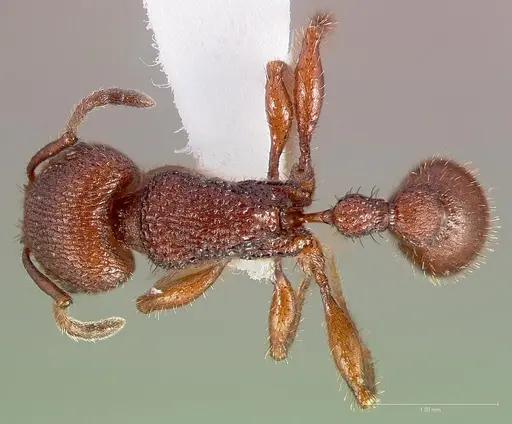
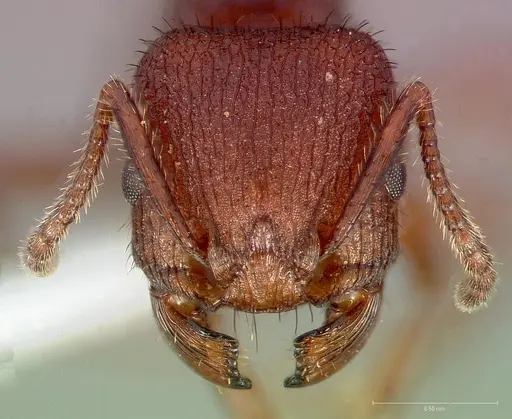
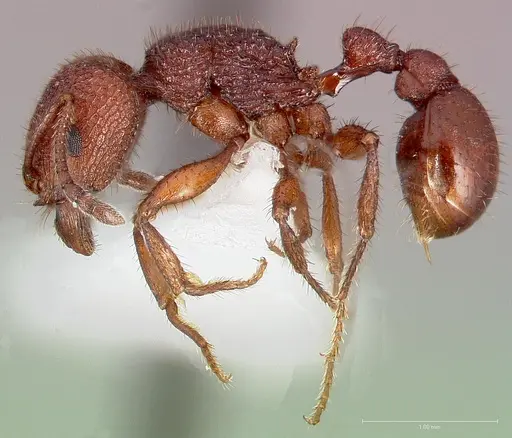
CASENT0066390
View on AntWeb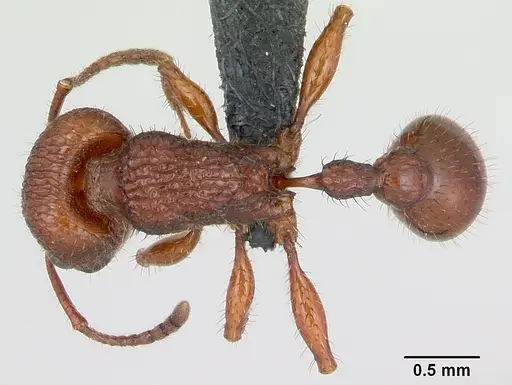
CASENT0217274
View on AntWeb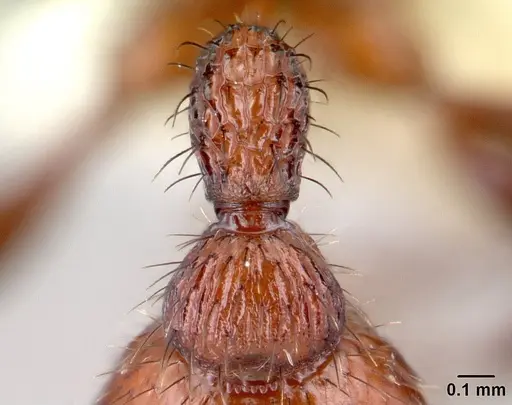
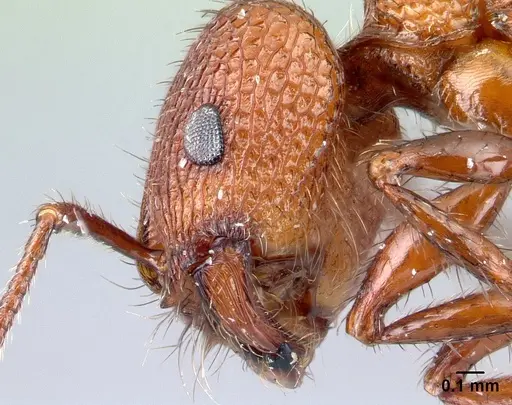
CASENT0235317
View on AntWeb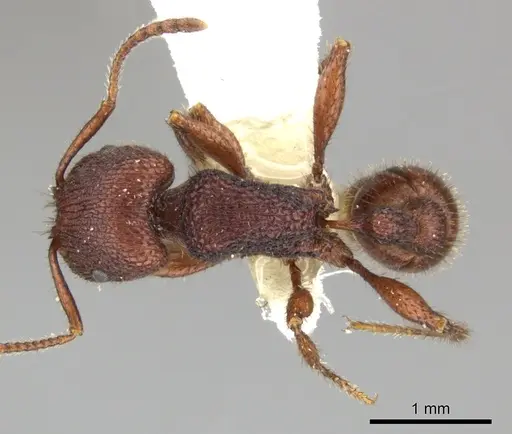
CASENT0904118
View on AntWeb
CASENT0914101
View on AntWeb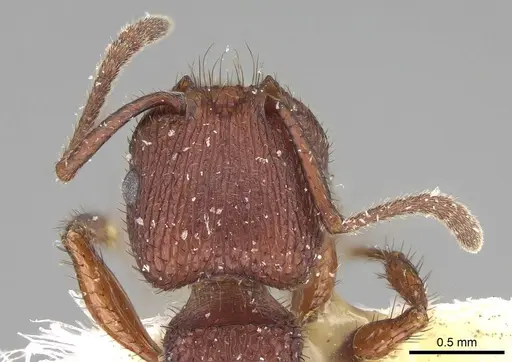
CASENT0914456
View on AntWeb
CASENT0923072
View on AntWeb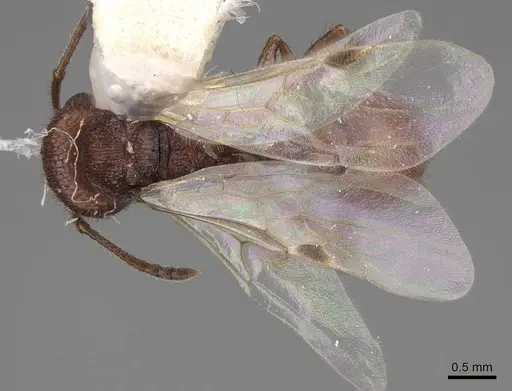
CASENT0923073
View on AntWeb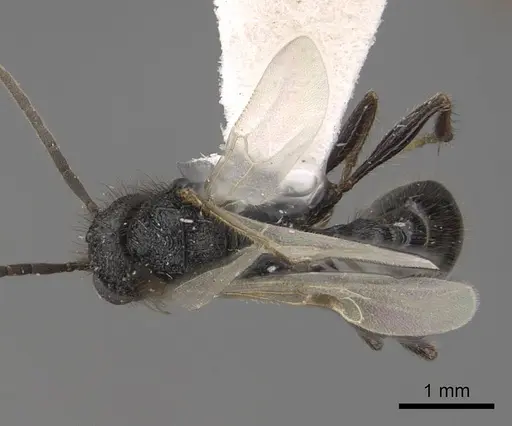
Literature
Loading distribution map...Loading products...