
Pogonomyrmex bispinosus
- Sci. Name
- Pogonomyrmex bispinosus
- Tribe
- Pogonomyrmecini
- Subfamily
- Myrmicinae
- Author
- Spinola, 1851
- Distribution
- Found in 1 countries
Introduction
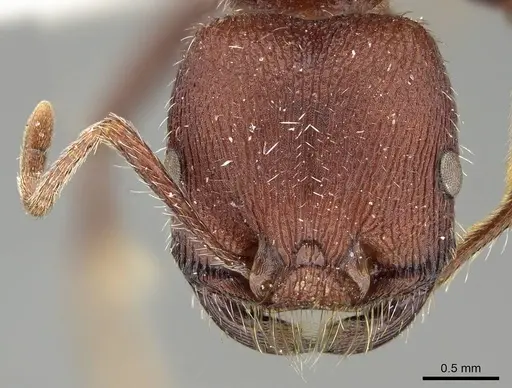
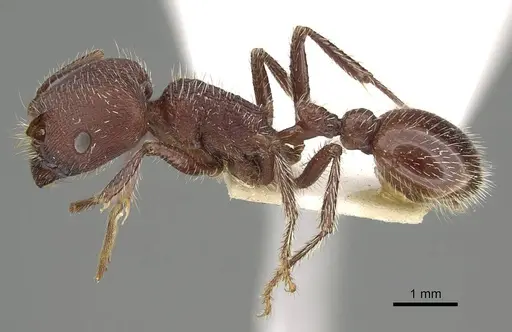
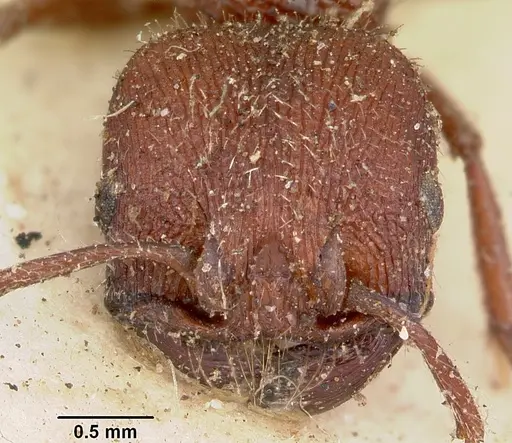
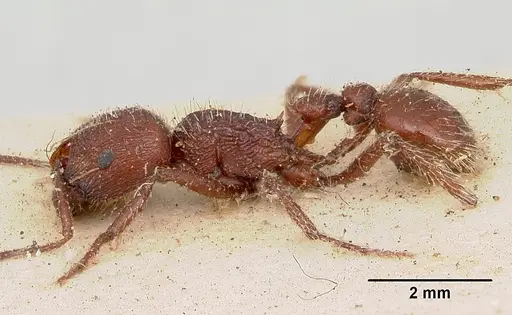
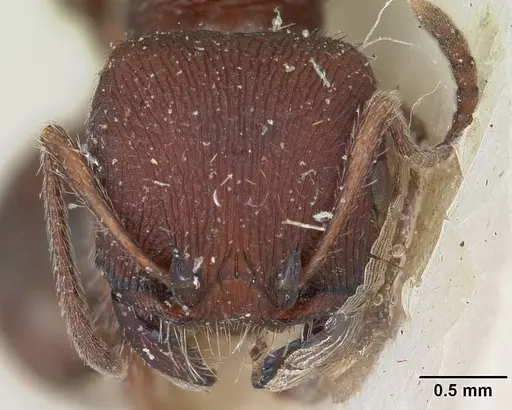
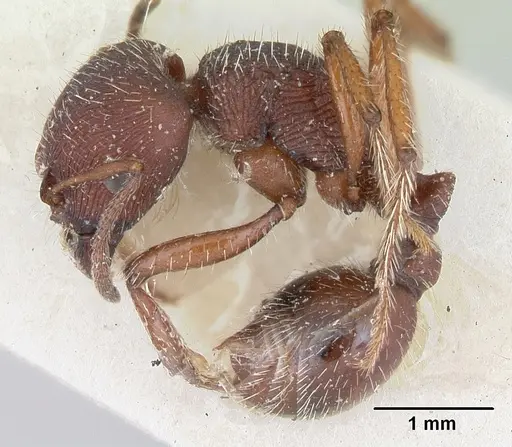
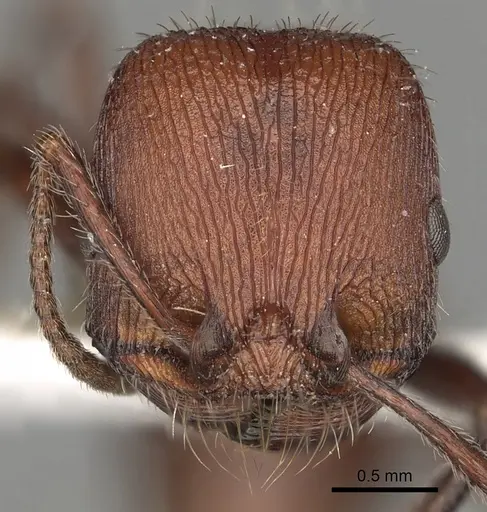
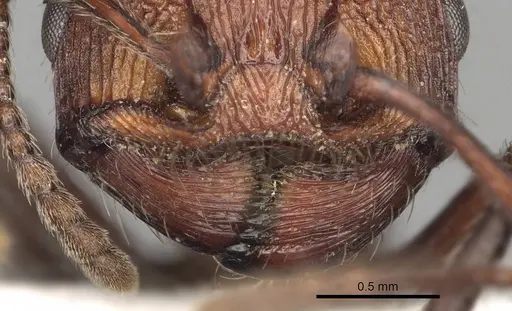
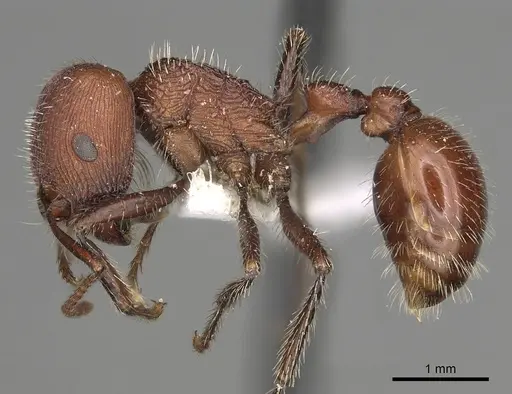
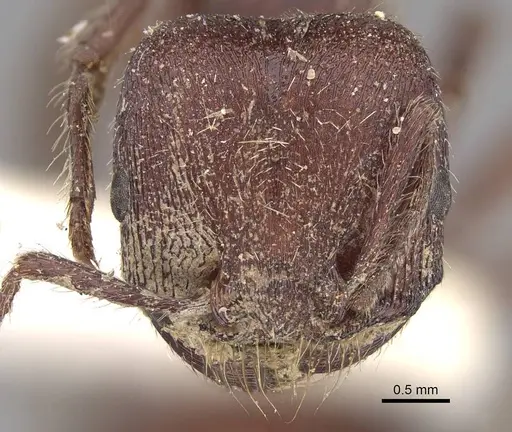
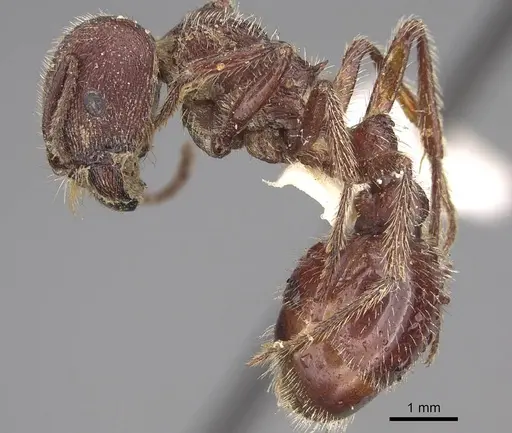
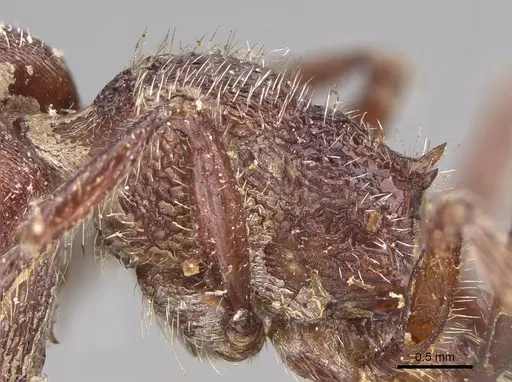
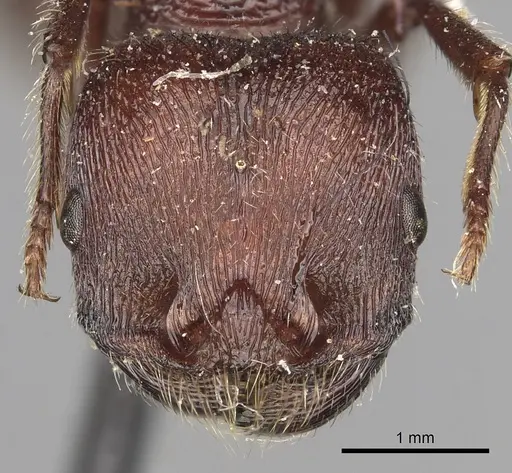
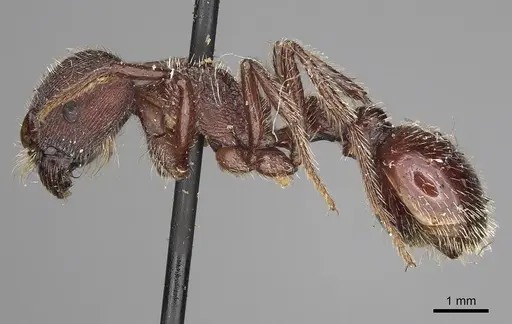
Pogonomyrmex bispinosus is a seed-harvester ant endemic to central Chile, found in the Valparaíso and Metropolitan Regions from sea level to over 1000 meters elevation . Workers have a tannish-brown to reddish-brown body color and a well-developed psammophore, a basket of hairs under the head used for carrying sand and water droplets . The frontal lobes are enlarged and project vertically, giving a unique facial profile . This species is notable for its ergatoid queens, which are wingless and remain in the nest rather than taking nuptial flights .
Quick Summary
- Difficulty: Medium
- Origin & Habitat: 1000m elevation [1][2]. Observed in areas like Papudo to Santiago, including Cerro Cantillana and Quebrada de la Plata [2].
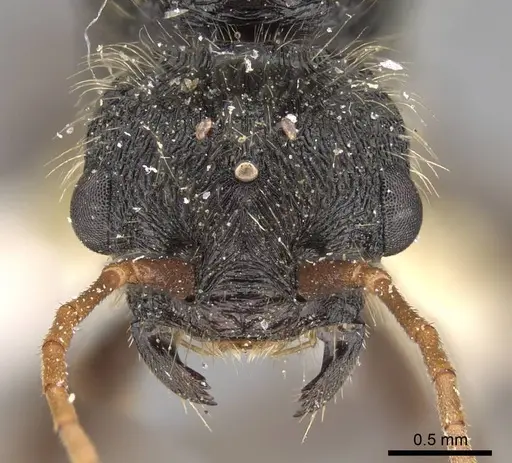
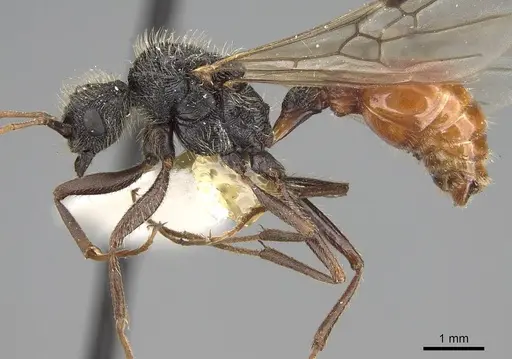
- Colony Type: Colonies have ergatoid (wingless) queens that remain in the nest and can serve as replacement reproductives [1]. The ergatoid queen lacks wings and all wing-related structures, with small ocelli on the head [1].
- Size & Growth:
- Queen: Size data unavailable, no total length measurements in research context
- Worker: Size data unavailable, no total length measurements in research context
- Colony: Colony size unknown, no data on maximum workers
- Growth: Growth rate unknown, inferred from Pogonomyrmex genus patterns
- Development: Unknown, no specific data for this species (Development time not studied, related Pogonomyrmex species may take 6-10 weeks at optimal temperatures, but this is estimated.)
- Antkeeping:
- Temperature: Keep at room temperature, roughly 22-26°C, based on Mediterranean climate inference [1][2]. No specific temperature data in research.
- Humidity: Provide a humidity gradient with mostly dry nest conditions, reflecting their natural dry habitat [2]. The psammophore suggests adaptation to dry environments.
- Diapause: Yes, inferred from central Chile's seasonal climate, reduce temperatures to 10-15°C for 2-3 months during winter [1].
- Nesting: Dry, well-drained nests preferred, such as Y-tong or plaster nests with good drainage, based on habitat inference [2].
- Behavior: Ergatoid queens remain in the nest, and workers are active foragers that harvest seeds [1][2]. Based on Pogonomyrmex genus patterns, they can be defensive and may sting when threatened, but no specific aggression data in research. Escape prevention is needed due to moderate size.
- Common Issues: stinging risk, handle with care as this species can deliver painful stings, ergatoid queens may have different founding dynamics than winged queens, dry nesting requirements may conflict with setups for tropical species, colony growth may be slow due to lack of specific data, escape prevention needed, workers are active and may find gaps
Housing and Nest Setup
You should provide dry to moderately dry nesting conditions, reflecting their natural habitat in the Chilean matorral [2]. Use Y-tong or plaster nests with good drainage to avoid moisture buildup. A test tube setup can work for founding colonies if kept dry, but transfer to a proper nest once the colony grows. Provide a shallow water dish in the outworld, and you may observe workers using their psammophore to carry water droplets. The outworld should have a sandy substrate for foraging. Secure the lid tightly as workers are active and will explore gaps [1][2].
Feeding and Diet
You should offer seeds as the primary diet, such as millet, grass seeds, or small sunflower seeds, since this species is a seed-harvester [2]. Provide protein sources like fruit flies or mealworms 2-3 times per week. Sugar water or honey can be offered occasionally. Remove uneaten seeds to prevent mold. The psammophore helps workers carry seeds efficiently [2].
Temperature and Seasonal Care
Keep your colony at room temperature, roughly 22-26°C, based on inference from their Mediterranean climate habitat [1][2]. During winter, reduce temperatures to 10-15°C for 2-3 months to mimic natural dormancy [1]. If exact temperatures are not possible, use a cool area that stays above freezing. Do not feed during deep dormancy but provide water. Resume normal care in spring.
Understanding Ergatoid Queens
You should know that this species has ergatoid queens, which are wingless and remain in the nest [1]. Unlike typical winged queens, they do not take nuptial flights and can serve as replacement reproductives. When acquiring a colony, you may receive an ergatoid queen, which is normal for this species [1].
Defense and Handling
You should handle the colony with care, as Pogonomyrmex ants are known for defensive stings based on genus patterns. Move slowly and avoid disturbing the nest. Use gloves for large colonies. The sting is painful but not medically dangerous. Good escape prevention reduces defensive encounters.
Frequently Asked Questions
Can I keep Pogonomyrmex bispinosus in a test tube?
Yes, for founding colonies, but keep it drier than tropical species. Once the colony reaches 20-30 workers, move to a Y-tong or plaster nest. Maintain dry conditions to match their habitat [2].
How long until first workers appear?
The exact timeline is unknown for this species. Based on related Pogonomyrmex, it may take 6-10 weeks at optimal temperatures, but this is estimated [1].
What do I feed Pogonomyrmex bispinosus?
Seeds should form the bulk of their diet, such as millet or grass seeds [2]. Offer protein like insects 2-3 times per week. Sugar water can be given occasionally.
Are Pogonomyrmex bispinosus good for beginners?
This species is rated medium difficulty due to stinging risk, dry housing needs, and seasonal temperature changes. It may be better for keepers with some experience.
Do I need to hibernate Pogonomyrmex bispinosus?
Yes, a winter dormancy is recommended based on inference from their seasonal habitat. Reduce temperatures to 10-15°C for 2-3 months [1].
Why does my Pogonomyrmex bispinosus have a wingless queen?
This is normal! This species has ergatoid queens, which are wingless and remain in the nest [1]. They can serve as replacement reproductives if needed.
When should I move my colony to a formicarium?
Move from test tube to a proper nest when the colony reaches roughly 20-30 workers. Ensure the new setup maintains dry conditions [2].
Can I keep multiple queens together?
This is unconfirmed for this species. Start with a single queen colony, as no data on polygyny exists in research.
What makes Pogonomyrmex bispinosus special compared to other ants?
They have a well-developed psammophore for carrying sand and water [2], and ergatoid queens instead of winged queens [1]. They are endemic to central Chile, representing unique ant diversity.
Report an Issue
The current care sheet is based fully on literature. See inconsistencies, or something that's incorrect? Please , it will be resolved after review from an admin. Contributing to the blogs tab also helps providing information, to make us be able to further improve the caresheets. Thank you for your support!
References

This caresheet is licensed under CC BY-SA 4.0 .
Community Blogs
ANTWEB1008879
View on AntWeb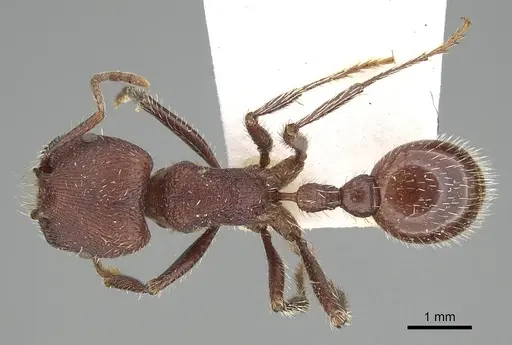
CASENT0103525
View on AntWeb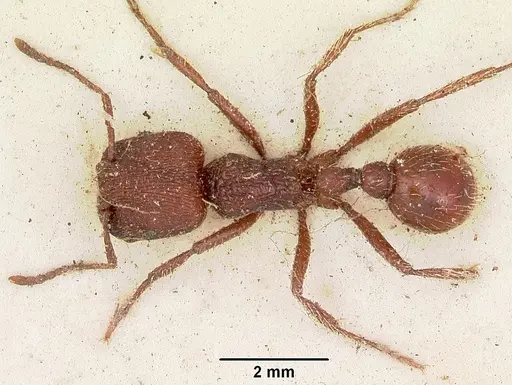
CASENT0173348
View on AntWeb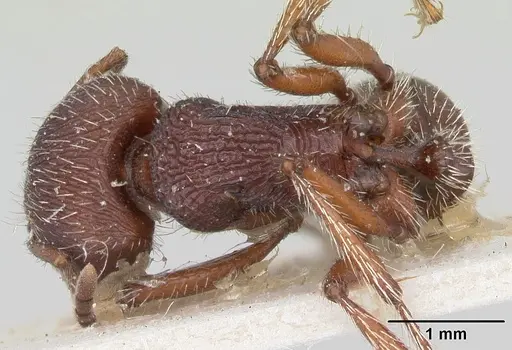
CASENT0281087
View on AntWeb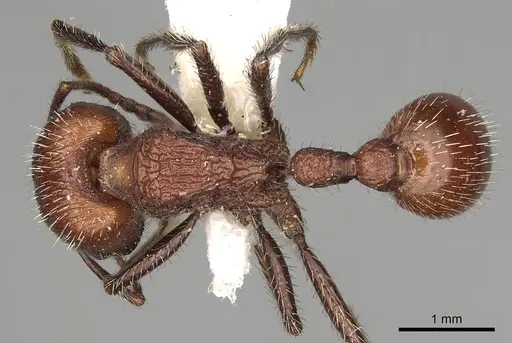
CASENT0914379
View on AntWeb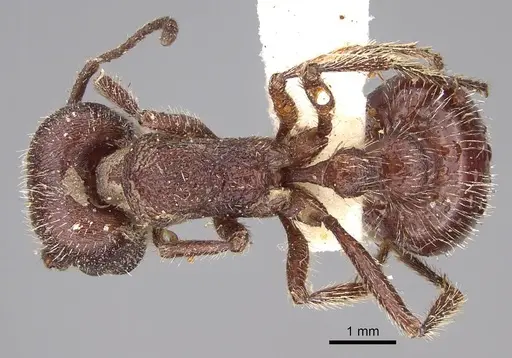
LACMENT273583
View on AntWeb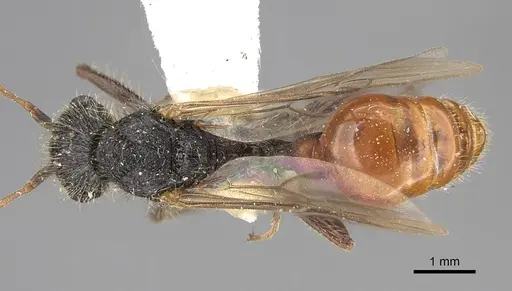
LACMENT273679
View on AntWeb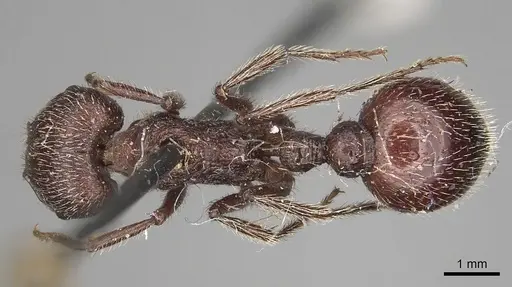
Literature
Loading distribution map...Loading products...