
Pogonomyrmex aterrimus
- Sci. Name
- Pogonomyrmex aterrimus
- Tribe
- Pogonomyrmecini
- Subfamily
- Myrmicinae
- Author
- Wheeler, 1936
- Distribution
- Found in 2 countries
Introduction
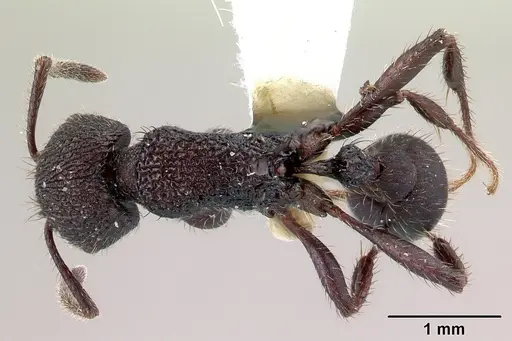
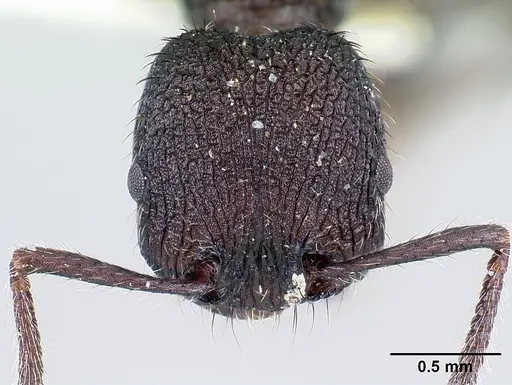
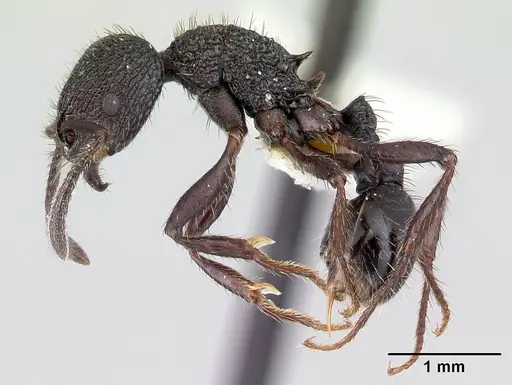
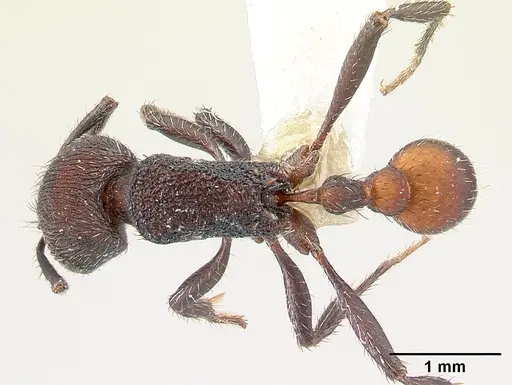
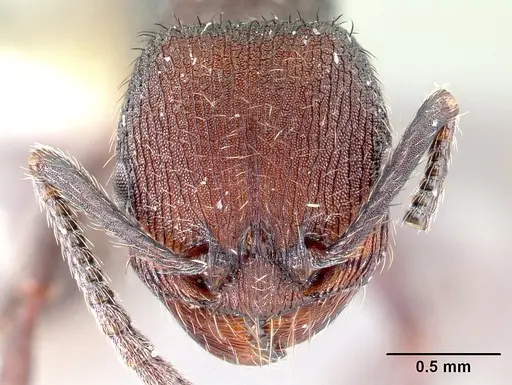
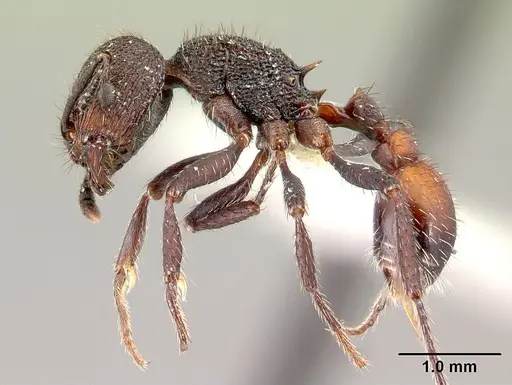
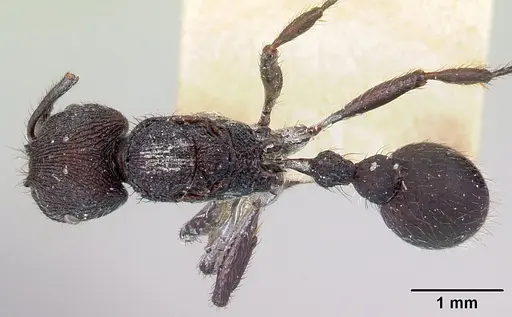
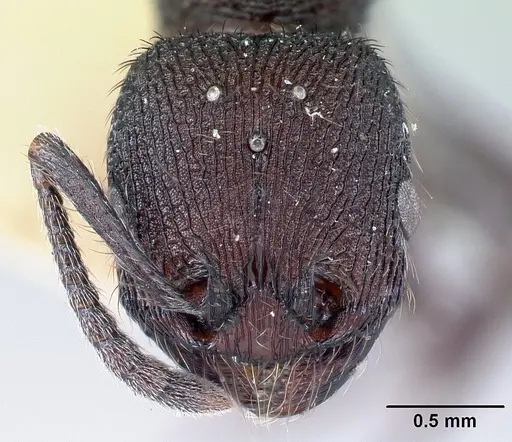
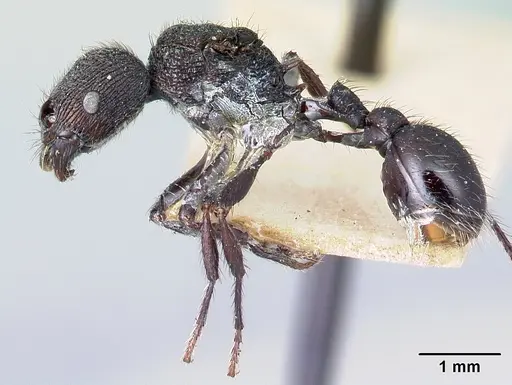
Pogonomyrmex aterrimus is a small seed-harvester ant that lives in the highlands of Hispaniola (Haiti and the Dominican Republic). Workers are coal-black all over, which is where the name 'aterrimus' comes from – Latin for 'blackest' . Queens are a dark reddish-brown. This species sticks to high elevations between 800 and 2,134 meters, where it nests under stones in grassy fields and at the edges of montane forests . For most of its history it was lumped with another species, and it was only recognized as a separate species in 2015 . Because it's found only on one island and in a limited area, very little is known about its biology compared to other Pogonomyrmex.
Quick Summary
- Difficulty: Medium
- Origin & Habitat: Endemic to the highlands of Hispaniola (Haiti and Dominican Republic). Found at 800–2,134 m in montane forest edges, tropical moist forest edges, and grassy fields [2][3][4].
- Colony Type: Likely monogyne (single queen). Only one dealate queen has ever been found in the wild, and nest densities suggest single-queen colonies [2].
- Size & Growth:
- Queen: Size data unavailable (total length not given in literature) [2]
- Worker: Size data unavailable (total length not given in literature) [2]
- Colony: Probably under 200–300 workers [2]
- Growth: Unknown – likely moderate, based on typical Pogonomyrmex patterns
- Development: Unknown – based on related Pogonomyrmex, estimate 6–10 weeks at suitable temperature (Development time for P. aterrimus itself has not been studied.)
- Antkeeping:
- Temperature: Because this species lives at high elevations (800–2,134 m), it prefers cooler conditions than most Pogonomyrmex. Keep the nest at room temperature, roughly 18–22 °C. Avoid using heating cables or mats – they can easily overheat. Provide a thermal gradient so the ants can choose their spot [2][3].
- Humidity: The montane forest edge habitat suggests moderate humidity. Keep the nest substrate moderately moist but not waterlogged. Allow some surface drying between waterings and offer a water tube [2][3].
- Diapause: Unknown – high elevation origin suggests they may tolerate or benefit from a cool winter period. If the colony becomes less active in winter, offer a cool period at 10–15 °C for 2–3 months. This is optional and based on inference.
- Nesting: In the wild they nest under stones in grassy fields [2][3]. A naturalistic setup with a digging area and flat stones on top works well. Alternatively, a Y‑tong (AAC) or plaster nest with small chambers (passages around 2–3 mm) fits their tiny size. Connect it to an outworld for foraging.
- Behavior: Pogonomyrmex brevibarbisrimus is a seed‑harvester that collects seeds and stores them in the nest. Workers also hunt small insects. They are active foragers but not particularly aggressive. Like all Pogonomyrmex, they have a stinger – but the workers are very small and may not be able to easily pierce human skin. Still, treat them with respect. Escape prevention is critical because of their small size [1].
- Common Issues: very small workers can escape through tiny gaps – use fine mesh and tight‑fitting lids, limited research data means many care recommendations are inferred – adjust based on colony behavior, high‑elevation origin makes them sensitive to overheating – avoid heating cables, small colony size (under 300 workers) means losses from disturbances have a bigger impact, as a seed‑
Report an Issue
The current care sheet is based fully on literature. See inconsistencies, or something that's incorrect? Please , it will be resolved after review from an admin. Contributing to the blogs tab also helps providing information, to make us be able to further improve the caresheets. Thank you for your support!
References

This caresheet is licensed under CC BY-SA 4.0 .
Community Blogs
Literature
Loading distribution map...Loading products...