
Pogonomyrmex anergismus
- Sci. Name
- Pogonomyrmex anergismus
- Tribe
- Pogonomyrmecini
- Subfamily
- Myrmicinae
- Author
- Cole, 1954
- Distribution
- Found in 1 countries
Introduction
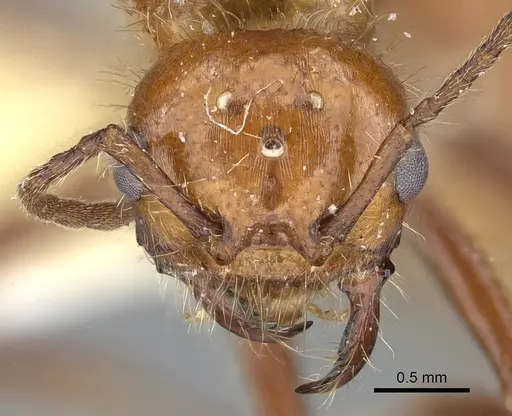
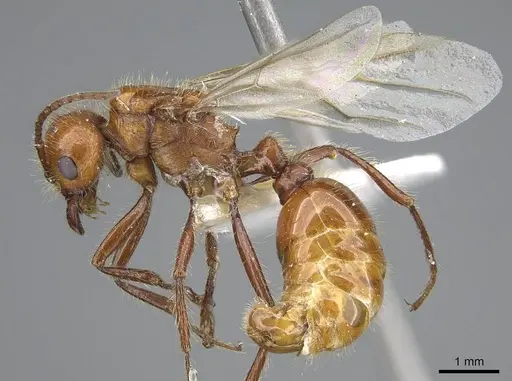
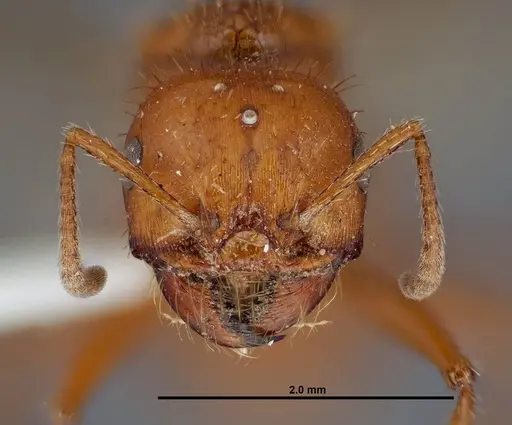
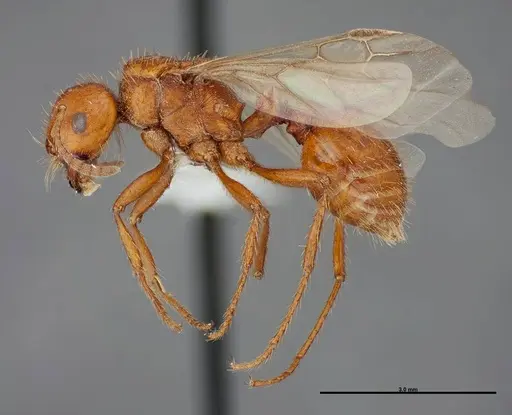
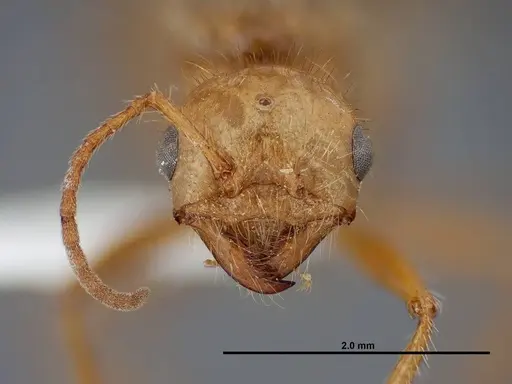
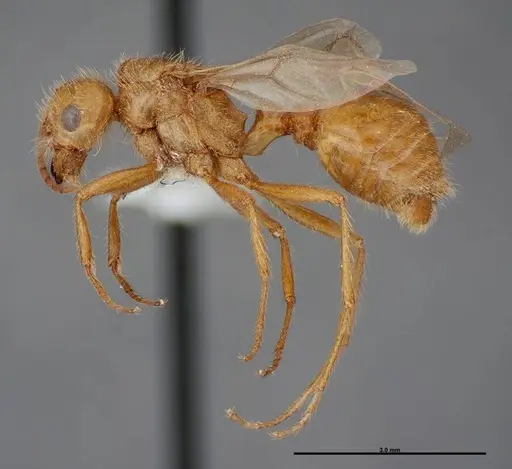
Pogonomyrmex anergismus is a workerless social parasite ant. It lives in nests of Pogonomyrmex barbatus and Pogonomyrmex rugosus in the Chihuahuan Desert grasslands of Arizona, New Mexico, Texas, and northern Mexico . Queens produce only sexual offspring and rely entirely on host workers for care . This species occurs at very low densities, infecting only about 1% of host colonies .
Quick Summary
- Difficulty: Expert
- Origin & Habitat: Chihuahuan Desert grasslands in Arizona, New Mexico, Texas, and northern Mexico, extending into cooler and wetter southeastern climates with Madrean evergreen woodlands [2][3].
- Colony Type: Workerless social parasite (inquiline). Colonies produce only sexuals (queens and males), never workers. The parasitic queen lives alongside the host queen and relies on host workers for all tasks. Multiple parasitic queens can coexist in a single host nest [1].
- Size & Growth:
- Queen: Size data unavailable, no total length measurements provided. Head length is 1.52-1.56 mm, but this is not body size [3].
- Worker: Workerless, this species produces no workers [1].
- Colony: Unknown maximum, but host colonies can support multiple parasitic queens. The species produces only sexuals, not workers [1].
- Growth: Unknown, growth is tied to host colony resources.
- Development: N/A, no workers produced. (All eggs develop into either new queens or males [1].)
- Antkeeping:
- Temperature: Keep host colony at temperatures typical for Pogonomyrmex species, roughly 24-30°C. The parasite tolerates host conditions [3].
- Humidity: Keep nest substrate relatively dry, similar to Chihuahuan Desert habitat. Provide a humidity gradient with mostly dry conditions [3].
- Diapause: Yes, host species undergo winter dormancy. Reduce temperatures to 15-18°C for 2-3 months during winter [3].
- Nesting: Cannot be kept independently. Requires an established host colony of P. barbatus or P. rugosus. In the wild, they inhabit underground galleries of host nests [1].
- Behavior: Queens are docile and defenseless, with no workers or sting. They are accepted into host colonies through grooming after initial aggression. Once accepted, they coexist peacefully with the host queen. Females mate with nestmates inside the host colony, males do not fly [1]. WARNING: This species is vulnerable (VU) on the IUCN Red List. It is illegal to catch queens or disturb colonies in protected areas [3].
- Common Issues: this species cannot be kept without a host colony, it is a permanent social parasite that cannot survive independently., finding a host colony (P. barbatus or P. rugosus) to pair with is extremely difficult and may be illegal in some areas., the species is rare in the wild (~1% of host colonies infected), making wild collection ethically questionable., multiple parasitic queens can live in one host nest, but balancing parasite-to-host ratios is challenging., host workers may reject or kill parasitic queens if acceptance is not complete., warning: this species is vulnerable (VU) on the IUCN Red List. it is illegal to catch queens or disturb colonies in protected areas. check local laws before acquiring.
The Workerless Lifestyle
Pogonomyrmex anergismus is a workerless social parasite. Unlike typical ants, it has completely lost the ability to produce workers. Queens and males are the only castes, and the species depends entirely on host colonies for survival [1]. The parasitic queen lives peacefully with the host queen, and host workers care for all brood indiscriminately [2].
How Parasitic Queens Enter Host Nests
Dispersing queens locate host colonies by following foraging trails, likely using recruitment pheromones [1]. Upon entry, they face initial aggression from host workers, but once they contact the host queen or brood, grooming behavior leads to full acceptance [1]. Multiple parasitic queens can coexist in a single host nest [2].
Reproduction and Mating
Females mate with nestmates inside the host nest, males do not fly [1]. Mating flights occur 2-3 days after summer or fall rains [1]. Sperm storage is limited, so females may need to remate during later flights [3].
Why This Species Cannot Be Kept by Hobbyists
This species requires a living host colony to survive. It cannot found a colony independently or be kept in a standard formicarium [1]. Additionally, it is vulnerable (VU) on the IUCN Red List, and collecting wild queens may be illegal [3].
Host Species Requirements
If attempting to keep this species, you need a healthy colony of Pogonomyrmex barbatus or Pogonomyrmex rugosus. These hosts require dry to moderate humidity, temperatures around 24-30°C, and a diet of seeds with protein supplementation [3]. Hosts occur in less-desiccating conditions at higher elevations [2].
Frequently Asked Questions
Can I keep Pogonomyrmex anergismus in a formicarium?
No. This species is a permanent social parasite that cannot survive without a host colony of Pogonomyrmex barbatus or P. rugosus. It produces no workers and cannot care for itself [1].
How do Pogonomyrmex anergismus queens found new colonies?
Queens cannot found colonies independently. They must enter an established host colony, locate it by following foraging trails, and be accepted through grooming by host workers [1].
Do Pogonomyrmex anergismus ants have workers?
No. This is a workerless species, colonies consist only of parasitic queens, host workers, and sexual offspring [1].
What do Pogonomyrmex anergismus eat?
They eat whatever host workers provide through trophallaxis. The parasitic queen does not forage [1].
Are Pogonomyrmex anergismus dangerous?
No. They have no workers or sting and are defenseless. However, host species have painful stings and should be handled with caution [3].
How rare is Pogonomyrmex anergismus?
Extremely rare. Only about 1% of host colonies are infected in the wild [1].
What is the difference between P. anergismus and P. colei?
Both are workerless parasites of Pogonomyrmex hosts, but P. anergismus has a broader range and can infect multiple host lineages, while P. colei is more specialized [1][2].
Do Pogonomyrmex anergismus queens kill host queens?
No. They coexist peacefully with the host queen after acceptance [1].
How many queens can live in one host nest?
Multiple parasitic queens can coexist in a single host nest [2].
Report an Issue
The current care sheet is based fully on literature. See inconsistencies, or something that's incorrect? Please , it will be resolved after review from an admin. Contributing to the blogs tab also helps providing information, to make us be able to further improve the caresheets. Thank you for your support!
References

This caresheet is licensed under CC BY-SA 4.0 .
Community Blogs
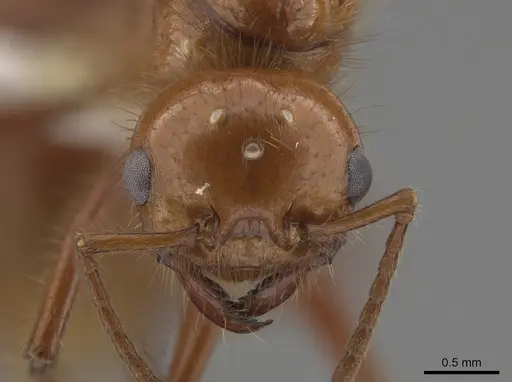
CASENT0006292
View on AntWeb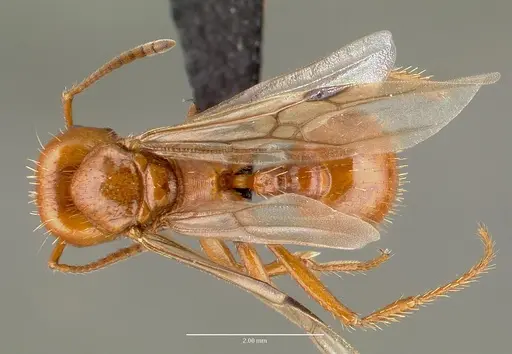
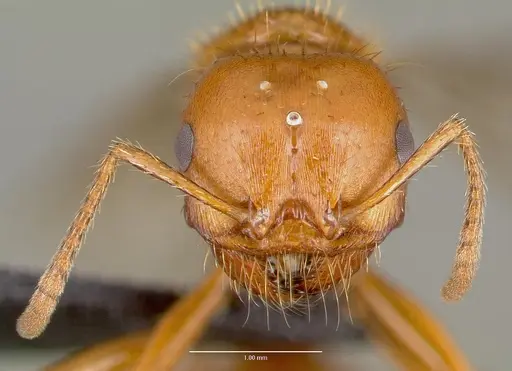
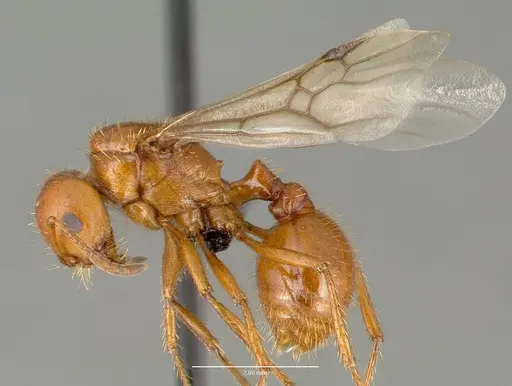
CASENT0637395
View on AntWeb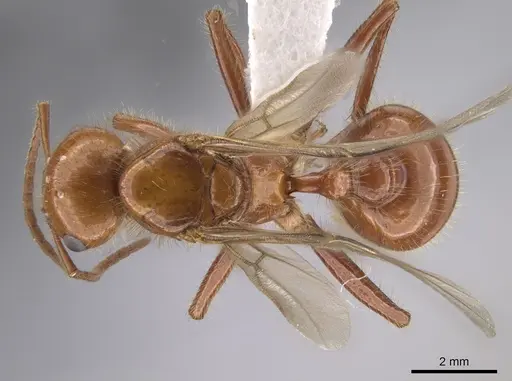
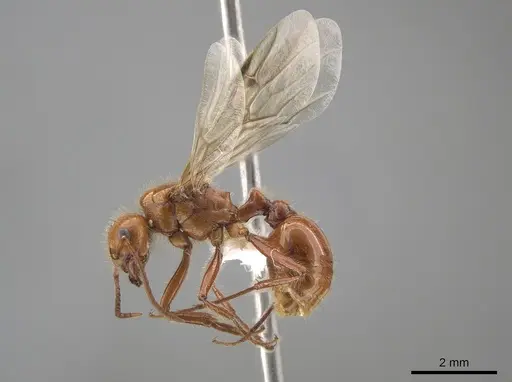
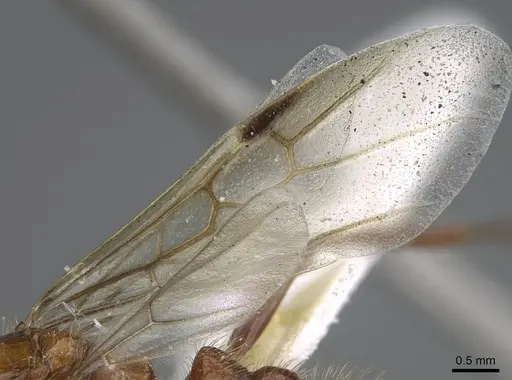
CASENT0914092
View on AntWeb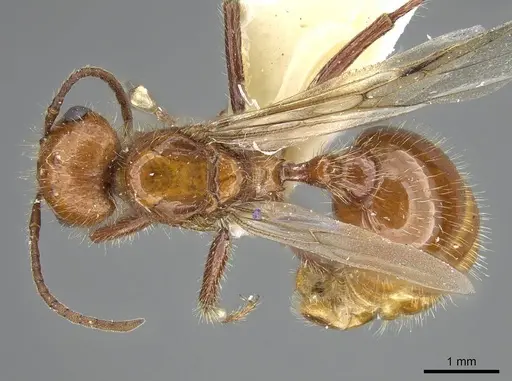
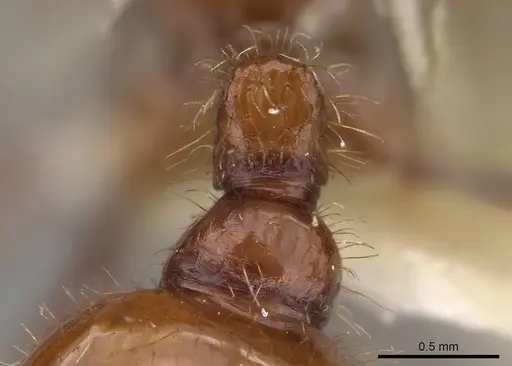
CASENT0914093
View on AntWeb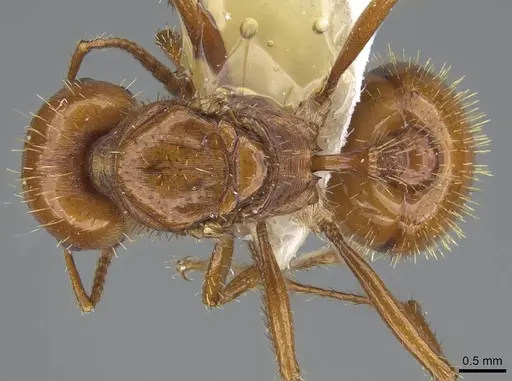
FMNHINS0000083123
View on AntWeb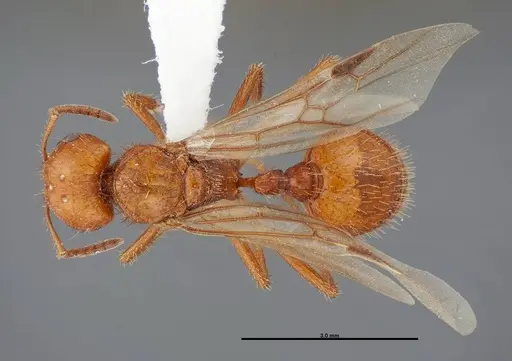
FMNHINS0000083124
View on AntWeb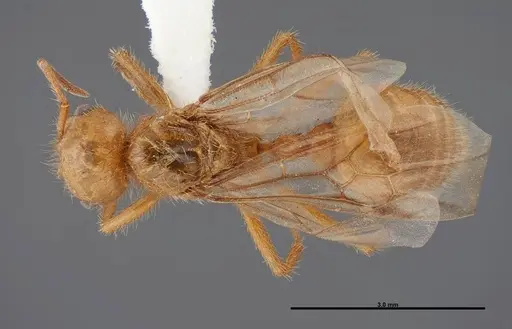
Literature
Loading distribution map...Loading products...