
Podomyrma nitida
- Sci. Name
- Podomyrma nitida
- Tribe
- Crematogastrini
- Subfamily
- Myrmicinae
- Author
- Clark, 1938
- Distribution
- Found in 1 countries
Introduction
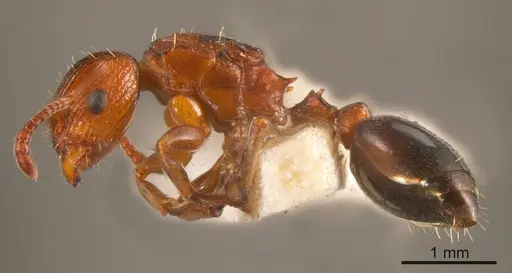
Podomyrma nitida is a small Myrmicinae ant found in Australia and New Guinea. Workers measure about 4-5 mm long . They have a dark body with rust-colored antennae, mandibles, legs, and petiole nodes. The head has fine lengthwise lines, and the abdomen is oval and pointed at the tip. This species was originally described as *Dacryon nitida* in 1938,then moved to *Podomyrma* later. Not much is known about its biology, so keepers should watch their colonies closely and adapt care as needed.
Quick Summary
- Difficulty: Unknown, limited data available
- Origin & Habitat: Australia and New Guinea [2][1]. Specific habitat is unclear, but related *Podomyrma* species often live in forests and nest in soil or under stones.
- Colony Type: Colony structure is unconfirmed. Most Myrmicinae are single-queen (monogyne), but this hasn't been verified for *P. nitida*.
- Size & Growth:
- Queen: Not documented. Based on genus patterns, queens are likely longer than workers, but exact size is unknown.
- Worker: ~4-5 mm [1]
- Colony: Unknown, no colony size data available
- Growth: Unknown, no data available
- Development: Unconfirmed. Related Australian Myrmicinae typically take 6-10 weeks at 22-26°C. (Development timeline is an estimate. Watch your own colony for guidance.)
- Antkeeping:
- Temperature: Aim for 22-26°C based on Australian climate. Adjust if the colony seems inactive or stressed.
- Humidity: Keep the nest substrate moist but not soggy. Offer a drier area so ants can choose. Mist when the surface starts to dry.
- Diapause: Unknown. Many Australian ants rest during winter (May-August). If your colony slows down, a cool period around 10-15°C may help, but don't force it.
- Nesting: No specific data. Based on genus habits, they likely like soil or spaces under stones. Use a natural setup with soil, Y-tong/plaster, or 3D-printed nest with moisture control.
- Behavior: Not well studied. Most *Podomyrma* are generalist foragers and not aggressive. Workers are small (4-5 mm) so escape prevention is crucial, use fine mesh and tight seals. Expect them to defend the nest if disturbed, but they shouldn't be overly aggressive.
- Common Issues: limited data means care is guesswork, monitor closely and adjust based on colony behavior, escape prevention is critical due to small worker size, use fine mesh (0.5 mm or smaller) on vents and connections, unknown diet, start with standard ant foods (small insects, sugar water) and watch what they accept, growth rate unknown, don't overfeed to avoid mold, hibernation needs unknown, watch natural activity cycles before trying a cool period
Species Overview and Identification
Podomyrma nitida is a small ant in the subfamily Myrmicinae, tribe Crematogastrini. Workers measure about 4-5 mm [1]. They are mostly dark but have rust-colored antennae, mandibles, legs, and petiole nodes. The head has fine lengthwise grooves, and the legs are flattened and widened in the middle. The abdomen is oval and tapers to a point. This species was first described as Podomyrma nitida in 1938,then moved to Podomyrma later. Very little is known about its biology, so keepers can help by documenting their own observations.
Natural Distribution and Habitat
Podomyrma nitida lives in Australia and New Guinea [2][1]. The type location is Dory in New Guinea [1]. In Australia, it's been recorded in Western Australia (AntWiki). There's no detailed info on its habitat, but other Podomyrma species live in forests and nest in soil or under stones. So it probably prefers shady, moist spots with easy access to the ground. For captive care, try to copy those conditions.
Housing and Nesting
Since P. nitida's exact nest preferences are unknown, use general Myrmicinae and Podomyrma patterns as a guide. A natural setup with soil substrate lets ants dig their own tunnels and keeps humidity stable. Y-tong, plaster, or 3D-printed nests with a water reservoir also work. Keep chamber size small, workers are only 4-5 mm. Make sure there's both a moist area for brood and a drier area for adults. Escape prevention is key: use fine mesh (0.5 mm or less) on all openings, and seal any gaps at connections. These ants can squeeze through tiny spaces.
Feeding and Diet
No one has studied what P. nitida eats in the wild. Being a Myrmicinae, it's probably a generalist omnivore. Offer small protein sources like fruit flies, pinhead crickets, or pieces of mealworm 2-3 times a week. Provide constant access to sugar water, honey, or ant nectar. Watch to see what they prefer. Remove uneaten protein after 24-48 hours to stop mold. Because workers are small, cut prey into pieces they can carry. Some Podomyrma tend aphids for honeydew, so they likely like sugary liquids.
Temperature and Seasonal Care
No one has measured exact temperature needs for P. nitida. Based on its Australian home, aim for 22-26°C. Room temperature in that range should work. If your colony seems inactive, a small heating cable on one side of the nest can create a warm spot, put it on top to avoid drying out the nest. For seasonal care, diapause needs are unknown. Many Australian ants rest during winter (May-August). If your colony slows down naturally, a cooler period around 10-15°C might help, but don't force it if the colony is still active.
Behavior and Colony Dynamics
There are very few behavioral observations for P. nitida. Based on the genus, they are probably not aggressive and will only defend the nest if directly threatened. Workers likely forage alone or in small groups, not in big columns. Their small size (4-5 mm) makes escape prevention essential, use fluon barriers and fine mesh. Colony growth is unknown, but expect it to be slow. A founding queen may take several months to raise her first workers, and the colony will grow gradually. Be patient. [1]
Defense Mechanism
As a member of the Myrmicinae subfamily, tribe Crematogastrini, Podomyrma nitida likely uses a 'smear' defense. This means it has a flat, spatula-shaped stinger that wipes venom onto enemies instead of stinging through the skin. No specific studies exist for this species, so this is based on general knowledge of its relatives. The venom is probably mild to humans, but avoid handling directly.
Frequently Asked Questions
How long does it take for Podomyrma nitida to produce first workers?
Not confirmed. Related Australian Myrmicinae take about 6-10 weeks from egg to worker at 22-26°C. Expect it to be similar.
What do Podomyrma nitida ants eat?
Exact diet is unknown, but they likely accept small insects and sugar water. Offer fruit flies, small mealworms, or cricket pieces 2-3 times a week, plus constant sugar water. Remove leftovers after a day or two to prevent mold.
What temperature should I keep Podomyrma nitida at?
Aim for 22-26°C, based on their Australian distribution. Room temperature in that range is fine. A heating cable can create a warm spot if needed.
Do Podomyrma nitida ants need hibernation?
Not sure. Many Australian ants rest during winter. If your colony slows down naturally, try a cool period around 10-15°C, but don't force it if they stay active.
Are Podomyrma nitida good for beginners?
Hard to say because so little is known. Keepers should have some experience because care info is scarce. The main challenges are escape prevention (small size) and the lack of specific care data.
How big do Podomyrma nitida colonies get?
No data. Other Podomyrma species may reach a few hundred workers, but this is just a guess.
Do Podomyrma nitida ants sting?
Stinging hasn't been studied. Myrmicinae ants usually have a stinger, but the smear defense means they wipe venom rather than sting. The effect on humans is unknown, so handle carefully.
Can I keep multiple Podomyrma nitida queens together?
We don't know if they are single-queen or multi-queen. Since it's unstudied, don't try combining queens unless you're experimenting carefully.
What size nest should I use for Podomyrma nitida?
Use a nest with small chambers because workers are only 4-5 mm. Natural soil setup, Y-tong, plaster, or 3D-printed nests work well. Start small to avoid overwhelming the colony.
Why are my Podomyrma nitida escaping?
They are tiny (4-5 mm) and can slip through very small gaps. Use fine mesh (0.5 mm or less) on vents, apply fluon barriers, and seal all connections tightly.
Report an Issue
The current care sheet is based fully on literature. See inconsistencies, or something that's incorrect? Please , it will be resolved after review from an admin. Contributing to the blogs tab also helps providing information, to make us be able to further improve the caresheets. Thank you for your support!
References

This caresheet is licensed under CC BY-SA 4.0 .
Community Blogs
ANTWEB1008161
View on AntWeb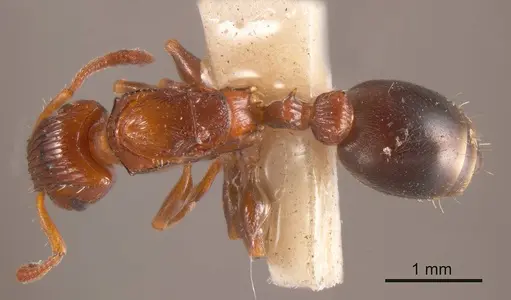
Literature
Loading distribution map...Loading products...