
Podomyrma femorata
- Sci. Name
- Podomyrma femorata
- Tribe
- Crematogastrini
- Subfamily
- Myrmicinae
- Author
- Smith, 1859
- Distribution
- Found in 1 countries
Introduction
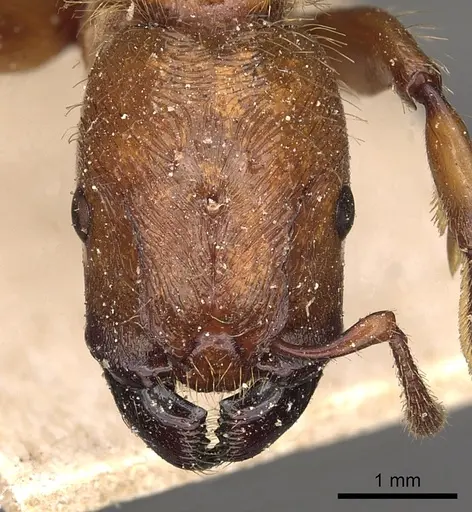
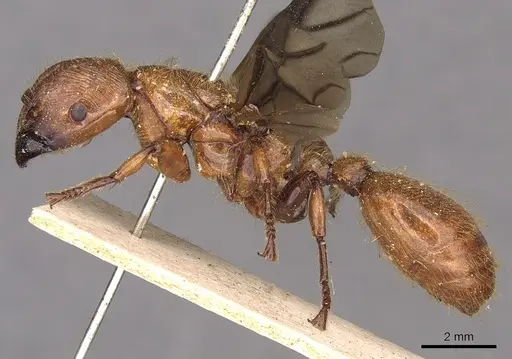
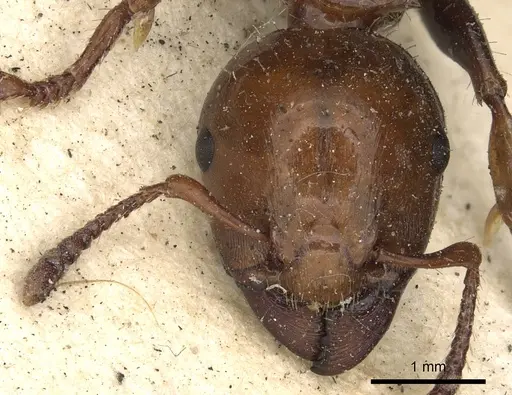
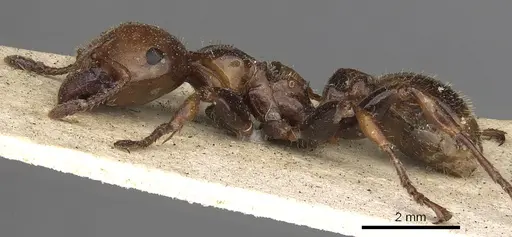
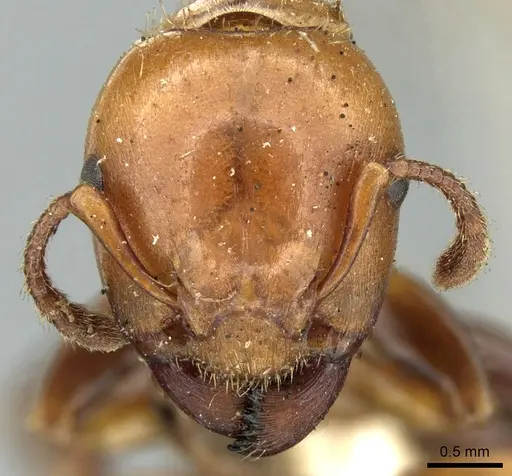
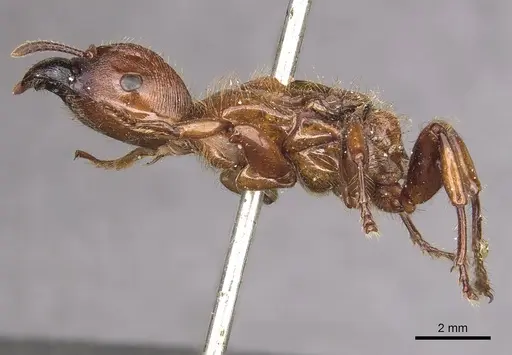
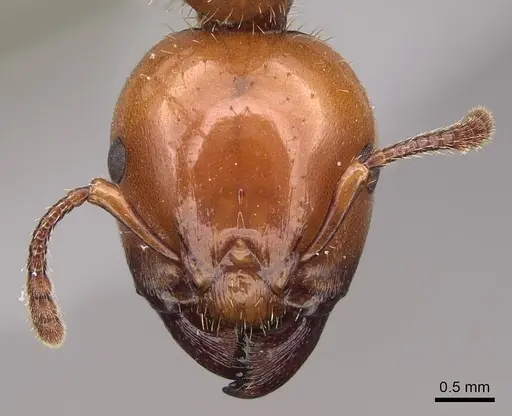
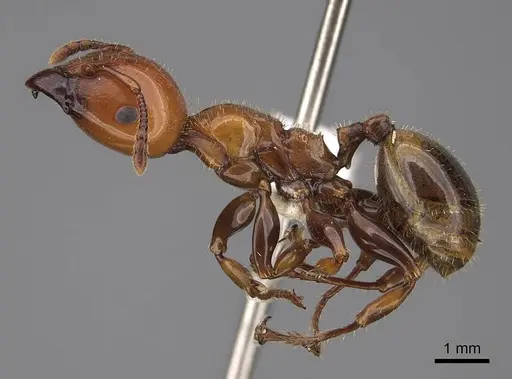
Podomyrma femorata is a small ant native to the Australasian region, ranging across Australia, New Guinea, and Indonesia . Workers are dark brown with lighter colored segments, and you may notice size variation within a single colony . The species was first described by Frederick Smith in 1859 from specimens collected on the Aru Islands . This ant belongs to the Crematogastrini tribe and uses a smear defense mechanism, where it wipes venom onto threats with a modified spatulate stinger rather than piercing skin . Very little is known about its natural history or captive care, making it a species where you will rely heavily on observation and standard tropical ant-keeping practices.
Quick Summary
- Difficulty: Medium
- Origin & Habitat: Tropical to subtropical forests across Australia, New Guinea, and Indonesia [1][2][3].
- Colony Type: Colony structure is unconfirmed. Most likely single-queen (monogyne, meaning one queen runs the colony), but this has not been documented.
- Size & Growth:
- Queen: size data unavailable
- Worker: size data unavailable
- Colony: Unknown
- Growth: Unknown
- Development: Unknown (No direct development data exists for this species.)
- Antkeeping:
- Temperature: Unknown, keep at a stable, warm temperature typical for tropical ants (roughly low-to-mid 20s°C). Adjust based on colony activity.
- Humidity: Keep the nest substrate consistently moist but not waterlogged. Provide a humidity gradient if possible.
- Diapause: Unknown, likely not required given their tropical range, but watch for seasonal slowdowns.
- Nesting: Y-tong (AAC), plaster, soil, or 3D-printed nests work well. Provide a connection to an outworld for foraging.
- Behavior: Likely docile but defensive of the nest. Small size means high escape risk, use fine mesh barriers and secure all connections. Activity is probably moderate, with workers foraging individually or in small groups.
- Common Issues: escape prevention is critical due to their small size, they can slip through tiny gaps, limited information makes care requirements uncertain, start with standard tropical ant conditions and adjust based on colony response, wild-caught colonies may carry parasites or diseases that can cause colony failure, slow development may indicate incorrect temperature or humidity, observe worker behavior to guide adjustments, overfeeding can lead to mold problems, remove uneaten food promptly
Getting Started
You will be working with limited data, so careful observation matters more than following rigid rules. Start with a queen caught during nuptial flights (timing is unknown) or a small established colony. For founding queens, use a standard test tube setup with a water reservoir. Founding behavior is unconfirmed, so you cannot assume whether she seals herself in or leaves to forage. Watch her closely in the first few weeks. If she stays inside and tends to brood, you have a claustral founder. If she leaves the tube regularly, you have a semi-claustral founder and must provide food and water immediately. Once workers emerge, connect the test tube to a small outworld. Given the limited species-specific information, closely observe your colony's behavior. Workers that cluster near heat sources indicate they want it warmer, while avoiding heated areas suggests the temperature is too high. [1][2][3]
Housing and Nest Setup
Y-tong (AAC), plaster, soil, or 3D-printed nests work well for this species. Both Y-tong and plaster retain moisture effectively and provide appropriate chamber sizes for small workers. Connect the nest to an outworld using a short tube. Use a water tube or hydration system that allows the nest substrate to draw moisture gradually. Because of their small size, pay extra attention to escape prevention. Check all connection points and consider using fine mesh on any ventilation holes. A small piece of sponge at the outworld entrance can help with humidity while still allowing some airflow. Provide a humidity gradient by keeping most of the nest dry and leaving one small moist area for drinking and brood care. [3]
Feeding and Nutrition
Like most Myrmicinae, Podomyrma femorata is likely a generalist that accepts both sugar sources and protein. Offer sugar water (1:1 ratio) or honey as an energy source, refreshed every few days. For protein, small insects like fruit flies, pinhead crickets, or mealworm pieces work well. Feed protein every 2-3 days, adjusting based on how quickly the colony consumes it. Remove any uneaten prey after 24-48 hours to prevent mold. Since this species isn't well-documented in captivity, be prepared to experiment. If they ignore a particular food, try alternatives. Always ensure clean water is available.
Temperature and Seasonal Care
Maintain temperatures between 24-28°C for optimal colony development. A small heating cable on one side of the nest can create a gentle gradient, allowing ants to regulate their own temperature by moving between warmer and cooler areas. Place the heat source on top of the nest rather than underneath to avoid drying out the substrate too quickly. During cooler months, a slight reduction of 3-5°C is acceptable if the colony naturally becomes less active, but avoid cold temperatures below 18°C for extended periods. Monitor water condensation in the nest. Excessive condensation can indicate too much heat or humidity, while complete drying out suggests more moisture is needed. True hibernation is unlikely given their tropical origin, but watch for seasonal slowdowns. [1][2]
Frequently Asked Questions
How long does it take for Podomyrma femorata to go from egg to worker?
The exact timeline is unknown for this species. No direct development data exists. Expect moderate development times typical for tropical Myrmicinae ants at stable warm temperatures. The first workers will likely be smaller than mature workers. Patience is key.
What do Podomyrma femorata ants eat?
They likely accept a standard ant diet including sugar water or honey for energy and small insects for protein. Feed small insects like fruit flies, pinhead crickets, or mealworm pieces as protein sources every 2-3 days. Sugar water should be available constantly. Remove uneaten food promptly to prevent mold.
What temperature do Podomyrma femorata ants need?
Keep them at a stable, warm temperature typical for tropical ants (roughly low-to-mid 20s°C). Create a gentle temperature gradient using a small heating cable on part of the nest so workers can regulate their own temperature by moving between warmer and cooler areas.
Are Podomyrma femorata ants good for beginners?
This species is not well-documented in the antkeeping hobby, making it a medium challenge. If you are experienced with tropical Myrmicinae species and comfortable adjusting care based on observation, it can be a rewarding species to keep. Beginners might prefer more established species with documented care requirements.
How big do Podomyrma femorata colonies get?
Colony size is unknown for this species. No direct data exists on maximum worker counts. Growth rate is unknown but likely moderate for a tropical species.
Do Podomyrma femorata ants sting?
Podomyrma species have stingers, but given their small size, any sting would be very mild and unlikely to penetrate human skin significantly. They use a smear defense mechanism, wiping venom onto threats rather than piercing. They are not considered dangerous to keepers.
What humidity level do Podomyrma femorata ants need?
Keep the nest substrate consistently moist but not waterlogged. Their natural habitat includes tropical forests, so a water tube connected to the nest helps maintain humidity through gradual moisture wicking. Provide a humidity gradient by keeping most of the nest dry and leaving one small moist area.
Do Podomyrma femorata ants need hibernation?
True hibernation is unlikely given their tropical origin. However, populations may experience reduced activity during cooler months. A slight temperature reduction (3-5°C) during winter may be appropriate if the colony shows decreased activity, but do not expose them to cold temperatures below 18°C.
Can I keep multiple Podomyrma femorata queens together?
Colony structure is unconfirmed for this species. Like many Myrmicinae, they likely form single-queen (monogyne) colonies, but this has not been studied. Combining unrelated queens is not recommended without documented evidence that they can coexist peacefully.
What type of nest is best for Podomyrma femorata?
Y-tong (AAC), plaster, soil, or 3D-printed nests work well. Both Y-tong and plaster retain moisture effectively and provide appropriate chamber sizes for their small workers. Ensure the nest is properly humidified and connected to an outworld for foraging. Given their small size, pay extra attention to escape prevention at all connection points.
Report an Issue
The current care sheet is based fully on literature. See inconsistencies, or something that's incorrect? Please , it will be resolved after review from an admin. Contributing to the blogs tab also helps providing information, to make us be able to further improve the caresheets. Thank you for your support!
References

This caresheet is licensed under CC BY-SA 4.0 .
Community Blogs
CASENT0901387
View on AntWeb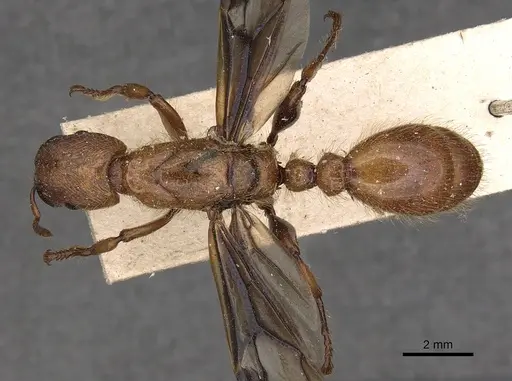
CASENT0901388
View on AntWeb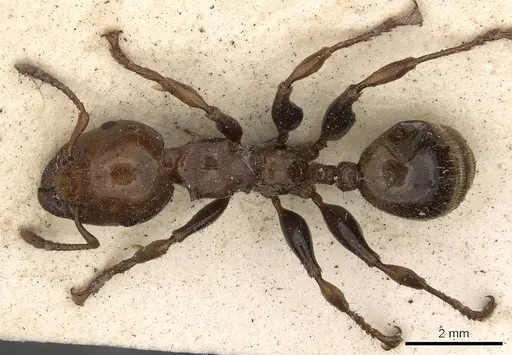
CASENT0906187
View on AntWeb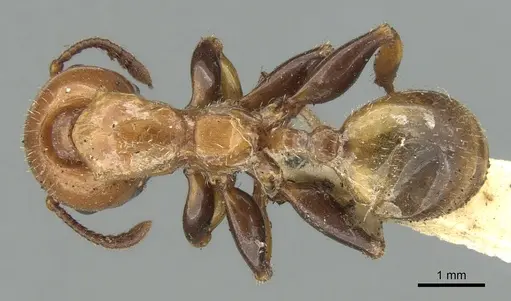
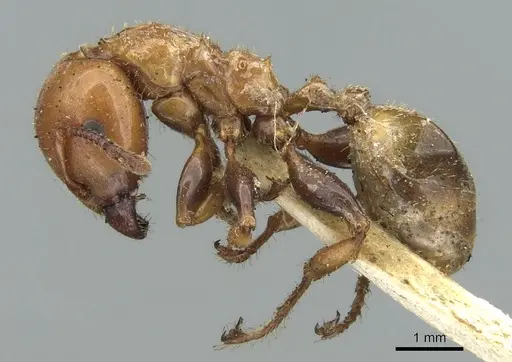
CASENT0908969
View on AntWeb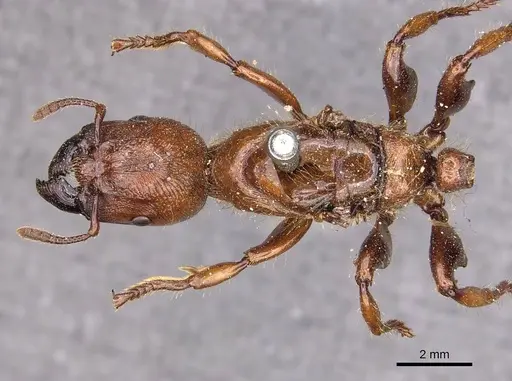
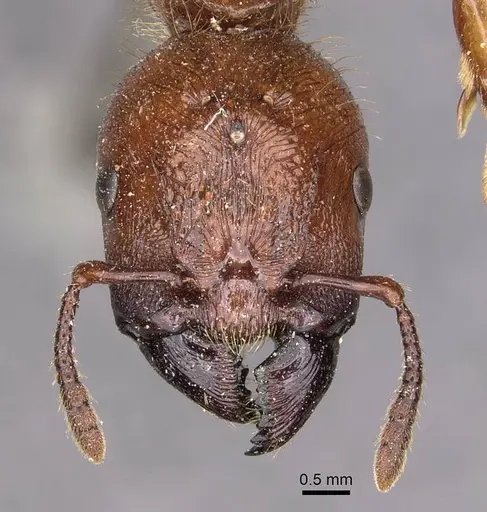
CASENT0922809
View on AntWeb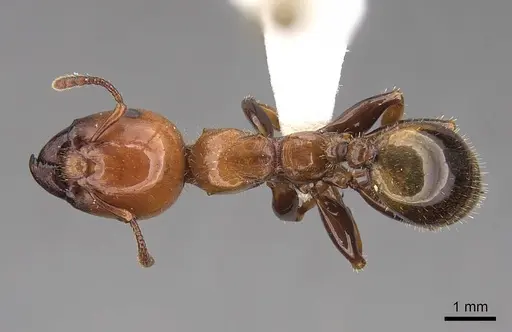
Literature
Loading distribution map...Loading products...