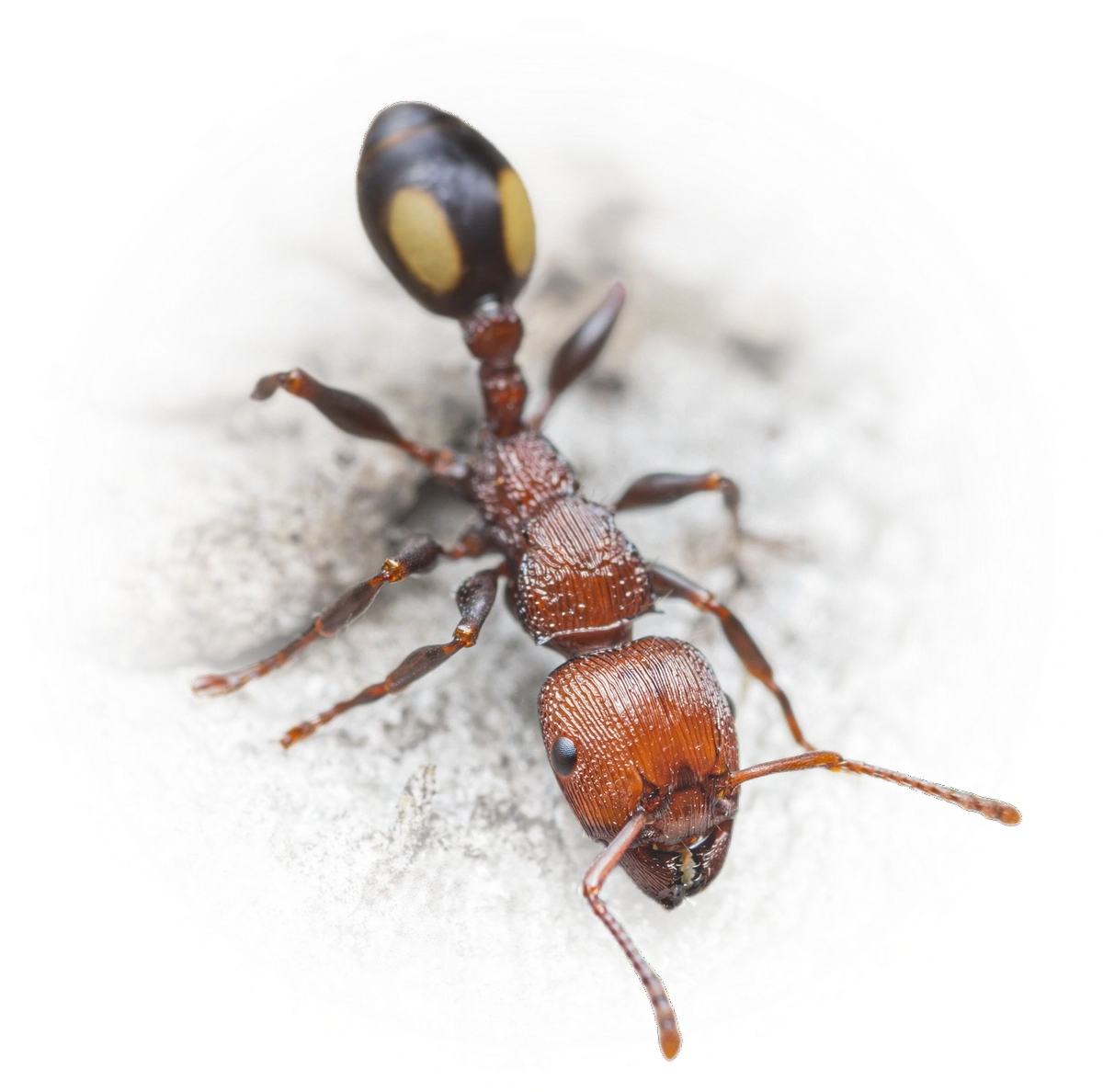
spotted muscleman tree ant
Podomyrma adelaidae
- Sci. Name
- Podomyrma adelaidae
- Tribe
- Crematogastrini
- Subfamily
- Myrmicinae
- Author
- Smith, 1858
- Common Name
- spotted muscleman tree ant
- Distribution
- Found in 1 countries
Introduction
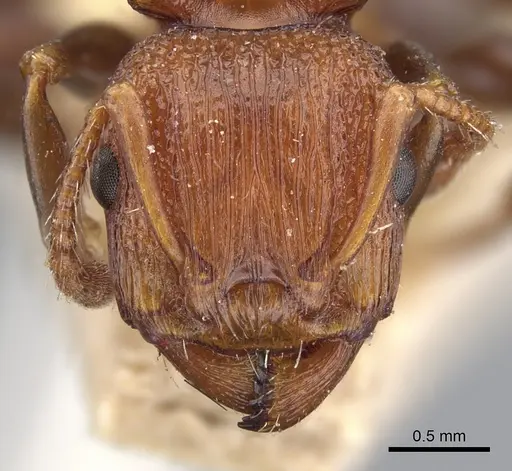
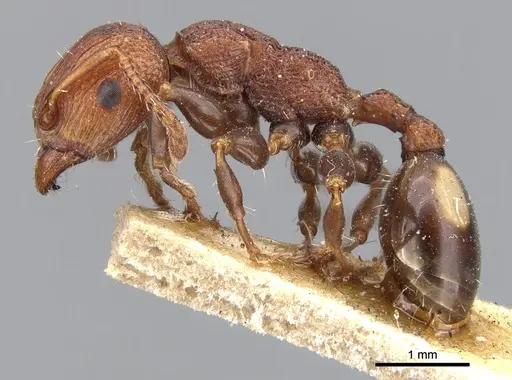
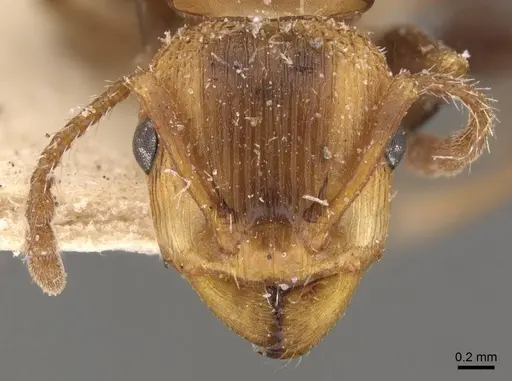
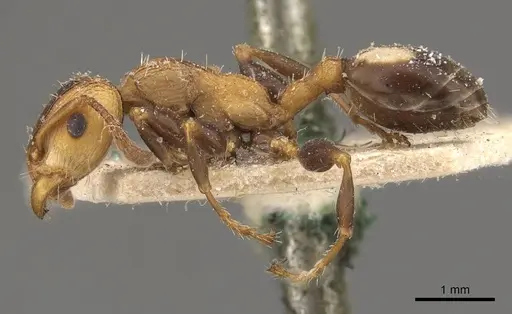
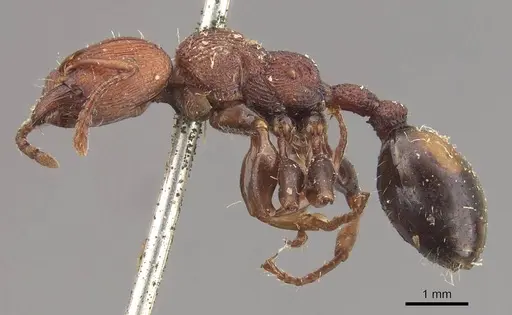
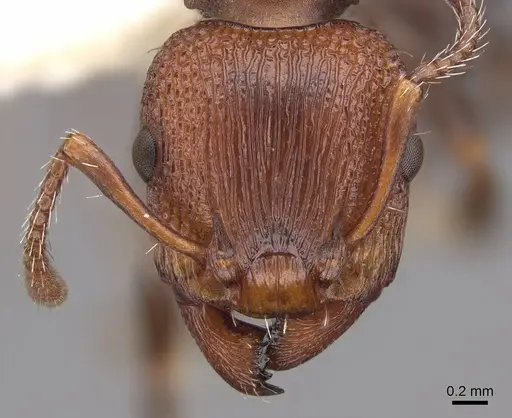
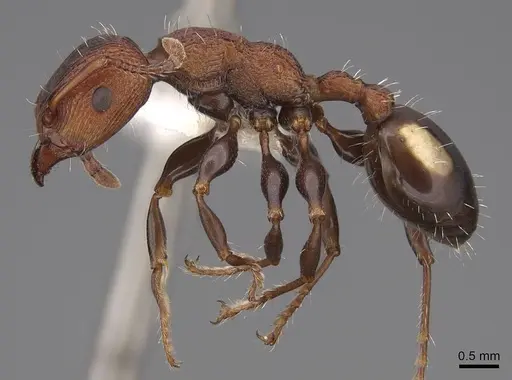
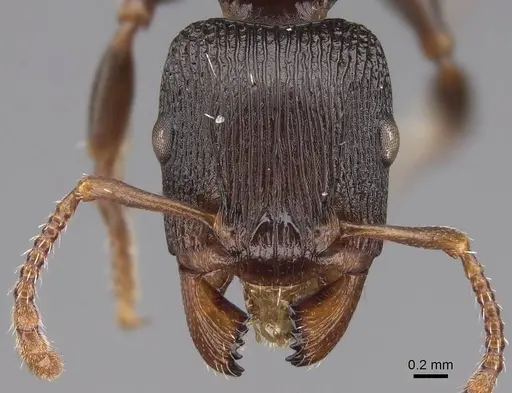
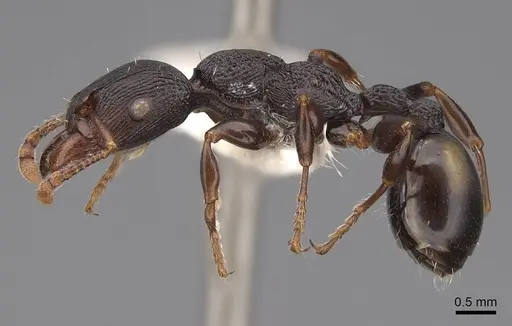
Podomyrma adelaidae is an arboreal ant from temperate Australia, identified by white spots on the abdomen . Workers forage on eucalypt trunks and have swollen femora . They are common in temperate Australia and the Kimberley region . This species is known for its arboreal foraging behavior and distinctive white abdominal spots .
Quick Summary
- Difficulty: Medium
- Origin & Habitat: Native to temperate Australia and the Kimberley region, arboreal foragers on eucalypt trees [1].
- Colony Type: Colony structure is unconfirmed. Based on Podomyrma patterns, likely single-queen (monogyne), but this has not been directly studied.
- Size & Growth:
- Queen: ~8-10mm, inferred from Podomyrma genus
- Worker: ~5-7mm, inferred from Podomyrma genus
- Colony: Up to 2000 workers
- Growth: Moderate
- Development: Estimated 6-10 weeks (Development time is estimated based on typical Myrmicinae. Temperature around 22-26°C likely optimal.)
- Antkeeping:
- Temperature: Keep at 22-26°C during active season. They can tolerate cooler temperatures but prefer warmth.
- Humidity: Provide a humidity gradient, mostly dry nest chamber with one small moist area, as they are arboreal.
- Diapause: Yes, requires winter dormancy for 2-3 months at 10-15°C.
- Nesting: Arboreal species prefer nests that mimic tree hollows. Use Y-tong (AAC) or plaster nests with vertical orientation [1].
- Behavior: Workers are active foragers on vertical surfaces. They are not highly aggressive but will defend the nest. Escape risk is moderate due to medium size and climbing ability.
- Common Issues: colonies may fail if kept too cold, maintain warmth except during hibernation, arboreal nature requires vertical space and climbing surfaces [1], slow founding phase may test patience, test tube setups may not provide enough vertical space, winter dormancy is required, skipping it can weaken colony
Nest Preferences and Housing
Podomyrma adelaidae is an arboreal species that naturally nests in tree hollows [1]. In captivity, they do well in Y-tong (AAC) nests or plaster nests with narrow chambers. The nest should have vertical orientation to accommodate their tree-climbing behavior. In the outworld, provide pieces of bark, twigs, or cork to simulate their natural foraging habitat [1].
Feeding and Diet
In the wild, these ants forage on eucalypt trunks and likely consume honeydew from scale insects and aphids, plus small insects they catch. In captivity, offer a varied diet: sugar water or honey as an energy source, and protein-rich foods like small crickets, mealworms, or fruit flies. Feed protein 2-3 times per week, and keep sugar water available at all times.
Temperature and Seasonal Care
Maintain temperatures between 22-26°C for optimal colony activity. As a temperate species, they require a diapause period of 2-3 months at 10-15°C during winter. This is essential for colony health.
Behavior and Colony Dynamics
Workers are active foragers that hunt on vertical surfaces. They likely use chemical pheromone trails to recruit nestmates. This is a medium-sized ant with a robust build. They are not particularly aggressive but will defend the nest if threatened.
Frequently Asked Questions
Can I keep Podomyrma adelaidae in a test tube?
Test tubes are not ideal for this arboreal species [1]. They prefer vertical space and climbing surfaces. A Y-tong (AAC) nest or plaster formicarium with vertical orientation works much better.
How long does it take for the first workers to hatch?
Estimated 6-10 weeks from egg to first worker at optimal temperature (22-26°C). This is based on typical Myrmicinae development, the exact timeline has not been directly studied for this species.
Do Podomyrma adelaidae ants sting?
Yes, being a Myrmicinae ant, they have a stinger. However, their sting is mild due to their medium size, most people experience only minor irritation similar to a mosquito bite.
What do Podomyrma adelaidae eat?
They are omnivorous with a preference for protein. Feed small insects like fruit flies, pinhead crickets, or mealworms 2-3 times per week. Keep sugar water or honey available constantly.
Do they need hibernation?
Yes, as a temperate Australian species, they require a winter dormancy period. Reduce temperature to 10-15°C for 2-3 months during winter. This is essential for colony health, skipping hibernation can weaken or kill the colony over time.
Are Podomyrma adelaidae good for beginners?
They are moderate difficulty, not the easiest but not challenging either. The main requirements are providing vertical climbing space, maintaining proper temperature, and respecting their hibernation needs.
How big do Podomyrma adelaidae colonies get?
Up to 2000 workers at maturity. This is an estimate based on similar arboreal Myrmicinae, the exact maximum colony size has not been documented.
When should I move them to a formicarium?
Move from a founding test tube to a formicarium once the colony has 20-30 workers and the test tube is becoming cramped. For this arboreal species, choose a nest with vertical orientation and climbing surfaces.
Can I keep multiple queens together?
This has not been studied for this species. Based on typical Podomyrma patterns, single-queen colonies are most likely. Combining unrelated foundress queens is not recommended as they likely will fight.
Why are my ants dying?
Common causes include: temperatures too cold (keep at 22-26°C), skipping hibernation (they need winter rest), too much moisture (arboreal species prefer drier conditions), or insufficient protein in their diet.
What temperature range is ideal for Podomyrma adelaidae?
Keep the nest at 22-26°C during the active season. They can tolerate a range from about 18°C to 30°C, but growth and activity are optimal in the mid-20s. During hibernation, reduce to 10-15°C.
Are they escape artists?
They are moderate escape risks, not as prone to escaping as tiny ants, but they can climb smooth surfaces well. Use standard barrier methods like fluon on test tube rims.
Report an Issue
The current care sheet is based fully on literature. See inconsistencies, or something that's incorrect? Please , it will be resolved after review from an admin. Contributing to the blogs tab also helps providing information, to make us be able to further improve the caresheets. Thank you for your support!
References

This caresheet is licensed under CC BY-SA 4.0 .
Community Blogs
CASENT0217908
View on AntWeb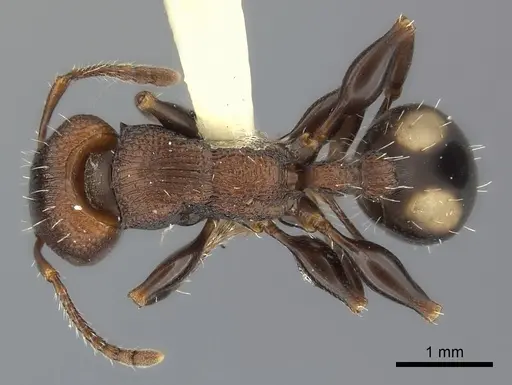
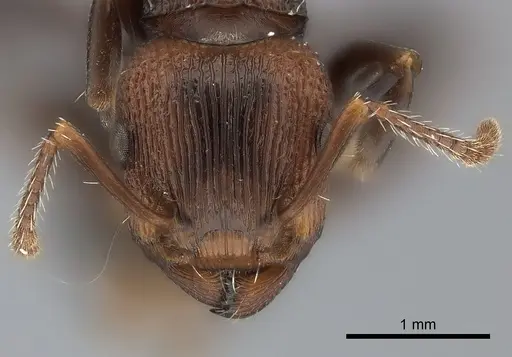
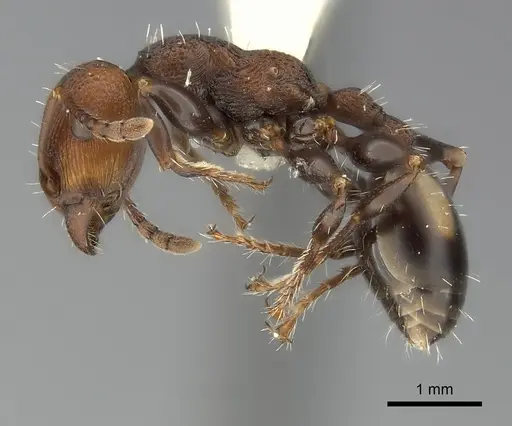
CASENT0901997
View on AntWeb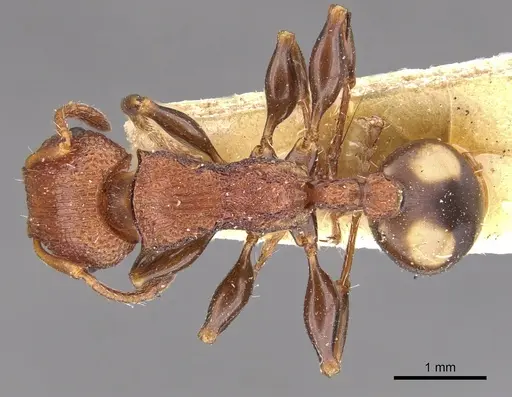
CASENT0908964
View on AntWeb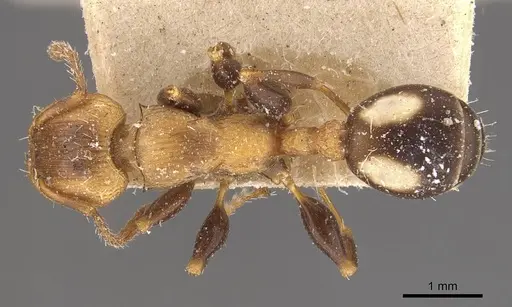
CASENT0908965
View on AntWeb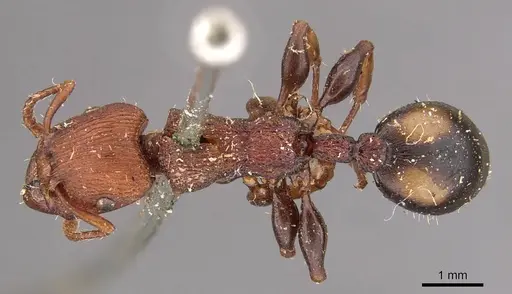
CASENT0922804
View on AntWeb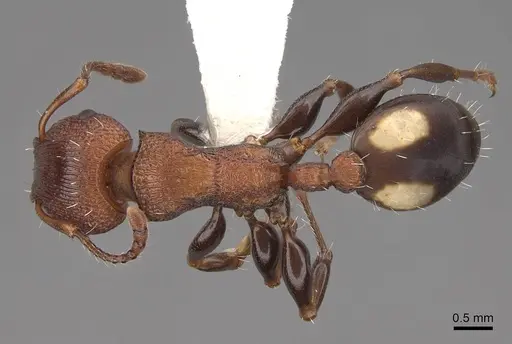
CASENT0922805
View on AntWeb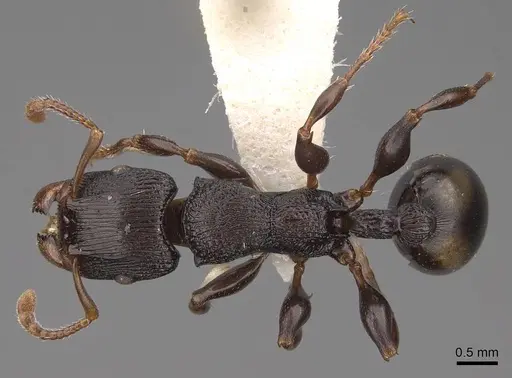
Literature
Loading distribution map...Loading products...