
Plectroctena minor
- Sci. Name
- Plectroctena minor
- Tribe
- Ponerini
- Subfamily
- Ponerinae
- Author
- Emery, 1892
- Distribution
- Found in 7 countries
Introduction
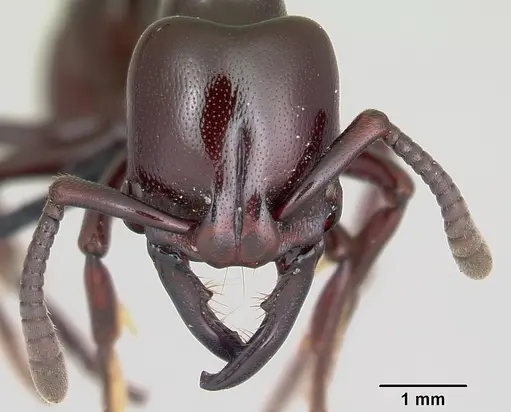
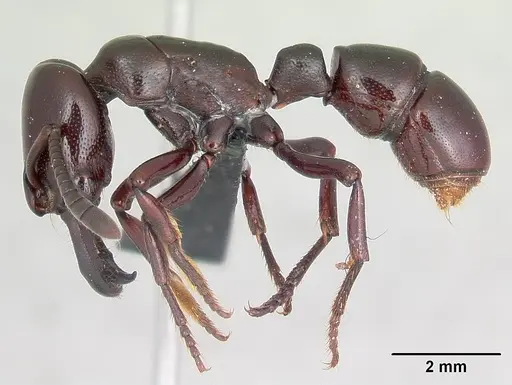
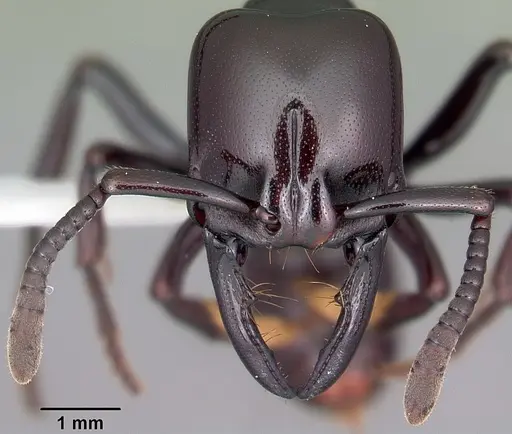
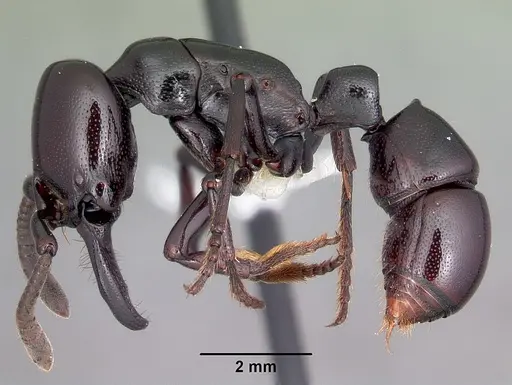
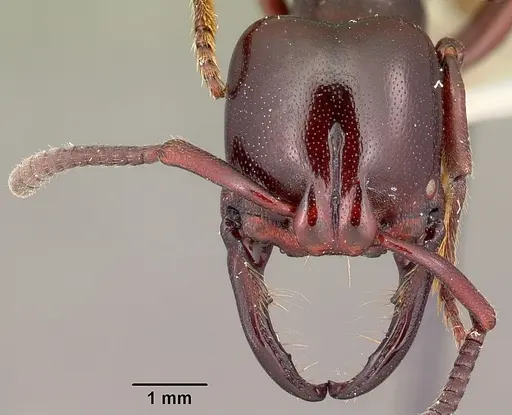
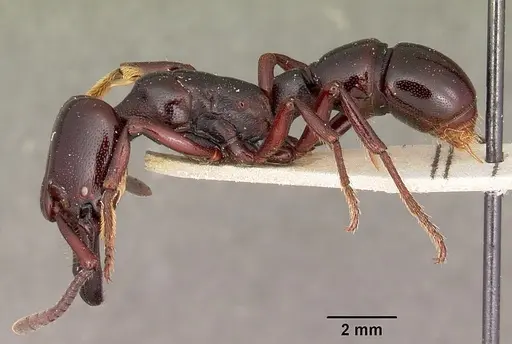
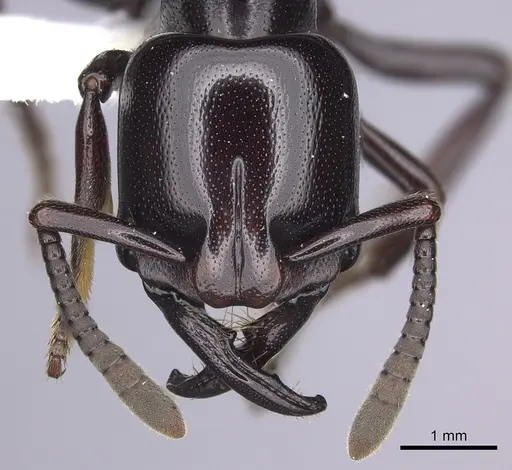
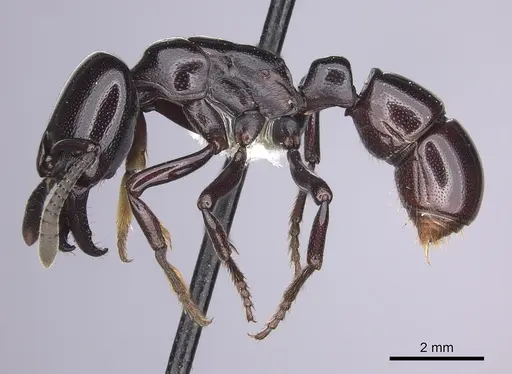
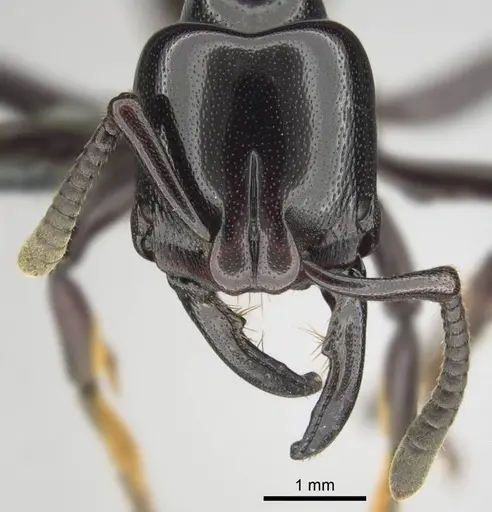
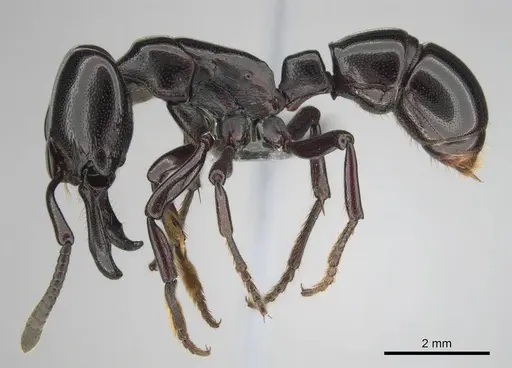
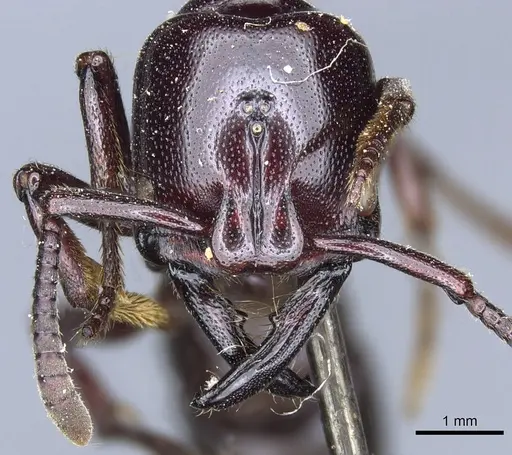
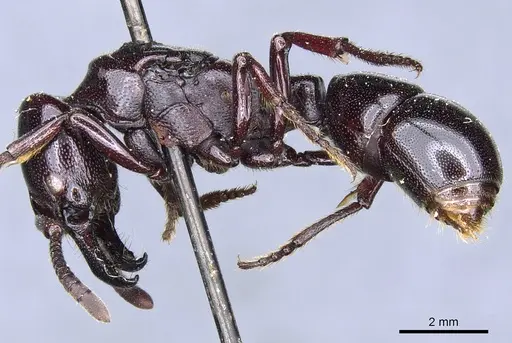
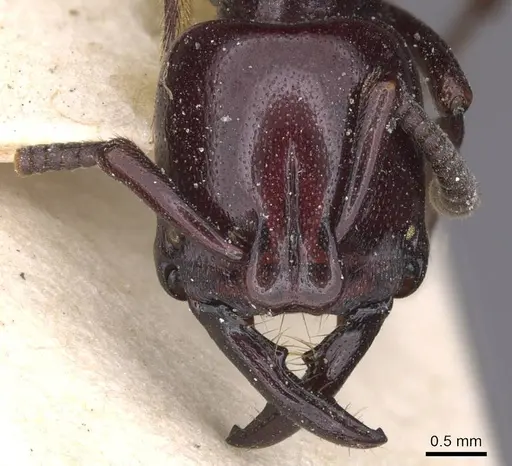
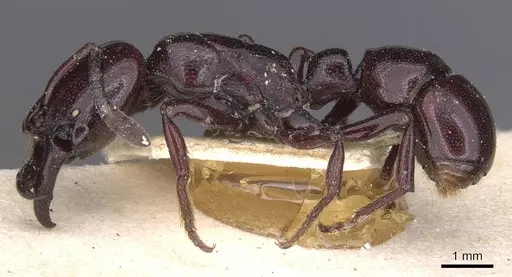
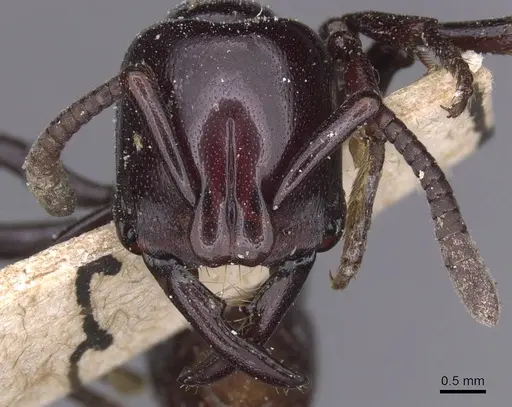
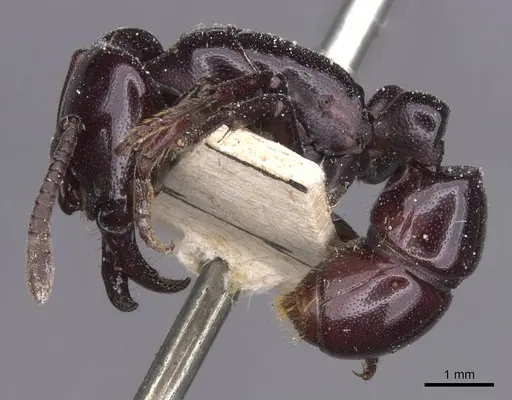
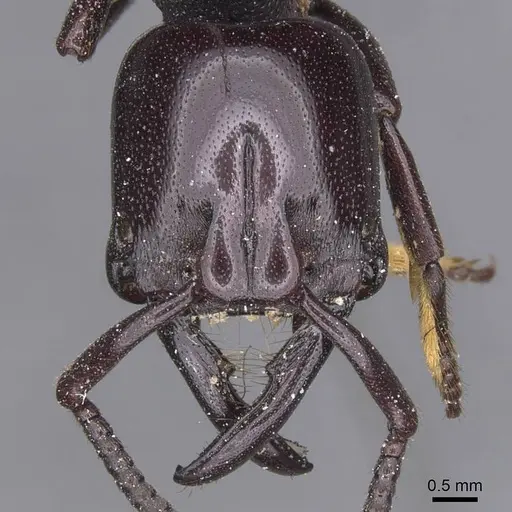
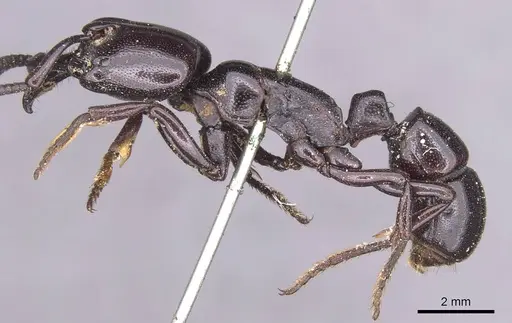
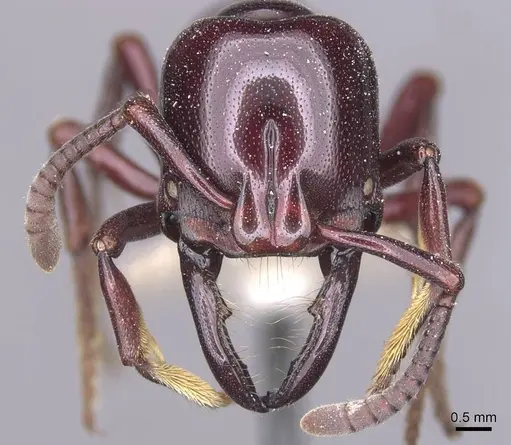
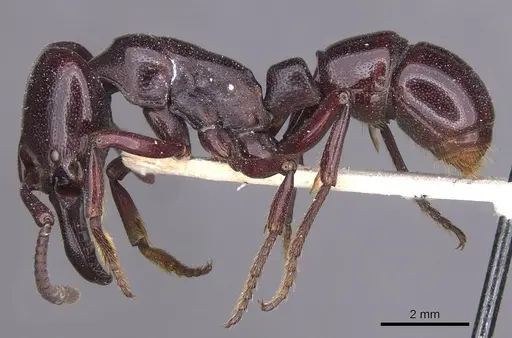
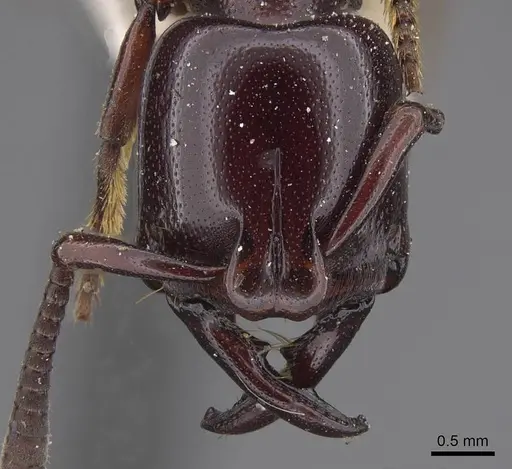
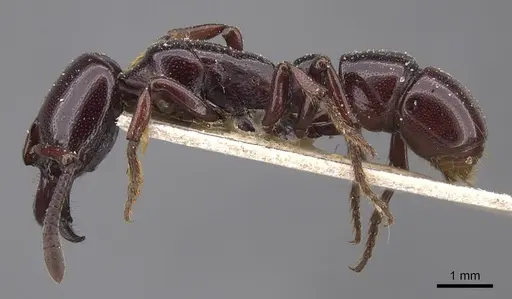
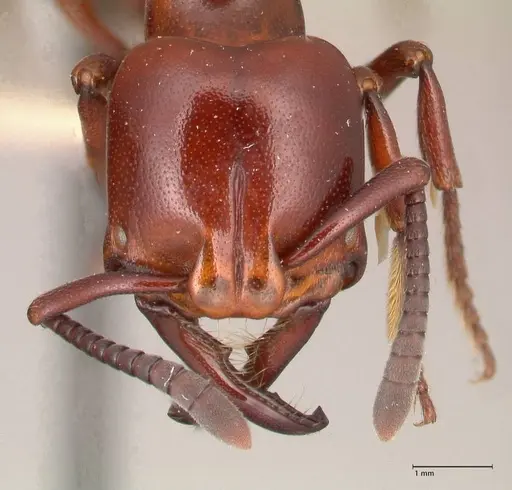
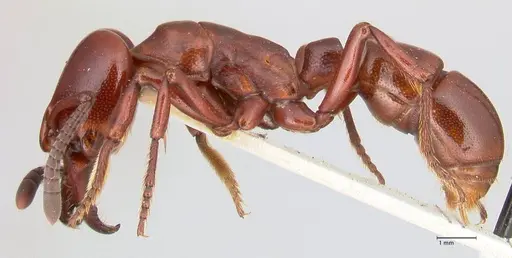
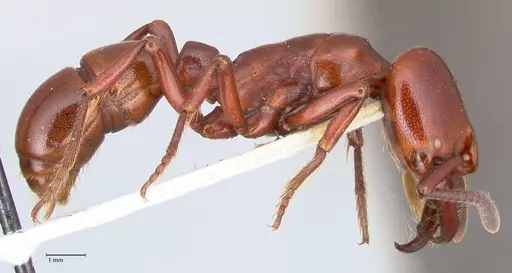
Plectroctena minor is a medium-sized ponerine ant native to West and Central Africa. Workers are robust, with size inferred from the Plectroctena genus at approximately 6-12 mm, and they inhabit lowland rainforests and savanna regions across countries including Ghana, Ivory Coast, Nigeria, Cameroon, Gabon, and the Democratic Republic of Congo . This species is a semi-specialist predator that almost exclusively hunts millipedes, using specialized mandibles to grip prey and venom to paralyze it quickly .
Quick Summary
- Difficulty: Expert
- Origin & Habitat: West and Central Africa, found in Ghana, Ivory Coast, Nigeria, Cameroon, Equatorial Guinea, Gabon, Liberia, Sierra Leone, Togo, Central African Republic, and Democratic Republic of Congo. Inhabits lowland rainforests and forest margins at elevations from 110m to 1400m [2][3][1].
- Colony Type: Colony structure is not well documented in scientific literature. Unconfirmed.
- Size & Growth:
- Queen: Size data unavailable, no total length measurements in research. Inferred from Plectroctena genus at approximately 8-10 mm [1].
- Worker: Size data unavailable, no total length measurements in research. Inferred from Plectroctena genus at approximately 6-12 mm [1].
- Colony: Unknown, no specific colony size data available in research.
- Growth: Unknown, no development timeline data available.
- Development: Unknown, no direct measurements available. (Development timeline has not been studied. Based on typical tropical ponerine patterns, expect slow growth, but this is an estimate.)
- Antkeeping:
- Temperature: Keep warm around 24-28°C, inferred from tropical habitat. Provide a heating gradient [1].
- Humidity: Keep the nest substrate consistently moist but not waterlogged, based on rainforest habitat [1].
- Diapause: No, this is a tropical species that does not hibernate. Maintain warm temperatures year-round.
- Nesting: In the wild, they nest in soil and rotting wood. In captivity, use moist substrate nests like Y-tong or plaster, with a foraging area [1].
- Behavior: Workers are solitary foragers but recruit nestmates for large prey. They are specialized millipede hunters, using mandibles to grip between segments and sting the ventral intersegmental space. Venom paralyzes prey quickly. Defense includes snapping behavior. Moderately aggressive, escape risk is moderate due to size [4][5][6].
- Common Issues: specialized diet requires live millipedes, which are difficult to obtain regularly., slow colony growth due to specialized diet and potentially low reproduction rates., tropical species needs warm, humid conditions year-round and cannot tolerate cool temperatures., wild-caught colonies may have parasites or fail to adapt to captivity., difficulty obtaining regular millipede prey in captivity.
The Millipede Specialist
Plectroctena minor is a specialized ant predator that almost exclusively hunts millipedes. In laboratory tests, workers always selected millipedes as prey and would never abandon them, even when millipedes were larger than alternative prey. This specialized diet is essential, colonies cannot produce adult offspring without millipedes [4][5]. The ants have evolved adaptations for hunting millipedes. Their mandibles grip onto segmented bodies, slipping between segments to deliver a sting into the soft ventral intersegmental space. Venom acts quickly on the millipede's neural chain, paralyzing distal parts. This allows a single worker to retrieve prey weighing 94-117 times its own weight, the highest body weight ratio for solitary hunting ants [6].
Feeding Your Colony
Feeding Plectroctena minor is challenging due to their specialized diet. Live millipedes are essential, without them, colonies will not produce adult offspring. Millipedes up to 4 mm in diameter can be seized by single workers. Larger millipedes may require group recruitment [4][5]. Alternative prey acceptance varies, workers may accept other arthropods but prefer smaller items. Termite soldiers can be stunned using snapping behavior. Sugar sources are unlikely to be accepted.
Hunting Behavior
Workers forage solitarily for millipedes in leaf litter. For small millipedes, they grip between segments, sting, and retrieve alone. For larger millipedes, they may seize an appendage or wrap around prey in a collar-like fashion. Once paralyzed, they recruit nestmates for retrieval. During head-on encounters, they grip antennae or mandibles and sting the body end for rapid paralysis [4][5][6].
Temperature and Humidity
As a tropical species from West and Central Africa, Plectroctena minor needs warm and humid conditions. Keep the nest at 24-28°C with a heating gradient. Humidity should be high, keep the nest substrate moist but not waterlogged, mimicking rainforest floor conditions. Provide a water tube for drinking [1].
Natural History
Plectroctena minor is found across West and Central Africa in lowland rainforests and forest margins, from 110m to 1400m elevation [2][3][1]. The species was described in 1892 and has several synonymized subspecies [1]. Like other ponerines, they have a potent sting and play a role in controlling millipede populations. They have been found in the stomach of the toad Bufo polycercus in Congo [7] and show resistance to raids by the invasive Pheidole megacephala [8].
Frequently Asked Questions
What do Plectroctena minor ants eat?
Plectroctena minor is a specialized millipede predator. Live millipedes are essential prey, colonies cannot produce adult offspring without them. Workers always select millipedes over other prey. Small millipedes can be captured by single workers, larger ones may require group recruitment [4][5].
How difficult are Plectroctena minor to keep?
Plectroctena minor is an expert-level species due to its specialized diet requiring live millipedes, which are difficult to obtain, and its need for warm, humid tropical conditions year-round [4][5].
What temperature do Plectroctena minor need?
Keep them at 24-28°C, inferred from their tropical African habitat. Provide a heating gradient to maintain warmth [1].
Can I keep multiple queens together?
Colony structure is unconfirmed in scientific literature. The safe approach is to keep only one queen per colony, as combining unrelated foundresses has not been studied.
How fast do Plectroctena minor colonies grow?
Growth rate is unknown, no development timeline data exists. Based on typical tropical ponerine patterns, expect slow growth, but this is an estimate.
Do Plectroctena minor need hibernation?
No, this is a tropical species that does not hibernate. Maintain warm temperatures year-round [1].
What size do Plectroctena minor workers reach?
Size data is unavailable from research. Inferred from Plectroctena genus at approximately 6-12 mm for workers and 8-10 mm for queens [1].
Where is Plectroctena minor found?
Native to West and Central Africa, including Ghana, Ivory Coast, Nigeria, Cameroon, Equatorial Guinea, Gabon, Liberia, Sierra Leone, Togo, Central African Republic, and Democratic Republic of Congo [1].
Why are my Plectroctena minor dying?
Common issues include lack of millipede prey, temperatures too cool, humidity too low, or stress from wild-caught colonies. Ensure regular millipede prey and proper nest conditions [4][5].
Report an Issue
The current care sheet is based fully on literature. See inconsistencies, or something that's incorrect? Please , it will be resolved after review from an admin. Contributing to the blogs tab also helps providing information, to make us be able to further improve the caresheets. Thank you for your support!
References

This caresheet is licensed under CC BY-SA 4.0 .
Community Blogs
CASENT0003067
View on AntWeb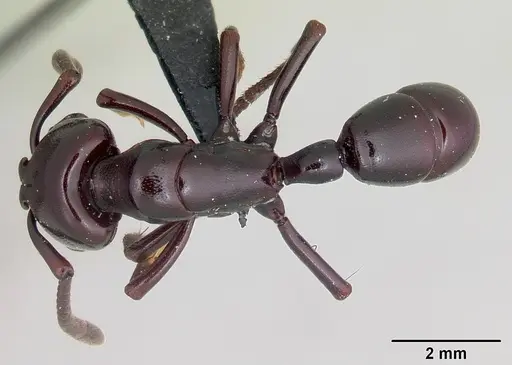
CASENT0102988
View on AntWeb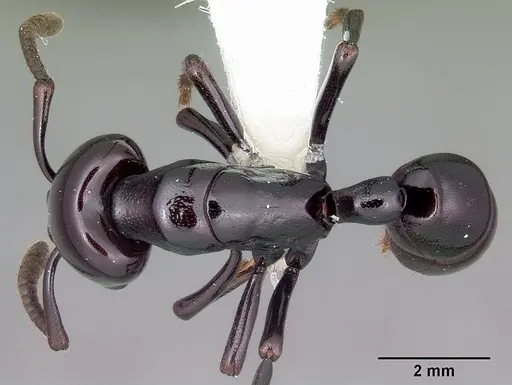
CASENT0104650
View on AntWeb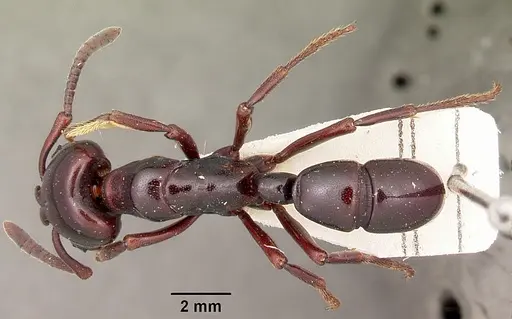
CASENT0249214
View on AntWeb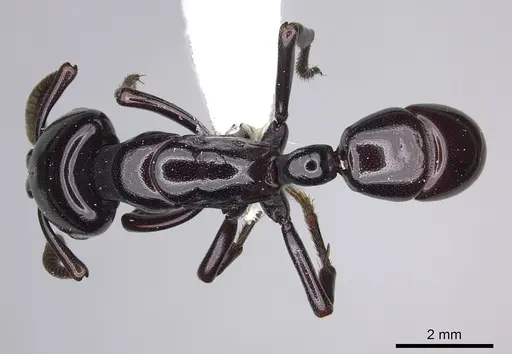
CASENT0815650
View on AntWeb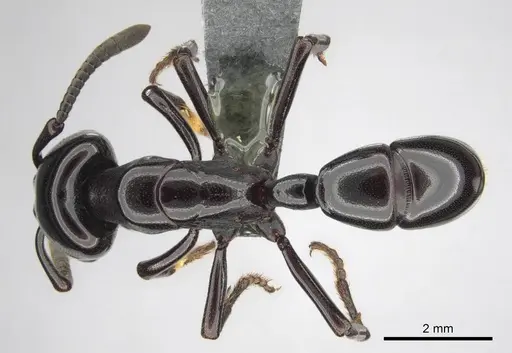
CASENT0815652
View on AntWeb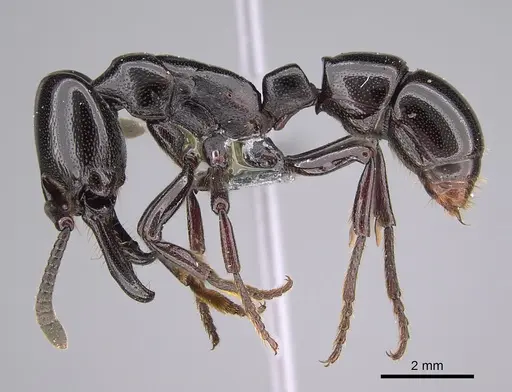
CASENT0903929
View on AntWeb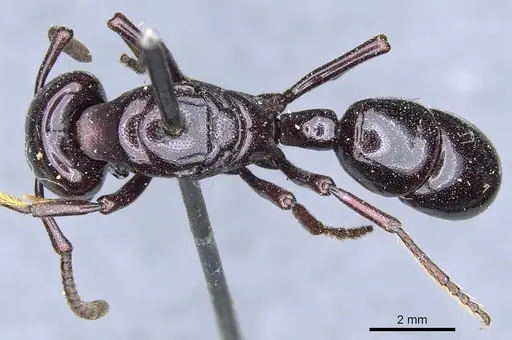
CASENT0915287
View on AntWeb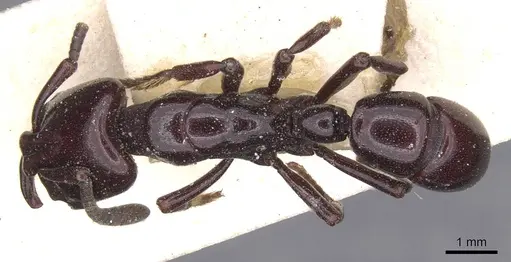
CASENT0915288
View on AntWeb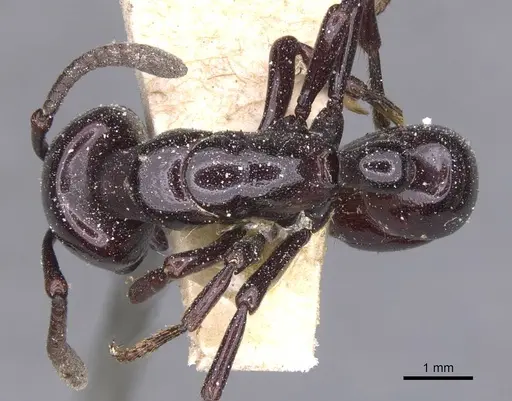
CASENT0915291
View on AntWeb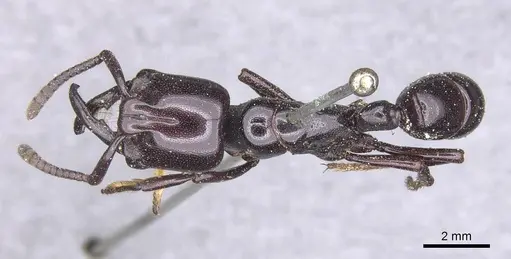
CASENT0915292
View on AntWeb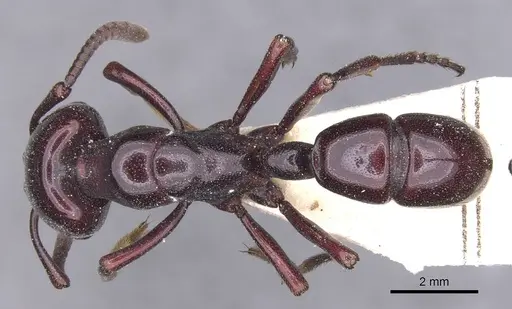
CASENT0915472
View on AntWeb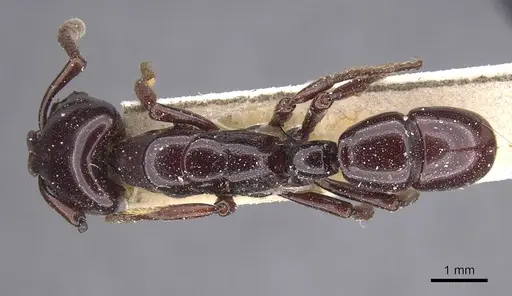
FOCOL1016
View on AntWeb
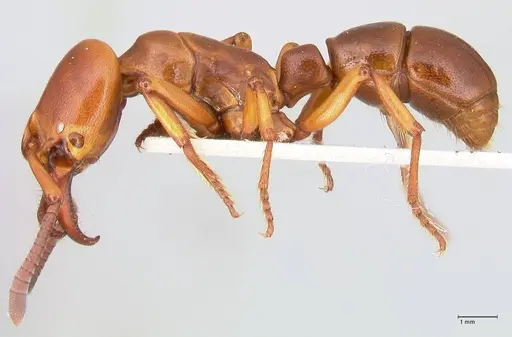
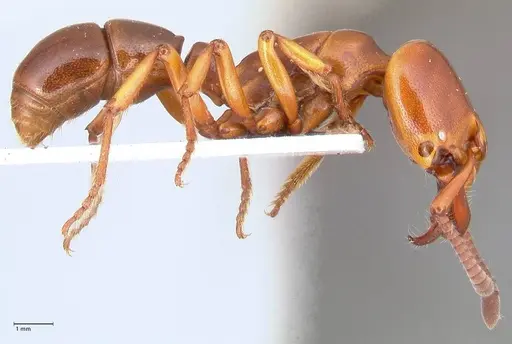
FOCOL1017
View on AntWeb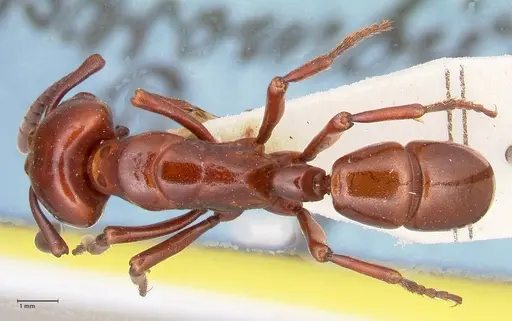
Literature
Loading distribution map...Loading products...