
Platythyrea cooperi
- Sci. Name
- Platythyrea cooperi
- Tribe
- Platythyreini
- Subfamily
- Ponerinae
- Author
- Arnold, 1915
- Distribution
- Found in 1 countries
Introduction
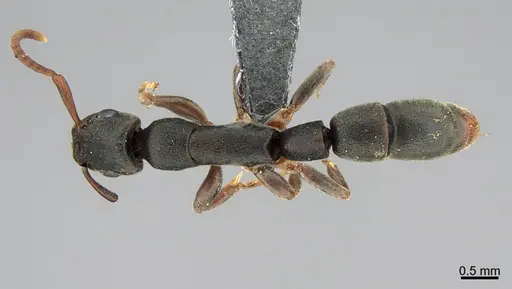
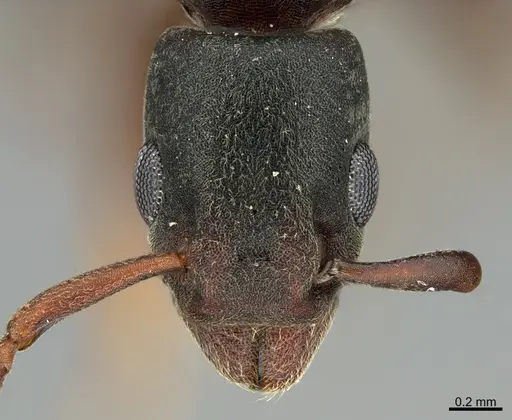
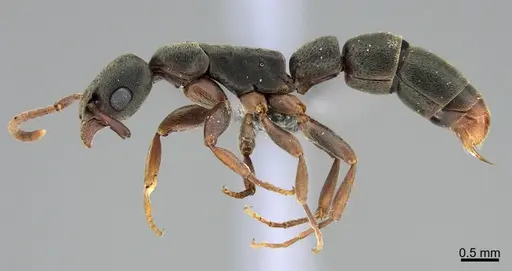
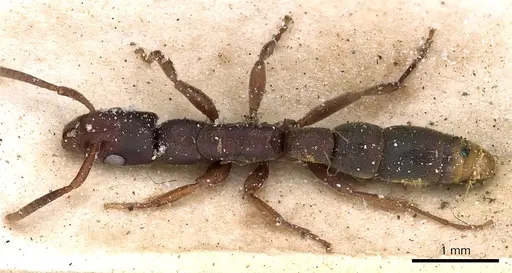
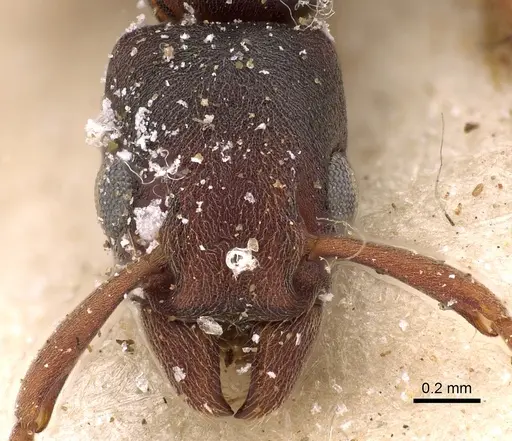
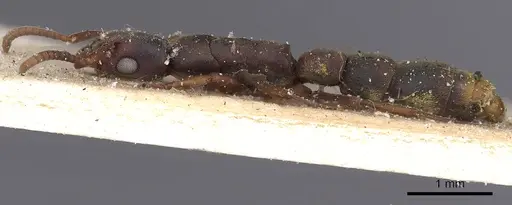
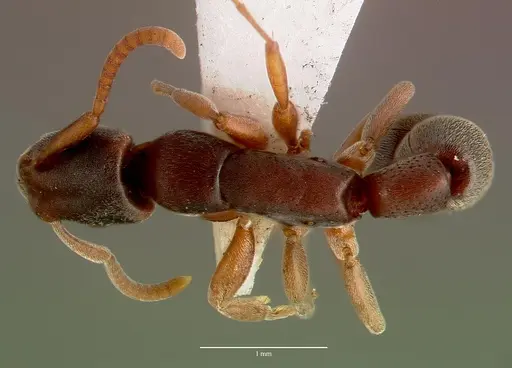
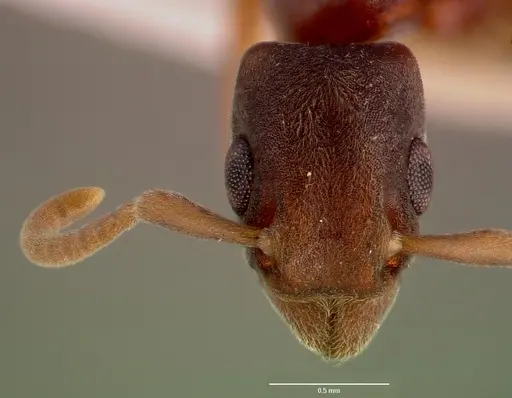
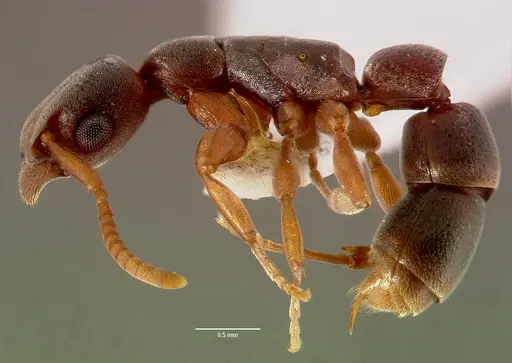
Platythyrea cooperi is a small ant species native to the Afrotropical region . Workers are slender and spider-like, with long legs and a dark, glossy body. They usually measure around 5 to 7mm in total length - inferred from Platythyrea genus patterns. These ants nest in soil, under stones, or inside rotting wood on forest floors across tropical Africa. The most interesting trait about this genus is the presence of ergatoid queens. These are wingless, worker-like females that can step up as replacement reproductives if the original queen dies. This system helps colonies survive without needing new queens to mate and found new nests.
Quick Summary
- Difficulty: Medium
- Origin & Habitat: Afrotropical region, found across tropical Africa in forested habitats [1]. They prefer shaded, humid microhabitats such as forest floors, under leaf litter, and within rotting wood.
- Colony Type: Colony structure is unconfirmed for this species. The genus uses ergatoid queens as replacement reproductives. Colonies are likely monogyne or oligogyne, but exact social structure is unconfirmed.
- Size & Growth:
- Queen: ~5-7mm, inferred from Platythyrea genus patterns
- Worker: ~5-7mm, inferred from Platythyrea genus patterns
- Colony: Up to 500 workers, estimated from related Platythyrea species
- Growth: Moderate
- Development: 6 to 10 weeks, estimated based on Ponerinae patterns (Development speed depends heavily on temperature and food availability.)
- Antkeeping:
- Temperature: Keep around 24 to 28°C. A gentle gradient helps workers self-regulate.
- Humidity: Provide a humidity gradient. Keep the nest substrate consistently moist but not waterlogged. These forest-floor ants need damp conditions.
- Diapause: Unconfirmed. Tropical species often skip true diapause, but a slight seasonal cooling might be appropriate.
- Nesting: Use plaster, Y-tong (AAC), soil nests, or 3D-printed setups. Keep the nest dark and humid.
- Behavior: Active foragers that hunt small invertebrates. They are not aggressive toward humans but will defend the nest. Workers move quickly and can be skittish. Escape prevention is critical due to their small size.
- Common Issues: founding queens may take months to produce workers, requiring patience and steady feeding., high humidity needs can lead to mold growth if ventilation is poor., small body size makes escape prevention critical, so use fine mesh and secure lids., predatory diet requires constant live prey, and starvation causes rapid colony decline., wild-caught colonies may carry parasites that can wipe out captive groups.
Housing and Nest Setup
Use plaster, Y-tong (AAC), soil nests, or 3D-printed setups. Keep the nest dark and humid. Place the nest in a shaded area of your setup. These ants prefer damp substrate, so provide a moisture gradient with one slightly wetter zone. Ensure all tubing connections and lids fit tightly to prevent escapes. A small water reservoir can help maintain humidity over time [1].
Feeding and Diet
These ants hunt live prey. Offer small insects like fruit flies, pinhead crickets, or tiny mealworms. Feed every two to three days and remove uneaten prey after twenty-four hours to prevent mold. While some ponerine ants accept sugar water, this species relies mainly on protein from live insects. Keep prey available at all times, because hunger triggers rapid colony decline [2].
Temperature and Humidity
Maintain temperatures between 24 and 28°C. A slight gradient allows workers to pick their preferred spot. Heat one side of the nest with a cable or mat placed on top, not underneath, to avoid drying out the substrate. Keep humidity high by maintaining a consistently moist nest substrate. Mist the outworld occasionally, but never let water pool inside the nest. Poor humidity leads to failed brood and colony stress [1].
Colony Establishment and Growth
Founding colonies take time to build up. If you start with a single queen, expect several months before the first workers appear. Keep the nest quiet and dark during this phase. Once the colony reaches twenty to thirty workers, growth usually speeds up. Mature colonies likely max out around five hundred workers. Do not disturb the nest frequently while the population is still small [2].
Behavior and Temperament
Workers actively hunt small invertebrates in the outworld. They are not aggressive toward humans but will attack intruders to protect the nest. Their stingers are too small to penetrate human skin effectively. Workers move quickly and may flee if the nest is disturbed. They do not form large supercolonies and are not considered invasive. Because they are small, excellent escape prevention is essential [2].
Frequently Asked Questions
How long does it take for Platythyrea cooperi to produce first workers?
Expect six to ten weeks from founding to the first workers. This timeline is estimated based on related Ponerinae patterns. Actual speed depends on your temperature and feeding routine [2].
What do Platythyrea cooperi ants eat?
They need live prey to survive. Offer small insects like fruit flies, pinhead crickets, or tiny mealworms. Feed every two to three days and remove uneaten food quickly [2].
What temperature do Platythyrea cooperi ants need?
Keep them warm at 24 to 28°C. A gentle temperature gradient helps workers self-regulate [1].
Are Platythyrea cooperi good for beginners?
They are medium difficulty. Their high humidity needs and strict predatory diet require more attention than easy species, but intermediate keepers can manage them [2].
How big do Platythyrea cooperi colonies get?
Mature colonies likely reach up to five hundred workers. This number is estimated from related Platythyrea species [2].
Do Platythyrea cooperi need hibernation?
Probably not. As a tropical species, they likely skip true diapause. A slight seasonal cooling might be appropriate, but it is not strictly necessary [2].
Can I keep multiple Platythyrea cooperi queens together?
This is unconfirmed. Combining unrelated queens is not recommended without proof they form polygynous colonies [2].
What humidity level do Platythyrea cooperi need?
High humidity is essential. Keep the nest substrate consistently moist but never waterlogged. Provide a moisture gradient to prevent mold [1].
When should I move Platythyrea cooperi to a formicarium?
Wait until the colony has at least twenty to thirty workers and is actively foraging. A test tube setup works well for founding. Move to a larger nest once the population grows [2].
Report an Issue
The current care sheet is based fully on literature. See inconsistencies, or something that's incorrect? Please , it will be resolved after review from an admin. Contributing to the blogs tab also helps providing information, to make us be able to further improve the caresheets. Thank you for your support!
References

This caresheet is licensed under CC BY-SA 4.0 .
Community Blogs
Literature
Loading distribution map...Loading products...