
Plagiolepis squamulosa
- Sci. Name
- Plagiolepis squamulosa
- Tribe
- Plagiolepidini
- Subfamily
- Formicinae
- Author
- Wheeler, 1934
- Distribution
- Found in 1 countries
Introduction
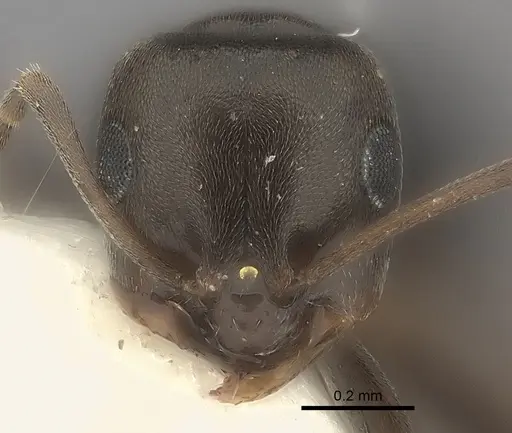
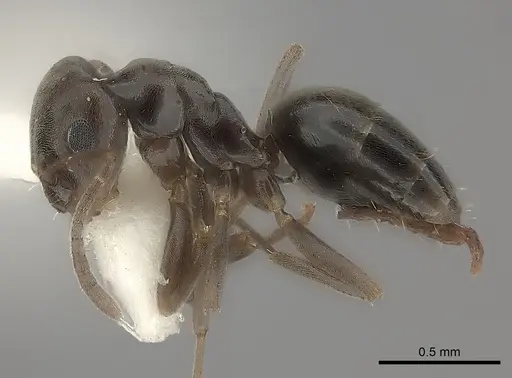
Plagiolepis squamulosa is a tiny ant species native to Western Australia. Workers measure 1.5 to 2.5 mm in total length . They display dark brown coloration, with the head being the darkest part and the gaster slightly lighter. Their body surface looks finely scaled under magnification. You will find them nesting under stones in sandy coastal dunes near Geraldton and Rottnest Island . A standout trait is the presence of replete workers, which are specialized ants that store liquid food in their swollen abdomens .
Quick Summary
- Difficulty: Hard
- Origin & Habitat: Southern Western Australia, including the Geraldton region and Rottnest Island. They nest under stones in sandy coastal dunes [2][1].
- Colony Type: Single-queen colonies (monogyne, meaning one queen per colony). Colonies produce replete workers that store liquid food in their abdomens [2].
- Size & Growth:
- Antkeeping:
- Temperature: Keep warm and stable, roughly low-to-mid 20s°C. Temperature needs are unclear, start around 22-24°C and observe.
- Humidity: Provide a humidity gradient, mostly dry nest substrate with one small moist area. Their natural sandy habitat stays relatively dry [2][1].
- Diapause: Unknown. Temperate Australian species usually need a winter rest. Plan for 3 to 4 months of cooler temperatures (around 15°C) from November to February [2].
- Nesting: Small chambers work best. Use Y-tong (AAC) nests, plaster nests, or soil nests. Avoid overly moist setups to match their dry sandy habitat [2][1].
- Behavior: Docile and non-aggressive. Workers forage actively but pose no sting threat to humans. Their tiny size creates a high escape risk, so you must seal all gaps. They readily take sugar water and small protein items.
- Common Issues: escape prevention is critical, workers are under 2mm and slip through standard mesh, founding behavior is unconfirmed, you may need to adjust feeding if the queen struggles to raise her first brood, colonies grow slowly, beginners often lose patience before the first workers emerge, humidity control matters, too wet causes mold in their dry-adapted nests, wild colonies may carry parasites that reduce captive survival rates
Housing and Escape Prevention
Your top priority is keeping these ants inside. Workers measure just 1.5 to 2.5 mm, so they slip through gaps that look solid to you. Use fine mesh (0.5 mm or smaller) on all vents. Coat the inner rim of your nest with a slip barrier like fluon. Test tubes work well for founding, pack cotton plugs firmly but leave enough room for the queen. When you move them to a larger nest, pick Y-tong (AAC) or plaster setups with tight connections. Check every seal weekly. A single lost queen or a few escaped workers can crash your colony. [1]
Feeding and Diet
Offer sugar water, diluted honey, or maple syrup as a steady carbohydrate source. For protein, give small live prey like fruit flies, pinhead crickets, or tiny mealworm pieces. Their size means you must scale prey down to what they can carry. Wild colonies contain replete workers that store liquid food, so keeping sugar sources available supports this natural behavior [2]. Feed protein every two to three days. Remove uneaten prey after 24 hours to stop mold. Replace sugar sources if they evaporate into sticky residue.
Temperature and Seasonal Care
Keep your colony at room temperature, ideally between 20 and 24°C. Western Australia has a Mediterranean climate with mild winters and warm summers. Activity will peak during the warmer months. You will likely need to provide a winter rest period. Lower the temperature to around 15°C for three to four months to mimic their natural cycle. Do not feed heavily during deep rest, but keep a small water source available. Gradually raise temperatures and resume normal feeding in spring. Exact diapause timing is unconfirmed, so watch your colony's activity levels [2].
Colony Development
You will start with a single queen. Founding behavior is unconfirmed, so you may need to experiment with feeding frequencies if she struggles to raise her first brood. The first workers will emerge smaller than mature adults. Colony growth is likely moderate. You will eventually see replete workers developing swollen abdomens as they store liquid food [2]. Be patient during the founding phase. It takes one to two months to see the first workers, and several more months before the colony reaches a stable size.
Nesting Preferences
In nature, these ants nest under stones in sandy coastal dunes [2]. Replicate this by using Y-tong (AAC) nests, plaster nests, or soil nests with small chambers. Tight chambers make them feel secure. Provide a moisture source in one corner of the nest to create a humidity gradient. Keep the rest of the nest dry to match their native sandy habitat. Avoid waterlogged substrates, which cause mold and stress [2][1].
Frequently Asked Questions
How long until first workers?
Expect 6 to 10 weeks at optimal temperatures. Direct development data is missing, so this estimate comes from typical Formicinae patterns [1].
Are they beginner-friendly?
They are hard to keep. Their tiny size demands perfect escape prevention, and founding behavior is unconfirmed. Only attempt if you have experience with small, fast-escaping species [1].
What do they eat?
They take sugar water, honey, and maple syrup. For protein, offer fruit flies, pinhead crickets, or tiny mealworm pieces. Replete workers in the colony will store liquid food [2].
Do they need hibernation?
Likely yes. Temperate Australian species usually require a winter rest. Plan for three to four months at 15°C from November to February. Exact timing is unconfirmed [2].
How big do colonies get?
Colony size data is unavailable. Related species suggest small to moderate colonies, but exact numbers are unknown [1].
Can I keep multiple queens?
This species is likely monogyne (single-queen). Combining unrelated queens will likely cause fatal fights [1].
When to move to a formicarium?
Wait until the colony has 30 to 50 workers and the test tube shows stress like condensation or soiled cotton. Use a Y-tong or plaster nest with tight seals [1].
Why are they escaping?
Workers are under 2 mm and slip through standard barriers. Use fine mesh, apply fluon to edges, and check seals weekly. Even microscopic gaps allow escape [1].
Best temperature?
Keep them between 20 and 24°C. Room temperature usually works. A slight gradient lets them choose their preferred warmth [1].
Report an Issue
The current care sheet is based fully on literature. See inconsistencies, or something that's incorrect? Please , it will be resolved after review from an admin. Contributing to the blogs tab also helps providing information, to make us be able to further improve the caresheets. Thank you for your support!
References

This caresheet is licensed under CC BY-SA 4.0 .
Community Blogs
CASENT0217738
View on AntWeb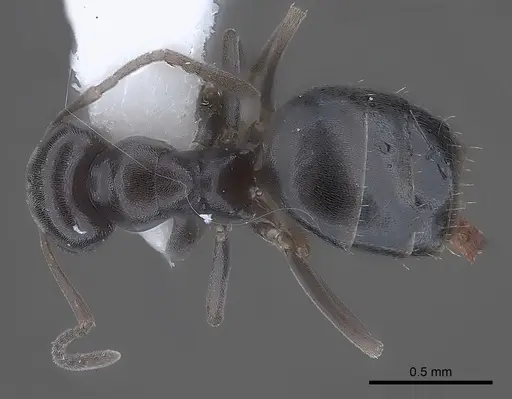
Literature
Loading distribution map...Loading products...