
Philidris nagasau
- Sci. Name
- Philidris nagasau
- Tribe
- Leptomyrmecini
- Subfamily
- Dolichoderinae
- Author
- Mann, 1921
- Distribution
- Found in 2 countries
Introduction
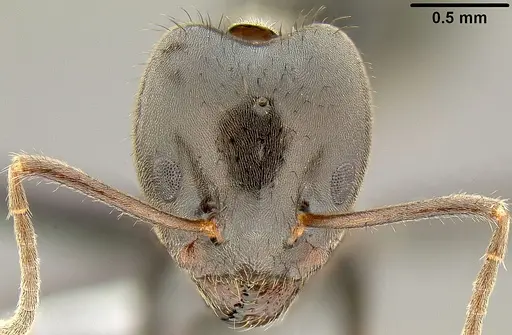
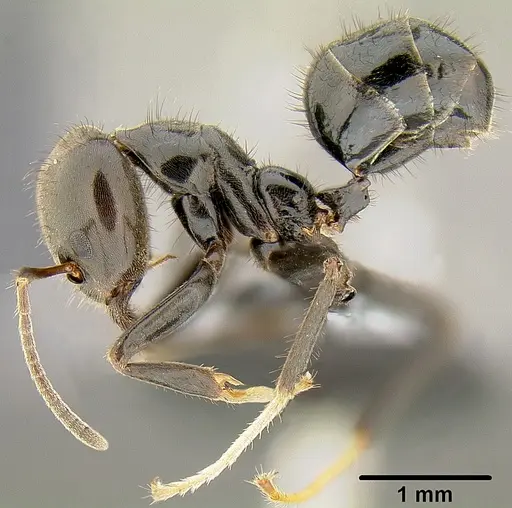
Philidris nagasau is a glossy black ant with yellowish-white tarsi, endemic to Fiji . Size data unavailable for body length. It is found on islands like Taveuni, Vanua Levu, Kadavu, and the Lau group . These ants live in tropical forest canopies, where they farm epiphytic plants of the genus Squamellaria . This species is known for its obligate mutualism with Squamellaria plants, where ants collect seeds, plant them under tree bark, and fertilize the growing plants . This farming relationship has evolved over nearly 2 million years .
Quick Summary
- Difficulty: Expert
- Origin & Habitat: Endemic to Fiji, found on Taveuni, Vanua Levu, Kadavu, and the Lau group [1][2]. They inhabit tropical forest canopies where they farm Squamellaria epiphytes [3].
- Colony Type: Polydomous colonies spread across multiple Squamellaria domatia, with each domatium typically housing one queen [1].
- Size & Growth:
- Queen: Size data unavailable
- Worker: Size data unavailable
- Colony: Up to 250,000 workers [1]
- Growth: Moderate to slow
- Development: Unknown, no direct development studies (Development likely tied to warm tropical conditions and plant health)
- Antkeeping:
- Temperature: Keep at 24-28°C, inferred from tropical habitat
- Humidity: Keep the nest substrate consistently moist but not waterlogged, replicate moist tropical forest canopy
- Diapause: No, tropical species, no hibernation needed
- Nesting: Requires living Squamellaria plants or artificial domatia structures, not suitable for standard formicaria [3]
- Behavior: Workers are abundant and aggressive where they occur [1]. They patrol farmed plants extensively and use smear defense by secreting chemicals from the abdomen. Escape risk is high due to active foraging behavior.
- Common Issues: this species is not suitable for typical antkeeping, they require living Squamellaria epiphytes which cannot be practically maintained in captivity, polydomous structure means single-queen colony fragments will not thrive, they need the multi-plant network, diet is extremely specialized, they primarily rely on plant nectar and cannot survive on typical ant foods alone, tropical humidity requirements make them prone to mold in poorly ventilated setups, massive colony size requires enormous space and resources
The Ant-Plant Mutualism
Philidris nagasau represents a specialized ant-plant relationship where ants farm six species of Squamellaria epiphytes [3]. The ants collect Squamellaria seeds and plant them under host tree bark, choosing locations with direct sunlight [1]. They protect seedlings from herbivores and fertilize them by defecating on absorptive warts inside the plant's domatia [3]. In return, the plants provide nesting domatia and sugar- and amino acid-rich nectar from flowers [3]. This mutualism is obligate for both species [3].
Why This Species Is Not Suitable for Typical Antkeeping
Philidris nagasau is extremely difficult to keep in captivity because it requires living Squamellaria epiphytes for nesting and feeding [3]. The ants feed primarily on plant nectar and supplement with arthropod prey, they cannot survive on typical ant foods alone [1]. Their polydomous nature means colonies span multiple plant structures, not a single nest chamber [1]. This species is not recommended for antkeepers unless they can maintain a live epiphyte garden.
Colony Structure and Size
P. nagasau colonies are polydomous, cultivating 50 or more Squamellaria plants [1]. Each domatium houses one queen with workers and brood [1]. The entire colony can reach up to 250,000 workers [1]. Colony size correlates with domatium size, and ants manage investment based on light exposure, sun plants receive more workers and manure [1].
Foraging and Defense Behavior
Workers are highly active foragers and exhibit decision-making based on plant value. Sun-grown plants have more patrolling ants, while shaded colonies show increased hunting for supplemental prey [1]. Workers are aggressive and defend territory [1]. Defense involves smear mechanism from the abdomen, typical of Dolichoderinae ants.
Frequently Asked Questions
Can I keep Philidris nagasau in a test tube?
No. This species requires living Squamellaria epiphytes for nesting and feeding and cannot survive in conventional setups [3].
What do Philidris nagasau ants eat?
Their primary diet is sugar- and amino acid-rich nectar from Squamellaria flowers, supplemented with arthropod prey [1][3].
How big do Philidris nagasau colonies get?
Mature colonies can reach up to 250,000 workers spread across multiple Squamellaria plants [1].
Where is Philidris nagasau found?
This species is endemic to Fiji, found on Taveuni, Vanua Levu, Kadavu, and the Lau group [1][2].
Are Philidris nagasau good for beginners?
No. This species is in the Expert category due to specialized requirements and is not suitable for typical antkeeping [3].
Do Philidris nagasau need hibernation?
No. As a tropical species from Fiji, they do not require hibernation and should be kept warm year-round.
How long does it take for first workers to appear?
The exact timeline is unknown, as no development studies exist.
Can I keep multiple queens together?
In the wild, colonies have multiple queens, each in separate domatia [1]. However, this is not practical in captivity due to the multi-plant network requirement.
Why are these ants so special?
They are one of few ant species that actively farm plants, with a 2-million-year-old mutualism representing novel plant cultivation [3][1].
Report an Issue
The current care sheet is based fully on literature. See inconsistencies, or something that's incorrect? Please , it will be resolved after review from an admin. Contributing to the blogs tab also helps providing information, to make us be able to further improve the caresheets. Thank you for your support!
References

This caresheet is licensed under CC BY-SA 4.0 .
Community Blogs
CASENT0171058
View on AntWeb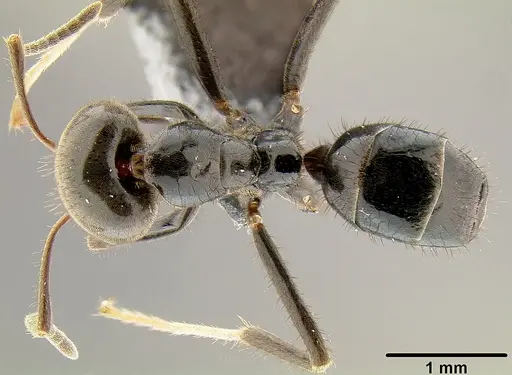
Literature
Loading distribution map...Loading products...