
Pheidole wilsoni
- Sci. Name
- Pheidole wilsoni
- Tribe
- Attini
- Subfamily
- Myrmicinae
- Author
- Mann, 1921
- Distribution
- Found in 2 countries
Introduction
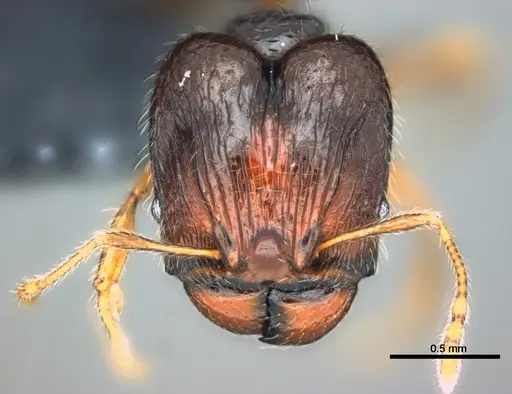
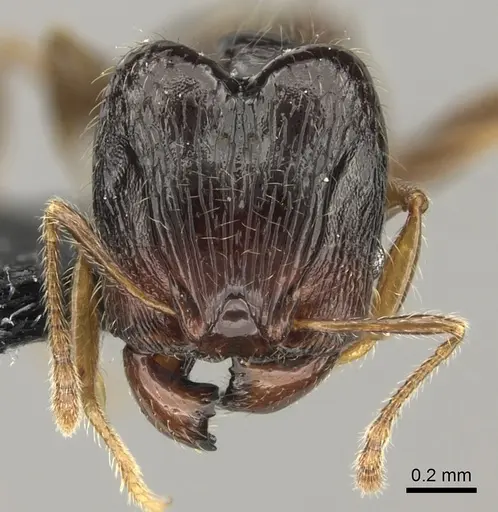
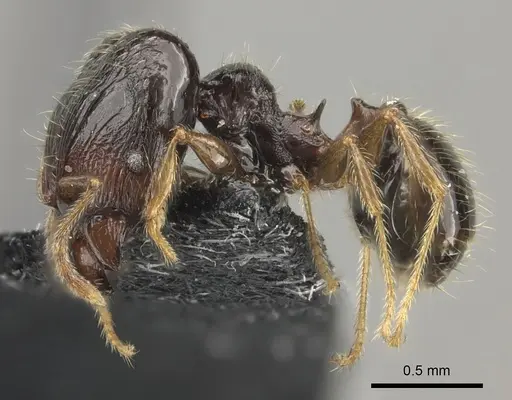
Pheidole wilsoni is a moderately sized ant endemic to the Fiji islands. Major workers have noticeably large heads with weakly reticulated ridges on the back corners, while minor workers have oval heads that are dotted on top but smooth underneath. The species is found across most of Fiji's islands including Viti Levu, Taveuni, Kadavu, and Ovalau, living in forest interiors from primary rainforest to disturbed areas between 100 and 1050 meters elevation . Colonies show unusual size variation among major workers, with two distinct size classes, smaller ones with less pronounced head lobes and larger ones with robustly developed posterolateral lobes . They are ecological generalists, nesting in rotting logs, hollow twigs, under stones, under moss on tree trunks, and inside ant-plants .
Quick Summary
- Difficulty: Medium
- Origin & Habitat: Fiji islands, forest interiors from primary rainforest to disturbed areas,100-1050m elevation [1][2]
- Colony Type: Unconfirmed, no specific data on queen number or social structure
- Size & Growth:
- Queen: size data unavailable
- Worker: size data unavailable
- Colony: Unknown
- Growth: Moderate
- Development: Likely 6-10 weeks at 25-28°C based on tropical Pheidole patterns, though not directly documented [2] (Tropical development is typically faster than temperate species)
- Antkeeping:
- Temperature: Keep warm year-round, roughly 24-28°C, as they are tropical species [2]
- Humidity: Keep nest substrate consistently moist but not waterlogged, mimicking their natural forest habitat [1]
- Diapause: No, maintain warm temperatures year-round [2]
- Nesting: Use naturalistic setups with rotting wood or hollow twigs, or plaster/Y-tong nests with small cavities [1][3]
- Behavior: They are generalist foragers attracted to sweets and protein. Minor workers are extremely small, creating serious escape risks. Major workers may handle defense, but specific roles are unconfirmed [1].
- Common Issues: minor workers have very small heads, making them prone to escape through tiny gaps in lids or mesh., endemic to Fiji, releasing them outside their native range could harm local ecosystems and is unethical., major workers come in two distinct sizes, which may require offering a range of food items to satisfy all castes., tropical humidity requirements can lead to mold if ventilation is inadequate.
Nest Preferences in Nature and Captivity
In the wild, Pheidole wilsoni nests in a variety of locations. They have been found in rotting logs and hollow twigs, under stones on the forest floor, under moss on tree trunks, and inside ant-plants [1][3]. This flexibility makes them adaptable to captive conditions.
For housing in captivity, a naturalistic setup with pieces of decaying wood or hollow plant stems works well. You can also use standard plaster or Y-tong nests with small chambers sized to their modest dimensions. Because they naturally inhabit forest interiors at moderate elevations, they prefer shaded conditions with stable moisture, avoid bright lights and dry conditions [1].
Feeding and Diet
These ants are opportunistic omnivores. In Fiji, researchers observed workers readily visiting cookie baits, showing they will accept sugar sources [1]. In captivity, offer sugar water or honey water constantly.
For protein, feed small live or freshly killed insects appropriate to their size, fruit flies, small cricket pieces, or mealworm segments work well. The presence of two distinct major worker sizes in your colony [1] means you should offer a range of food sizes to ensure all castes can feed effectively.
Temperature and Seasonal Care
Coming from tropical Fiji, Pheidole wilsoni needs warm temperatures year-round. Keep them between 24-28°C with a gentle gradient, slightly warmer on one side of the nest [2]. They do not require any cooling or hibernation period.
If your room temperature drops below 22°C, use a heating cable or heat mat on one side of the nest. Place the heating element on top of the nest to avoid condensation problems. Watch the colony's behavior, if workers cluster near the heat source, they need more warmth, if they avoid it, reduce the temperature slightly.
The Two Sizes of Major Workers
One of the most distinctive features of Pheidole wilsoni is the bimodal distribution of major worker sizes. Your colony will produce some majors that are smaller with less pronounced head lobes, and others that are larger with robustly developed posterolateral lobes [1].
This variation appears to be normal intraspecific variation. For keepers, this means you will see noticeable size differences among your majors. Ensure your feeding routine accommodates both sizes.
Escape Prevention and Handling
The minor workers of Pheidole wilsoni are extremely small, with narrow heads that can squeeze through gaps that would stop larger ants.
You must use excellent escape prevention. Tight-fitting lids are essential, and any ventilation mesh must be extremely fine. Fluon or other barrier products applied to the upper walls of the outworld help prevent climbing. Check all seams and connections in your formicarium regularly, as these tiny ants can exploit the smallest gaps. [1]
Frequently Asked Questions
Can I keep Pheidole wilsoni in a test tube?
Yes, test tubes work well for founding colonies. Use a standard water tube setup. Move them to a formicarium when the colony grows [2].
How long until Pheidole wilsoni get their first workers?
Likely 6-10 weeks at 25-28°C based on patterns from related tropical Pheidole species [2].
Can I keep multiple Pheidole wilsoni queens together?
Not recommended, as Pheidole are typically single-queen species, but specific structure is unconfirmed. Combining unrelated queens may lead to fighting and death of all but one.
Do Pheidole wilsoni need hibernation?
No. They come from tropical Fiji and remain active year-round. Maintain warm temperatures continuously [2].
What is the bimodal major worker size in Pheidole wilsoni?
Colonies naturally produce major workers in two distinct size classes. Larger majors have more robustly developed head lobes compared to smaller majors. This variation is normal for the species [1].
What do Pheidole wilsoni eat?
They are generalist omnivores. In the wild they are attracted to cookie baits [1], so they readily accept sugar water or honey. They also need protein from small insects like fruit flies, cricket pieces, or mealworms.
Are Pheidole wilsoni good for beginners?
They are medium difficulty. While adaptable to various nest types and foods, their extremely small minor workers require excellent escape prevention that beginners might struggle to provide.
What nest type is best for Pheidole wilsoni?
They nest in rotting logs and hollow twigs in nature [1][3], so naturalistic setups with decaying wood work best. Plaster or Y-tong nests with small cavities also work well.
Report an Issue
The current care sheet is based fully on literature. See inconsistencies, or something that's incorrect? Please , it will be resolved after review from an admin. Contributing to the blogs tab also helps providing information, to make us be able to further improve the caresheets. Thank you for your support!
References

This caresheet is licensed under CC BY-SA 4.0 .
Community Blogs
CASENT0183603
View on AntWeb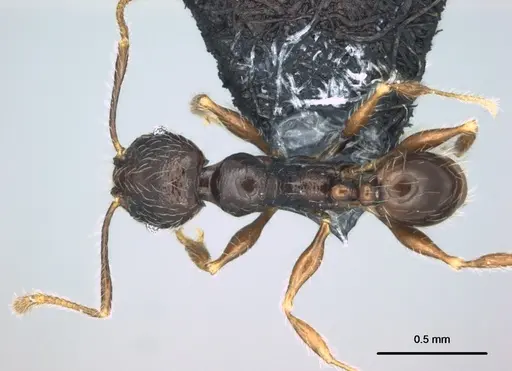
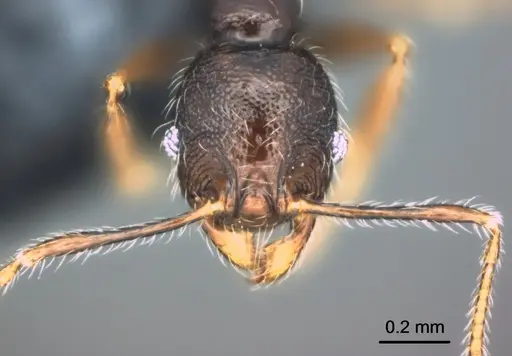
CASENT0183622
View on AntWeb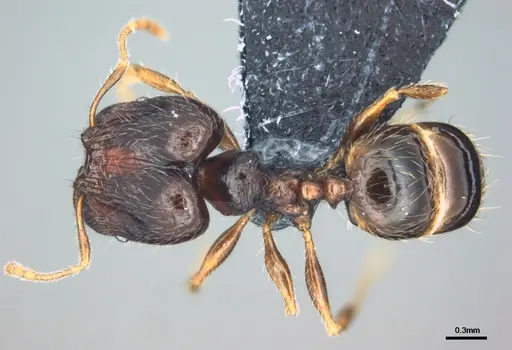
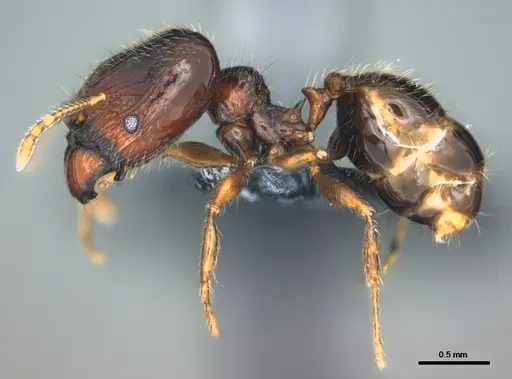
CASENT0185076
View on AntWeb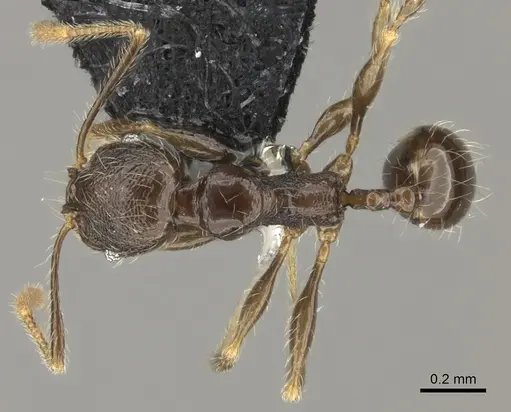
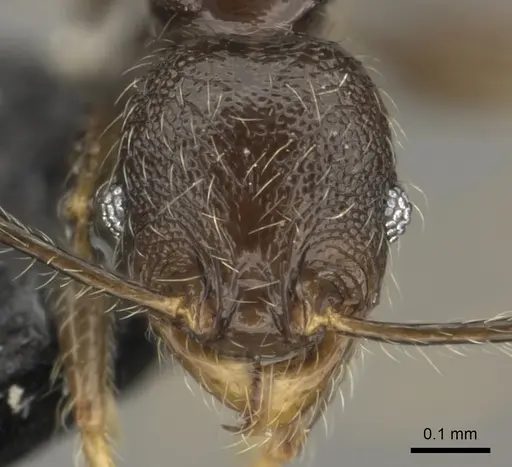
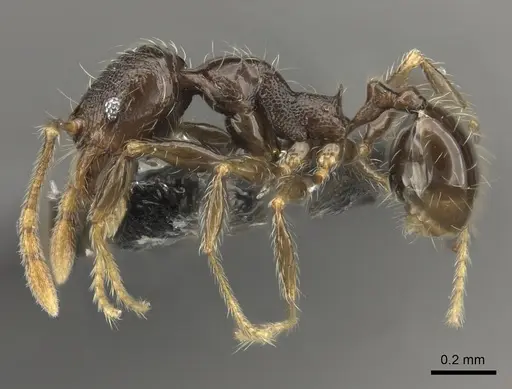
CASENT0185117
View on AntWeb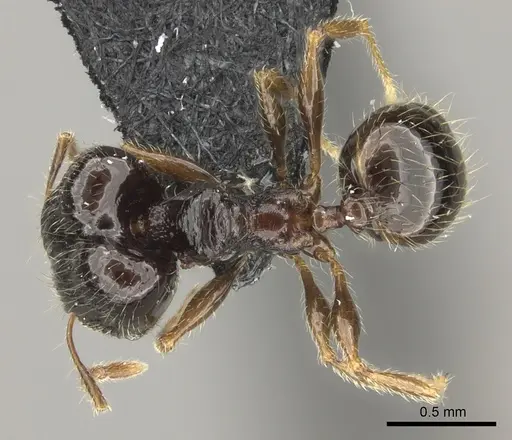
Literature
Loading distribution map...Loading products...