
Pheidole vulcan
- Sci. Name
- Pheidole vulcan
- Tribe
- Attini
- Subfamily
- Myrmicinae
- Author
- Fischer & Fisher, 2013
- Distribution
- Found in 1 countries
Introduction
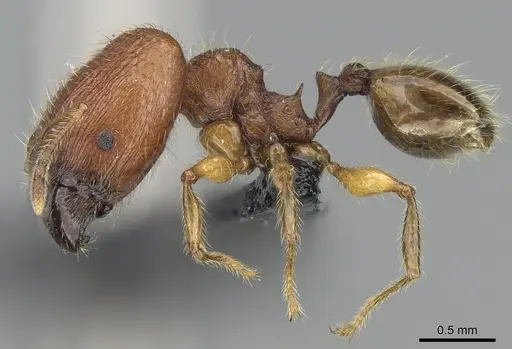
Pheidole vulcan is a small ant species endemic to Grande Comore island in the Comoros archipelago. It is characterized by its orange to light reddish-brown coloration and very abundant standing hairs on the mesosoma. The species was discovered in 2013 and is named after Vulcan, the Roman god of volcanoes, reflecting its presence on the volcanic slopes of Mt. Karthala and La Grille . This species is a true island endemic, found only on the slopes of two volcanoes on Grande Comore at elevations between 995 and 1125 meters in montane rainforest. It nests in rotting logs, leaf litter, under tree bark, and on low vegetation .
Quick Summary
- Difficulty: Unknown, no captive husbandry data available
- Origin & Habitat: Grande Comore island, Comoros (Indian Ocean). Found only on the volcanic slopes of Mt. Karthala and La Grille at 995-1125m elevation in montane rainforest [1][2].
- Colony Type: Colony structure is unconfirmed. Pheidole species are typically single-queen colonies (monogyne), but this has not been documented for P. vulcan specifically.
- Size & Growth:
- Queen: Size data unavailable, no queen measurements exist in scientific literature
- Worker: Inferred from Pheidole genus: minor workers approximately 0.5-1 mm total length, major workers 1-2 mm total length
- Colony: Unknown, no colony size data exists for P. vulcan
- Growth: Unknown
- Development: Estimated based on genus patterns: 4-8 weeks at optimal temperature (This is a rough estimate based on typical Pheidole development patterns. Specific development time for P. vulcan has not been studied.)
- Antkeeping:
- Temperature: Based on montane rainforest habitat (995-1125m elevation), likely prefers cooler conditions. Start around 20-24°C and observe colony activity [1]
- Humidity: Montane rainforest suggests high humidity needs. Keep substrate consistently moist but not waterlogged [1]
- Diapause: Unknown, no seasonal data exists. Grande Comore has mild seasonal variation, so diapause may not be required
- Nesting: In nature: rotting logs, sifted leaf litter, under tree bark, on lower vegetation in montane rainforest [1]. For captivity: a naturalistic setup with moist substrate or Y-tong/plaster nest would likely work well
- Behavior: Temperament is unconfirmed. Based on Pheidole patterns, workers are generally non-aggressive but will defend their nest. Workers are small, so escape prevention must be excellent due to high escape risk
- Common Issues: no captive husbandry data exists, this is an extremely rare species in the antkeeping hobby, tiny minor workers mean standard test tube setups may need fine mesh barriers to prevent escapes, limited distribution means wild-caught colonies are very unlikely to be available, development time and care requirements are unknown, keepers will be pioneers
Discovery and Rarity
Pheidole vulcan is one of the newest described ant species, only formally named in 2013 by Fischer and Fisher. It was discovered during biodiversity surveys on Grande Comore, the largest island in the Comoros archipelago located in the Indian Ocean between Madagascar and mainland Africa. What makes this species particularly special is its extremely limited distribution, it has only been found on two volcanic peaks (Mt. Karthala and La Grille) at elevations between 995 and 1125 meters. This makes it a true island endemic that exists nowhere else on Earth. The species name 'vulcan' honors Vulcan, the Roman god of fire and volcanoes, a fitting tribute given its exclusive home on these volcanic slopes [1][2].
Identification and Distinction from Related Species
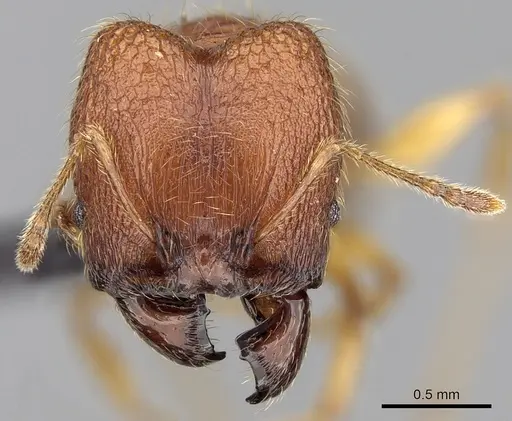
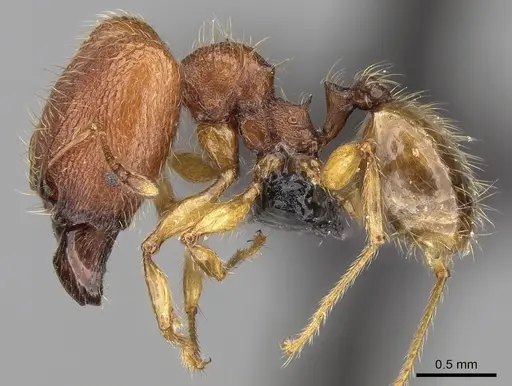
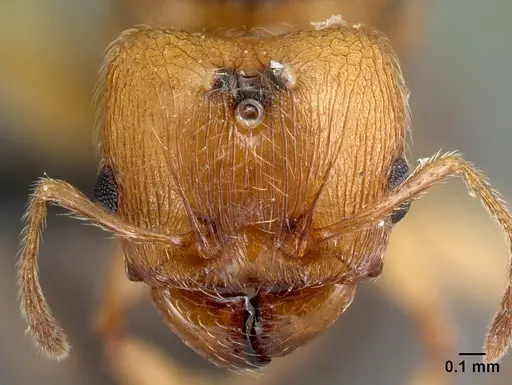
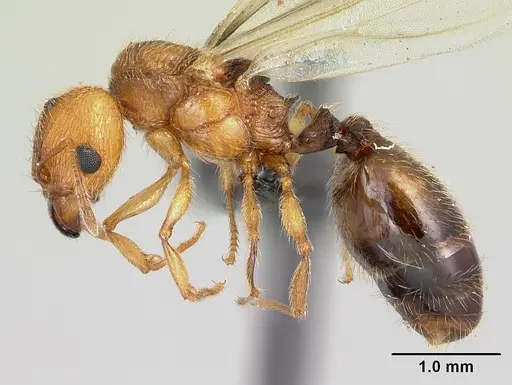
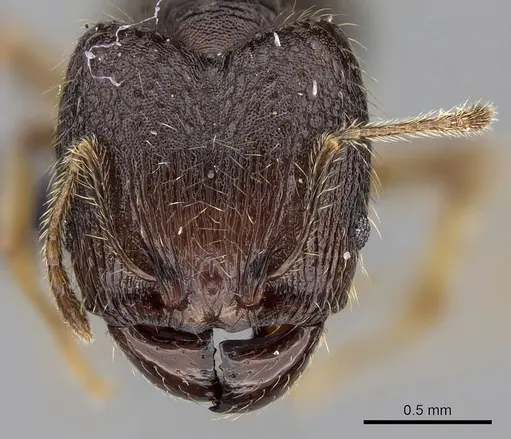
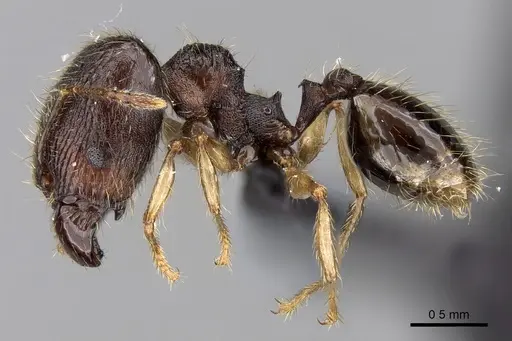
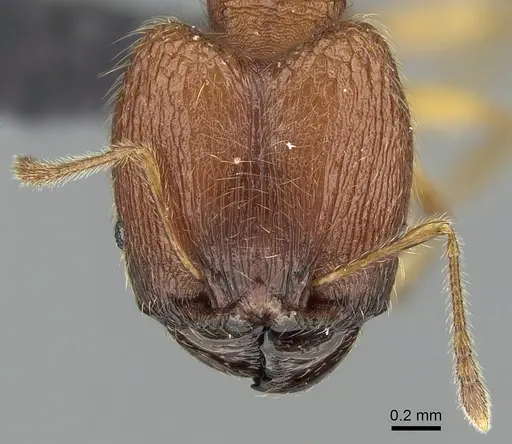
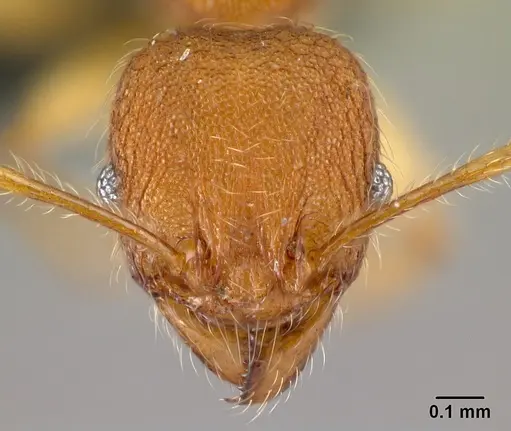
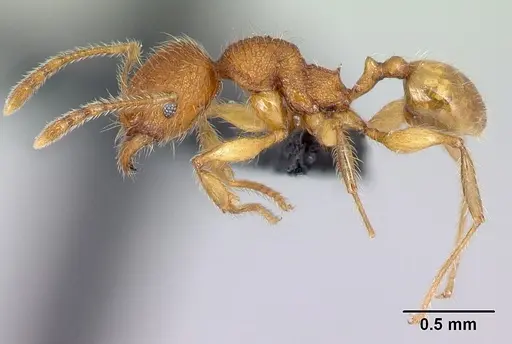
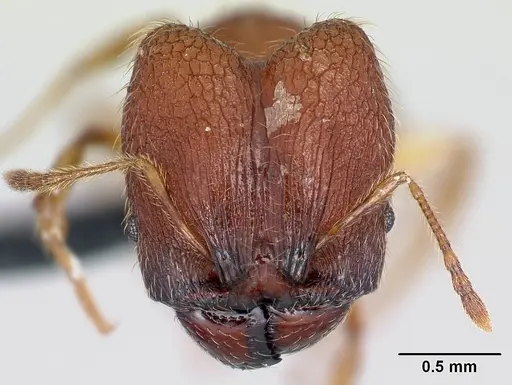
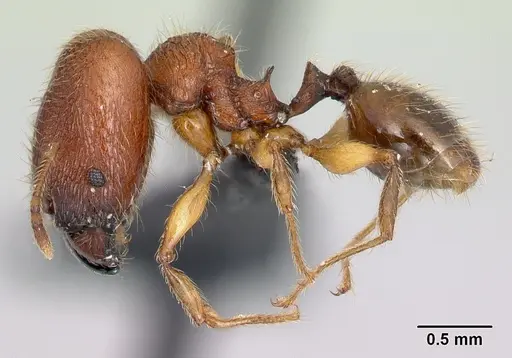
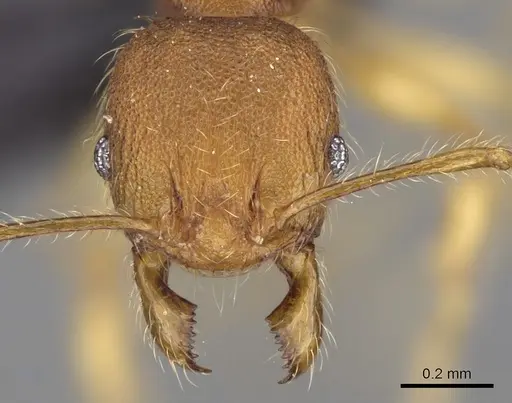
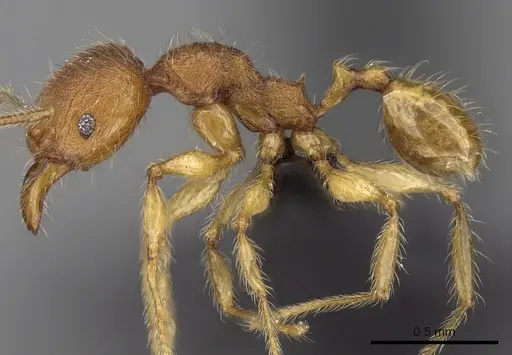
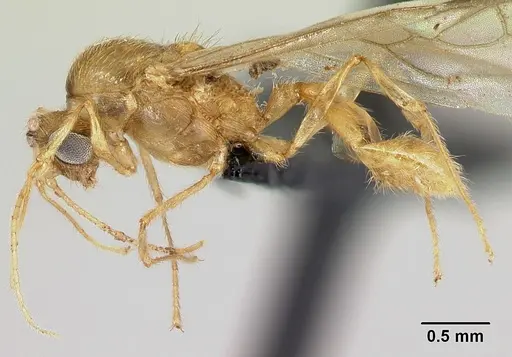
Pheidole vulcan can be identified by its distinctive orange to light reddish-brown coloration (unlike the dark P. jonas found in sympatry), very abundant standing hairs on the mesosoma, and relatively short scapes and legs. Major workers have a rugoreticulate (wrinkled-net-like) pattern on the back half of the head, while minor workers have a strongly punctate (dotted) head and mesosoma. The promesonotal process is very high with a steep posterior declivity, giving them a distinctive profile shape. The spines are relatively long, almost as long as the distance between their bases. Minor workers have a postpetiole that is about 1.2 times longer than high, while in major workers it is higher than long [1].
This species is closely related to Pheidole jonas and Pheidole loki, which occur in the same region. The most reliable way to tell them apart is color (P. vulcan is orange, P. jonas is dark) and the abundance of standing hairs (more abundant in P. vulcan).
Natural Habitat and Nesting
In the wild, Pheidole vulcan lives exclusively in montane rainforest at elevations around 1000-1125 meters. This habitat is cooler and wetter than lowland tropical forests. Workers have been collected from rotting logs, sifted leaf litter, under tree bark, and on low vegetation. This indicates they are forest-floor ants that prefer damp, shaded microhabitats with decaying organic material. The volcanic soils of Mt. Karthala and La Grille provide rich, moist conditions ideal for these ants [1].
For captive care, this suggests the species needs a setup that maintains consistent moisture without being waterlogged. A naturalistic terrarium-style formicarium with soil substrate would best replicate their natural conditions. The substrate should remain damp but allow for some drier areas so ants can regulate their own humidity preferences.
Size and Morphology
Pheidole vulcan is a relatively small species even by Pheidole standards. Major workers (the soldiers with larger heads) are larger than minor workers (the foragers), with both castes having very abundant standing hairs on the mesosoma. The body length is small, making them visible but tiny ants. Both castes have relatively short scapes (antennae segments) and legs compared to some other Pheidole species. The most distinctive morphological feature is the very abundant standing hairs on the mesosoma, these stiff hairs standing up from the body are more numerous than in related species and serve as a key identification character [1][2].
Keeping an Undescribed Species
Because Pheidole vulcan has never been kept in captivity (as far as documented records show), anyone attempting to keep this species would be essentially pioneering its husbandry. This comes with challenges but also opportunities for discovery. Start with conditions that match its natural habitat: montane rainforest at roughly 1000m elevation means temperatures in the low-to-mid 20s Celsius with high humidity [1]. Keep the nest substrate consistently moist but not saturated, and provide plenty of cover and dark spaces.
Since we have no direct data on their diet, offer a variety of foods and observe what they accept. Typical Pheidole diets include small insects, seeds, and sugar sources. Start with protein (small live or dead insects) and sugar water, then expand based on acceptance. The lack of existing husbandry data also means keepers should document their observations carefully, any information about this species in captivity would be scientifically valuable.
Frequently Asked Questions
Is Pheidole vulcan available for sale in the antkeeping hobby?
Almost certainly not. This species was only described in 2013 and is endemic to a single island (Grande Comore) where it lives only on two volcanic peaks. It has never been documented in the antkeeping trade and would be extremely difficult to obtain. If you ever see it for sale, verify the source carefully [1][2].
What does Pheidole vulcan look like?
This is a small orange to light reddish-brown ant. Major workers have larger heads and are larger than minor workers. Both castes have very abundant short hairs standing up from their body, and the head of majors has a distinctive wrinkled-ribbed pattern. They are distinctly orange-colored, unlike many related species which are darker [1].
Where is Pheidole vulcan found in the wild?
Only on Grande Comore island in the Comoros archipelago (Indian Ocean). Specifically on the slopes of Mt. Karthala and La Grille volcanoes at elevations between 995 and 1125 meters. It is a true island endemic found nowhere else on Earth [1][2].
What temperature should I keep Pheidole vulcan at?
This is unconfirmed, but based on its montane rainforest habitat at 1000m+ elevation, it likely prefers cooler conditions than typical tropical ants. Start around 20-24°C and observe colony behavior [1]. If workers are clustered near the warmest part of the nest, they may prefer it slightly warmer, if they avoid heated areas, reduce temperature.
What do Pheidole vulcan ants eat?
Unconfirmed, no feeding observations exist for this species. Based on typical Pheidole biology, they likely accept small insects (protein), seeds, and sugar sources. Offer a varied diet and note what they accept. Start with small live prey like fruit flies or pinhead crickets, and sugar water or honey.
How long does it take for Pheidole vulcan to develop from egg to worker?
This is completely unconfirmed, no development data exists for this species. Based on typical Pheidole development patterns, estimate roughly 4-8 weeks from egg to first worker at optimal temperature. This is a rough guess, not a confirmed timeline.
Is Pheidole vulcan a good species for beginners?
No, this species is not recommended for beginners or even experienced keepers. There is zero captive husbandry data available, making it extremely difficult to keep successfully. Additionally, the species is essentially unavailable in the antkeeping hobby. If you're interested in Pheidole, consider more common and well-documented species like Pheidole megacephala or Pheidole pallidula [1].
Does Pheidole vulcan need hibernation?
Unknown, no seasonal data exists. Grande Comore island has mild seasonal variation with temperatures remaining relatively warm year-round (20-27°C). Based on this, diapause may not be required. However, a slight cooling period during what would be winter months may be beneficial.
Can I keep multiple Pheidole vulcan queens together?
This is unconfirmed. Pheidole species are typically monogyne (single-queen colonies), but colony structure has not been documented for P. vulcan specifically. Do not attempt combining unrelated queens without evidence they will accept each other.
What type of nest is best for Pheidole vulcan?
Based on natural nesting habits (rotting logs, leaf litter, under bark), a naturalistic setup with moist soil substrate would likely work best. A Y-tong or plaster nest with appropriately sized chambers could also work given their small size. The key is maintaining high humidity without flooding [1].
Why is Pheidole vulcan named after volcanoes?
The species name 'vulcan' is a noun in apposition honoring Vulcan, the Roman god of fire and volcanoes (Greek equivalent: Hephaestus). This name was chosen because the species was discovered only on the volcanic slopes of Mt. Karthala and La Grille on Grande Comore island [1].
Report an Issue
The current care sheet is based fully on literature. See inconsistencies, or something that's incorrect? Please , it will be resolved after review from an admin. Contributing to the blogs tab also helps providing information, to make us be able to further improve the caresheets. Thank you for your support!
References

This caresheet is licensed under CC BY-SA 4.0 .
Community Blogs
CASENT0136532
View on AntWeb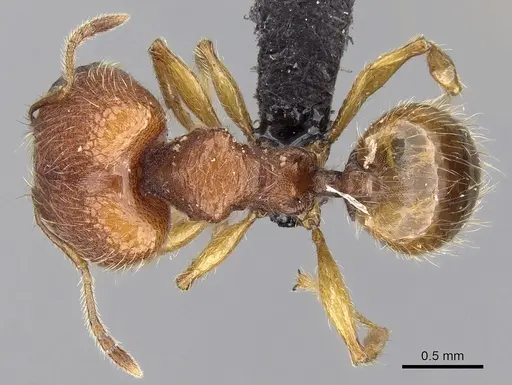
CASENT0136738
View on AntWeb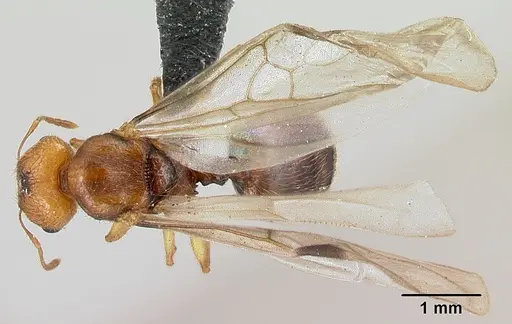
CASENT0136990
View on AntWeb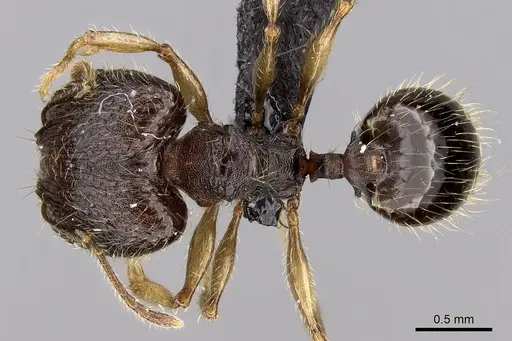
CASENT0137234
View on AntWeb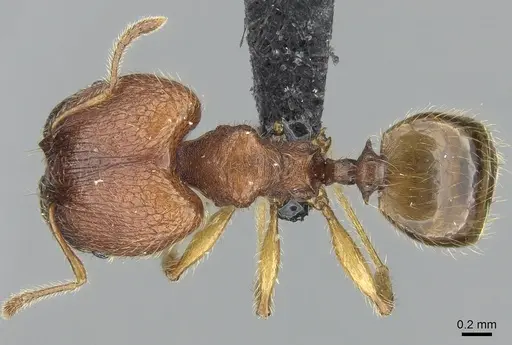
CASENT0137260
View on AntWeb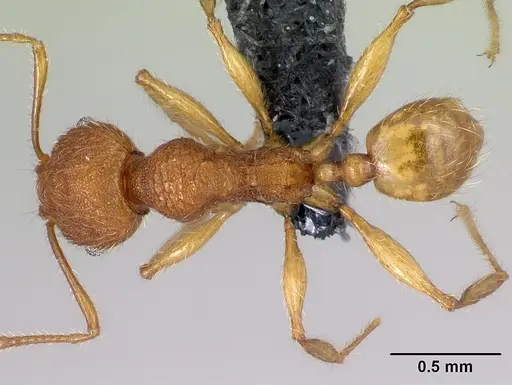
CASENT0137291
View on AntWeb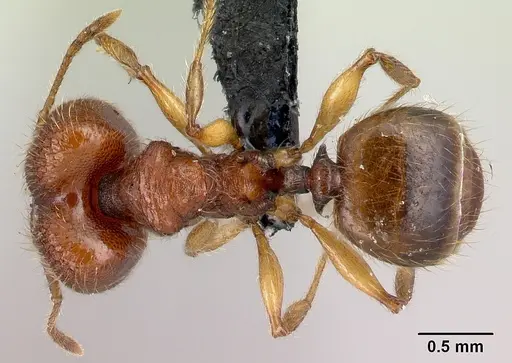
CASENT0137429
View on AntWeb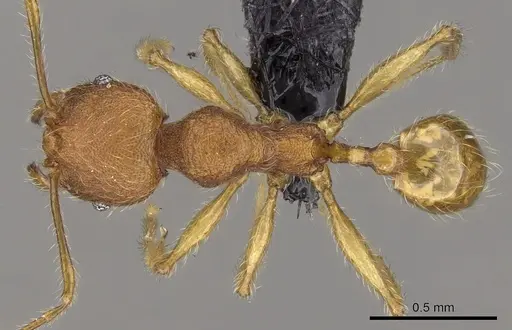
CASENT0137444
View on AntWeb
Literature
Loading distribution map...Loading products...