
Pheidole vomer
- Sci. Name
- Pheidole vomer
- Tribe
- Attini
- Subfamily
- Myrmicinae
- Author
- Wilson, 2003
- Distribution
- Found in 1 countries
Introduction
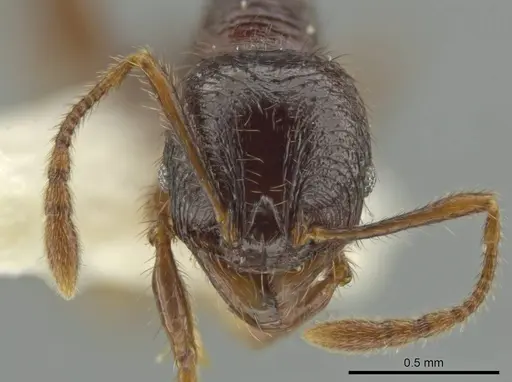
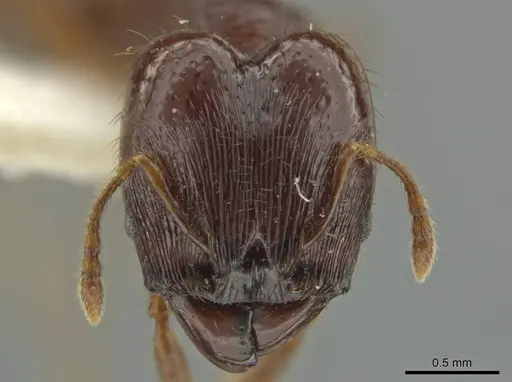
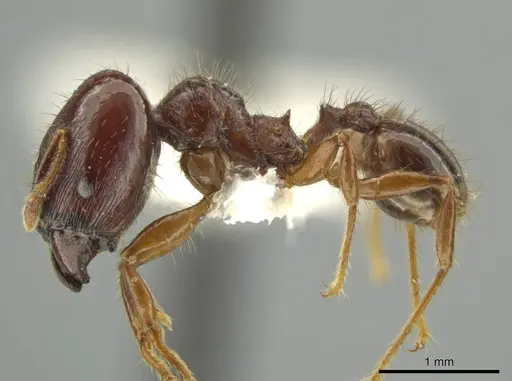
Pheidole vomer is a small ant species native to the highland regions of Colombia in South America. The species name comes from Latin 'vomer' meaning plowshare, referring to the blade-like projection on major workers' heads. Major workers have a dark reddish-brown body with dark yellow legs, while minor workers have a medium brown body with a tiger-striped pattern of ridges on their heads. This species is found at elevations between 1730-2300m in the Colombian Andes, particularly in Huila department . One interesting feature is the distinctive caste system with minor workers having a tiger-striped head pattern, and major workers serving as soldiers with powerful mandibles .
Quick Summary
- Difficulty: Medium
- Origin & Habitat: Highland Colombia (Huila and Magdalena departments) at elevations of 1730-2300m. Found in the Andean region of central Colombia [1][2].
- Colony Type: Colony structure is unconfirmed. The type colony was collected in January with winged queens present, indicating nuptial flight season occurs early in the year [3].
- Size & Growth:
- Queen: Size data unavailable, no total length measurements in context. Based on Pheidole genus patterns, likely 5-8 mm.
- Worker: Size data unavailable, no total length measurements in context. Based on Pheidole genus patterns, workers are typically 2-4 mm.
- Colony: Unconfirmed, typical Pheidole colonies can reach several thousand workers, but this species is known from only a few specimens.
- Growth: Unconfirmed, likely moderate based on genus patterns.
- Development: Unconfirmed, typical Pheidole development takes 6-10 weeks at optimal temperature, inferred from genus patterns. (No specific development data exists for this species.)
- Antkeeping:
- Temperature: Keep at cool to moderate temperatures, roughly 18-22°C. This is a high-altitude species from the Colombian Andes, so avoid overheating [1][2].
- Humidity: Keep the nest substrate consistently moist but not waterlogged, as they prefer damp conditions in their highland habitat [1][2].
- Diapause: Unconfirmed, highland tropical species may have reduced activity during cooler months rather than true diapause.
- Nesting: Prefer soil-based substrates in natural habitat. In captivity, use test tubes or nests made of Y-tong, plaster, or soil. Avoid acrylic nests.
- Behavior: Pheidole vomer is not particularly aggressive but will defend the colony vigorously. Major workers serve as soldiers. Foraging occurs primarily at night. Escape prevention should be moderate due to their small size.
- Common Issues: limited availability may make sourcing queens difficult for keepers, high altitude requirements may cause stress in warm environments, colony growth may be slow due to limited care data, wild-caught colonies may struggle to adapt to captive conditions
Housing and Nesting
You can keep Pheidole vomer in standard test tube setups for founding colonies. Once the colony reaches a small size, consider moving to a nest made of Y-tong, plaster, or soil-based substrates. They likely prefer soil-based substrates given their natural highland habitat. Provide moderate chamber sizes that accommodate both minor and major workers. Ensure adequate ventilation while maintaining appropriate moisture levels.
Feeding and Diet
You should offer a variety of foods since they are omnivorous. Provide protein sources such as small insects (e.g., fruit flies, pinhead crickets) and sugar sources like honey water or sugar water. Feed small amounts every 2-3 days, removing uneaten food within 24 hours to prevent mold. Fresh water should always be available.
Temperature and Seasonal Care
Maintain temperatures between 18-22°C, as this highland species prefers cooler conditions than typical tropical ants. Avoid placing their nest near heat sources. During cooler months, activity may naturally decrease, this is normal and not necessarily diapause. Stable, cool conditions year-round are best [1][2].
Colony Development and Castes
Pheidole vomer has a caste system with minor workers (foragers) and major workers (soldiers). Major workers develop from larvae that receive more food. Early colonies consist mainly of minor workers, with majors appearing as the colony grows. The type colony had winged queens in January, suggesting nuptial flights occur early in the year [2][3].
Behavior and Defense
This species is not highly aggressive but will defend its nest if threatened. Major workers can deliver painful bites with their strong mandibles. Workers forage primarily at night and use chemical trails to recruit nestmates. Provide enrichment like small rocks to encourage natural behaviors. Defense is based on subfamily Myrmicinae traits, with a functional stinger.
Frequently Asked Questions
How long does it take for Pheidole vomer to produce first workers?
The exact timeline is unconfirmed. Based on typical Pheidole development, expect 6-10 weeks from egg to first worker at optimal temperature (around 20°C), inferred from genus patterns.
What temperature is best for Pheidole vomer?
Keep them at cool to moderate temperatures, ideally 18-22°C. This highland species from the Colombian Andes prefers cooler conditions [1][2].
Can I keep multiple queens together?
Not recommended. Colony structure is unconfirmed for this species, and most Pheidole are monogyne (single queen) in nature. Starting with one mated queen is safest.
What do Pheidole vomer ants eat?
They are omnivorous. Offer small insects, seeds, and sugar sources like honey water. Major workers can process seeds with their mandibles.
Are Pheidole vomer ants good for beginners?
This species is rated as Medium difficulty. It is not commonly kept, so care information is limited. Beginners may have more success with well-documented species.
How big do Pheidole vomer colonies get?
Colony size is unconfirmed. Based on typical Pheidole patterns, colonies likely reach several thousand workers at maturity.
When do Pheidole vomer queens fly?
The type colony was collected in January with winged queens present, suggesting nuptial flights occur in early January in their native habitat [3].
What makes Pheidole vomer different from other Pheidole?
This species is distinguished by its highland Colombian distribution and the distinctive plowshare-shaped projection on major workers' heads. Minor workers have a unique tiger-striped head pattern [2].
How should I set up a test tube for founding?
Use a standard test tube setup with a water reservoir at one end, stopped with cotton. Place the mated queen in the tube and keep it dark and undisturbed. Maintain room temperature (around 20°C) and ensure the water reservoir does not dry out.
Report an Issue
The current care sheet is based fully on literature. See inconsistencies, or something that's incorrect? Please , it will be resolved after review from an admin. Contributing to the blogs tab also helps providing information, to make us be able to further improve the caresheets. Thank you for your support!
References

This caresheet is licensed under CC BY-SA 4.0 .
Community Blogs
CASENT0645892
View on AntWeb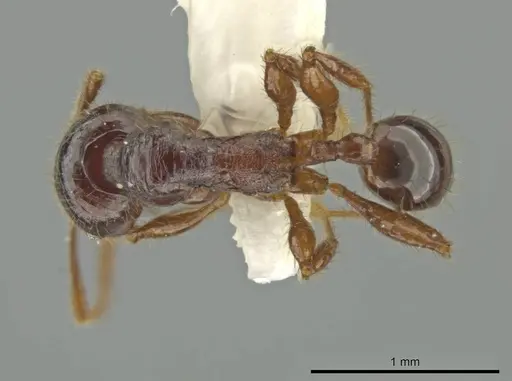
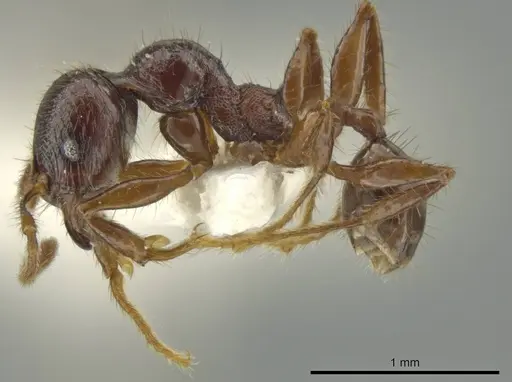
JTLC000016572
View on AntWeb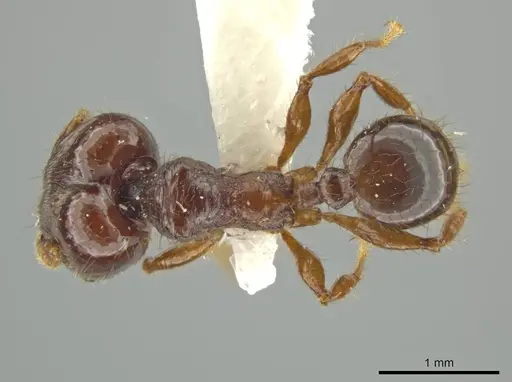
Literature
Loading distribution map...Loading products...