
Pheidole vohemarensis
- Sci. Name
- Pheidole vohemarensis
- Tribe
- Attini
- Subfamily
- Myrmicinae
- Author
- Salata & Fisher, 2020
- Distribution
- Found in 1 countries
Introduction
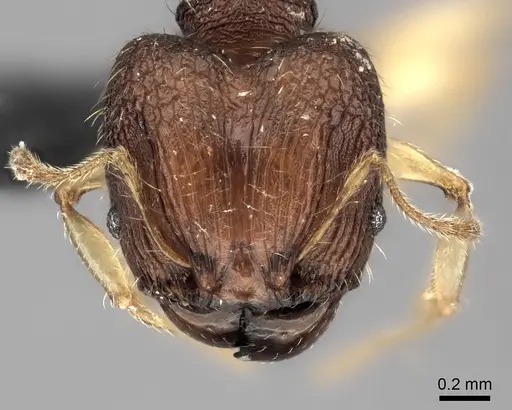
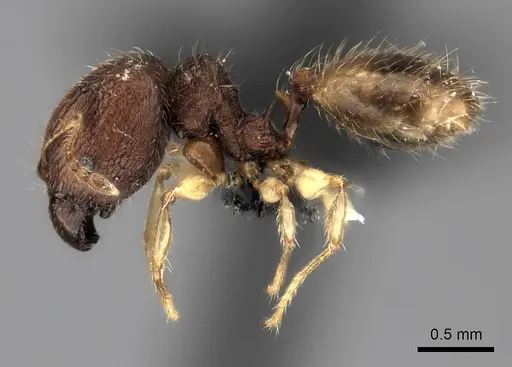
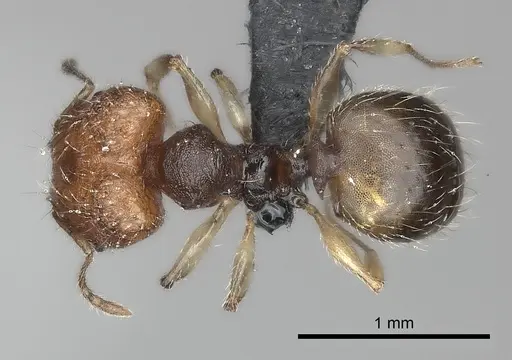
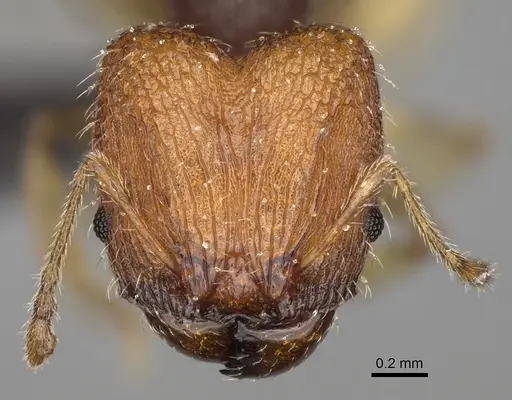
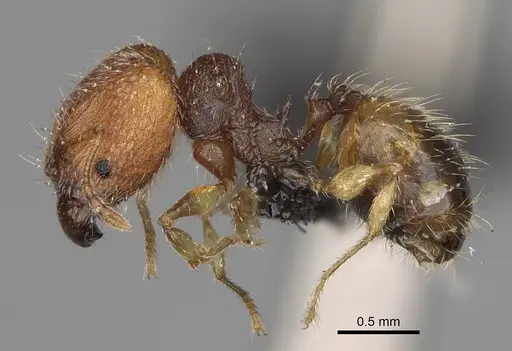
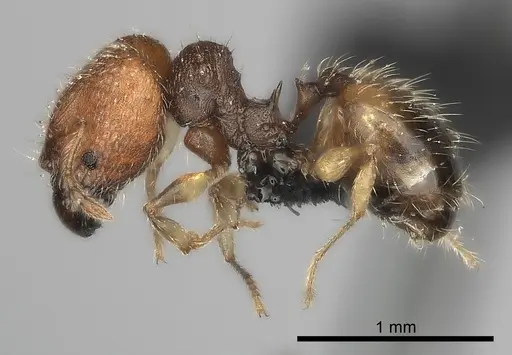
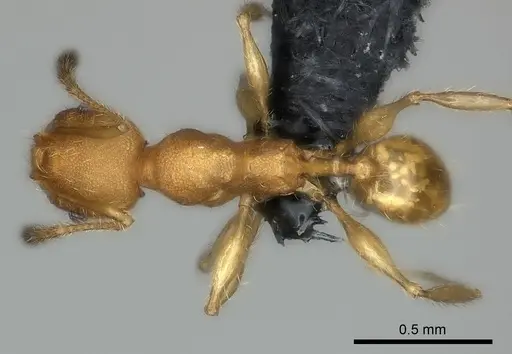
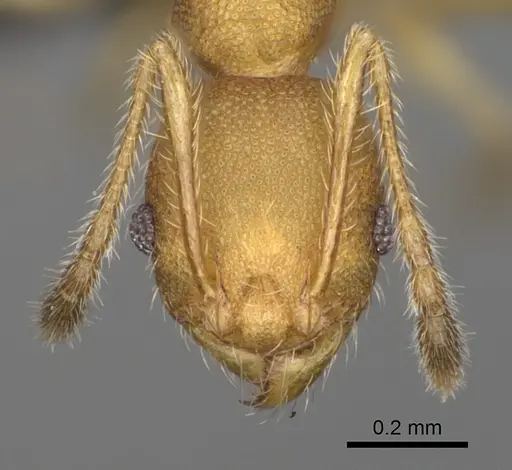
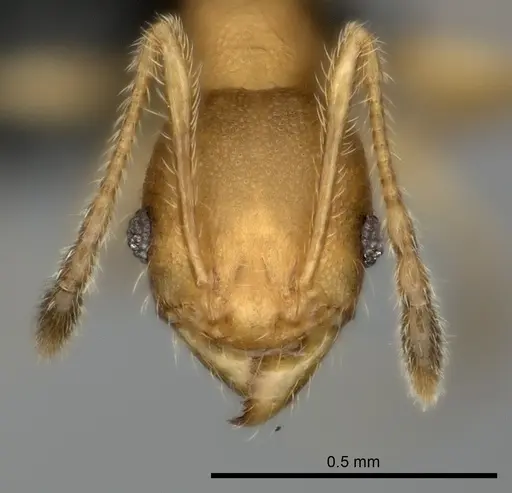
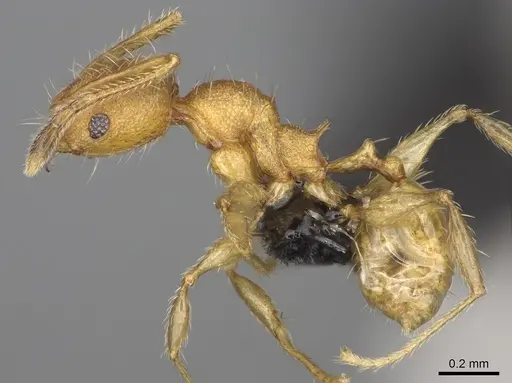
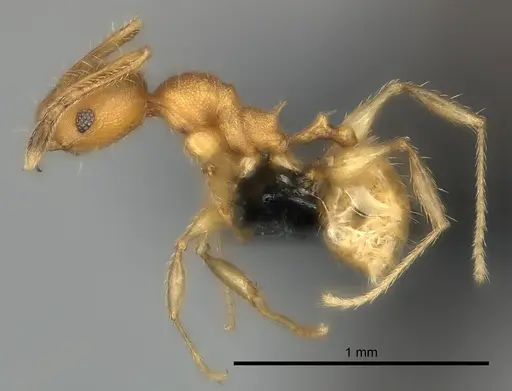
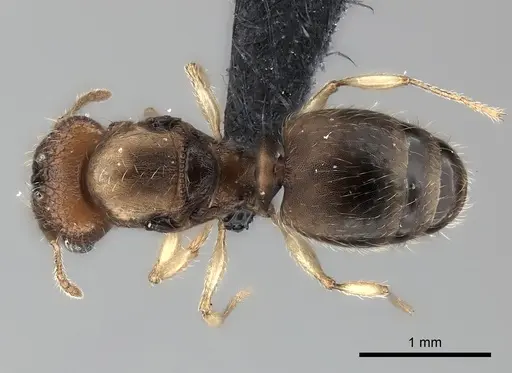
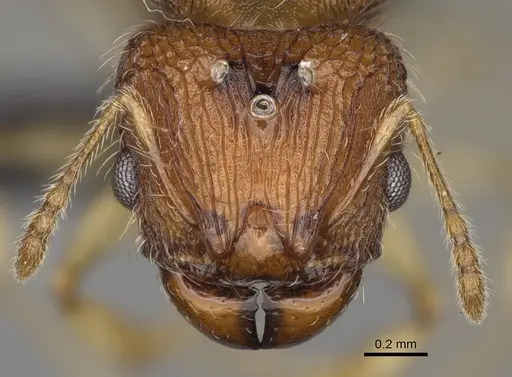
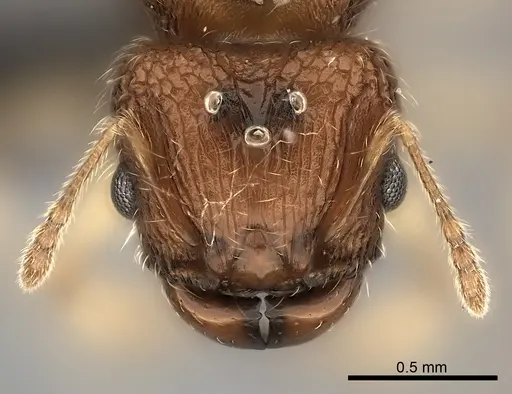
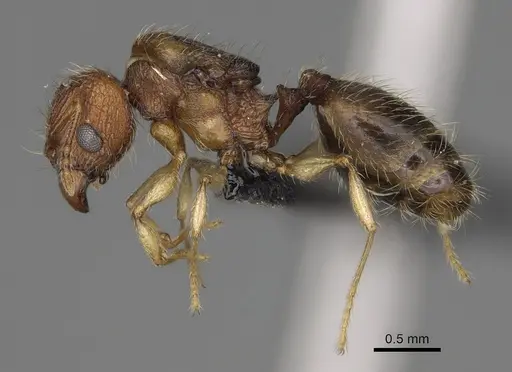
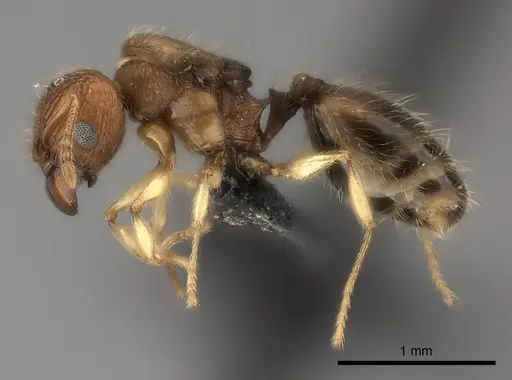
Pheidole vohemarensis is a small ant species native to Madagascar, described in 2020. It belongs to the Pheidole ferruginea species group. Major workers have a cordate head that widens posteriorly and are bright brown to dark brown, while minor workers are yellow. This species nests in rotten logs in tropical dry forest, littoral rainforest, and rainforest at elevations between 10-775 meters . Like all Pheidole, they have distinct major and minor worker castes. A notable aspect is their adaptation to nesting in rotten logs in humid tropical environments, which influences captive care requirements.
Quick Summary
- Difficulty: Medium
- Origin & Habitat: Northern Madagascar (Antsiranana region) in tropical dry forest, littoral rainforest, and rainforest at 10-775m elevation [1]. Nests located in rotten logs [1].
- Colony Type: Colony structure is unconfirmed for this species. No data on queen number or social structure.
- Size & Growth:
- Queen: size data unavailable
- Worker: size data unavailable
- Colony: Unknown, no specific data available for this species.
- Growth: Unknown, no specific data available.
- Development: Unknown, no specific data available for this species. Based on Pheidole genus patterns, it may take 6-10 weeks at tropical temperatures. (Development time inferred from related species, direct measurements not available.)
- Antkeeping:
- Temperature: Keep warm, roughly 24-28°C, based on tropical habitat [1].
- Humidity: Keep nest substrate consistently moist but not waterlogged, as they nest in humid environments [1].
- Diapause: No, as a tropical species, they do not require hibernation [1].
- Nesting: Use nests that retain moisture, such as Y-tong or plaster nests, with damp substrate. Provide natural elements like wood pieces [1].
- Behavior: Pheidole vohemarensis is a generalist forager. Major workers have enlarged heads for defense and seed processing. Minor workers are tiny and handle routine tasks. Escape risk is high due to the small size of minor workers. They are not aggressive but will defend if threatened. Primary defense is stinging, as typical for Myrmicinae ants.
- Common Issues: cold temperatures slow brood development, keep colony warm year-round, high humidity is essential, dry conditions cause colony decline, escape prevention must be thorough due to small minor workers, newly described species means limited captive breeding information, start conservatively, frequent disturbances can stress colonies nesting in stable, humid conditions
Housing and Nest Setup
Set up nests with damp soil and wood pieces to mimic rotten logs. Use Y-tong or plaster nests that retain moisture. Keep the substrate consistently moist but not waterlogged. Ensure good ventilation to prevent mold. Maintain warm temperatures around 24-28°C [1].
Feeding and Diet
Offer protein sources like small insects (fruit flies, crickets) 2-3 times per week, plus a constant sugar source like honey or sugar water. Remove uneaten prey after 24-48 hours to prevent mold. Minor workers are very small, so prey items should be appropriately sized [1].
Temperature and Seasonal Care
Maintain temperatures between 24-28°C for optimal brood development. Use a heating cable on one side of the nest to create a gradient. This is a tropical species, so no diapause is needed. Keep away from cold drafts or air conditioning [1].
Colony Development and Growth
Colony development data is unavailable for this species. Based on Pheidole genus patterns, founding may be claustral, but this is unconfirmed. Growth rate is unknown. First workers may appear within 6-10 weeks at tropical temperatures, but this is inferred [1].
Behavior and Observation
Workers forage actively for protein and sugar sources. Major workers defend the colony with their enlarged heads and stingers. Minor workers handle routine tasks. Escape risk is high due to their small size. Observation is easy as they forage openly [1].
Frequently Asked Questions
How long does it take for Pheidole vohemarensis to produce first workers?
Exact timing is unknown. Based on related Pheidole species, expect first workers around 6-10 weeks after queen lays eggs, assuming temperatures around 24-28°C [1].
What temperature do Pheidole vohemarensis ants need?
Keep them warm at 24-28°C. This is a tropical species requiring consistent warmth [1].
Do Pheidole vohemarensis ants need hibernation?
No. As a tropical species from Madagascar, they do not require diapause or hibernation [1].
What do I feed Pheidole vohemarensis?
Offer small insects as protein 2-3 times per week, plus a constant sugar source like sugar water or honey. Remove uneaten food promptly [1].
Are Pheidole vohemarensis good for beginners?
This is a medium-difficulty species. They require warm, humid conditions year-round, and care information is limited due to recent description [1].
How big do Pheidole vohemarensis colonies get?
Colony size is unknown for this species. No specific data is available [1].
What type of nest is best for Pheidole vohemarensis?
Use moisture-retaining nests like Y-tong or plaster with damp substrate. Provide wood pieces to mimic rotten logs [1].
Can I keep multiple queens together?
Colony structure is unconfirmed. Most Pheidole are single-queen, but combining unrelated queens may cause fighting.
Why are my minor workers dying?
Check humidity levels first, they require high humidity. Also verify temperatures are warm enough (24-28°C). Ensure no escape routes due to their small size [1].
Report an Issue
The current care sheet is based fully on literature. See inconsistencies, or something that's incorrect? Please , it will be resolved after review from an admin. Contributing to the blogs tab also helps providing information, to make us be able to further improve the caresheets. Thank you for your support!
References

This caresheet is licensed under CC BY-SA 4.0 .
Community Blogs
CASENT0040756
View on AntWeb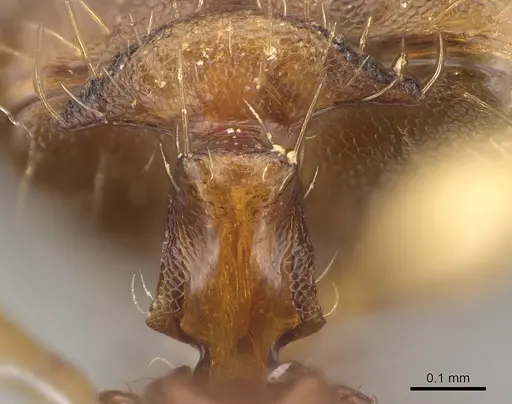
CASENT0041430
View on AntWeb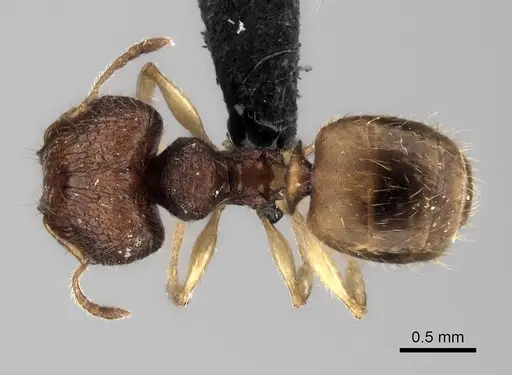
CASENT0107946
View on AntWeb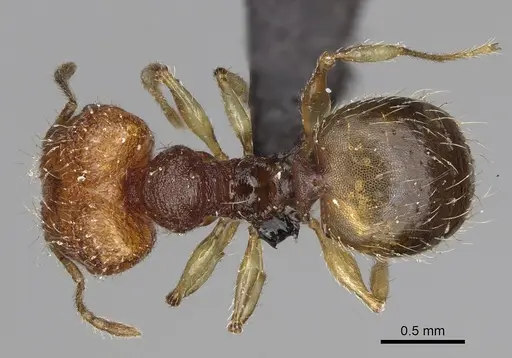
CASENT0107947
View on AntWeb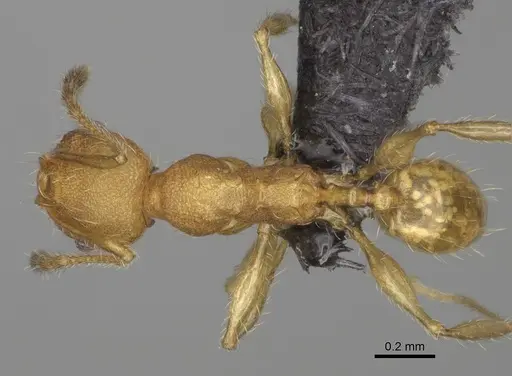
CASENT0217986
View on AntWeb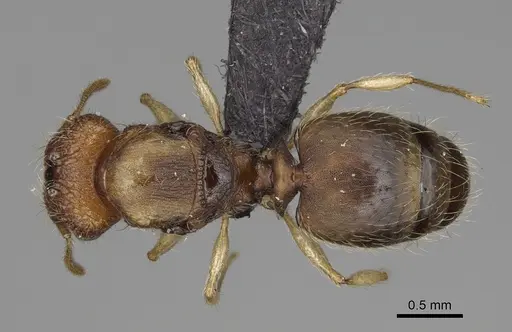
Literature
Loading distribution map...Loading products...