
Pheidole virago
- Sci. Name
- Pheidole virago
- Tribe
- Attini
- Subfamily
- Myrmicinae
- Author
- Wheeler, 1915
- Distribution
- Found in 2 countries
Introduction
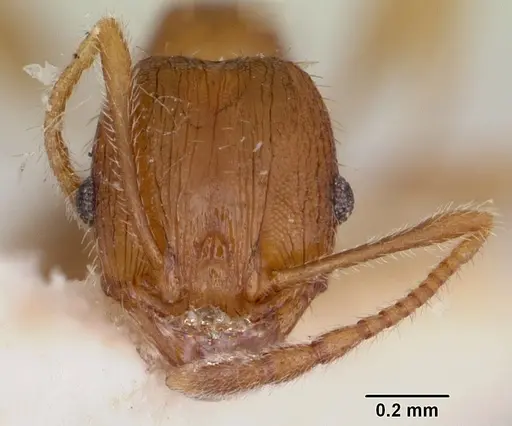
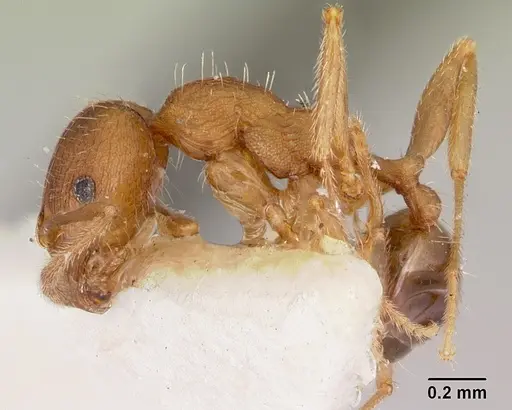
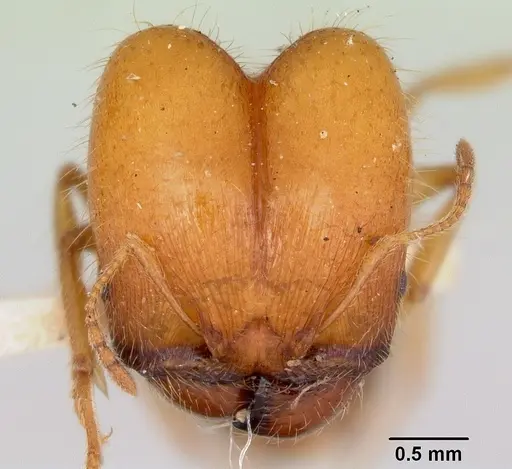
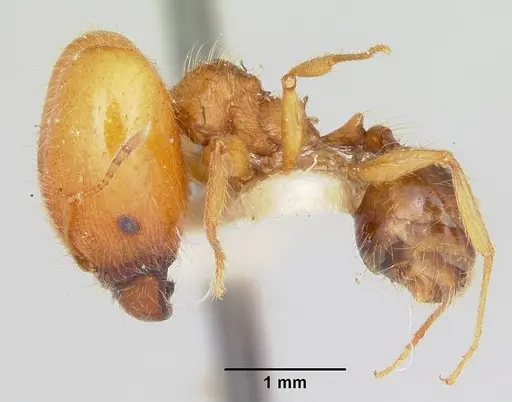
Pheidole virago is a big-headed ant species native to the southwestern United States, specifically found in Arizona around Tucson . This species exhibits extreme worker polymorphism, with two distinct worker castes: minor workers and major workers (soldiers) that are significantly larger than the minors . As a desert-adapted species, it is suited to warm, dry conditions. The extreme worker polymorphism in Pheidole virago allows for efficient task specialization, with majors handling defense and seed-crushing.
Quick Summary
- Difficulty: Easy
- Origin & Habitat: Arizona, United States (Tucson area), desert habitats [1]
- Colony Type: Based on Pheidole patterns, likely monogyne (single queen colonies). Colonies have distinct major and minor worker castes.
- Size & Growth:
- Queen: Size data unavailable, no total length measurements in context
- Worker: Workers are dimorphic with majors larger than minors [2], but specific size data is unavailable.
- Colony: Colony size data unavailable from context.
- Growth: Moderate, inferred from genus patterns
- Development: Estimated 6-8 weeks at optimal temperature, inferred from typical Pheidole development (Development time is temperature-dependent, warmer conditions accelerate growth)
- Antkeeping:
- Temperature: Keep at warm temperatures, typically 24-28°C for active growth, based on desert adaptation [1]
- Humidity: Keep substrate moderately dry, as this is a desert-adapted species. Provide a small water source but avoid damp conditions.
- Diapause: Unknown, no data on diapause in context. Based on Pheidole patterns, may benefit from winter rest, but not strictly required.
- Nesting: Use test tubes for founding. For established colonies, use Y-tong nests, plaster nests, or naturalistic setups with dry substrate.
- Behavior: Pheidole virago is generally calm, but major workers may defend the colony. Escape risk is high for minor workers (under 4mm), so use proper barriers. Based on subfamily, they have a sting, but it is mild.
- Common Issues: colonies may stall if kept too cold, ensure warm temperatures for active growth., overwatering can be fatal, these desert ants prefer drier conditions., escape risk is high due to small worker size, use fine barriers., wild-caught colonies may have parasites, quarantine new colonies.
Housing and Nest Setup
Pheidole virago does well in standard test tube setups for colony founding. Use a test tube with a water reservoir sealed with a cotton plug, the ants will drink from the condensation. For founding, keep the tube in a dark, quiet location at warm temperatures and do not disturb the queen for at least 4-6 weeks. Once the first workers emerge, you can begin offering small amounts of food. For established colonies, transfer to a Y-tong nest, plaster nest, or naturalistic setup. These ants do well in dry conditions, avoid excessive humidity which can cause mold problems. Provide a foraging area with easy access to food and water. [1]
Feeding and Diet
Pheidole species are omnivorous with a strong preference for seeds. Offer a mix of seeds such as millet, chia, flax, or cracked sunflower seeds. Supplement with protein sources like small insects, and offer sugar water or honey occasionally. Feed seeds continuously and offer protein 2-3 times per week, removing any uneaten prey within 24 hours. A constant water source is essential.
Temperature and Seasonal Care
As an Arizona desert species, Pheidole virago thrives at warm temperatures between 24-28°C. Room temperature is acceptable but may slow growth. You can use a heating cable on one side of the nest to create a temperature gradient. In winter, if your colony shows reduced activity, you can reduce temperatures to simulate natural seasonal cycles, but this is not strictly required for health. [1]
Worker Caste System
This species exhibits extreme worker polymorphism, meaning there are two distinct worker types [2]. Minor workers handle most daily tasks: foraging, caring for brood, and maintaining the nest. Major workers have significantly enlarged heads and mandibles designed for crushing hard seeds and defending the colony. Both castes work together efficiently.
Colony Development
Pheidole virago colonies start when a queen seals herself in a small chamber. She relies on her stored fat reserves to survive and feed her first brood. This founding phase typically takes several weeks before the first workers emerge. Growth is moderate under good conditions, and the colony will continue growing for several years.
Frequently Asked Questions
How long does it take for Pheidole virago to produce first workers?
Expect 4-8 weeks from egg to first worker at optimal temperature. The queen raises the first brood alone during founding. Do not disturb the founding chamber during this time.
What do Pheidole virago ants eat?
They are omnivorous with a preference for seeds. Offer millet, chia, flax, and cracked sunflower seeds daily. Supplement with small insects 2-3 times per week. Occasional sugar water or honey is also accepted.
Are Pheidole virago ants good for beginners?
Yes, this is a good beginner species. They are hardy and adaptable. The main challenges are patience during founding and avoiding overwatering.
What temperature do Pheidole virago ants need?
Keep them warm at 24-28°C for active growth. They are desert-adapted from Arizona and prefer these temperatures.
How big do Pheidole virago colonies get?
Colony size data is unavailable from context, but established Pheidole colonies can grow large with distinct worker castes.
Can I keep multiple Pheidole virago queens together?
This species is likely monogyne, so colonies function best with a single queen. Combining unrelated queens may result in fighting.
Do Pheidole virago ants need hibernation?
Diapause data is unavailable, but based on genus patterns, a winter rest period may benefit spring breeding if the colony slows down.
When should I move Pheidole virago to a formicarium?
Keep them in a test tube until the colony has active foraging and you are ready to transfer to a Y-tong or plaster nest.
Why are my Pheidole virago workers dying?
Common causes include too cold temperatures, overwatering, mold from damp conditions, or poor nutrition. Check temperature and humidity first.
Report an Issue
The current care sheet is based fully on literature. See inconsistencies, or something that's incorrect? Please , it will be resolved after review from an admin. Contributing to the blogs tab also helps providing information, to make us be able to further improve the caresheets. Thank you for your support!
References

This caresheet is licensed under CC BY-SA 4.0 .
Community Blogs
CASENT0103483
View on AntWeb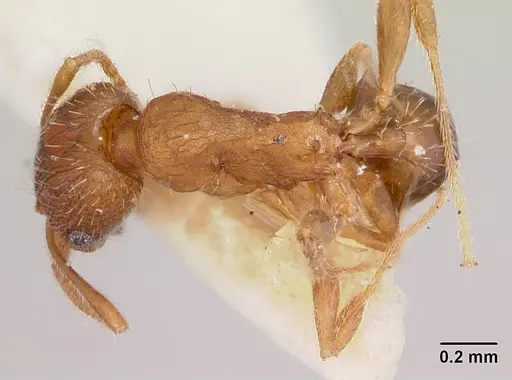
CASENT0103484
View on AntWeb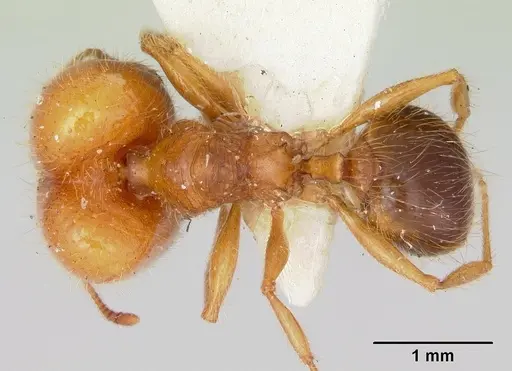
Literature
Loading distribution map...Loading products...