
Pheidole vestita
- Sci. Name
- Pheidole vestita
- Tribe
- Attini
- Subfamily
- Myrmicinae
- Author
- Wilson, 2003
- Distribution
- Found in 1 countries
Introduction
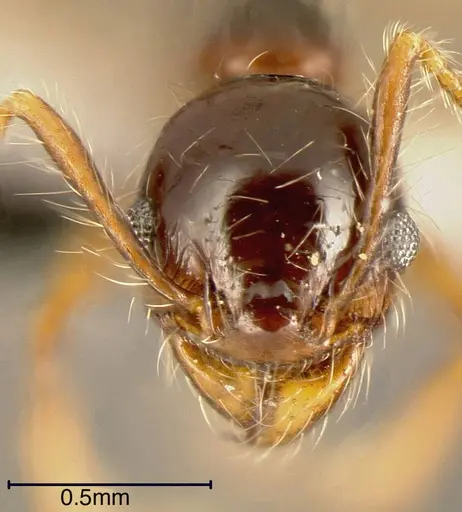
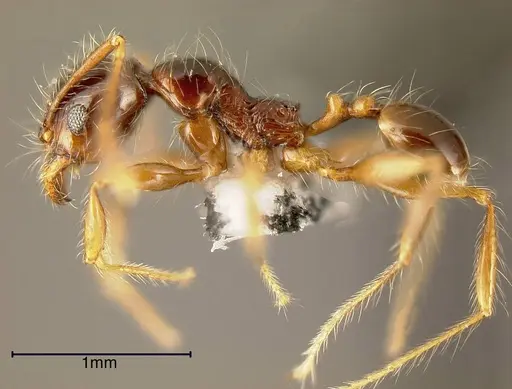
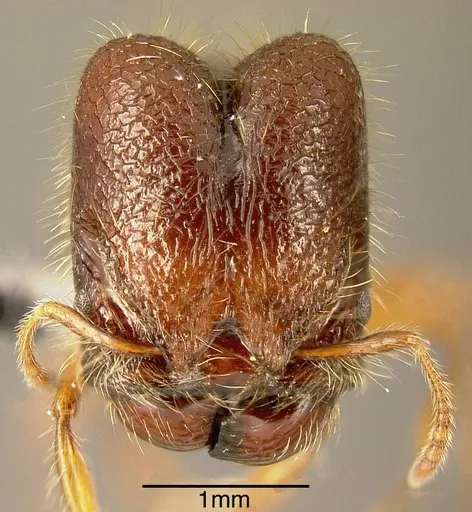
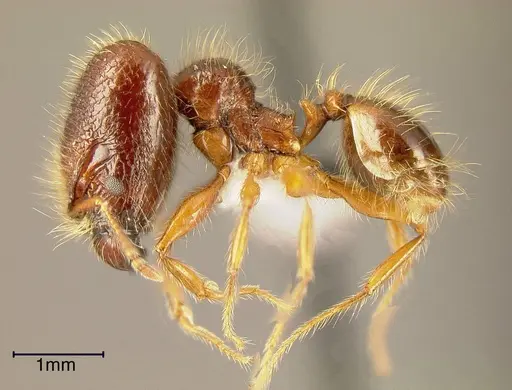
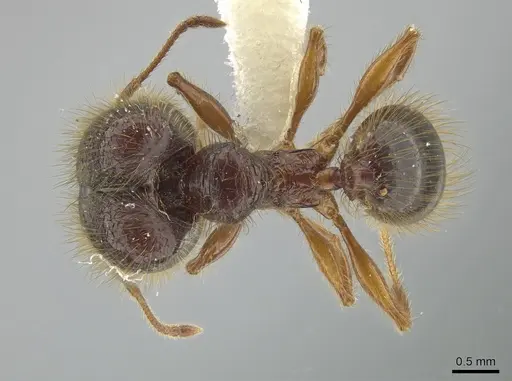
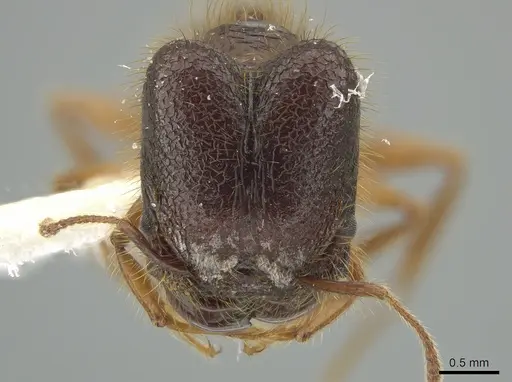
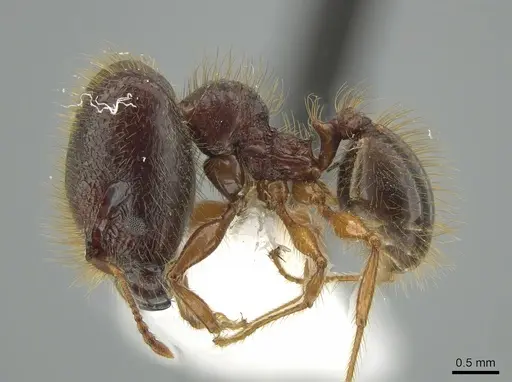
Pheidole vestita is a tropical big-headed ant from Costa Rica, first described by E. O. Wilson in 2003 . It is known only from La Selva Biological Station . This species belongs to the scrobifera group and is notable for its remarkably dense covering of long, suberect hairs, giving a 'clothed' appearance, the name 'vestita' means 'clothed' . The colony has two castes: majors with a large head (head width about 1.86 mm) and minors (head width about 0.60 mm) . Majors are dark reddish‑brown and minors are lighter brown . Total body length has not been recorded . What makes P. vestita special is its nocturnal foraging behaviour, it forages at night on grassy sections of forest trails . It nests in clayey soil in mature forest . The dense pilosity is unusual among Pheidole and likely helps sense the humid forest floor environment .
Quick Summary
- Difficulty: Hard
- Origin & Habitat: Known only from La Selva Biological Station, Costa Rica [1]. Nests in clayey soil in mature forest trails [1]. Forages at night [1]. Ground‑dwelling in tropical lowland forest [2].
- Colony Type: Unknown, no published data on colony structure. The genus Pheidole is typically monogyne (single‑queen), but this species has not been studied [1].
- Size & Growth:
- Queen: Total length unknown, no body size data available [1].
- Worker: Total length unknown, original description provides head measurements only: major head width 1.86 mm, minor head width 0.60 mm [1]. These are not body lengths.
- Colony: Unknown [1].
- Growth: Moderate (inferred from other Pheidole species)
- Development: No data, based on related Pheidole: roughly 6-8 weeks at tropical temperatures. (Unconfirmed for this species.)
- Antkeeping:
- Temperature: 24-28 °C (75-82 °F), inferred from tropical lowland habitat [1].
- Humidity: High, nest substrate should be consistently moist but not waterlogged [1].
- Diapause: No, tropical species [1].
- Nesting: Clay soil nests in nature, Y‑tong/plaster or soil formicaria with high humidity are suitable [1].
- Behavior: Nocturnal foragers, majors possess a functional sting (typical of Myrmicinae). Generally non‑aggressive but may sting if disturbed. Escape risk is high due to very small minors, use fine mesh or oil barriers [1].
- Common Issues: tiny minor workers can escape through standard mesh, use fine mesh barriers., high humidity is critical, dry conditions quickly kill the colony., colony founding details are unknown, success with captive queens is not documented., nocturnal activity means daytime observation is limited., rarity in the hobby and limited distribution data make this species a challenge.
Housing and Nest Setup
In nature Pheidole vestita nests in clayey soil along forest trails [1]. A naturalistic setup with moist soil or a Y‑tong/plaster nest that holds humidity works well. Test tubes are fine for founding, keep the cotton moist. For established colonies, provide chambers connected by narrow tunnels. Because minors are tiny, use very fine mesh (e.g.,0.2 mm) or a fluon barrier to prevent escapes [1].
Feeding and Diet
No specific dietary data exists for P. vestita, but Pheidole species are generally omnivorous. Offer small protein sources (fruit flies, pinhead crickets, small mealworms) and constant sugar water or honey. Feed protein 2-3 times a week. Remove uneaten prey after 24 hours to prevent mold. Prey should be small enough for minors to handle [1].
Temperature and Humidity
As a tropical lowland species, P. vestita needs warmth and high humidity. Keep the nest at 24-28 °C (75-82 °F). Use a small heating cable on one side to create a gradient. Temperatures below 22 °C slow brood development. Humidity must be high, the substrate should feel consistently moist. Mist the outworld regularly and provide a water tube. Avoid placing the nest in air‑conditioned rooms or near fans [1].
Behavior and Activity
Pheidole vestita is strictly nocturnal, expect activity only after dark [1]. Majors have large heads likely used for defense and processing seeds, minors handle most foraging and brood care. Majors can deliver a mild sting (Myrmicinae subfamily), but the ants are not aggressive toward humans. The dense hairs covering the body may help sense the environment in the dark forest understory [1].
Frequently Asked Questions
How long does it take for Pheidole vestita to get first workers?
There is no direct data. Based on related Pheidole, first workers may appear after 6-8 weeks at 24-28 °C, but this is only an estimate [1].
What do Pheidole vestita ants eat?
Specific diet is unknown. Like most Pheidole, they are likely omnivorous, offer small insects for protein and sugar water or honey [1].
What temperature do Pheidole vestita need?
Keep them at 24-28 °C (75-82 °F) year‑round. This is inferred from their tropical lowland habitat [1].
Do Pheidole vestita need hibernation?
No. As a tropical species from Costa Rica, they do not require diapause. Maintain warm temperatures all year [1].
Can I keep multiple Pheidole vestita queens together?
Unknown. Most Pheidole are monogyne, but there is no information for this species. It is safest to keep only one queen per colony [1].
How big do Pheidole vestita colonies get?
Colony size is unknown. Related Pheidole can reach several thousand workers, but no data exists for this species [1].
Why are my Pheidole vestita dying?
Common causes include dry conditions (needs high humidity), temperatures below 22 °C, escape of tiny minors through standard mesh, or mold from uneaten prey. Check humidity and use fine mesh barriers [1].
When should I move Pheidole vestita to a formicarium?
No specific recommendation. In general, wait until the colony has at least 30-50 workers before moving from a test tube. A suitable formicarium should maintain high humidity [1].
Are Pheidole vestita good for beginners?
No. They are rated Hard because key care requirements (founding, growth, exact humidity needs) are unknown. Only experienced keepers prepared for uncertainties should attempt this species [1].
Report an Issue
The current care sheet is based fully on literature. See inconsistencies, or something that's incorrect? Please , it will be resolved after review from an admin. Contributing to the blogs tab also helps providing information, to make us be able to further improve the caresheets. Thank you for your support!
References

This caresheet is licensed under CC BY-SA 4.0 .
Community Blogs
Literature
Loading distribution map...Loading products...