
Pheidole venatrix
- Sci. Name
- Pheidole venatrix
- Tribe
- Attini
- Subfamily
- Myrmicinae
- Author
- Wilson, 2003
- Distribution
- Found in 2 countries
Introduction
Pheidole venatrix is a small Neotropical ant from the diligens group, known only from Colombia. The species was described in 2003 by Wilson, based on specimens collected in a montane coffee plantation at 850 m elevation in Magdalena . Its name means 'huntress' in Latin . Like all Pheidole, it has two worker castes (dimorphism), but detailed biology and colony structure are unstudied. This species is poorly known and has never been kept in captivity.
Quick Summary
- Difficulty: Unknown, insufficient data for reliable care recommendations
- Origin & Habitat: Montane coffee plantation in Magdalena, Colombia at 850 m elevation [1]. Also recorded in Amazonian upland forest (bosque de tierra firme) [3]. Likely inhabits forest edges and disturbed areas.
- Colony Type: Unknown, colony structure has not been documented. Most Pheidole are monogyne (single-queen), but this is unconfirmed for P. venatrix.
- Size & Growth:
- Queen: Undocumented, no queen measurements available
- Worker: Size data unavailable, only head measurements exist (no total body length recorded). Major workers are small with distinctive humeral extensions, minors are smaller [2].
- Colony: Unknown, no colony size data available
- Growth: Unknown, no growth rate data exists
- Development: Unknown for this species. Based on typical Pheidole patterns, estimate 6-10 weeks at optimal temperature. (Development timeline is unconfirmed. Related Neotropical Pheidole typically complete development in 6-10 weeks.)
- Antkeeping:
- Temperature: Unknown, no thermal studies exist. Based on Colombian origin (850 m elevation, Magdalena), likely prefers warm conditions similar to other Neotropical Pheidole: 22-28°C. Start in this range and observe colony activity.
- Humidity: Unknown, no humidity data exists. Based on montane habitat, likely prefers moderate humidity. Keep nest substrate slightly moist but not waterlogged. Provide a water source.
- Diapause: Unknown, no seasonal data exists for this species. Colombian ants from this region may not require strong diapause, but a brief cool period (2-3 months at 15-18°C) might benefit long-term health.
- Nesting: No specific nesting data exists. Based on habitat, they likely nest in soil or under stones. Use standard Pheidole setups: test tubes for founding, Y-tong or plaster nests for established colonies. Provide a connecting outworld.
- Behavior: Behavior is unstudied. Based on subfamily (Myrmicinae, tribe Attini), Pheidole venatrix has a functional stinger but is not considered dangerous. Like most Pheidole, majors likely defend the colony and crush seeds, while minors forage. Escape prevention is recommended as they are active foragers. Colony may be aggressive only when disturbed.
- Common Issues: insufficient data makes reliable care recommendations difficult, no documented diet acceptance, start with standard Pheidole foods (seeds, insects), no information on founding success rates, unknown if this species accepts sugar/honeydew, no data on common pathogens or parasites affecting this species
Identification and Appearance
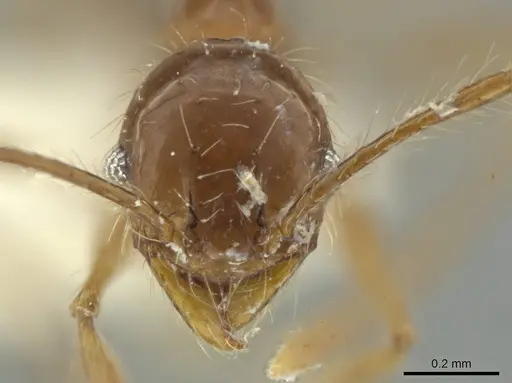
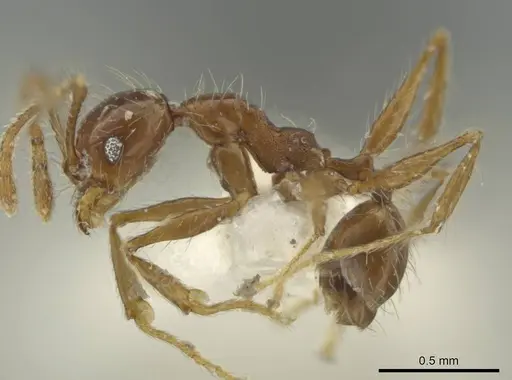
Pheidole venatrix is dimorphic with two worker castes. Major workers have a small 'shark fin' extension on the humerus (shoulder) in dorsal-oblique view, thin propodeal spines about one-third the length of the basal propodeal face, and a weakly concave posterior dorsal half of the head in side view. The postpetiolar node is spinose. Minor workers lack propodeal spines and have a narrowed occiput with a nuchal collar. Both castes have a medium brown body and mandibles with yellowish-brown appendages [2]. Total body length has not been recorded, only head measurements exist.
Distribution and Habitat
Pheidole venatrix is known only from Colombia. The type locality is Finca El Recreo, Bonda, Magdalena at 850 m elevation, in a montane coffee plantation [1][4][2]. A 2009 study recorded this species in Colombian Amazonia (bosque de tierra firme / upland forest) [3]. This suggests the species may occupy both montane and lowland forest habitats.
Known Biology
Direct biological studies on Pheidole venatrix do not exist. The species was described in 2003 and remains one of the least studied Pheidole in Colombia [2]. Based on genus-level knowledge, Pheidole species are generally seed-harvesting ants that also take insect protein. The genus is one of the most diverse ant genera, with over 1000 described species. Colony sizes typically reach several hundred to a few thousand workers, but this is unconfirmed for P. venatrix. No information is available on founding behavior, queen morphology, or reproductive biology.
Keeping Considerations
This caresheet is preliminary, Pheidole venatrix has never been kept in captivity. If you obtain this species, document your observations carefully. Start with standard Pheidole care: test tube setups for founding colonies, temperatures in the 22-28°C range, and moderate humidity. Feed a mix of seeds (millet, chia, flax) and protein sources (dead insects, mealworms). Always use escape prevention as Pheidole are active foragers. The lack of data means this species could have unique requirements, approach keeping as experimental and share findings with the antkeeping community.
Frequently Asked Questions
How do I care for Pheidole venatrix?
Care recommendations are speculative due to lack of species-specific data. Provide a test tube setup for founding, maintain temperatures around 22-28°C, keep humidity moderate, and offer both seeds and protein. This is an experimental species in captivity with no established protocols.
What do Pheidole venatrix ants eat?
Diet is unconfirmed. Based on typical Pheidole behavior, they likely eat seeds and insects. Offer millet, chia, or flax seeds plus protein sources like dead crickets, mealworms, or fruit flies. Sugar water may be accepted but is not a primary food for most Pheidole.
How long does it take for Pheidole venatrix to develop from egg to worker?
Development time is unknown, no direct measurements exist for this species. Based on related Neotropical Pheidole, expect approximately 6-10 weeks from egg to first worker at optimal temperature (around 24-26°C).
What size colony does Pheidole venatrix reach?
Colony size is undocumented. Most Pheidole colonies grow to several hundred to a few thousand workers. P. venatrix may reach similar sizes given enough time, but no specific data exists.
Can I keep multiple Pheidole venatrix queens together?
Colony structure is unconfirmed. Most Pheidole are single-queen (monogyne) species. Do not combine unrelated foundress queens, they will likely fight. If you find a colony with multiple queens in the wild, it may indicate polygyny, but this has not been documented for this species.
What temperature should I keep Pheidole venatrix at?
Temperature requirements are unstudied. Based on Colombian origin (850m elevation, Magdalena), start around 22-26°C. Adjust based on colony activity.
Does Pheidole venatrix need hibernation?
Diapause requirements are unknown. Colombian ants from Magdalena may not need strong hibernation, but a brief cool period (2-3 months at 15-18°C) may benefit colony health. Monitor for reduced activity as a sign of dormancy needs.
Is Pheidole venatrix a good species for beginners?
No, this species is not recommended for beginners due to complete lack of captive husbandry data. The difficulty level is unknown until more keepers successfully maintain colonies. Choose well-documented species like Pheidole pallidula for beginner-friendly Pheidole keeping.
Where is Pheidole venatrix found?
Pheidole venatrix is known only from Colombia: Magdalena region (type locality) and recorded in Amazonia [4][2][3].
Report an Issue
The current care sheet is based fully on literature. See inconsistencies, or something that's incorrect? Please , it will be resolved after review from an admin. Contributing to the blogs tab also helps providing information, to make us be able to further improve the caresheets. Thank you for your support!
References

This caresheet is licensed under CC BY-SA 4.0 .
Community Blogs
JTLC000016569
View on AntWeb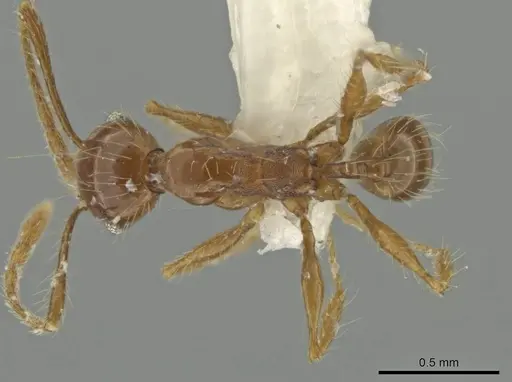
Literature
Loading distribution map...Loading products...