
Pheidole velox
- Sci. Name
- Pheidole velox
- Tribe
- Attini
- Subfamily
- Myrmicinae
- Author
- Emery, 1887
- Distribution
- Found in 0 countries
Introduction
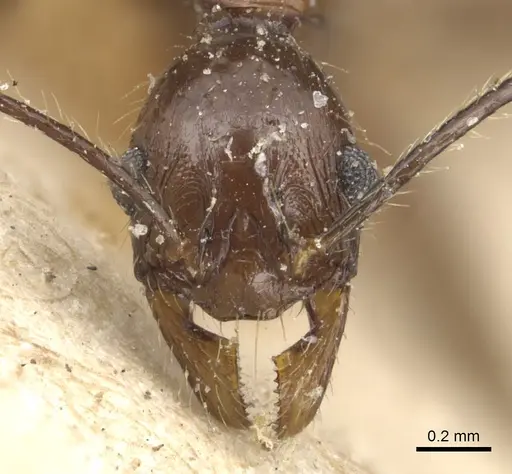
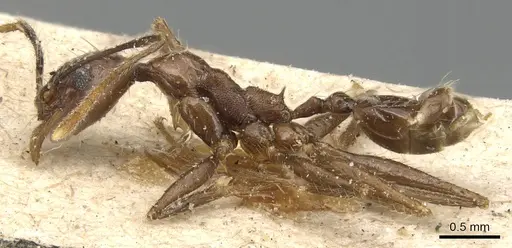
Pheidole velox is a small, slender ant species native to Ternate Island in Indonesia. Workers measure approximately 3.5 mm in total length and have a ferrugineous, shiny appearance with sparse pilose . The species belongs to the Myrmicinae subfamily and Attini tribe . A notable feature is the elongated head shape, which resembles Aphaenogaster species, as described in the original 1887 paper . This species is only known from its type locality and has not been studied in captivity.
Quick Summary
- Difficulty: Medium
- Origin & Habitat: Ternate Island, Indonesia (Indomalaya region), tropical island environment [1][2]
- Colony Type: Unconfirmed
- Size & Growth:
- Antkeeping:
- Temperature: Temperature needs are unclear, start around 24-28°C and observe, based on tropical origin
- Humidity: Keep substrate consistently moist but not waterlogged, based on tropical habitat
- Diapause: No, tropical species do not require diapause
- Nesting: Nesting preferences unknown, based on genus patterns, soil or under stones may be suitable
- Behavior: Pheidole species are generally non-aggressive toward keepers but will defend their nest using soldiers. Workers are small (3.5 mm), so escape prevention is important. Defense mechanism includes a sting, as typical for Myrmicinae.
- Common Issues: lack of specific care data, this species has not been documented in captive ant keeping., escape prevention is important due to small worker size., tropical humidity requirements mean dry housing can cause colony decline., colony growth rate is unknown, expect moderate growth based on genus patterns.
Nest Preferences
Nesting preferences for Pheidole velox are unknown. Based on genus patterns, they may nest in soil or under stones in tropical environments. In captivity, Y-tong (AAC) or plaster nests can be used, but no specific data exists for this species. Provide a water source to maintain humidity. [2]
Feeding and Diet
Diet is unknown for Pheidole velox. Based on genus patterns, Pheidole species are granivorous and may accept seeds, small insects, and sugary liquids. Offer a mix of seeds and protein, but adjust based on colony acceptance. No specific dietary data exists.
Temperature and Care
Temperature needs are unclear for this species. As a tropical ant from Indonesia, keep temperatures around 24-28°C and avoid cold exposure. A heating gradient can help, but no specific care data exists.
Behavior and Temperament
Pheidole velox workers are active foragers, but specific behavior is undocumented. Based on genus patterns, colonies are defensive with soldiers, but not aggressively swarming. Escape prevention is critical due to small size (3.5 mm). [1]
Colony Establishment
Colony establishment details are unknown. If a queen is obtained, she may be claustral, but this is unconfirmed. Provide a test tube setup and monitor for worker emergence, but no timeline data exists.
Frequently Asked Questions
How long does it take for Pheidole velox to produce first workers?
Unknown, no specific data exists for this species. Based on genus patterns, it may take 6-8 weeks under warm conditions, but monitor your colony closely.
What do Pheidole velox ants eat?
Diet is unknown, but based on genus patterns, they may accept seeds, small insects, and sugar water. Offer a varied diet and adjust based on colony response.
What temperature do Pheidole velox ants need?
Temperature needs are unclear, start around 24-28°C and observe, based on tropical origin.
Can I keep multiple Pheidole velox queens together?
Colony type is unconfirmed, but Pheidole species are typically monogyne. Combining queens is not recommended without evidence of compatibility.
How big do Pheidole velox colonies get?
Colony size is unknown, no wild data exists. Based on genus patterns, colonies may reach several hundred workers over years, but growth rate is unclear.
Do Pheidole velox ants need hibernation?
No, as a tropical species from Indonesia, they do not require diapause.
What size nest should I use for Pheidole velox?
Nesting preferences are unknown, but Y-tong or plaster nests may work based on genus patterns. Chambers should suit small workers (3.5 mm).
Are Pheidole velox ants good for beginners?
This species is rated as Medium difficulty due to lack of specific care data. Some ant-keeping experience is recommended.
Why are my Pheidole velox ants dying?
Common causes include incorrect temperature, dry housing, or mold. Ensure warm, humid conditions and proper escape prevention, but specific risks are undocumented.
When should I move Pheidole velox to a formicarium?
Move when the colony has several workers and the test tube dries, but no specific timeline exists. Use a nest that maintains humidity.
Where is Pheidole velox found in the wild?
This species is only documented from Ternate Island, Indonesia [1][2].
Report an Issue
The current care sheet is based fully on literature. See inconsistencies, or something that's incorrect? Please , it will be resolved after review from an admin. Contributing to the blogs tab also helps providing information, to make us be able to further improve the caresheets. Thank you for your support!
References

This caresheet is licensed under CC BY-SA 4.0 .
Community Blogs
CASENT0904235
View on AntWeb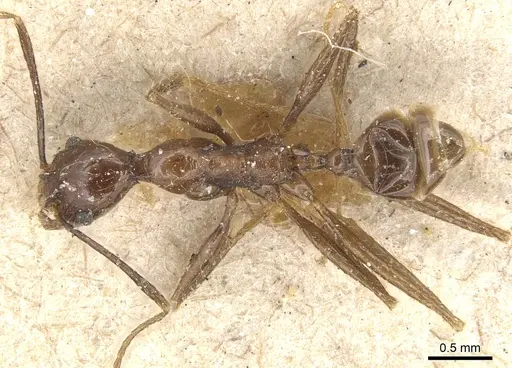
Literature
Loading distribution map...Loading products...