
Pheidole ursus
- Sci. Name
- Pheidole ursus
- Tribe
- Attini
- Subfamily
- Myrmicinae
- Author
- Mayr, 1870
- Distribution
- Found in 4 countries
Introduction
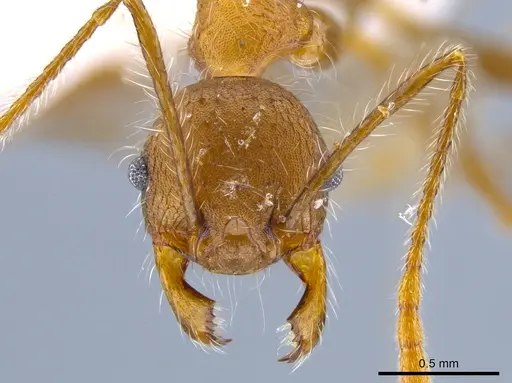
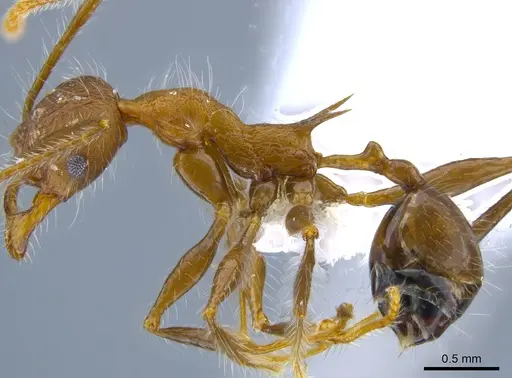
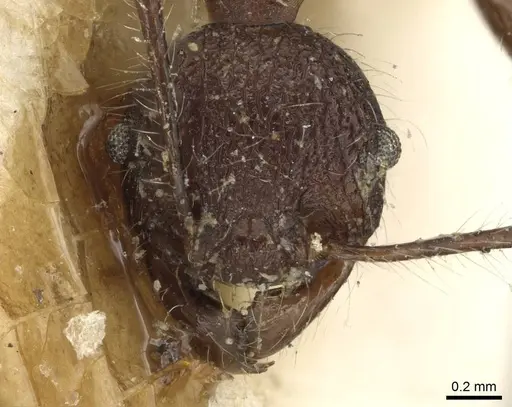
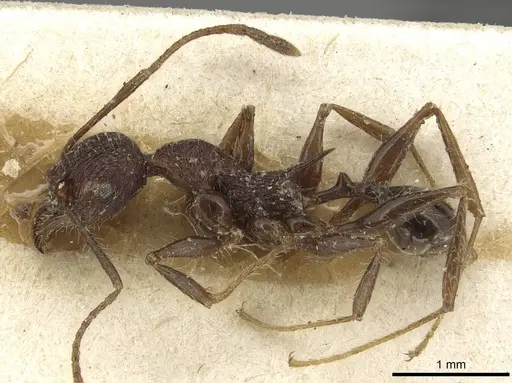
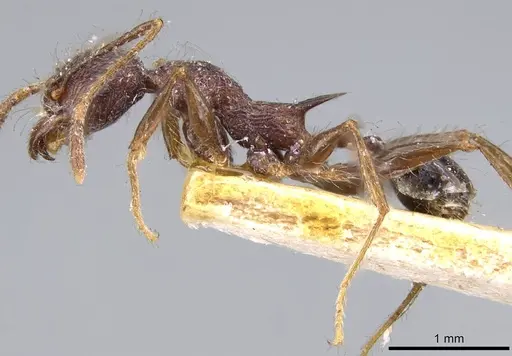
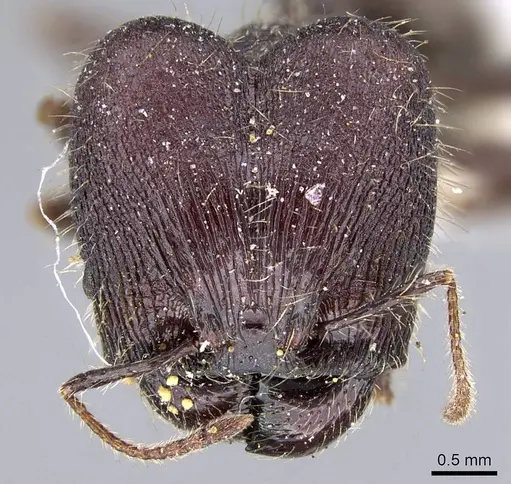
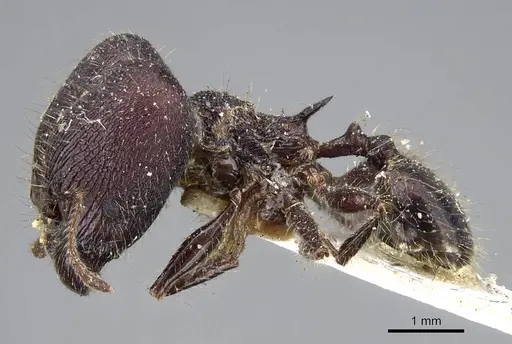
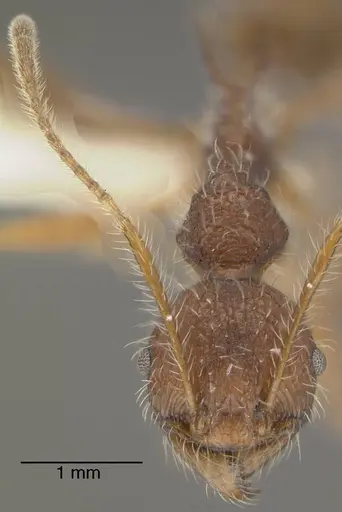
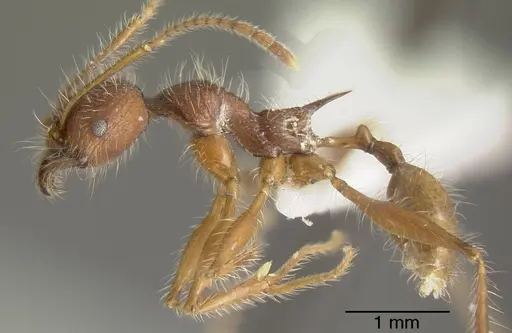
Pheidole ursus is a large, dimorphic ant species native to Central America. Majors reach 7.5 mm and minors 4 mm . The major is dark blackish-brown with a rough, rugoreticulate head and mesosoma, while the minor is dark chestnut fuscous with reddish-brown appendages . It is found in Mexico, Guatemala, Honduras, and Costa Rica, living in tropical forests and coffee plantations up to 1600 m elevation . The most striking feature is the extremely long propodeal spines on both castes. Majors have a concave rear head profile and completely foveolate gaster, giving a rough, bear-like appearance (the Latin name 'ursus' means bear) . The combination of large size, dramatic spines, and caste dimorphism makes this a visually impressive species for advanced keepers.
Quick Summary
- Difficulty: Medium
- Origin & Habitat: Native to Mexico, Guatemala, Honduras, and Costa Rica. Found in tropical forests and coffee plantations at elevations up to 1600 m [2][3].
- Colony Type: Assumed to be single-queen (monogyne) based on genus patterns. This species is dimorphic with distinct major and minor worker castes [3].
- Size & Growth:
- Queen: Estimated ~9-10 mm based on worker sizes.
- Worker: Major: 7.5 mm, minor: 4 mm [1].
- Colony: Unknown, estimated up to several thousand workers based on genus patterns.
- Growth: Moderate
- Development: Estimated 6-8 weeks at optimal temperature (24-28 °C). (Development speed depends on temperature. First workers (nanitics) are minors.)
- Antkeeping:
- Temperature: 24-28 °C. Tropical species, avoid prolonged temperatures below 20 °C. Provide a thermal gradient [2].
- Humidity: Keep nest substrate moist but not waterlogged. A humidity gradient is beneficial.
- Diapause: No, tropical species that stays active year-round [2].
- Nesting: Y‑tong (AAC), plaster, or soil nests work well. Provide dark chambers large enough for majors. Avoid acrylic nests.
- Behavior: Generally docile but will defend the nest vigorously. Majors have powerful mandibles for crushing seeds and large prey. Active diurnal foragers. Moderate escape risk, they climb well, so use fluon barriers and tight gaps.
- Common Issues: tropical species sensitive to cold, colony may decline if temperatures drop below 20 °C for long, colonies can be slow to establish initially, patience required during founding, large majors need spacious nest chambers, cramped spaces can stress the colony, overfeeding causes mold, remove uneaten prey within 24-48 hours, wild-caught colonies may carry parasites, quarantine and observe new colonies
Housing and Nest Setup
Pheidole ursus does well in Y‑tong (AAC), plaster, or soil nests. The nest should have chambers large enough for the 7.5 mm majors, tight spaces that work for tiny ants will feel cramped. Provide a well-defined outworld at least twice the area of the nest. Use a 2 cm gap and fluon to prevent escapes [2]. Darken the nest chambers to mimic their natural underground habitat.
Feeding and Diet
This species is a generalist omnivore. Offer protein 2-3 times per week, small insects like fruit flies, pinhead crickets, or mealworms. They also accept seeds, especially once majors are present. Provide a sugar source (honey or sugar water) once or twice weekly. Remove uneaten prey after 24-48 hours to prevent mold. Varied diet keeps the colony healthy [2].
Temperature and Seasonal Care
As a tropical species, Phedole ursus needs warm conditions year-round. Maintain 24-28 °C in the nest area. Use a heating cable on one side to create a gradient. Room temperature (22-24 °C) is acceptable but may slow growth. Avoid sustained temperatures below 20 °C. No diapause, keep them warm all year [2].
Colony Development and Growth
Founding behavior is unconfirmed for this species, but based on typical Pheidole patterns, queens likely found claustrally. The first workers (nanitics) are minors and appear after about 6-8 weeks at optimal temperature. Majors begin to appear once the colony reaches a few hundred workers. Growth rate is moderate for a large ant. A mature colony may contain several thousand workers [2].
Behavior and Observation
Watch for the division of labor: minors handle brood care and most food retrieval, while majors tackle large prey and seeds with their powerful mandibles. When you drop a large insect, majors quickly mobilize. The contrast between the black, rough-surfaced majors and the smaller, reddish-brown minors is visually striking. They are diurnal and consistently active. They are not aggressive toward keepers but will defend the nest if disturbed [2].
Frequently Asked Questions
How long does it take for Pheidole ursus to raise first workers?
Estimated 6-8 weeks at 24-28 °C. Timing depends on temperature and feeding. Queens likely found claustrally and do not emerge until the first workers appear.
What do Pheidole ursus eat?
They are omnivores. Feed small insects (fruit flies, pinhead crickets, mealworms) 2-3 times per week, plus seeds and sugar water once or twice weekly. Remove uneaten prey after 24-48 hours [2].
What temperature do Pheidole ursus need?
Keep them at 24-28 °C. They are tropical and do not tolerate cold. Use a heating cable to create a gradient. Room temperature (22-24 °C) slows growth, avoid below 20 °C [2].
Are Pheidole ursus good for beginners?
Rated medium difficulty. Main challenges: need constant tropical warmth (no hibernation) and patience during establishment. If you can maintain warm, humid conditions year‑round, they are rewarding.
How big do Pheidole ursus colonies get?
Unknown, but estimated up to several thousand workers at maturity. Majors (7.5 mm) become more common as the colony grows. A well‑established colony after 2-3 years can be impressive [1].
Can I keep multiple Pheidole ursus queens together?
Unknown. This species is assumed to be monogyne, so keeping multiple queens together is not recommended without more information. Attempts may lead to fighting.
What size nest do I need for Pheidole ursus?
Use a nest with chambers large enough for the 7.5 mm majors. Y‑tong, plaster, or soil nests work well. The outworld should be at least twice the nest area. Avoid acrylic nests [2].
Do Pheidole ursus need hibernation?
No, they are tropical and do not require diapause. Keep them warm year‑round at 24-28 °C [2].
Why are my Pheidole ursus majors dying?
Majors have shorter lifespans than minors, so some die‑off is normal. If many die at once, check temperature (too cold?), humidity (too dry?), or food quality. Avoid excessive disturbance of the colony.
Report an Issue
The current care sheet is based fully on literature. See inconsistencies, or something that's incorrect? Please , it will be resolved after review from an admin. Contributing to the blogs tab also helps providing information, to make us be able to further improve the caresheets. Thank you for your support!
References

This caresheet is licensed under CC BY-SA 4.0 .
Community Blogs
CASENT0612735
View on AntWeb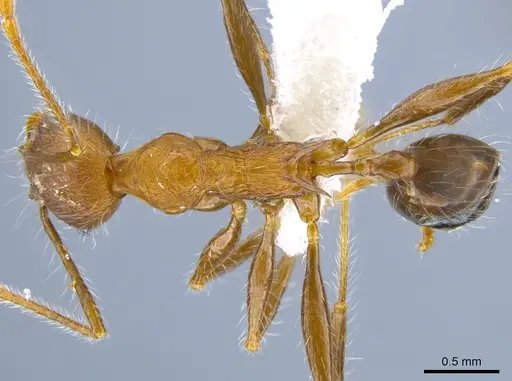
CASENT0915431
View on AntWeb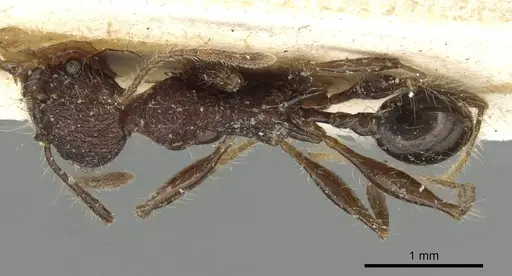
CASENT0919788
View on AntWeb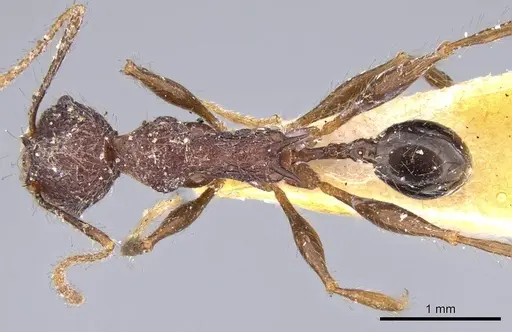
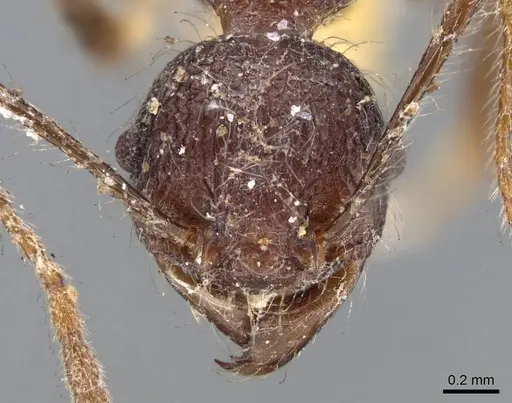
CASENT0919789
View on AntWeb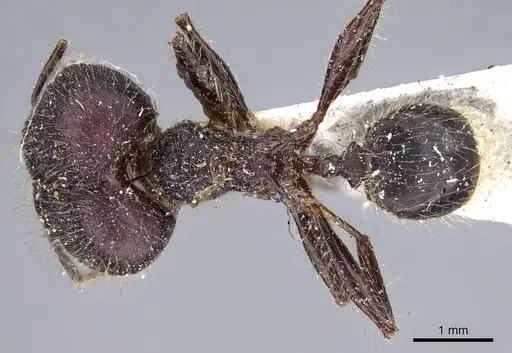
INBIOCRI001280928
View on AntWeb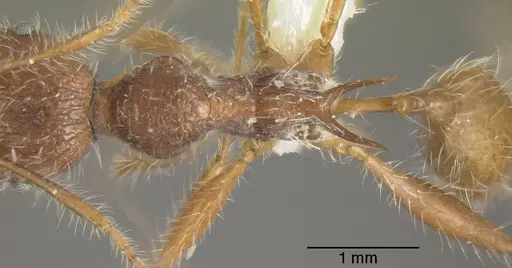
Literature
Loading distribution map...Loading products...