
Pheidole unicornis
- Sci. Name
- Pheidole unicornis
- Tribe
- Attini
- Subfamily
- Myrmicinae
- Author
- Wilson, 2003
- Distribution
- Found in 2 countries
Introduction
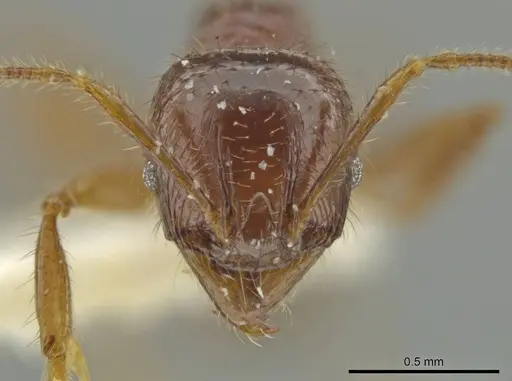
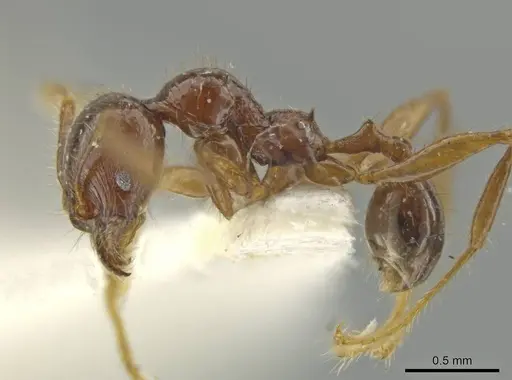
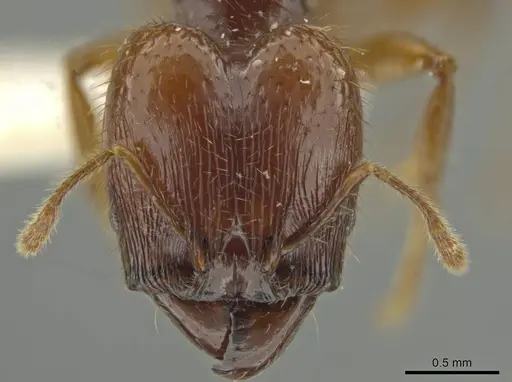
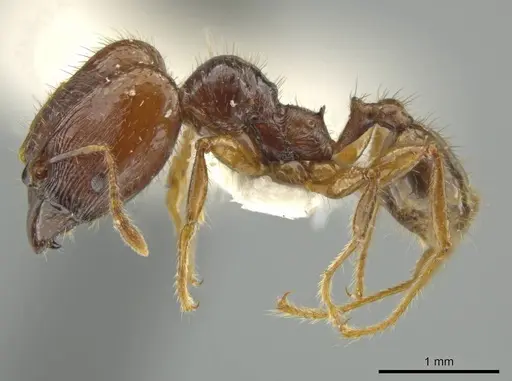
Pheidole unicornis is a small to medium-sized ant from the tristis-group, native to high-altitude mountain forests of Colombia and Ecuador. The species name 'unicornis' (one-horned) refers to the distinctive lobe-like median clypeal carina projecting forward on major workers, giving them a horn-like appearance. Queens are relatively large at 6.3–6.4 mm total length, while worker sizes have not been directly measured but are typical for the genus. This species is polygynous (multiple queens per colony) and polydomous (maintaining multiple connected nests), and nests in the ground at the base of plants at elevations between 1600–2100 meters .
Quick Summary
- Difficulty: Medium
- Origin & Habitat: Native to mountain rainforests of Colombia (Valle del Cauca) and Ecuador (Cotopaxi province), at elevations of 1600–2100 m. A documented nest was found at the base of a banana plant in Otonga forest, Ecuador, at 2065 m [1][2][3].
- Colony Type: Polygynous and polydomous – colonies contain multiple egg-laying queens and occupy multiple connected nest sites. This social structure is uncommon among Pheidole species and was confirmed from a wild nest [1].
- Size & Growth:
- Queen: 6.3–6.4 mm total length [1]
- Worker: Worker body length not recorded in available literature. Major workers have a distinctively sculpted head (head width ~1.42 mm) and minor workers are smaller (~0.72 mm head width), but total length data are unavailable [3].
- Colony: Unknown for kept colonies. Wild colonies can be large due to polygynous-polydomous structure [1].
- Growth: Moderate (inferred from typical Pheidole patterns)
- Development: Estimated 6–8 weeks at optimal temperature (based on Pheidole genus patterns) (Species-specific data are lacking, development time is inferred from similar Pheidole species.)
- Antkeeping:
- Temperature: Prefer cool, stable conditions 18–24°C. Their high-altitude origin means they struggle above 26°C. Avoid direct heat sources [1].
- Humidity: Moderate to high. Keep nest substrate consistently moist but not waterlogged, mimicking mountain rainforest floor conditions [1].
- Diapause: Unknown – no research exists on overwintering needs. Given their tropical high-altitude habitat, they may not require a defined diapause, but seasonal cooling might still be beneficial [1].
- Nesting: Ground-nesting species. In captivity, use a soil-filled formicarium, plaster nest, or Y-tong nest with deep chambers. They naturally nest at the base of plants, so provide plenty of substrate depth [1].
- Behavior: Standard Pheidole temperament – minor workers forage and tend brood, while major workers (soldiers) defend the nest and help process food. They are not notably aggressive but will defend vigorously if disturbed. Escape risk is high due to the small size of minor workers, use fine mesh or tight-sealing outworld.
- Common Issues: high temperatures above 26°C can quickly kill the colony – this species is adapted to cool high-altitude conditions., small minor workers can slip through tiny gaps – ensure the outworld and nest are fully sealed., limited captive care records mean some trial and error is necessary for optimal success., polygynous structure may lead to queen conflict if the nest is too small or resources are limited, provide ample space.
Housing and Nest Setup
This ant naturally nests in the ground at the base of plants. In captivity, a soil-filled formicarium, plaster nest, or Y-tong nest works well. Provide deep chambers because they are used to nesting in soil. Because they are polydomous, you can connect multiple chambers, but a single large nest also works. Start with a test tube for founding, once the colony grows, move them to a more spacious setup. Make sure all openings are sealed tight – minor workers are small and will escape through the tiniest gap [1].
Feeding and Diet
Like most Pheidole, these ants are omnivorous. Provide a balanced diet of protein (small crickets, fruit flies, mealworms) and carbohydrates (sugar water, honey, seeds). Major workers help chop up large prey. Give them a constant supply of fresh water in a test tube or water feeder. Since captive feeding data is lacking, observe what they prefer and adjust accordingly.
Temperature and Humidity
These ants come from cool mountain forests, so keep temperatures between 18–24°C. Anything above 26°C risks stressing or killing the colony. Humidity should be moderate to high – keep the nest substrate consistently damp but not flooded. A moisture gradient (dryer foraging area, moist nest) works well [1].
Colony Structure and Social Organization
Pheidole unicornis is one of the few Pheidole species with a polygynous (multiple queen) and polydomous (multiple nest) social structure. A wild nest was found at 2065 m in Ecuador, under a banana plant, containing multiple queens. In captivity, you may see several queens coexisting peacefully – do not separate them. The major workers develop a prominent lobe-like carina on the clypeus that gives the species its name. Minor workers are smaller and lack this feature [1][3].
Growth and Development
Queens are 6.3–6.4 mm total length and share the horn-like clypeal carina with major workers. Males are smaller at 4.2–4.3 mm. Worker body length has not been formally measured, but majors are notably larger than minors. Development from egg to worker likely takes 6–8 weeks at optimal temperature (based on typical Pheidole genus data). Because no species-specific data exists, these times are estimates [1][3].
Frequently Asked Questions
How long does it take for Pheidole unicornis to produce first workers?
Estimated 6–8 weeks from egg to first worker at optimal temperature (18–24°C). This is inferred from typical Pheidole patterns, as species-specific data is unavailable.
Can I keep multiple queens together in Pheidole unicornis?
Yes – this species is naturally polygynous, meaning multiple queens coexist in the same colony. Unlike many ants, they do not fight each other [1].
What temperature is best for Pheidole unicornis?
Keep them at 18–24°C. They come from high-altitude forests and cannot handle prolonged temperatures above 26°C [1].
Are Pheidole unicornis good for beginners?
Rated Medium difficulty. While not the hardest, they require stable cool temperatures and have limited captive care records. Their polygynous nature can make queen success easier, but temperature management is key.
What do Pheidole unicornis eat?
They are omnivorous. Feed them small insects (crickets, fruit flies, mealworms) for protein, and sugar water or honey for carbohydrates. They also accept seeds like many Pheidole.
How big do Pheidole unicornis colonies get?
Exact colony size is unknown, but given their polygynous and polydomous nature, mature wild colonies likely contain several hundred to over a thousand workers [1].
Do Pheidole unicornis need hibernation?
Diapause requirements are unconfirmed. Their high-altitude tropical origin suggests they may not require a cold diapause, but seasonal temperature drops might still be beneficial. Without research, it's safest to keep conditions stable year-round [1].
What makes Pheidole unicornis unique?
It is named 'unicornis' (one-horned) for the forward-projecting lobe on the clypeus of major workers. It is also one of the few Pheidole species that is both polygynous and polydomous [1][3].
When should I move Pheidole unicornis to a formicarium?
Move from a test tube to a formicarium when the colony reaches around 20–30 workers and the tube becomes crowded. Ensure the new nest has appropriate moisture and chamber size for their small minors.
Report an Issue
The current care sheet is based fully on literature. See inconsistencies, or something that's incorrect? Please , it will be resolved after review from an admin. Contributing to the blogs tab also helps providing information, to make us be able to further improve the caresheets. Thank you for your support!
References

This caresheet is licensed under CC BY-SA 4.0 .
Community Blogs
CASENT0645887
View on AntWeb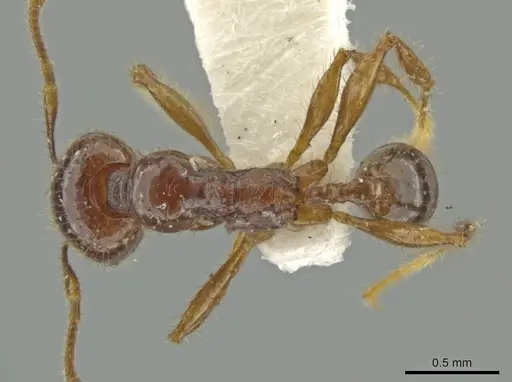
JTLC000016566
View on AntWeb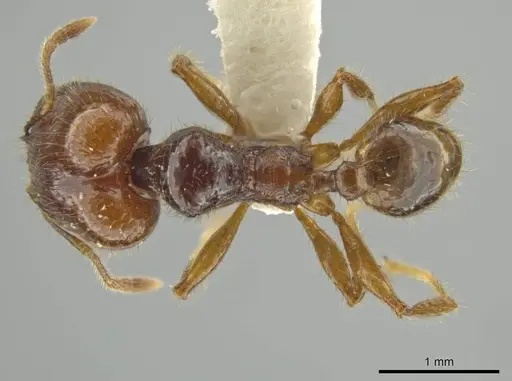
Literature
Loading distribution map...Loading products...