
Pheidole tumida
- Sci. Name
- Pheidole tumida
- Tribe
- Attini
- Subfamily
- Myrmicinae
- Author
- Eguchi, 2008
- Distribution
- Found in 3 countries
Introduction
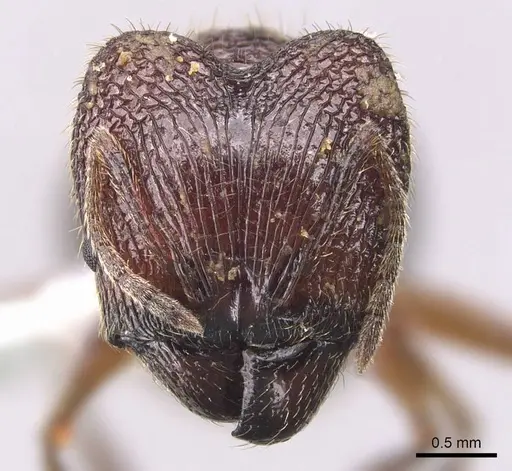
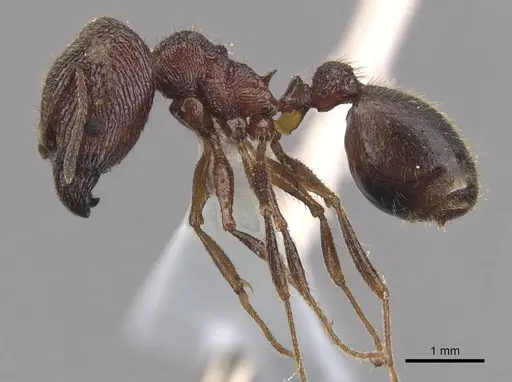
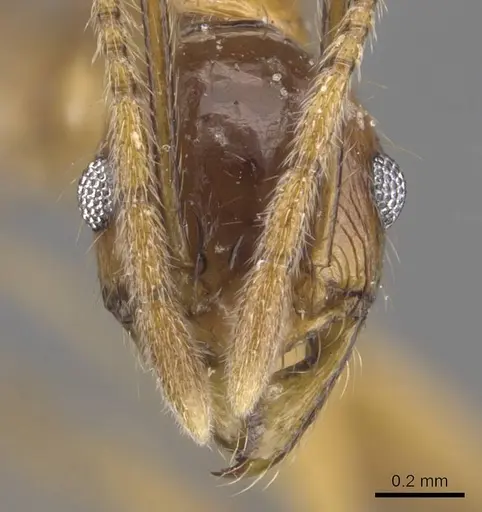
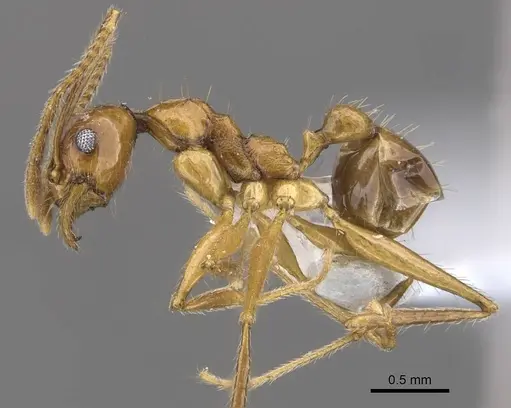
Pheidole tumida is an ant species native to Southeast Asia, described by Eguchi in 2008 . It inhabits forest edges and well-developed forests across the Indo-Chinese and Indo-Malayan subregions, nesting in soil and rotting logs . Major workers have a massive postpetiole and lobate subpetiolar process, while minor workers are much smaller with smooth bodies . The species is closely related to Pheidole nodus .
Quick Summary
- Difficulty: Medium
- Origin & Habitat: Native to Southeast Asia including Vietnam, Laos, southern China (Yunnan, Hainan), and Macau. Found in forest edges, well-developed forests, and rubber plantations at elevations of 552-840m, nesting in soil and rotting logs [1][2][4][5][6][7].
- Colony Type: Based on Pheidole genus patterns, likely monogyne (single-queen colonies).
- Size & Growth:
- Queen: Size data unavailable, inferred from Pheidole genus as ~6-8 mm
- Worker: Size data unavailable, major workers are larger than minors [1]
- Colony: Colony size data unavailable
- Growth: Moderate, typical for Pheidole genus
- Development: Unknown, no species-specific data available (Development time may vary with temperature)
- Antkeeping:
- Temperature: Keep at 24-28°C with a slight gradient allowing cooler areas around 22°C [2].
- Humidity: Keep nest substrate consistently moist but not waterlogged, as forest-dwelling species needs damp conditions [1].
- Diapause: Unknown, no data on hibernation requirements
- Nesting: Natural nesting in soil and rotting logs. In captivity, use soil-based or Y-tong/plaster nests with moisture management [1][2].
- Behavior: Pheidole tumida is a generalist forager found across ground, subterranean, and occasionally arboreal levels [6]. It has minor workers for general tasks and major workers for defense and processing food. The species possesses a stinger from its subfamily Myrmicinae but is not highly aggressive toward humans. Minor workers are very small, requiring good escape prevention [1].
- Common Issues: colonies may fail if humidity drops too low, forest species needs consistent moisture., tiny minor workers can escape through small gaps, use fine mesh barriers., founding behavior is unconfirmed, queens may require patience during early stages., limited availability in trade since species was described in 2008., wild-caught colonies may carry parasites that can harm captive colonies.
Housing and Nest Setup
For founding colonies, a standard test tube setup works well. As the colony grows, move to a naturalistic formicarium with soil substrate or a Y-tong/plaster nest to maintain humidity. Provide a foraging area connected to the nest [1][2].
Feeding and Diet
Pheidole tumida is omnivorous. Offer protein sources like small insects and carbohydrates like sugar water or honey. Feed small prey items 2-3 times per week and remove uneaten food to prevent mold [8].
Temperature and Humidity
As a tropical species, prefer temperatures of 24-28°C. Humidity should be moderate to high, with consistently moist substrate [2][1].
Colony Development
Colony development data is unavailable. Based on genus patterns, growth may be moderate, but specific timelines are unknown.
Behavior and Defense
The species has minor and major worker castes. Major workers defend the colony and process food. Defense includes stinging from its subfamily Myrmicinae, but it is not highly aggressive. Minor workers are small and require escape prevention [1][6].
Frequently Asked Questions
How long does it take for Pheidole tumida first workers to emerge?
Unknown, no species-specific data on development time available.
What do Pheidole tumida ants eat?
They are omnivorous, accepting small insects for protein and sugar water for carbohydrates [8].
Are Pheidole tumida ants good for beginners?
Rated as medium difficulty due to temperature and humidity requirements, and small size needing escape prevention.
Do Pheidole tumida ants need hibernation?
Unknown, no data on diapause requirements.
How big do Pheidole tumida colonies get?
Colony size data unavailable.
Can I keep multiple Pheidole tumida queens together?
Likely not, as they are probably monogyne based on genus patterns.
What temperature is ideal for Pheidole tumida?
Keep them at 24-28°C with a slight gradient [2].
Why are my Pheidole tumida workers dying?
Common causes include low humidity, temperatures below 20°C, or escape through tiny gaps. Check your setup parameters.
When should I move my colony to a formicarium?
Move when the colony is crowded, but specific timing is unknown due to lack of data.
Report an Issue
The current care sheet is based fully on literature. See inconsistencies, or something that's incorrect? Please , it will be resolved after review from an admin. Contributing to the blogs tab also helps providing information, to make us be able to further improve the caresheets. Thank you for your support!
References

This caresheet is licensed under CC BY-SA 4.0 .
Community Blogs
CASENT0905873
View on AntWeb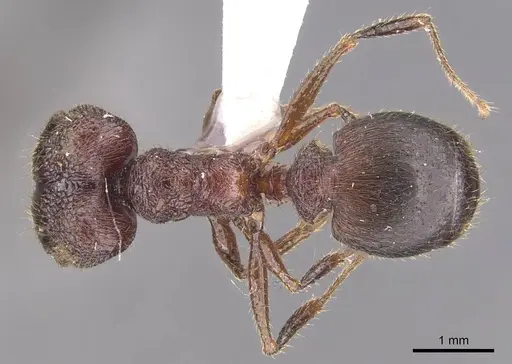
CASENT0905874
View on AntWeb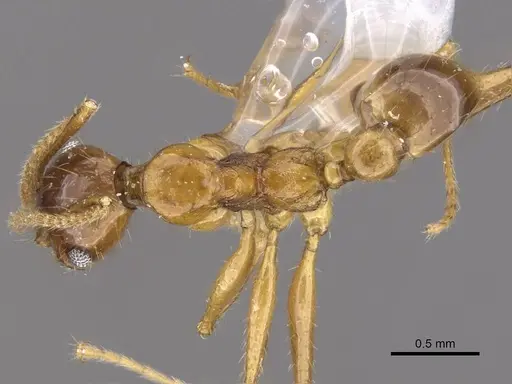
Literature
Loading distribution map...Loading products...