
Pheidole tobini
- Sci. Name
- Pheidole tobini
- Tribe
- Attini
- Subfamily
- Myrmicinae
- Author
- Wilson, 2003
- Distribution
- Found in 3 countries
Introduction
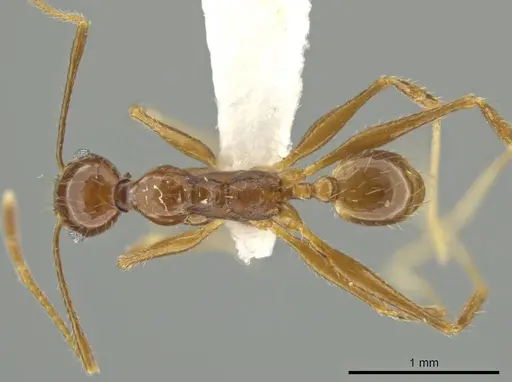
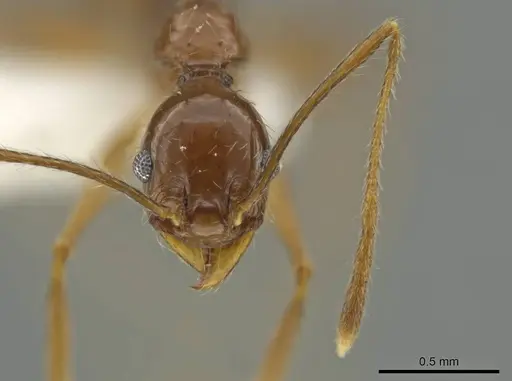
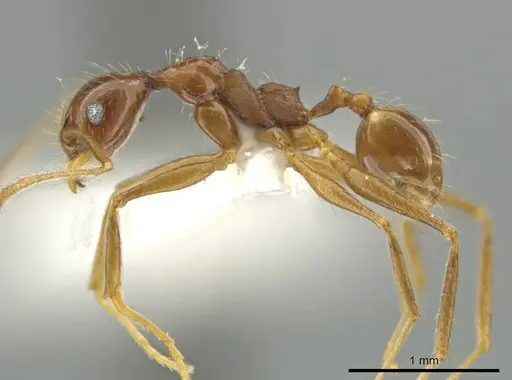
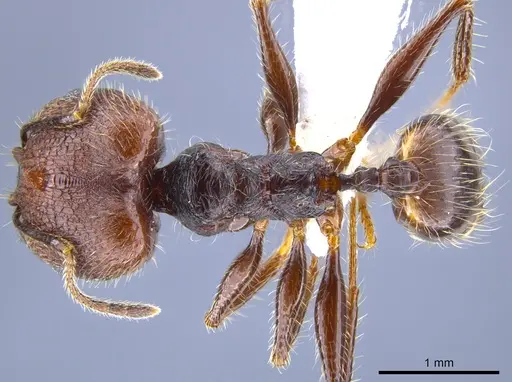
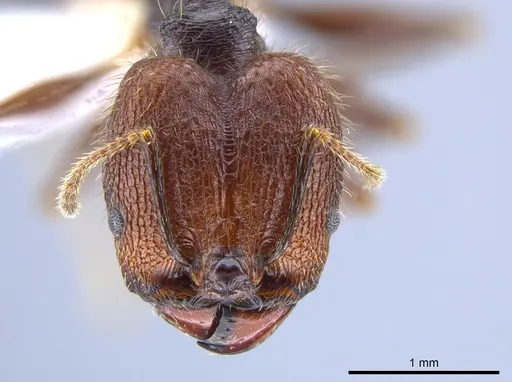
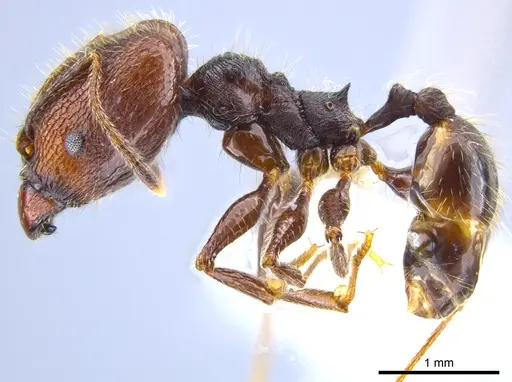
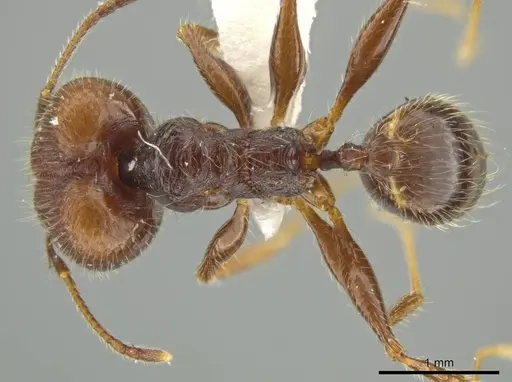
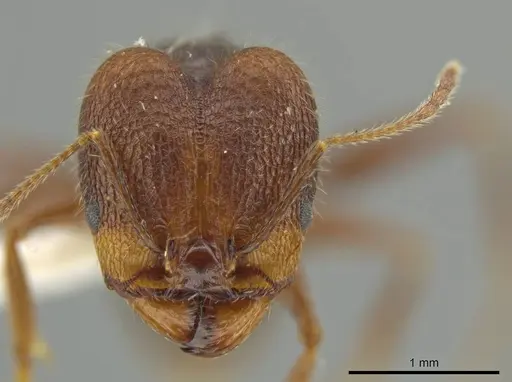
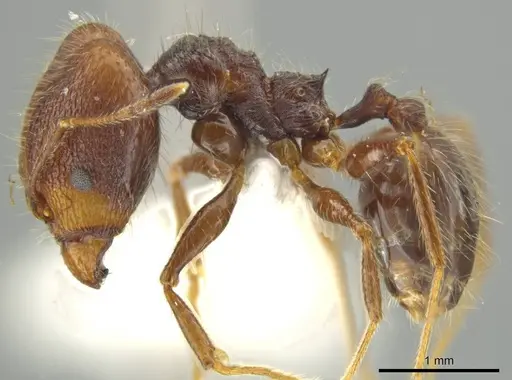
Pheidole tobini is a small Neotropical ant from the fallax group, found only in the Amazon rainforest of Peru and Ecuador. Majors have a dark reddish-brown head that narrows toward the back, with a deep occipital cleft and contrasting rugoreticulate front versus carinate rear. Minors are bicolored with medium brown heads and mesosoma, lighter brown gaster and appendages. This rare species is known only from its type locality in Madre de Dios, Peru, where it nests in epiphyte masses on fallen trees or under bark on fallen logs at forest gaps .
Quick Summary
- Difficulty: Medium
- Origin & Habitat: Amazonian rainforest in Peru and Ecuador. Type colonies found in terra firme rainforest, nesting in epiphyte masses on large fallen trees and beneath bark of fallen logs at tree gap edges [2].
- Colony Type: Unconfirmed, no specific data on queen number or social structure available for this rare species.
- Size & Growth:
- Queen: Size data unavailable, no total length measurements provided.
- Worker: Size data unavailable, no total length measurements provided. Head measurements are not body size.
- Colony: Unknown, no wild colony data available.
- Growth: Moderate, inferred from typical Pheidole development patterns.
- Development: Estimated 5-7 weeks at tropical temperatures, based on related Pheidole species [1]. (Development time is inferred from Amazonian Pheidole patterns, actual timeline unconfirmed for this species.)
- Antkeeping:
- Temperature: Keep at warm temperatures, around 24-28°C, as they are from Amazonian rainforest. Provide a gentle gradient for regulation [1].
- Humidity: Provide a humidity gradient, mostly dry nest chamber with one small moist area, as they are flood-intolerant. Keep substrate moist but not waterlogged [1].
- Diapause: No, tropical species, no hibernation needed.
- Nesting: Mixed nesting preference [1], so provide naturalistic setups with soil or plaster nests that retain moisture. Y-tong (AAC) or 3D-printed nests work well. Ensure excellent drainage to avoid flooding [2].
- Behavior: Pheidole tobini is ground-foraging, with majors as defenders and minors handling foraging and brood care. Not aggressive toward keepers, but majors can deliver a mild sting if threatened, as typical for Myrmicinae ants. Small size means escape risk, use fine mesh barriers. Flood-intolerant, so avoid wet conditions [1].
- Common Issues: flood intolerance, ensure good drainage to prevent drowning., escape risk due to small minor workers, use fine mesh barriers., limited data on care, some aspects inferred from related species., mixed nesting may require more complex setup than simple test tubes., slow colony growth can test keeper patience.
Housing and Nest Setup
You should use naturalistic setups that mimic their natural epiphyte and under-bark nesting sites. A Y-tong nest with moist plaster or soil works well, as does a naturalistic formicarium with soil and hiding structures. Provide a moist but not waterlogged environment, these ants are flood-intolerant and will drown if their nest floods. Include organic material or small chambers to mimic epiphyte masses. Always have a water tube available for drinking. Because minors are very small, ensure escape prevention uses fine mesh or tight-fitting barriers [1][2].
Feeding and Diet
You can offer protein sources like small insects (fruit flies, pinhead crickets, mealworms) 2-3 times per week, and provide sugar water, honey, or diluted maple syrup as an energy source. Remove uneaten prey after 24 hours to prevent mold. As ground-foragers, they will collect food in the outworld, so ensure food is accessible [2].
Temperature and Seasonal Care
You should keep them at warm temperatures around 24-28°C, as they are from Amazonian rainforest. They do not hibernate, maintain consistent warmth year-round. Avoid temperature drops below 20°C. A heating cable can create a gradient, but ensure cooler areas too. Good drainage is essential to prevent flooding [1].
Colony Development
You can expect slow initial growth, as this rare species has limited documented data. Based on typical Pheidole development, expect 5-7 weeks from egg to first worker at tropical temperatures. Initial colonies grow slowly, then accelerate moderately. The first workers will be smaller nanitics, this is normal. Major workers develop later as the colony grows. Be patient, as small colonies can take months to show significant growth [1].
Behavior and Defense
You will see typical Pheidole division of labor: minor workers handle foraging and brood care, while majors serve as defenders and seed processors. They are not aggressive toward keepers but will defend if threatened. Majors can deliver a mild sting if handled roughly, though this is not dangerous to healthy humans. The main concern is their small size, minor workers can easily escape, so use fine mesh barriers. They are ground-foragers and will actively search the outworld for food [1].
Frequently Asked Questions
How long does it take for Pheidole tobini to produce first workers?
Estimated 5-7 weeks from egg to first worker at 25-28°C, based on related Pheidole species [1]. Specific data for this species is unavailable.
Can I keep Pheidole tobini in a test tube setup?
Test tubes can work for founding colonies, but given their nesting preferences, they may do better in a naturalistic or Y-tong setup with moist substrate. Transition to a more complex nest as the colony grows [2].
What do Pheidole tobini eat?
They are generalist omnivores. Offer small insects as protein 2-3 times weekly, and keep sugar water or honey available at all times [2].
Do Pheidole tobini need hibernation?
No. As an Amazonian tropical species, they do not require hibernation. Maintain warm, stable temperatures year-round [1].
Are Pheidole tobini good for beginners?
They are rated as medium difficulty. Their flood-intolerance, need for high humidity, and small size require attention to escape prevention and moisture management. Some experience with antkeeping is helpful [1].
How big do Pheidole tobini colonies get?
Colony size data is not available for this rare species. Based on related Pheidole species, colonies likely reach several hundred to a few thousand workers over time.
Why are my Pheidole tobini dying?
Common causes are flooding (ensure good drainage), temperatures below 20°C, or escape through small gaps. Check moisture levels, maintain warmth, and verify escape prevention [1].
When should I move my colony to a formicarium?
Move from test tube to a larger nest when the colony reaches 30-50 workers or when the test tube shows issues. A naturalistic setup with soil or Y-tong nest works well.
Can I keep multiple queens together?
Pheidole tobini colony structure is not documented. Most Pheidole are monogyne, and combining unrelated queens is not recommended unless you have specific information. Stick with single-queen colonies.
Report an Issue
The current care sheet is based fully on literature. See inconsistencies, or something that's incorrect? Please , it will be resolved after review from an admin. Contributing to the blogs tab also helps providing information, to make us be able to further improve the caresheets. Thank you for your support!
References

This caresheet is licensed under CC BY-SA 4.0 .
Community Blogs
Literature
Loading distribution map...Loading products...