
Titan Big-headed Ant
Pheidole titanis
- Sci. Name
- Pheidole titanis
- Tribe
- Attini
- Subfamily
- Myrmicinae
- Author
- Wheeler, 1903
- Common Name
- Titan Big-headed Ant
- Distribution
- Found in 2 countries
Introduction
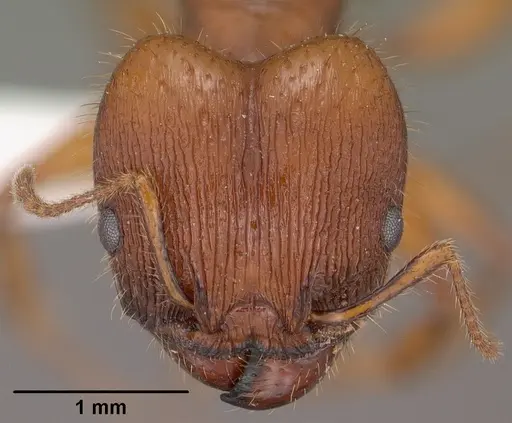
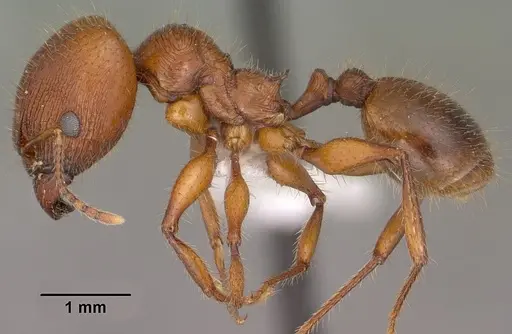
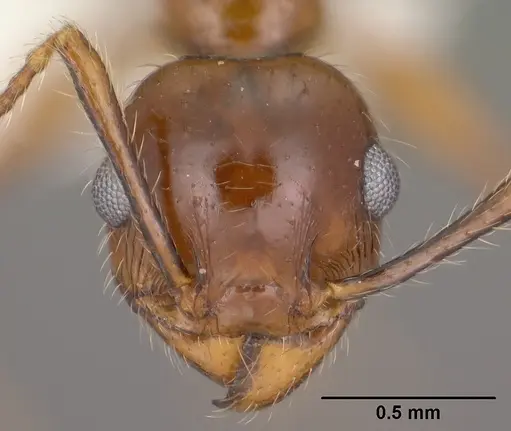
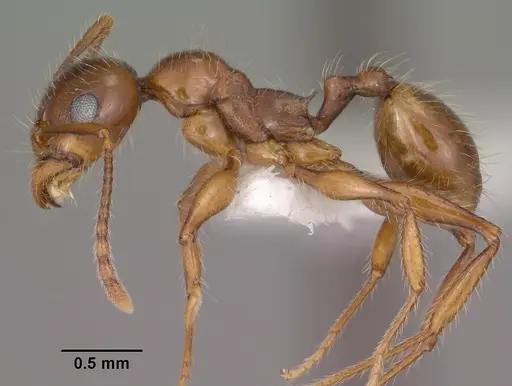
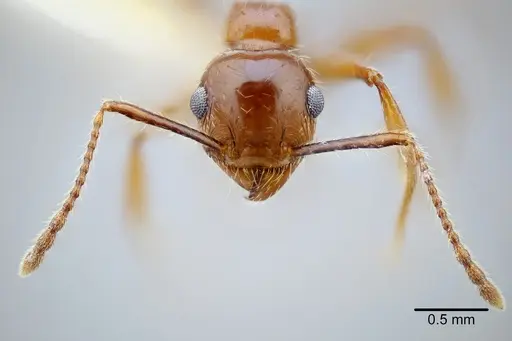
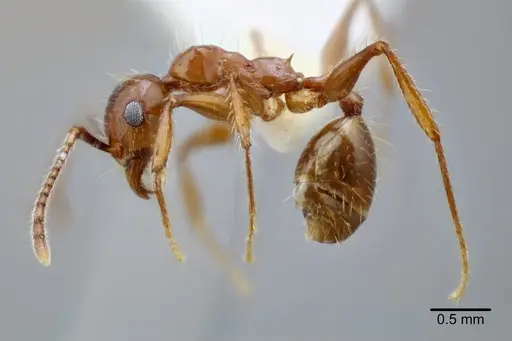
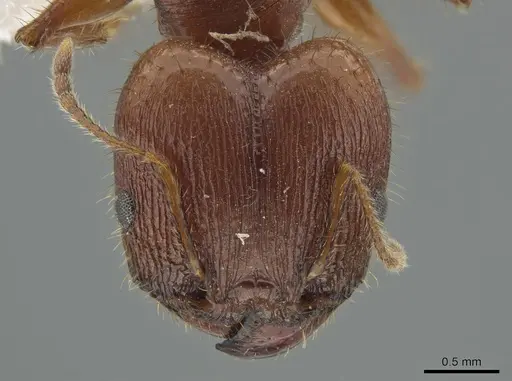
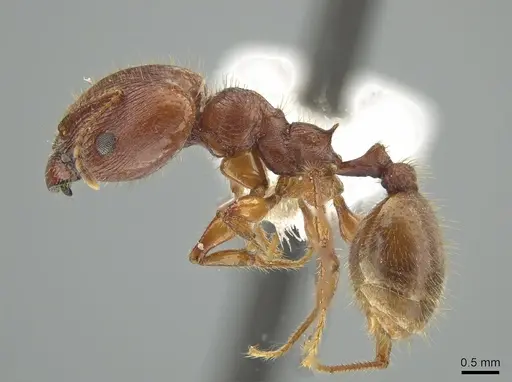
Pheidole titanis is a big-headed ant with major workers measuring 7.25-8 mm and minor workers 4-4.5 mm . It ranges from western Texas through southern Arizona into Jalisco, Mexico, inhabiting desert scrub and deciduous thorn forest, often nesting under stones near streams . This species is a specialized termite predator, launching coordinated raids with hundreds of workers to overwhelm termite colonies .
Quick Summary
- Difficulty: Medium
- Origin & Habitat: Western Texas, southern Arizona, and Jalisco, Mexico, in desert scrub and deciduous thorn forest, nesting under stones near streams [2][3][4][1].
- Colony Type: Unconfirmed, no specific data on queen number or social structure.
- Size & Growth:
- Queen: Size data unavailable, no total length measurements for queens.
- Worker: Majors 7.25-8 mm, minors 4-4.5 mm [1].
- Colony: Estimated up to several thousand workers based on foraging raid sizes of 200-2000 ants [5].
- Growth: Moderate, inferred from Pheidole genus patterns.
- Development: Estimated 6-10 weeks based on typical Pheidole development. (Development time is inferred from related species, no specific data for P. titanis.)
- Antkeeping:
- Temperature: Keep warm, roughly 24-30°C, based on desert habitat inference.
- Humidity: Provide a humidity gradient, mostly dry nest chamber with one small moist area, as they inhabit arid regions.
- Diapause: Unknown, no specific data on diapause requirements for this species.
- Nesting: Naturalistic setup with stones or soil, mimicking under-stone nesting preferences [1].
- Behavior: Active and aggressive when hunting, escape risk is moderate, use standard barriers. They have a sting (as Myrmicinae) but are less medically significant, they also seek cover from parasitic phorid flies [7].
- Common Issues: specialized diet requirement, colonies may fail if live termite prey is not provided regularly., desiccation risk, desert origin means they need dry conditions, but avoid overly low humidity., phorid fly parasitism, wild-caught colonies may carry parasites affecting behavior., slow colony growth, large raids require established colonies, so patience is needed.
Housing and Nest Setup
Pheidole titanis nests under stones in desert environments. For captivity, use a naturalistic setup with compact soil and flat stones, or Y-tong/plaster nests with medium chambers. Provide a dry, stable environment and an outworld for foraging raids [1].
Feeding and Diet
This species is a specialized termite predator. Provide live termites or other small live insects regularly. They will snatch prey avidly, showing intense hunting behavior [5][6].
Temperature and Seasonal Care
Keep colonies warm, around 24-30°C, with a gradient using a heating cable. No specific diapause data, but based on genus patterns, a winter cool period may be beneficial.
Behavior and Defense
They exhibit coordinated raiding behavior on termites. Workers and soldiers seek cover from parasitic phorid flies [7]. Majors have strong mandibles for biting, and as Myrmicinae, they possess a sting, though it is less medically significant.
Colony Growth and Development
Colonies start with a queen, but founding type is unconfirmed. Worker polymorphism is extreme, with majors much larger than minors [8]. Growth is moderate, with estimated egg-to-worker development of 6-10 weeks.
Frequently Asked Questions
Can I keep Pheidole titanis in a test tube?
Yes, for founding colonies, but transfer to a larger formicarium once the colony reaches 50+ workers for space [1].
What do Pheidole titanis eat?
They are specialized termite predators, provide live termites or other small live insects [5][6].
How long until first workers in Pheidole titanis?
Estimated 6-10 weeks from egg to worker at optimal temperature, based on genus patterns.
Are Pheidole titanis good for beginners?
Medium difficulty due to specialized diet, if live termite prey is available, they are manageable.
Do Pheidole titanis need hibernation?
Unknown, no specific data, but a winter cool period may be inferred from genus patterns.
How big do Pheidole titanis colonies get?
Estimated up to several thousand workers, based on foraging raid observations [5].
When should I move my colony to a formicarium?
Move from test tube to formicarium when the colony reaches 30-50 workers, with an outworld for raids [1].
Why is my Pheidole titanis colony dying?
Common causes include insufficient protein (live termites), improper temperature/humidity, or phorid fly parasites in wild-caught colonies [7].
Can I keep multiple queens together?
Unconfirmed, no data on queen number, but based on Pheidole patterns, likely single-queen colonies.
Report an Issue
The current care sheet is based fully on literature. See inconsistencies, or something that's incorrect? Please , it will be resolved after review from an admin. Contributing to the blogs tab also helps providing information, to make us be able to further improve the caresheets. Thank you for your support!
References

This caresheet is licensed under CC BY-SA 4.0 .
Community Blogs
CASENT0104449
View on AntWeb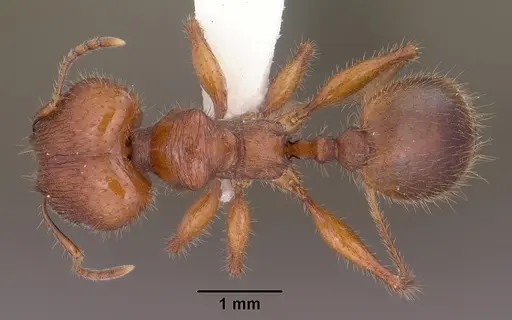
CASENT0104450
View on AntWeb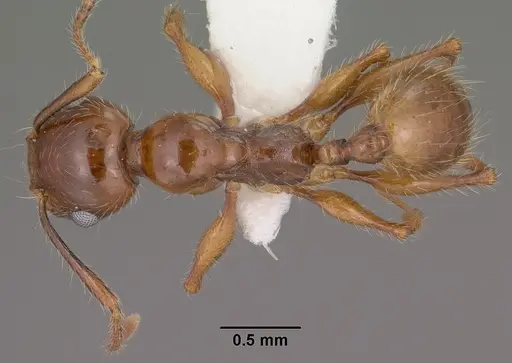
CASENT0649712
View on AntWeb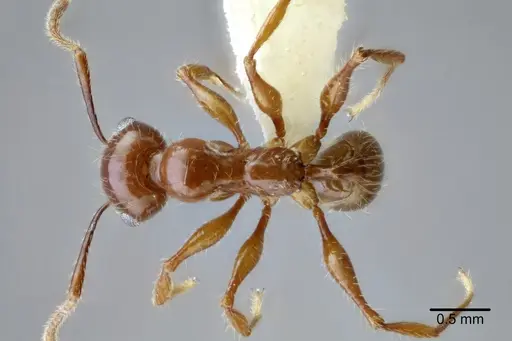
JTLC000008175
View on AntWeb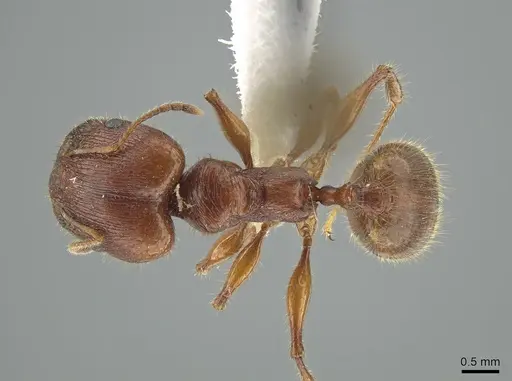
Literature
Loading distribution map...Loading products...