
Pheidole tigris
- Sci. Name
- Pheidole tigris
- Tribe
- Attini
- Subfamily
- Myrmicinae
- Author
- Wilson, 2003
- Distribution
- Found in 3 countries
Introduction
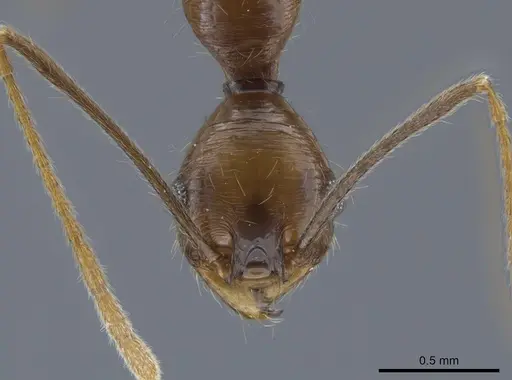
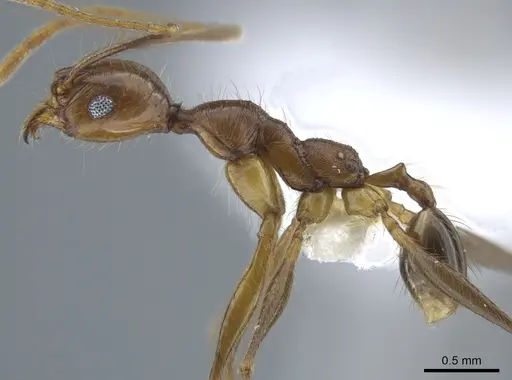
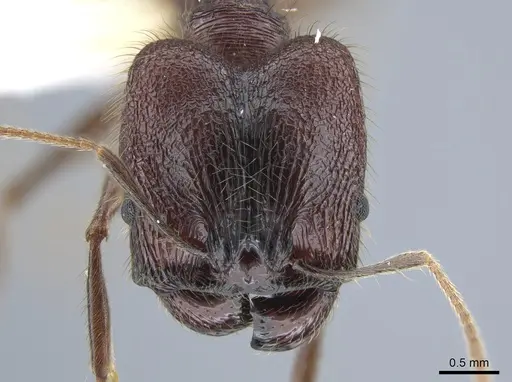
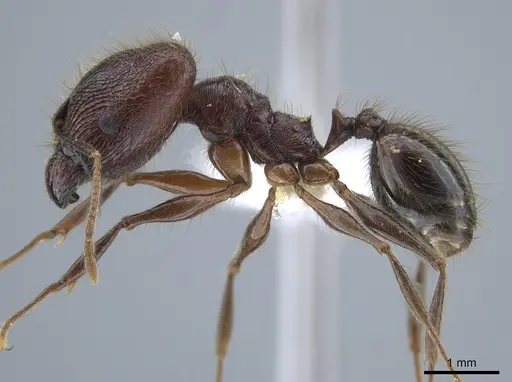
Pheidole tigris is a large, visually striking ant from the Chocó region of Colombia. Its major workers are bright orange with a tiger-striped pattern of transverse carinulae (grooves) covering most of the head and body. Minor workers are uniformly yellow. The species name 'tigris' means tiger, referencing this striped look . This ant is only known from the Chocó department, where it nests in rotting logs in bamboo (Guadua) forest . A seed cache found in the type colony suggests it is a seed harvester, a common habit in many Pheidole .
Quick Summary
- Difficulty: Medium
- Origin & Habitat: Chocó, Colombia, tropical rainforest, nesting in rotting logs in spring bamboo (Guadua) forest [2][3]
- Colony Type: Unconfirmed, no data on queen number for this species
- Size & Growth:
- Queen: Unknown, no queen measurements documented
- Worker: Size data unavailable. Only head measurements known, body length estimated from genus patterns: majors ~5-7 mm, minors ~2-3 mm (inferred from Pheidole genus) [1]
- Colony: Unknown, no colony size data available
- Growth: Moderate, inferred from typical Pheidole development
- Development: Estimated 6-8 weeks based on typical Pheidole patterns at tropical temperatures (Direct development data unavailable, estimate based on related species in the genus)
- Antkeeping:
- Temperature: 24-28°C, a tropical species from warm lowland forest
- Humidity: High, keep nest substrate consistently moist but not waterlogged. Good ventilation is essential to prevent mold.
- Diapause: No, tropical species from Colombia does not require hibernation
- Nesting: Naturalistic setup with rotting wood, or a Y‑tong (AAC), plaster, or soil nest with good moisture retention. They naturally nest in rotting logs [2].
- Behavior: Major workers act as guards and seed crackers, while minors handle foraging and brood care. The type colony held a seed cache, confirming seed‑harvesting behavior [2]. They are not aggressive to keepers but will defend the nest. Escape prevention is critical because minor workers are very small (body length ~2 mm) and can slip through standard barriers.
- Common Issues: escape prevention is critical due to tiny minor workers, use fine mesh and tight-fitting lids, high humidity needs can cause mold problems if ventilation is poor, wild-caught colonies may carry parasites or pathogens, founding queens are delicate, avoid disturbing the nest during the first few weeks
Housing and Nest Setup
Pheidole tigris naturally nests in rotting wood in humid tropical forests [2]. In captivity, a Y‑tong (AAC) nest or plaster nest with good moisture retention works well. Avoid overly large chambers, majors are relatively big (body ~5-7 mm) but minors are tiny (~2 mm). A test tube setup works for founding. Include a water reservoir to maintain humidity. An outworld provides foraging space where they can hunt and store seeds. Provide a small dry area for seed caching, as they would in nature [2].
Feeding and Diet
The type colony contained a seed cache, confirming that Pheidole tigris is a seed‑harvester [2]. Offer a variety of seeds (grass seeds, millet, crushed sunflower seeds) as a staple. Supplement with protein sources (fruit flies, pinhead crickets, mealworms) 2-3 times per week. Occasional sugar water or honey is accepted. Remove uneaten seeds to prevent mold.
Temperature and Humidity
This tropical species needs warm, humid conditions. Maintain 24-28°C, a heating cable on one side of the nest creates a gradient so ants can choose their preferred spot. Humidity must be high: keep the nest substrate moist but not waterlogged. Mist the nest occasionally if needed. Avoid placing the setup near air conditioning or drafts.
Colony Development and Growth
Pheidole colonies produce two worker castes: majors and minors. Majors develop from larvae that receive extra food. First workers (nanitics) likely appear about 6-8 weeks after the queen lays eggs (estimated from typical Pheidole patterns). Growth is moderate. The type colony, collected 1-4 June, contained males, hinting at a reproductive season during the wet months [2].
Behavior and Defense
Caste system is typical of Pheidole. Majors guard the nest and process large seeds, while minors forage and tend brood. When disturbed, majors block the entrance while minors move the brood deeper. They have a functional stinger (subfamily Myrmicinae) but it is not medically significant. They are not aggressive toward keepers, but will defend their nest vigorously. Seed caching is a key behavior, you'll see them stockpiling seeds in the outworld [2].
Frequently Asked Questions
How long does it take for Pheidole tigris to produce first workers?
Based on typical Pheidole development patterns, expect first workers (nanitics) around 6-8 weeks after the queen lays eggs at optimal tropical temperatures (24-28°C). This is an estimate since no specific data exists for this species.
What do Pheidole tigris ants eat?
They are seed harvesters, offer a variety of seeds (grass seeds, millet, crushed sunflower seeds) as a staple. Supplement with protein (fruit flies, pinhead crickets, mealworms) 2-3 times per week. Occasional sugar water or honey is also accepted.
Do Pheidole tigris ants need hibernation?
No. As a tropical species from Colombia's Chocó region, they do not require hibernation or winter cooling. Keep them warm year-round at 24-28°C.
Are Pheidole tigris good for beginners?
This species is rated Medium difficulty. They are visually striking but have specific humidity and temperature needs typical of tropical ants. The main challenges are maintaining proper humidity without causing mold, and ensuring escape prevention for their tiny minor workers.
How big do Pheidole tigris colonies get?
Colony size data is unavailable for this species. Based on typical Pheidole genus patterns, colonies likely reach several hundred workers over time, but this is unconfirmed.
What temperature should I keep Pheidole tigris at?
Keep them at 24-28°C. As a tropical species from Colombia's Chocó region, they need warm conditions year-round. A heating cable on one side of the nest creates a useful temperature gradient.
Can I keep multiple Pheidole tigris queens together?
This is not recommended. There is no data on polygyny for this species. Combining unrelated queens usually leads to fighting. Start with a single queen colony.
Why are my Pheidole tigris escaping?
Minor workers are very small (body length ~2 mm) and can squeeze through tiny gaps. Use fine mesh barriers, tight-fitting lids, and apply fluon or petroleum jelly to barrier edges. Check all connections between nest and outworld regularly.
When should I move Pheidole tigris to a formicarium?
Keep them in a founding setup (test tube or small nest) for the first few months until the colony has 30-50 workers. Once the colony regularly forages in the outworld and the founding setup seems cramped, you can transfer them to a larger nest.
Report an Issue
The current care sheet is based fully on literature. See inconsistencies, or something that's incorrect? Please , it will be resolved after review from an admin. Contributing to the blogs tab also helps providing information, to make us be able to further improve the caresheets. Thank you for your support!
References

This caresheet is licensed under CC BY-SA 4.0 .
Community Blogs
CASENT0633656
View on AntWeb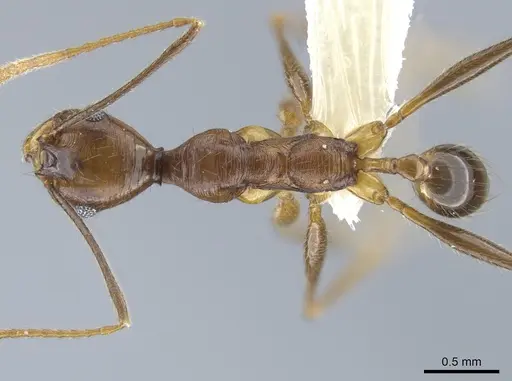
CASENT0633658
View on AntWeb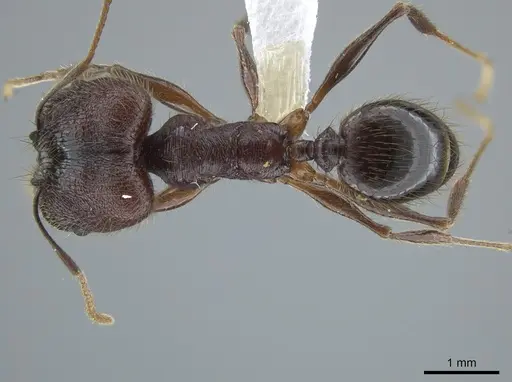
Literature
Loading distribution map...Loading products...