
Pheidole tetrica
- Sci. Name
- Pheidole tetrica
- Tribe
- Attini
- Subfamily
- Myrmicinae
- Author
- Forel, 1913
- Distribution
- Found in 1 countries
Introduction
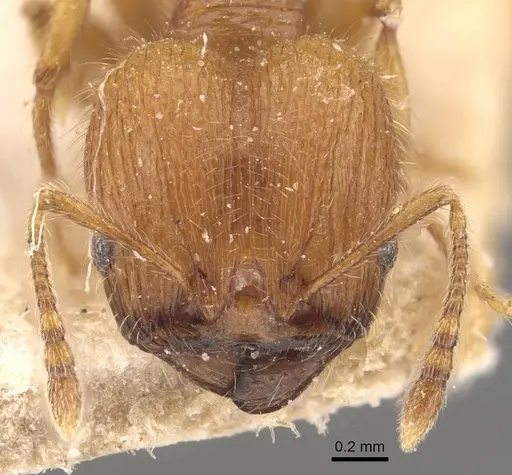
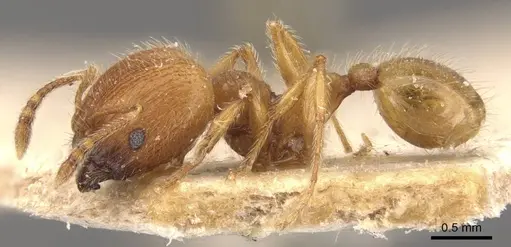
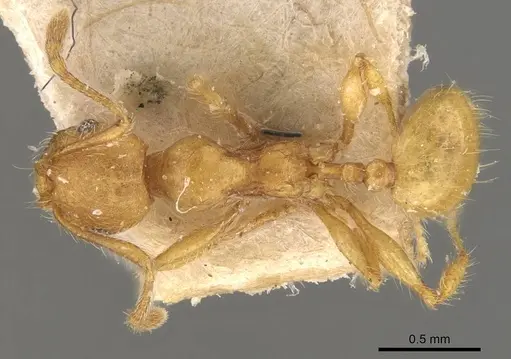
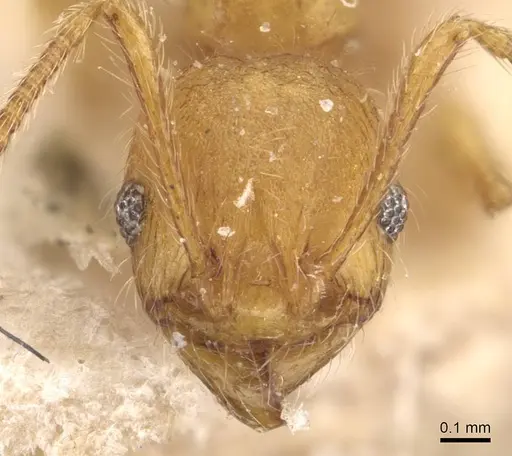
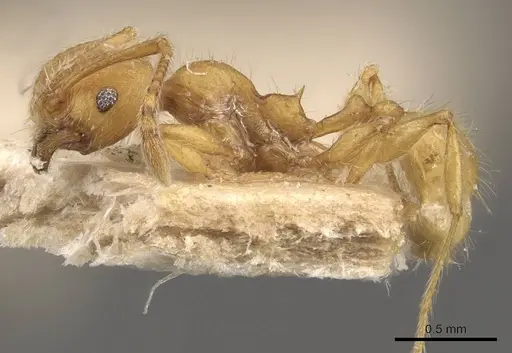
Pheidole tetrica is a small ant species native to southern Brazil, specifically recorded in the states of Santa Catarina and São Paulo . The species belongs to the Attini tribe, which includes leafcutter ants, but Pheidole species typically harvest seeds rather than cultivate fungus . Major workers display the characteristic large heads of big-headed ants, covered in fine ridge-like structures called carinulae, while minor workers are significantly smaller . Both castes share a uniform yellow coloration with a faint reddish tinge . Scientific literature provides almost no biological data for this species, making captive care reliant on genus-level patterns .
Quick Summary
- Difficulty: Medium
- Origin & Habitat: Southern Brazil (Santa Catarina and São Paulo states) [1]
- Colony Type: Unconfirmed. Most Pheidole species are monogyne or polygyne, but no data exists for this species.
- Size & Growth:
- Antkeeping:
- Temperature: Unknown. Start around 24-26°C and observe activity. [1]
- Humidity: Keep the nest substrate consistently moist but not waterlogged. [1]
- Diapause: Unknown. Southern Brazil has mild winters, so a slight seasonal cooling may be appropriate, but true diapause is unconfirmed. [1]
- Nesting: Likely soil-nesting based on Pheidole patterns. Provide a plaster or soil nest. [1]
- Behavior: Temperament is unconfirmed. Pheidole species are generally docile and focus on seed harvesting. Escape risk is moderate to high because minor workers are small enough to fit through tiny gaps. [1]
- Common Issues: colony failure due to unknown founding requirements, escape of minor workers through small gaps, mold growth from uneaten seeds in the outworld, development stalls if temperature fluctuates
Appearance and Identification
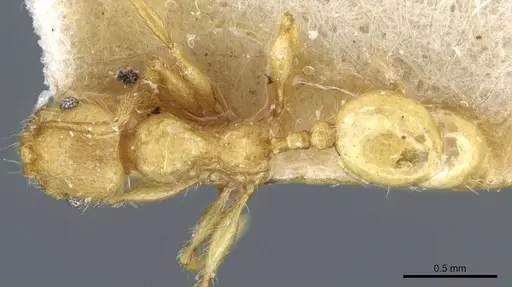
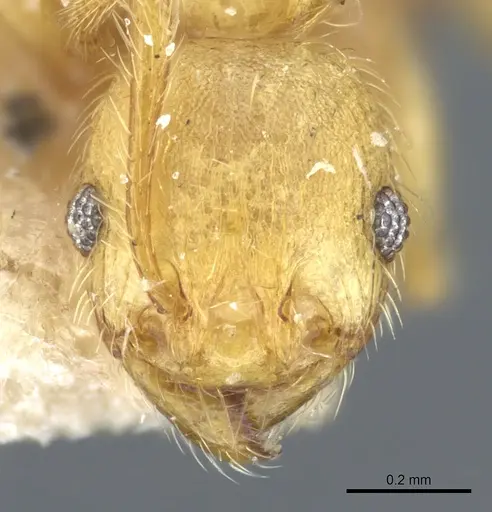
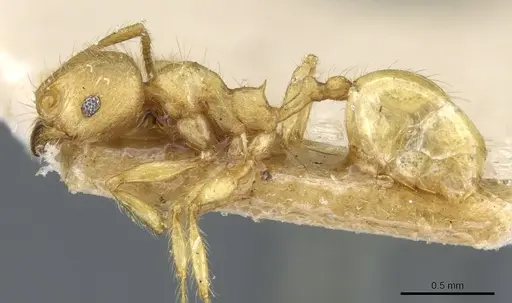
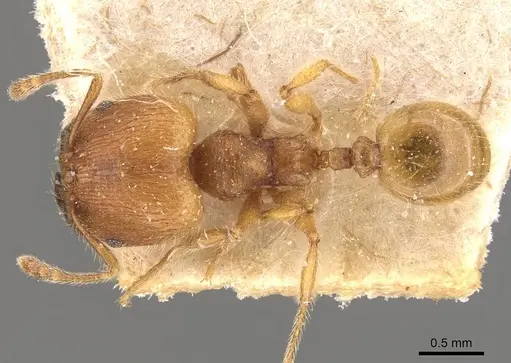
Pheidole tetrica is a distinctive small ant species. Major workers have the characteristic large, square-ish heads that define the genus Pheidole. The head is completely covered with carinulae (fine ridges) except for the frontal triangle and midclypeus area. The pronotum has unique wraparound carinulae that circle around the dorsum to travel along the lower lateral margin. Minor workers are much smaller and have widely spaced carinulae covering most of the dorsal head surface. Both castes are a uniform yellow color with a faint reddish tinge. The propodeal spine on majors is almost half as long as the propodeal basal face and stands nearly vertical to it. This species can be distinguished from similar Pheidole species by these carinulae patterns and specific body proportions [1].
Natural History and Distribution
Pheidole tetrica is endemic to southern Brazil, specifically found in the states of Santa Catarina and São Paulo. The type locality is Ibirama in Santa Catarina. This region has a subtropical climate with warm summers and mild winters. The species was originally described by Forel in 1913 and later redescribed by Wilson in 2003 as part of a comprehensive genus review. The natural nesting habits are completely unknown. Most Pheidole species nest in soil, often under stones or in decaying wood. As members of the Attini tribe, they likely forage for seeds and small insects, though detailed foraging behavior has not been documented for this specific species [1].
Housing and Nesting
For keeping Pheidole tetrica, start with a standard test tube setup for the founding queen. Use a test tube filled with water, stopped with a cotton ball, providing a humid chamber for egg-laying. Once the colony reaches a few workers, consider moving them to a small formicarium. Y-tong (AAC), plaster, or soil nests work well for Pheidole species because they allow you to observe the colony while providing appropriate chamber sizes. Since we do not know their exact nesting preferences, provide a humidity gradient with a mostly dry nest chamber and one small moist area. Ensure the outworld (foraging area) is escape-proof using fluon or similar barriers. Pheidole minors are small enough to potentially escape through tiny gaps, so check all connections carefully [1].
Feeding and Diet
Like other Pheidole species, Pheidole tetrica is likely a generalist forager that collects seeds and small insects. Offer a varied diet including seeds like millet, chia, or flax. Provide small insects like fruit flies or pinhead crickets, and occasional sugar sources like honey water or sugar water. Protein supports brood development, so offer insects at least twice weekly. Seeds can be provided constantly as they store them. Remove uneaten seeds periodically to prevent mold. Since this species is from Brazil, they may have preferences for tropical seed types, but common hobby seeds are likely accepted. Observe your colony's preferences and adjust accordingly [1].
Temperature and Seasonal Care
Pheidole tetrica comes from southern Brazil, which has a subtropical climate. Keep the nest area warm and stable, roughly low-to-mid 20s°C for optimal activity and brood development. A heating cable on one side of the nest can create a gentle gradient. Room temperature in most homes should be adequate if it falls in this range. Unlike temperate species, they likely do not require a true hibernation period. However, they may slow down slightly during winter months if room temperatures drop. Monitor colony activity. If workers become less active and cluster together, a slight temperature reduction may be appropriate, but do not cool them below around 18°C. Maintain moderate humidity in the nest [1].
Colony Development and Growth
The development timeline for Pheidole tetrica is not documented in scientific literature. Based on typical Pheidole genus patterns for Neotropical species, expect several weeks to a few months from egg to first worker at optimal temperature. The founding queen will likely seal herself in her test tube chamber. She feeds the larvae from her own body reserves until the first workers emerge. These first workers are typically smaller than normal workers. After the first workers emerge, the colony enters a growth phase. Pheidole colonies can grow steadily over time, though the maximum size for this specific species is unknown. Growth rate is likely moderate. Provide consistent food and stable temperatures [1].
Behavior and Temperament
Pheidole species are generally calm and non-aggressive. Majors use their large heads to crack seeds and process larger food items, while minors handle most foraging and brood care. They are not defensive and rarely sting, making them safe for antkeepers of all experience levels. Workers communicate using chemical trails to guide nestmates to food sources. When threatened, they may retreat rather than attack. The majors are primarily specialized for food processing rather than defense. They are active foragers that will explore their outworld regularly. Escape prevention is important because minors are small enough to slip through small gaps, though not as tiny as some other genera [1].
Frequently Asked Questions
How long does it take for Pheidole tetrica to have first workers?
The exact timeline is unknown. Based on related Pheidole species, expect first workers in several weeks to a few months after the queen lays eggs. Keep temperature stable around 24-26°C to support development [1].
What do Pheidole tetrica ants eat?
Like other Pheidole species, they likely eat seeds and small insects. Offer a mix of seeds like millet or chia, protein sources like fruit flies or small crickets, and occasional sugar like honey water. Remove uneaten food to prevent mold [1].
What temperature do Pheidole tetrica ants need?
Keep them warm and stable, roughly low-to-mid 20s°C. This matches their native Brazilian habitat. A heating cable on part of the nest can help maintain optimal temperature if your room is cooler [1].
Are Pheidole tetrica ants good for beginners?
Biology is completely unknown, which makes care difficult. Only experienced keepers should attempt this species. Pheidole species in general are considered good for beginners due to their calm temperament and relatively simple care requirements [1].
How big do Pheidole tetrica colonies get?
The maximum colony size is unknown for this species. Based on related Pheidole species, colonies likely grow steadily over time, but exact numbers are unavailable [1].
Can I keep multiple Pheidole tetrica queens together?
The colony structure is unconfirmed for this species. Do not combine unrelated foundress queens. Most Pheidole species are monogyne or polygyne, but combining queens is risky and not recommended unless you have experience with multi-queen setups [1].
What size nest do I need for Pheidole tetrica?
Start with a test tube for the founding queen. Once the colony reaches a few workers, upgrade to a small formicarium or Y-tong (AAC) nest. They will need more space as they grow, so plan for future expansion [1].
Does Pheidole tetrica need hibernation?
Likely no true hibernation is required. Southern Brazil has mild winters, so a slight temperature reduction in winter may be appropriate but not a full diapause like temperate species require [1].
Why is no information available about Pheidole tetrica biology?
This species is poorly studied in the scientific literature. The AntWiki entry explicitly states that nothing is known about the biology of Pheidole tetrica. All care recommendations rely on typical Pheidole genus behavior rather than species-specific research [1][2].
Report an Issue
The current care sheet is based fully on literature. See inconsistencies, or something that's incorrect? Please , it will be resolved after review from an admin. Contributing to the blogs tab also helps providing information, to make us be able to further improve the caresheets. Thank you for your support!
References

This caresheet is licensed under CC BY-SA 4.0 .
Community Blogs
Literature
Loading distribution map...Loading products...