
Pheidole terribilis
- Sci. Name
- Pheidole terribilis
- Tribe
- Attini
- Subfamily
- Myrmicinae
- Author
- Wilson, 2003
- Distribution
- Found in 3 countries
Introduction
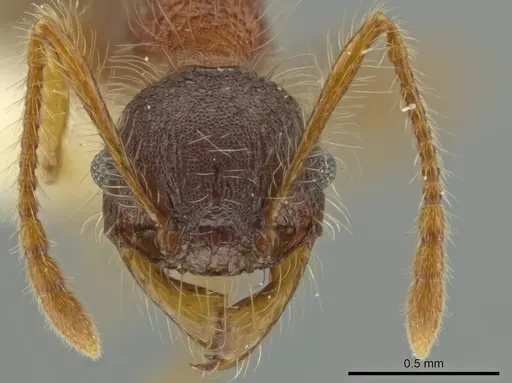
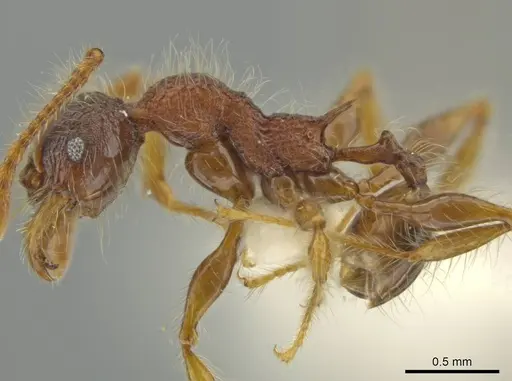
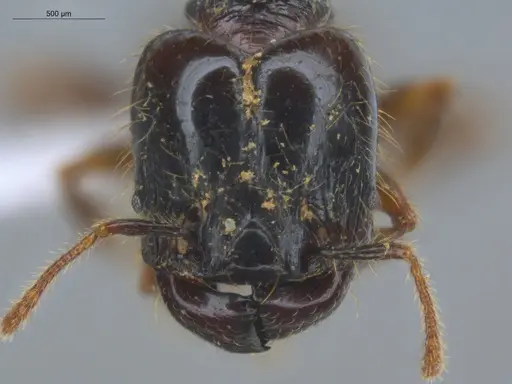
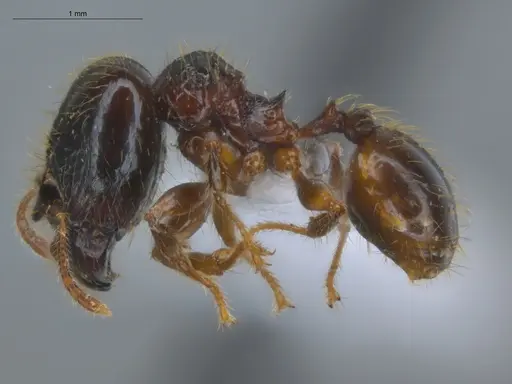
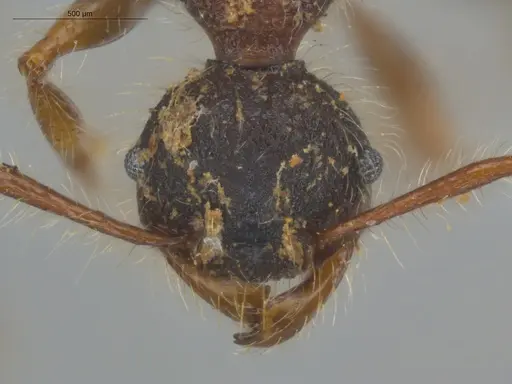
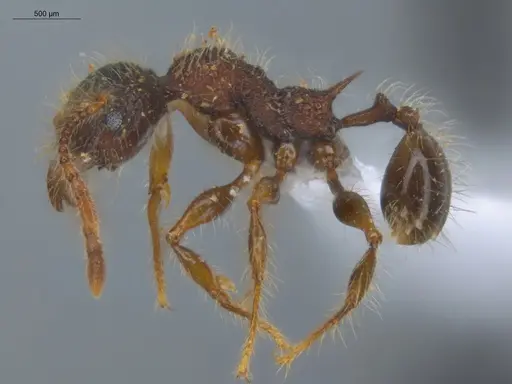
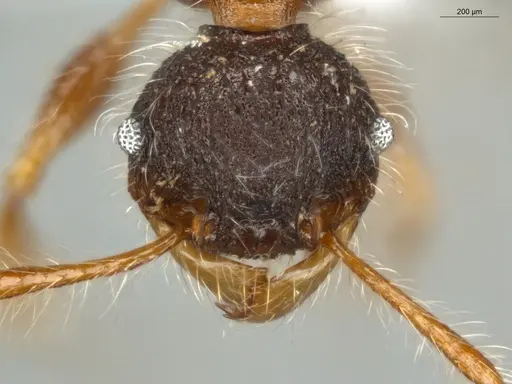
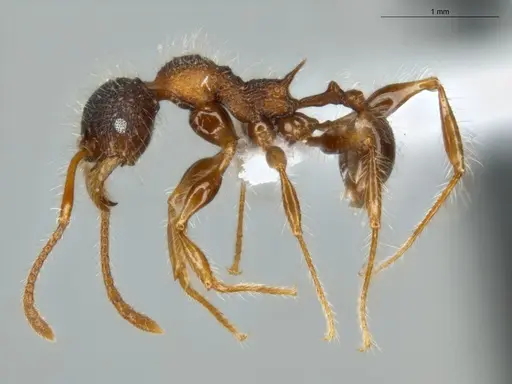
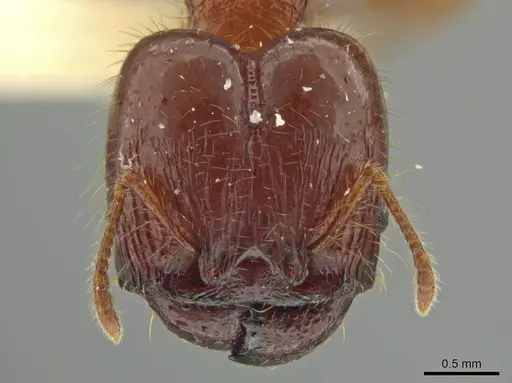
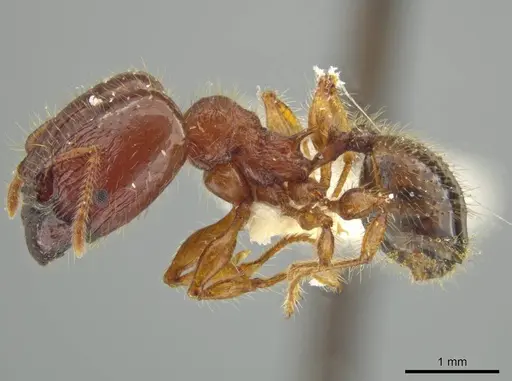
Pheidole terribilis is a big-headed ant species from northern South America. The majors have a distinct appearance: a stout propodeal spine, a smooth rear part of the head, and a rough pattern between the eye and antenna base. The body is medium reddish brown with brownish yellow legs. Minor workers have a dark reddish brown head and gaster against a lighter middle section . The species was described by Wilson in 2003. It's known from Bolivia, Brazil, French Guiana, and Suriname . Almost nothing is known about the biology of Pheidole terribilis . No studies have documented its colony structure, diet, or behavior in the wild. It has been collected from plateau and transition forests in French Guiana, suggesting it lives in humid rainforest leaf litter . All care advice that follows is based on general patterns of the genus Pheidole, not on species-specific data.
Quick Summary
- Difficulty: Unknown, biology entirely unstudied
- Origin & Habitat: Northern South America: Bolivia, Brazil, French Guiana, Suriname. Collected in tropical rainforest leaf litter, from both plateau and transition forest types, at elevations around 90-450 m [1][2].
- Colony Type: Unconfirmed, colony structure has not been documented. Most Pheidole species are monogyne (single queen), but some can have multiple queens. Without specific research, the colony structure of P. terribilis cannot be confirmed.
- Size & Growth:
- Queen: Undocumented, no queen measurements exist
- Worker: No body size (total length) has been measured. Based on the genus Pheidole, majors likely reach around 6-8 mm and minors around 3-4 mm, but this is an inference.
- Colony: Unknown, no colony size data exists
- Growth: Unknown, no development data exists
- Development: Unknown for this species. Based on typical tropical Pheidole, a rough estimate is 6-10 weeks at warm temperatures (around 26 °C), but this is a guess. (No development data exists. Use the estimate with caution.)
- Antkeeping:
- Temperature: Likely 24-28 °C based on tropical rainforest origin. Start around 24-26 °C and watch the colony. Adjust slightly warmer if ants seem sluggish, cooler if they avoid heated spots. Avoid dropping below 20 °C.
- Humidity: High humidity is expected for a rainforest litter‑dweller. Keep the nest substrate consistently moist but not waterlogged. Provide a water tube for drinking.
- Diapause: Unknown, tropical species may not need a formal hibernation. Some seasonal slow‑down is possible during cooler months, but there is no data.
- Nesting: Likely nests in rotting wood, under logs, or in soil on the forest floor. In captivity, use a naturalistic setup with moist substrate, or a Y‑tong/plaster nest that holds humidity. Avoid letting the nest dry out.
- Behavior: Unstudied in captivity. Based on genus patterns, expect majors to crack seeds and defend the colony, while minors forage and care for brood. They are likely generalist foragers. Escape risk: minors are small (around 3 mm) so standard barriers (fluon, tight lids) are necessary.
- Common Issues: no species‑specific biology is known, all care is based on guesswork from related species, so results may vary unpredictably., humidity needs are inferred, not confirmed, too dry can kill the colony, but exact moisture level is unknown., growth rate is unknown, the colony may be slow or fast, and you have no way to tell if something is wrong., wild‑caught colonies may carry parasites or diseases with no documented treatment., temperature requirements are inferred, if the colony fails to grow, you won't know if temperature is the cause.
Species Identification and Appearance
Pheidole terribilis is one of the larger big‑headed ants. Majors have a stout propodeal spine, a smooth rear third of the head, and a rough area between the eye and antenna base. The body is medium reddish brown with brownish yellow legs. Minors are smaller, with a dark reddish brown head and gaster and a lighter middle section. No total length measurements have been recorded, the head widths given in the original description (major HW 1.80 mm, minor HW 0.76 mm) are not body size [1]. The species name 'terribilis' means 'dreadful' or 'frightful'.
Natural Distribution and Habitat
This species is known from Bolivia (Santa Cruz department,450 m), Brazil, French Guiana, and Suriname. The type specimen came from the Raleigh‑Vallen‑Voltzberg Reserve in Suriname at 90 m. In French Guiana, it was found in both plateau and transition forest types, showing some habitat flexibility within rainforest [1][2].
Nest Preferences and Housing
Nothing is known about the nest sites of this species. Based on its occurrence in leaf litter, it likely nests in rotting wood, under logs, or in soil. In captivity, provide a setup with consistently moist substrate, a Y‑tong or plaster nest works well. Avoid letting the nest dry out. Include a water tube for drinking.
Feeding and Diet
No dietary information exists for Pheidole terribilis. The genus Pheidole is omnivorous: they eat seeds, small insects, and honeydew. In captivity, offer a variety: small live insects (fruit flies, pinhead crickets), seeds (millet, chia), and sugar water. Majors are built for seed processing, so seeds should be a regular part of the menu. Feed protein two to three times a week and keep sugar water always available.
Temperature and Seasonal Care
As a tropical rainforest species, Pheidole terribilis likely needs warm temperatures around 24-28 °C (mid‑70s to low‑80s °F). Avoid letting the nest fall below 20 °C. Whether it requires any winter dormancy is unknown, tropical ants often stay active year‑round. If activity drops during cooler months, a slight temperature reduction might be fine, but formal hibernation is probably not needed.
Behavior and Colony Structure
The colony structure of this species is unconfirmed. Most Pheidole are monogyne (single queen), but some have multiple queens. Without research, assume a single queen per nest. Majors likely crack seeds and defend the colony, while minors forage and care for brood. No specific behavior has been observed for P. terribilis itself.
Frequently Asked Questions
How long does it take for Pheidole terribilis to produce first workers?
The development time is completely unstudied. A rough guess based on tropical Pheidole is 6-10 weeks from egg to worker at warm temperatures (around 26 °C), but there is no data for this species.
What do Pheidole terribilis ants eat?
Their diet has not been documented. Pheidole ants are generalists. Offer small insects (fruit flies, pinhead crickets), seeds (millet, chia), and sugar water. Majors are specialized for seed processing, so include seeds regularly.
Are Pheidole terribilis ants good for beginners?
No. Because almost nothing is known about its biology, all care is guesswork. Beginners should choose a well‑documented species like Pheidole pallidula or Pheidole noda instead.
What temperature do Pheidole terribilis ants need?
Based on its tropical rainforest origin, keep them at 24-28 °C (mid‑70s to low‑80s °F). Avoid temperatures below 20 °C. Use a heating cable on one side of the nest if your room is cooler.
Do Pheidole terribilis ants need hibernation?
Hibernation requirements are unknown. As a tropical species, it likely does not need formal hibernation. Some seasonal slow‑down may occur naturally.
How big do Pheidole terribilis colonies get?
Colony size is unconfirmed for this species. Most Pheidole colonies reach several hundred to a few thousand workers. Without data, exact size is unknown.
Can I keep multiple Pheidole terribilis queens together?
Colony structure is unconfirmed, we don't know if this species is monogyne or polygyne. Most Pheidole are monogyne. Do not combine unrelated queens unless you have evidence this species accepts multiple queens.
What size nest do Pheidole terribilis need?
Use a nest scaled to their size. Majors are relatively large (inferred ~6-8 mm) and minors small (~3-4 mm). A Y‑tong or plaster nest with chambers sized appropriately works well. Ensure the nest can maintain high humidity.
Why is nothing known about Pheidole terribilis biology?
The species was described in 2003 and has very few observations in the scientific literature. It is not a common species and has not been the focus of ecological or behavioral research. Many tropical ant species remain poorly studied.
Report an Issue
The current care sheet is based fully on literature. See inconsistencies, or something that's incorrect? Please , it will be resolved after review from an admin. Contributing to the blogs tab also helps providing information, to make us be able to further improve the caresheets. Thank you for your support!
References

This caresheet is licensed under CC BY-SA 4.0 .
Community Blogs
CASENT0645880
View on AntWeb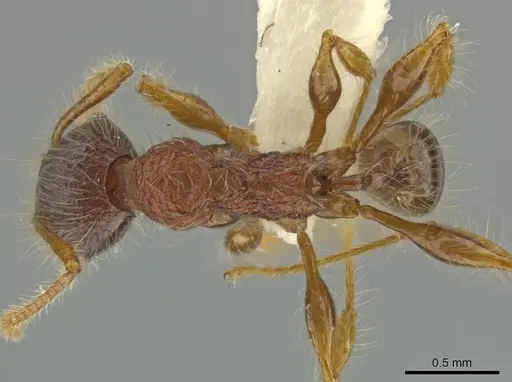
ECOFOG-KOT23-0079-13-S
View on AntWeb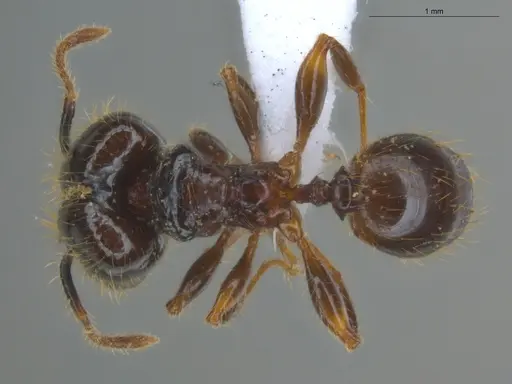
ECOFOG-KOT23-0079-13
View on AntWeb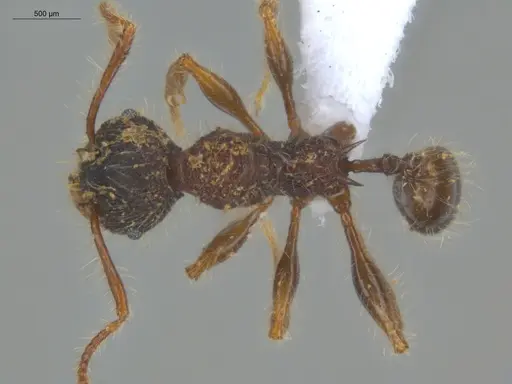
ECOFOG-MI15-0380-40
View on AntWeb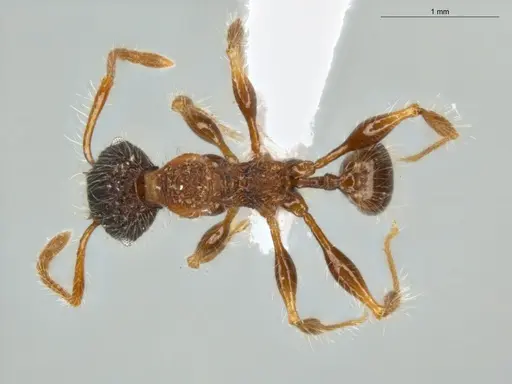
JTLC000016553
View on AntWeb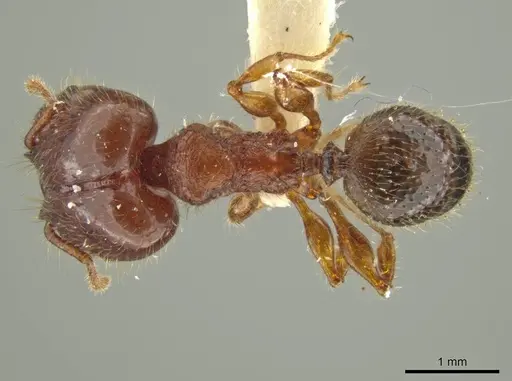
Literature
Loading distribution map...Loading products...