
Pheidole tenuis
- Sci. Name
- Pheidole tenuis
- Tribe
- Attini
- Subfamily
- Myrmicinae
- Author
- Wilson, 2003
- Distribution
- Found in 1 countries
Introduction
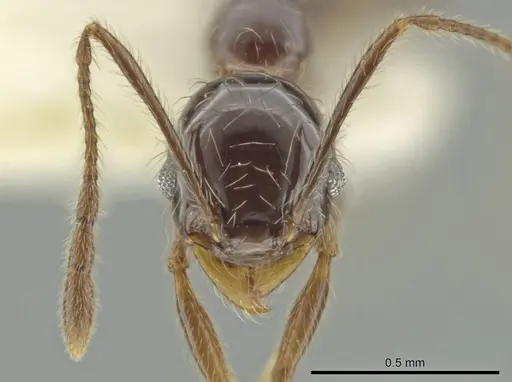
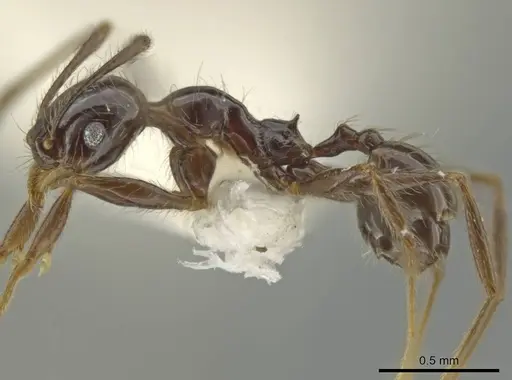
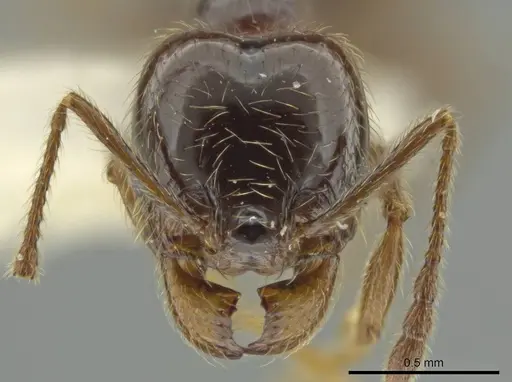
Pheidole tenuis is a tiny Neotropical ant species described from a single location in Colombia's Chocó region. It has a bicolorous head in majors with a narrow yellowish brown strip on the clypeus and genae, and the body is dark brown. The species is known only from the type locality at 760m elevation in the Chocó biogeographic region, collected from a slope covered in spiny bamboo . This species belongs to the diligens group and is one of the least studied Pheidole species, making it a challenge for antkeepers .
Quick Summary
- Difficulty: Hard
- Origin & Habitat: Chocó region of Colombia, South America. Collected from a slope covered in spiny bamboo (Guadua) at 760m elevation. The Chocó is a biodiversity hotspot with high rainfall and humid forest conditions [1][2].
- Colony Type: Based on Pheidole patterns, likely monogyne (single queen colonies), but unconfirmed [1].
- Size & Growth:
- Queen: Size data unavailable
- Worker: ~2-4 mm, inferred from Pheidole genus
- Colony: Unknown, no colony size data available
- Growth: Unknown
- Development: Unknown, no direct measurements exist. Based on typical Pheidole patterns, estimate 4-8 weeks at warm temperatures, but this is unconfirmed [1]. (Development is temperature-dependent.)
- Antkeeping:
- Temperature: 22-28°C, inferred from Chocó's tropical climate [2][3]
- Humidity: High humidity expected, keep nest substrate consistently moist but not waterlogged [2][3]
- Diapause: Unknown, no seasonal data. Given tropical origin, diapause may not be required, but unconfirmed.
- Nesting: Standard Pheidole setups like test tubes, Y-tong, or plaster nests with damp substrate are likely suitable, inferred from genus patterns [1].
- Behavior: Pheidole tenuis belongs to subfamily Myrmicinae, which have a sting, but Pheidole species are generally non-aggressive and colony-focused. Minor workers forage, majors defend the nest. Escape risk is low due to small size. Safe to handle.
- Common Issues: no biological data exists, this is one of the least studied ant species in captivity., colony founding may be difficult since no one has documented how queens establish nests., growth rate is unknown so keepers cannot benchmark their colony's progress., humidity requirements are inferred rather than confirmed, observe colony behavior., limited availability, this species is rarely available in the antkeeping hobby.
Species Overview and Identification
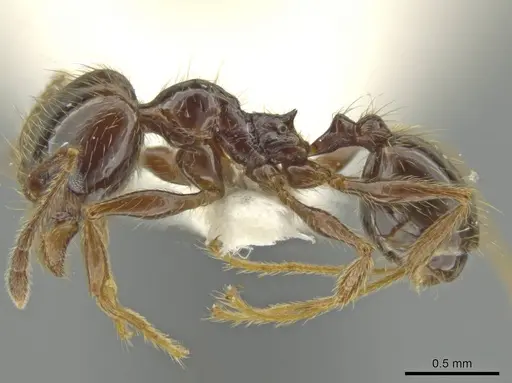
Pheidole tenuis is a diminutive ant species described by E.O. Wilson in 2003 from Colombia's Chocó region. It belongs to the diligens group. The species name 'tenuis' means thin, referring to its slender body. Majors have a bicolored head with a narrow yellowish brown strip on the clypeus and genae, and the body is dark brown. Propodeal spines are stout. This species is known only from its type locality [1][3].
Natural Habitat and Distribution
Pheidole tenuis is known only from the Chocó region of Colombia, at 760m elevation. The type locality is on a slope covered in spiny bamboo (Guadua). The Chocó region has high rainfall and warm temperatures [1][2][3].
Keeping Pheidole tenuis in Captivity
Since no captive care data exists, recommendations are based on typical Pheidole care and the species' tropical origin. Provide warm temperatures (22-28°C) and high humidity with moist substrate [2][3]. Use test tube setups for founding colonies. Feed standard ant foods [1].
Challenges and Limitations
This species has no captive care data, so keeping it is experimental. Availability is extremely limited [1].
Frequently Asked Questions
How do I keep Pheidole tenuis ants?
No captive care protocol exists for this species. Based on typical Pheidole care and the species' tropical origin, provide warm temperatures (22-28°C), high humidity with consistently moist substrate, and standard ant foods. Start with a test tube setup for founding colonies [2][3].
What do Pheidole tenuis eat?
No feeding data exists for this species. Offer standard ant foods: small protein sources (fruit flies, small crickets, mealworms) and sugar sources (honey water, sugar water). Pheidole species are generalist feeders [1].
How long does it take for Pheidole tenuis to develop from egg to worker?
Unknown, no development data exists for this species. Based on typical Pheidole patterns in tropical regions, estimate 4-8 weeks at warm temperatures, but this is a rough guess with low confidence [1].
Are Pheidole tenuis good for beginners?
No. This species is not recommended for beginners due to the complete lack of any captive care data. You would be experimenting with no reference points. Choose a more established species like Pheidole pallidula or Pheidole megacephala for beginner success.
How big do Pheidole tenuis colonies get?
Unknown, no colony size data exists. Most Pheidole colonies reach several hundred to a few thousand workers. This species' maximum size is unconfirmed.
Where is Pheidole tenuis found?
Only known from the Chocó region of Colombia, South America, at 760m elevation. The type locality is Finca Los Guadales,10 km south of San José del Palmar [1][2].
Can I keep multiple Pheidole tenuis queens together?
Unknown, colony structure has not been documented. Most Pheidole are monogyne (single queen), but this species' queen arrangement is unconfirmed. Do not attempt combining unrelated queens without data.
Does Pheidole tenuis need hibernation?
Unknown, no seasonal data exists. Given the tropical Chocó origin, hibernation is likely not required, but this is unconfirmed.
Is Pheidole tenuis available in the antkeeping hobby?
Extremely rare if at all. This species is known only from its type locality in Colombia and has never been documented in commercial ant trade. It would be an exceptional find if available [1].
Report an Issue
The current care sheet is based fully on literature. See inconsistencies, or something that's incorrect? Please , it will be resolved after review from an admin. Contributing to the blogs tab also helps providing information, to make us be able to further improve the caresheets. Thank you for your support!
References

This caresheet is licensed under CC BY-SA 4.0 .
Community Blogs
CASENT0645879
View on AntWeb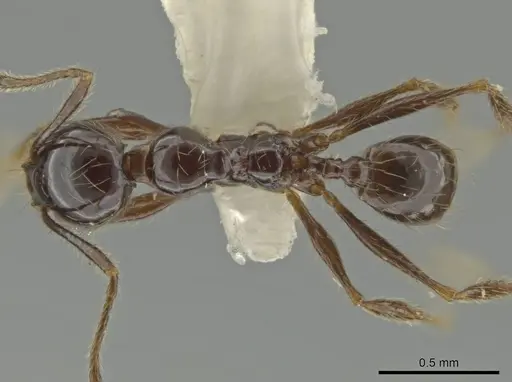
JTLC000016552
View on AntWeb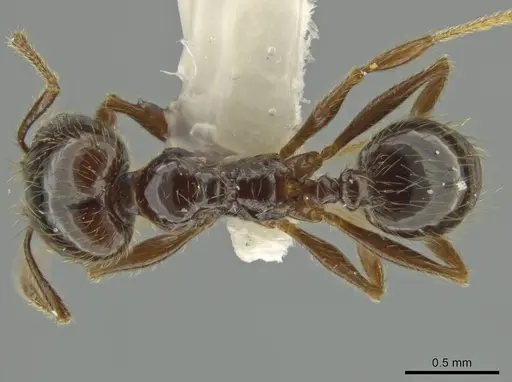
Literature
Loading distribution map...Loading products...