
Pheidole tennantae
- Sci. Name
- Pheidole tennantae
- Tribe
- Attini
- Subfamily
- Myrmicinae
- Author
- Wilson, 2003
- Distribution
- Found in 1 countries
Introduction
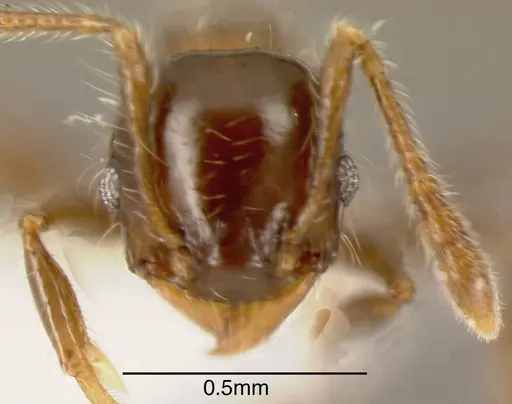
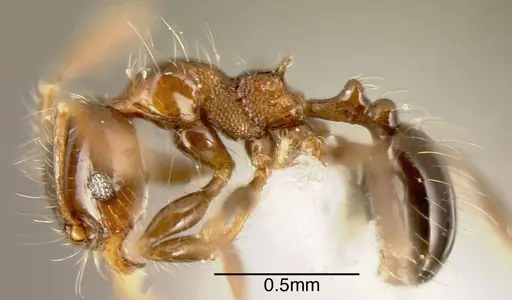
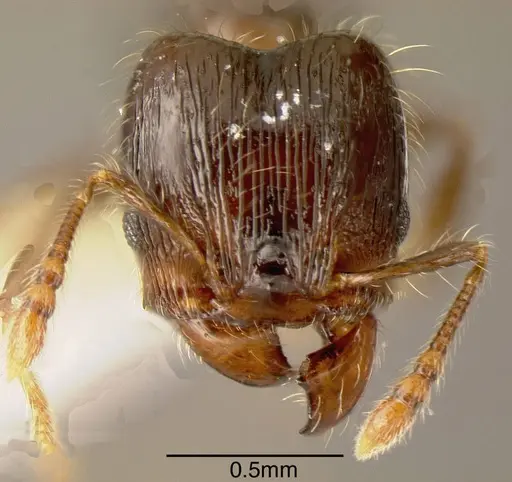
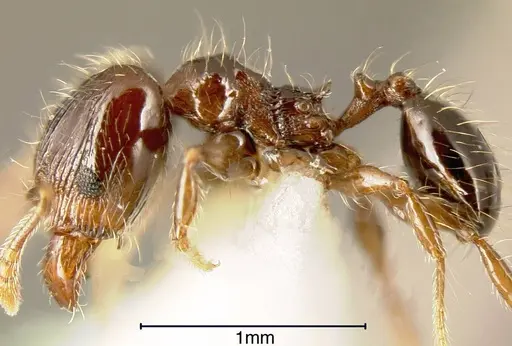
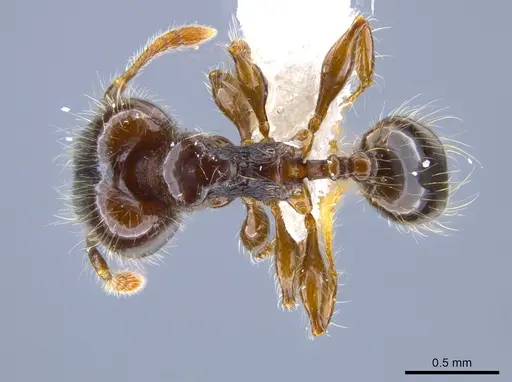
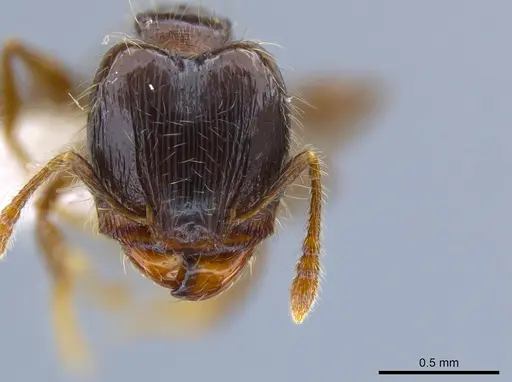
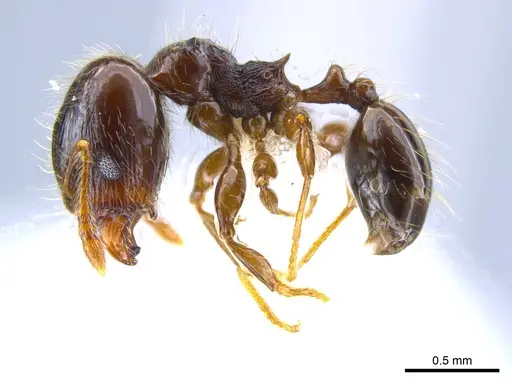
Pheidole tennantae is a small Neotropical ant species with distinctive major workers that have enlarged heads and minor workers that are smaller. Major workers are brown with a bicolored head, and minors are dark brown with yellowish mandibles. This species nests in dead wood on the floor of wet forests and is found in Costa Rica, Panama, Colombia, Venezuela, and Peru . The most notable trait is that major workers specialize in processing seeds and defending the colony, a common feature in the Pheidole genus .
Quick Summary
- Difficulty: Medium
- Origin & Habitat: Native to the Neotropical region, including Costa Rica, Panama, Colombia, Venezuela, and Peru. Found in wet lowland forests, nesting in dead wood on the forest floor [1][2][3][4].
- Colony Type: Unconfirmed, no specific data on queen number from research. Based on Pheidole genus patterns, likely monogyne (single queen colonies), but this is not confirmed.
- Size & Growth:
- Queen: Size data unavailable, no total length measurements in research.
- Worker: Size data unavailable, no total length measurements in research.
- Colony: Unknown, no data on maximum colony size.
- Growth: Moderate, inferred from Pheidole genus patterns.
- Development: Estimated 6-10 weeks at optimal temperature, inferred from genus patterns [4]. (Development time is inferred since specific data for this species is unavailable.)
- Antkeeping:
- Temperature: Keep warm, roughly 22-26°C, with a gentle gradient to allow self-regulation, inferred from tropical lowland habitat [4].
- Humidity: Keep nest substrate consistently moist but not waterlogged, mimicking wet forest conditions [4].
- Diapause: No diapause required, tropical species [4].
- Nesting: Prefer tight, enclosed chambers in dead wood or cork bark, from natural habitat [4].
- Behavior: Calm and non-aggressive species. Minor workers forage, while majors handle defense and seed processing. Small size requires careful escape prevention [4].
- Common Issues: high humidity needs can lead to mold if ventilation is poor [4], small size makes escape prevention critical, use tight-fitting lids and fine mesh [4], slow founding phase means colonies can fail if queen is disturbed [4], wild-caught colonies may carry parasites that affect captive survival [4], limited available information means some care must be adapted from related species [4]
Housing and Nest Preferences
Pheidole tennantae naturally nests in dead wood on the forest floor of wet Neotropical forests. In captivity, they do well in Y-tong, plaster, or naturalistic setups with dead wood or cork bark. They prefer tight, narrow chambers that mimic their natural tunnels. Ensure all connections between nest and outworld are secure to prevent escapes due to their small size [4].
Feeding and Diet
Like other Pheidole species, they are primarily granivorous, collecting and processing seeds. Offer small seeds like grass or dandelion seeds, and provide protein from small insects like fruit flies or pinhead crickets. Sugar water can be offered occasionally [4].
Temperature and Humidity
As a tropical lowland species, they need warm and humid conditions. Maintain temperatures around 22-26°C with a gradient. Keep nest substrate moist but not waterlogged, with good ventilation to prevent mold [4].
Colony Development and Growth
Colonies start with a queen that raises the first brood alone. Growth is moderate, with major workers appearing as the colony expands. Development from egg to worker is estimated at 6-10 weeks at optimal temperature [4].
Behavior and Temperament
This species is calm and not aggressive. Minor workers forage, while majors defend the nest and process seeds. They are not known to sting, but their small size means escape prevention is critical [4].
Frequently Asked Questions
How long does it take for Pheidole tennantae to have first workers?
Estimated 6-10 weeks from egg to first worker at optimal temperature, inferred from genus patterns [4].
What do Pheidole tennantae ants eat?
They are primarily granivorous, eating small seeds, and need protein from small insects like fruit flies [4].
What temperature and humidity do they need?
Keep them at 22-26°C with high humidity, maintaining moist nest substrate [4].
Are Pheidole tennantae good for beginners?
They are rated medium difficulty due to specific humidity needs and escape risks [4].
Can I keep multiple queens together?
Unconfirmed, but likely single-queen colonies based on genus patterns, not recommended to combine queens [4].
When should I move them to a formicarium?
Keep in test tube setup until they have enough workers, then transfer to a proper nest [4].
How big do Pheidole tennantae colonies get?
Colony size is unknown, but based on related species, they may reach several hundred workers [4].
Do they need hibernation?
No, as a tropical species, they do not require hibernation [4].
Why are my ants escaping?
Their small size allows them to squeeze through tiny gaps, use fine mesh and secure lids [4].
Report an Issue
The current care sheet is based fully on literature. See inconsistencies, or something that's incorrect? Please , it will be resolved after review from an admin. Contributing to the blogs tab also helps providing information, to make us be able to further improve the caresheets. Thank you for your support!
References

This caresheet is licensed under CC BY-SA 4.0 .
Community Blogs
Literature
Loading distribution map...Loading products...