
Pheidole subnuda
- Sci. Name
- Pheidole subnuda
- Tribe
- Attini
- Subfamily
- Myrmicinae
- Author
- Wilson, 2003
- Distribution
- Found in 1 countries
Introduction
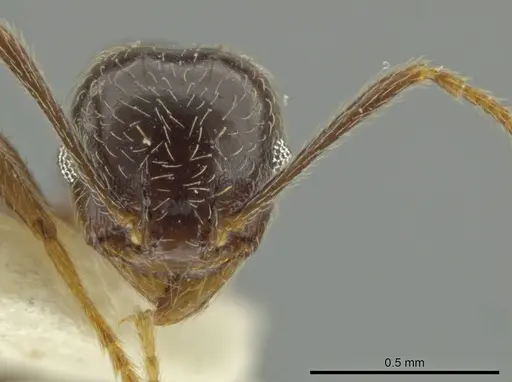
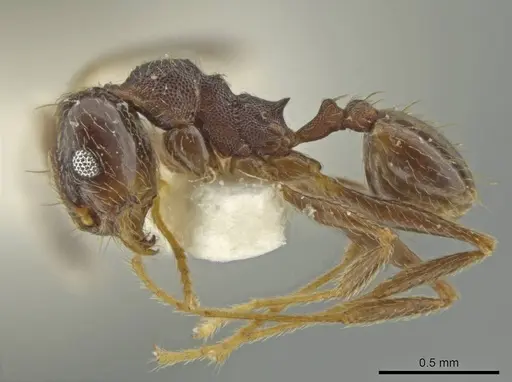
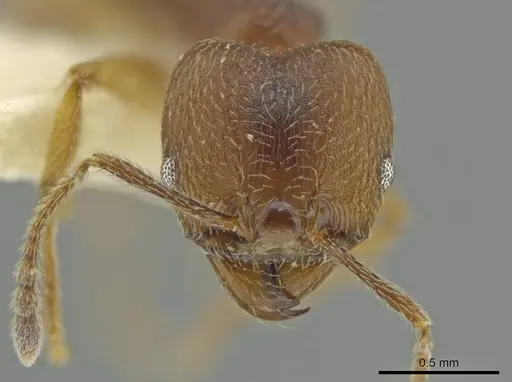
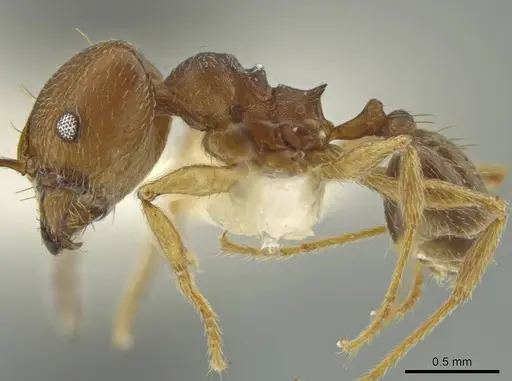
Pheidole subnuda is a small Neotropical ant, first described by E.O. Wilson in 2003 . It belongs to the diligens group and is native to Colombia and Venezuela, found at elevations of 1100–1200 m . The species name 'subnuda' means 'almost bare', referring to its reduced pilosity . Direct total length measurements are not available; based on head width data, workers are likely ~2–4 mm in total length, inferred from typical Pheidole sizes . Major workers have a smooth gaster, faint head carinulae, and a hairless mesosoma; minors have a concave head profile and a smooth head and gaster with an opaque, pitted waist . Almost nothing is known about its biology – only a single observation of males in a nest in Venezuela on 13 September has been reported .
Quick Summary
- Difficulty: Unknown – likely Medium based on genus patterns
- Origin & Habitat: Colombia (Meta) and Venezuela (Táchira state) at 1100–1200 m elevation in the Andes – likely highland tropical or subtropical habitats [2][3][1].
- Colony Type: Unknown. No data on queen number. Most Pheidole are monogyne, but polygynous species exist. Captive observations are needed.
- Size & Growth:
- Queen: Undocumented – no queen specimens have been described.
- Worker: ~2–4 mm total length (inferred from Pheidole genus, direct total length measurements are unavailable). Head width data: major HW 0.94 mm, minor HW 0.58 mm [3].
- Colony: Unknown – no colony size data exists.
- Growth: Unknown – no development data exists.
- Development: Unknown – based on typical Pheidole patterns, estimate 6–10 weeks at optimal temperature. This is a rough guess, not a confirmed timeline. (No species-specific research exists. Use this estimate with caution.)
- Antkeeping:
- Temperature: Likely 22–26 °C based on highland Neotropical origin [1]. Start at 24 °C and adjust based on colony activity.
- Humidity: Keep nest substrate slightly moist but not waterlogged. Small worker size makes them susceptible to desiccation, ensure a humid nest area.
- Diapause: Unknown – tropical origin suggests no true hibernation, but reduced activity may occur during cooler months. Observe seasonal patterns.
- Nesting: No natural nesting data. Based on Pheidole genus, likely nests in soil or under stones. Use test tubes or small formicaria with narrow passages (due to tiny workers).
- Behavior: Completely unstudied. Pheidole species are generally non‑aggressive foragers that scavenge for protein and sugar. Major workers (soldiers) assist in defense and food processing. The very small size of both castes (under ~4 mm body length) requires excellent escape prevention – use fine mesh (
- Common Issues: no biological data exists – this species has never been kept in captivity, unknown founding behavior – claustral or semi‑claustral? No queen observations, tiny workers can escape through standard barriers – use very fine mesh (≤0.5 mm), inferred temperature and humidity needs may be wrong – monitor closely, wild‑caught colonies may carry parasites since nothing is known about their health
Species Overview and Identification
Pheidole subnuda was described in 2003 by Wilson from specimens collected in Colombia and Venezuela [1]. It belongs to the diligens group. Major workers have a smooth gaster, faint longitudinal carinulae on the posterior half of the head, a weakly bilobed pronotum, and a hairless mesosoma [3]. Minor workers have a concave ventral head profile, a completely smooth head and gaster, and an opaque, pitted waist [3]. The species name 'subnuda' means 'almost bare', referring to the reduced pilosity [1]. Only a handful of specimens exist from three highland locations (1100–1200 m) in Venezuela and one site in Meta, Colombia [2][3][1].
Natural History and Biology
Almost nothing is known about the biology of this species. The only documented observation is the presence of males in a nest at La Parada, Venezuela on 13 September, suggesting nuptial flights might occur during the wet season [1]. No data exists on colony size, queen behavior, founding method, diet, or any other trait. This species has never been kept in captivity. Any care advice is highly speculative and based on genus‑level patterns, not species‑specific research.
Housing and Nesting
Since no natural nesting data exists, infer from related Pheidole and collection locations. The highland tropical origin suggests warm, humid conditions. In captivity, start with test tubes as founding chambers, for established colonies, use small formicaria with narrow passages (due to tiny workers). The very small size of minors (body length ~2–4 mm) requires fine mesh (≤0.5 mm) on outworlds to prevent escape. Avoid large open spaces that small ants may dry out in. A small outworld with a heat gradient allows observation and feeding.
Feeding and Diet
No direct dietary data exists. Like most Pheidole, this species is likely omnivorous, accepting both protein (small insects like fruit flies, pinhead crickets, mealworm pieces) and sugar (honey, sugar water). Pheidole species are scavengers rather than active predators. Offer protein 2–3 times per week and constant access to sugar water. Remove uneaten prey after 24–48 hours to prevent mold. Major workers may help process larger items, but minors handle fine particles.
Temperature and Seasonal Care
Collected from highland sites (1100–1200 m) in the Venezuelan Andes – likely prefers slightly cooler conditions than lowland tropical species. Start at 22–26 °C [1]. Monitor activity: if workers cluster near heat, raise temperature, if they avoid heat, lower it. Since the region is near the equator with year‑round warmth, true hibernation is unlikely. You may see reduced activity during cooler months, but no diapause data exists. Maintain consistent temperatures and humidity throughout the year.
Behavior and Colony Dynamics
No behavioral studies exist for this species. Based on typical Pheidole, expect non‑aggressive foragers with distinct major and minor worker castes. Majors defend and process food, minors forage and care for brood. The species likely forms moderate‑sized colonies with one queen (unconfirmed). Workers will probably recruit nestmates to food sources. The small size (both castes under ~4 mm) makes them vulnerable to desiccation – maintain high nest humidity.
Frequently Asked Questions
How do I care for Pheidole subnuda ants?
Care is uncertain since this species has never been kept. Based on genus patterns, keep at 22–26 °C, provide a humid nest (substrate slightly moist), feed small insects and sugar water, and use very fine mesh to prevent escape. This species is not recommended for beginners due to the total lack of established care protocols.
What do Pheidole subnuda ants eat?
No species‑specific data exists. Like other Pheidole, they likely accept small insects (fruit flies, pinhead crickets, mealworm pieces) and sugar sources (honey, sugar water). Offer these and adjust based on acceptance.
How long does it take for Pheidole subnuda to develop from egg to worker?
Unknown – no development data. Based on typical Pheidole, estimate 6–10 weeks at optimal temperature. This is a rough guess, not confirmed.
Are Pheidole subnuda ants good for beginners?
No. This species has no captive records, no known care data, and very little biological information. Choose a better‑documented species like Pheidole pallidula or Pheidole megacephala for your first colony.
What size colony do Pheidole subnuda colonies reach?
Unknown – no data. Most Pheidole form colonies of several hundred to a few thousand workers, but this is unconfirmed for subnuda.
What temperature should I keep Pheidole subnuda at?
Based on highland origin (1100–1200 m), start at 22–26 °C [1]. Adjust if the colony shows signs of heat stress or sluggishness.
Can I keep multiple Pheidole subnuda queens together?
Unknown – no data on colony structure. Most Pheidole are monogyne, but some are polygynous. Do not attempt combining queens without documented evidence.
Where is Pheidole subnuda found in the wild?
Only known from Meta in Colombia, and La Parada, San Cristóbal, and Palmira in Táchira, Venezuela, at elevations of 1100–1200 m [2][3][1].
Why is so little known about Pheidole subnuda?
Described only in 2003 from a few specimens, it has never been studied for biology, behavior, or colony structure. It remains one of the most poorly documented Pheidole species [1].
Report an Issue
The current care sheet is based fully on literature. See inconsistencies, or something that's incorrect? Please , it will be resolved after review from an admin. Contributing to the blogs tab also helps providing information, to make us be able to further improve the caresheets. Thank you for your support!
References

This caresheet is licensed under CC BY-SA 4.0 .
Community Blogs
JTLC000016542
View on AntWeb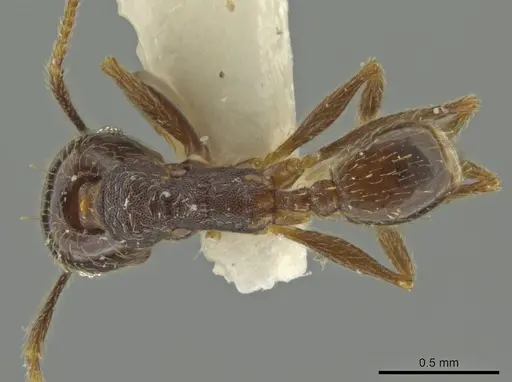
JTLC000016543
View on AntWeb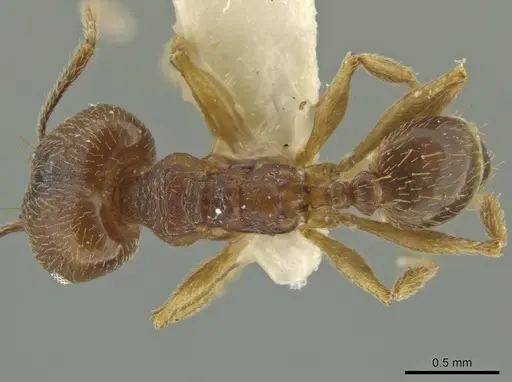
Literature
Loading distribution map...Loading products...