
Pheidole spinicornis
- Sci. Name
- Pheidole spinicornis
- Tribe
- Attini
- Subfamily
- Myrmicinae
- Author
- Eguchi, 2001
- Distribution
- Found in 1 countries
Introduction
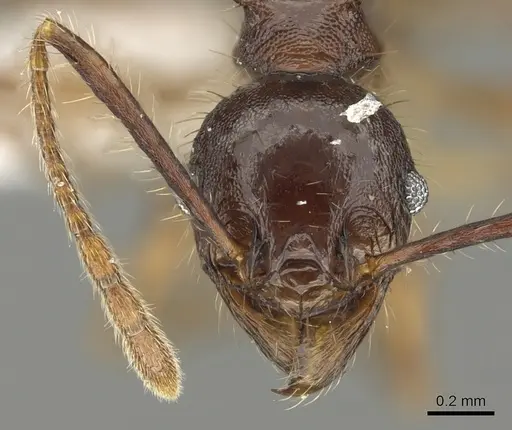
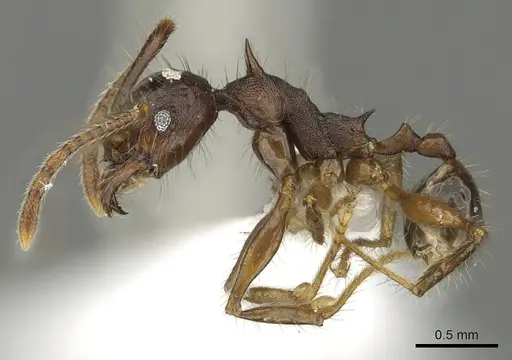
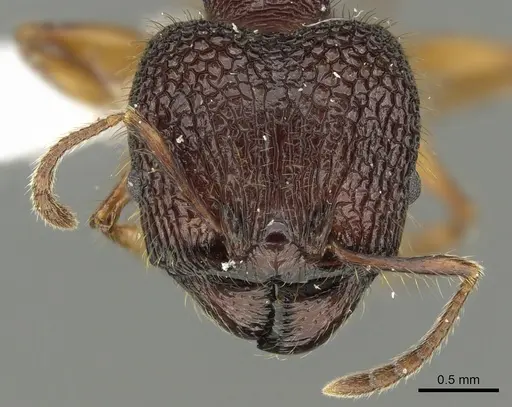
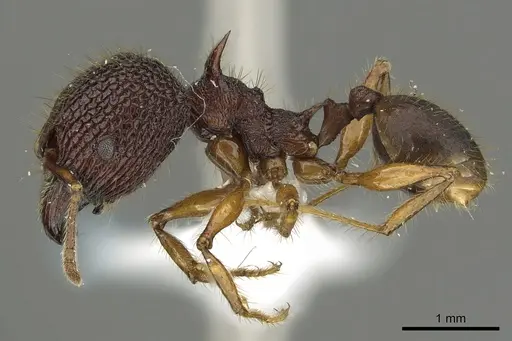
Pheidole spinicornis is a small ant species native to the rainforests of Borneo. Majors measure 4.1-4.9 mm in total length, with a pair of spines on their promesonotal dome that curve slightly backward and a distinct transverse ridge on the posterior slope. Minors are 2.7-3.0 mm in total length, with horn-like propodeal spines. Both castes have a 3-segmented antennal club. The species is dark reddish-brown with a lighter alitrunk. It inhabits well-developed lowland and hill forests in Borneo, particularly at altitudes of 500-1000 m, and is sympatric with Pheidole quadricuspis and Pheidole quadrensis in Sepilok forest . Pheidole spinicornis is part of the Pheidole quadricuspis group, a cluster of closely related species that can be difficult to distinguish. The majors' spines and ridges serve as key identification markers .
Quick Summary
- Difficulty: Medium
- Origin & Habitat: Borneo (Sabah, Malaysia) and Indonesia, tropical rainforests in lowland and hill areas at altitudes 500-1000 m [1]. Sympatric with Pheidole quadricuspis and Pheidole quadrensis [1].
- Colony Type: Colony structure is unconfirmed. Based on typical Pheidole patterns, likely monogyne (single-queen) colonies, but this has not been directly documented for this species.
- Size & Growth:
- Queen: Size data unavailable for queens, inferred from Pheidole genus patterns as approximately 6-8 mm.
- Worker: Minors: 2.7-3.0 mm, Majors: 4.1-4.9 mm in total length [1].
- Colony: Up to several hundred workers, estimated from typical Pheidole colony sizes.
- Growth: Moderate.
- Development: Estimated 6-8 weeks at 25-28°C, based on typical Pheidole development. (Development time is species-specific data unavailable, so estimated from genus patterns.)
- Antkeeping:
- Temperature: Keep at 24-28°C. As a tropical species, they need warm, stable temperatures.
- Humidity: Keep nest substrate consistently moist but not waterlogged, based on their rainforest habitat.
- Diapause: No diapause required, tropical species [1].
- Nesting: Prefer nests that maintain moisture, such as Y-tong or plaster nests.
- Behavior: Pheidole spinicornis is a generalist forager. Majors defend the colony and process large food items. Workers are active foragers. Escape risk is moderate due to small size.
- Common Issues: mold growth is a risk due to high humidity needs, ensure good ventilation., temperature drops can stress these tropical ants, keep away from cold areas., majors may have difficulty in narrow passages, use wider tubes in formicariums., overfeeding can lead to mold, remove uneaten food promptly., wild-caught colonies may harbor parasites, quarantine if possible.
Housing and Nest Setup
Pheidole spinicornis does well in several nest types. Y-tong (AAC) nests work well because they hold humidity while providing dark chambers. Plaster nests are another good option as they absorb water. For a naturalistic approach, use a soil-filled formicarium with leaf litter. Keep the nest substrate consistently damp without standing water. A test tube setup can work for founding colonies, but move them to a proper formicarium once the colony reaches 20-30 workers. Ensure all connections are smooth to prevent majors from getting stuck. [2]
Feeding and Diet
Pheidole spinicornis is a generalist that accepts protein sources like small crickets, mealworms, and fruit flies twice weekly. Offer sugar sources like honey or sugar water every few days. Seeds are part of their natural diet, so grass seeds or bird seed can be provided. Remove uneaten food after 24-48 hours to prevent mold. Fresh water should always be available. [2]
Temperature and Humidity Management
Keep the nest area at 24-28°C using a heating cable if needed. Maintain humidity by keeping the substrate moist and providing a water tube. Balance humidity with ventilation to avoid mold. Watch for condensation, some is good, but excessive moisture can harm the colony. [1]
Colony Growth and Development
A newly mated queen lays eggs and feeds the first brood using her reserves. The first workers are smaller but handle basic tasks. Majors appear once the colony reaches around 50 workers. Growth is moderate, and colonies can reach several hundred workers over years.
Handling and Temperament
This species is not highly aggressive but will defend if threatened. Majors can bite but rarely break human skin. Workers are active foragers. Use standard escape prevention like fluon barriers. They coordinate foraging and are interesting to observe. [2]
Frequently Asked Questions
How long does it take for Pheidole spinicornis to get their first workers?
Expect first workers in about 6-8 weeks after egg laying, assuming temperatures around 25-28°C. This is estimated from typical Pheidole development.
What do Pheidole spinicornis ants eat?
They accept protein like small insects, seeds, and sugar sources like honey. Offer protein twice weekly and keep sugar water available [2].
What temperature do Pheidole spinicornis need?
Keep them at 24-28°C. As a tropical species, they need warm conditions year-round [1].
Are Pheidole spinicornis good for beginners?
They are rated as medium difficulty due to humidity and temperature needs, but their generalist diet makes them manageable for intermediate keepers.
How big do Pheidole spinicornis colonies get?
Colonies likely reach up to several hundred workers over 2-3 years, based on typical Pheidole patterns.
Do Pheidole spinicornis need hibernation?
No, as a tropical species from Borneo, they do not require diapause [1].
What humidity level do Pheidole spinicornis need?
Keep the substrate consistently moist but not waterlogged, based on their rainforest habitat.
Can I keep multiple Pheidole spinicornis queens together?
This has not been documented. Most Pheidole are monogyne, and combining queens is not recommended as it may lead to fighting.
What size formicarium do I need for Pheidole spinicornis?
Start with a test tube for the founding queen. Move to a small formicarium like Y-tong or plaster nest once the colony reaches 20-30 workers.
Report an Issue
The current care sheet is based fully on literature. See inconsistencies, or something that's incorrect? Please , it will be resolved after review from an admin. Contributing to the blogs tab also helps providing information, to make us be able to further improve the caresheets. Thank you for your support!
References

This caresheet is licensed under CC BY-SA 4.0 .
Community Blogs
CASENT0901620
View on AntWeb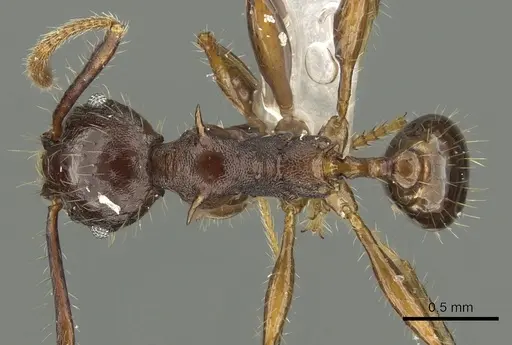
CASENT0901621
View on AntWeb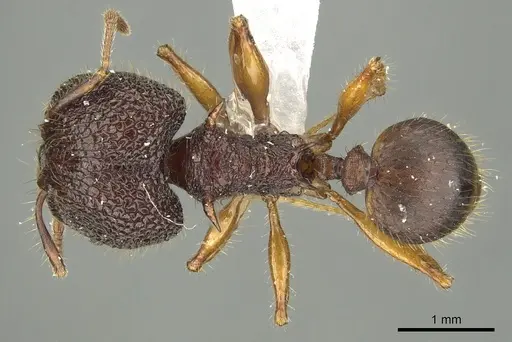
Literature
Loading distribution map...Loading products...