
Pheidole singularis
- Sci. Name
- Pheidole singularis
- Tribe
- Attini
- Subfamily
- Myrmicinae
- Author
- Smith, 1863
- Distribution
- Found in 0 countries
Introduction
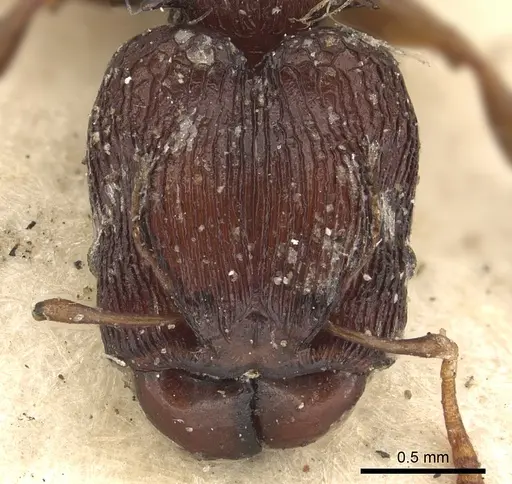
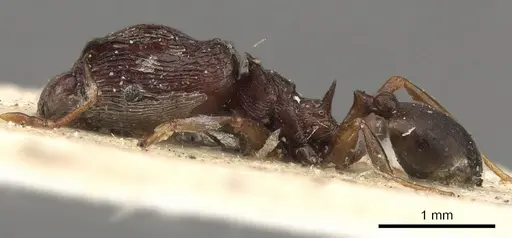
Pheidole singularis is a tropical ant species native to the Indo-Malayan and Australasian regions, specifically found in New Guinea and the islands of Indonesia, including Misool Island where it was first described . Major workers measure approximately 4 mm in total length, with distinctive morphological features including elongated heads with regular striation and dense punctation on the thorax . This species belongs to the subgenus Pheidolacanthinus and is known for seed harvesting behavior. This species exhibits polymorphic workers with major workers that have enlarged heads for seed processing and defense, while minor workers handle most foraging tasks.
Quick Summary
- Difficulty: Medium
- Origin & Habitat: Tropical forest regions of New Guinea and Indonesian islands including Misool. Found in lowland to mid-elevation areas [1][2].
- Colony Type: Colony structure is unconfirmed for this specific species. Without specific research, the queen number cannot be determined.
- Size & Growth:
- Queen: Size data unavailable, no total length measurements in research context.
- Worker: Major workers: approximately 4 mm in total length [3]. Minor worker size unknown.
- Colony: Colony size unknown, no species-specific data available.
- Growth: Growth rate unknown, inferred from typical Pheidole patterns as moderate.
- Development: Unknown, no species-specific research available. (Development time is unconfirmed, based on genus patterns, warmer temperatures may accelerate growth.)
- Antkeeping:
- Temperature: Based on typical Pheidole patterns, keep warm at 24-28°C [2].
- Humidity: Maintain moderate to high humidity, keep substrate moist but not waterlogged [2].
- Diapause: No, tropical species do not require hibernation [2].
- Nesting: Prefers soil nests or Y-tong nests with dark, humid chambers [2].
- Behavior: Minor workers are active foragers, while major workers defend the colony and process seeds. They are not aggressive toward keepers but may sting if threatened. Escape risk is moderate due to size [2].
- Common Issues: tropical species may struggle in cool, dry environments, maintain warmth and humidity [2]., colonies can be slow to establish initially, patience is needed during founding phase [2]., major workers may appear threatening but stings are mild, no significant danger to keepers., seed-based diet requires variety, supplement with protein sources for balanced nutrition [2]., polygyne tendency means multiple queens may coexist, monitor for aggression if combining colonies [2].
Housing and Nest Setup
Pheidole singularis does well in a variety of captive setups. A Y-tong (AAC) nest with narrow chambers works excellently for this species, providing the dark, humid environment they prefer. Alternatively, a plaster nest or naturalistic setup with soil substrate allows for natural tunneling behavior. The nest should have chambers scaled appropriately, not too large, as these ants prefer cozy spaces. Provide an outworld connected to the nest where you can offer food. A water test tube with a cotton plug should always be available for drinking water. Escape prevention is straightforward with this species, standard fluon barriers on the rim of the outworld are sufficient [2].
Feeding and Diet
This species is primarily granivorous, they collect and process seeds. Offer a variety of small seeds such as millet, sesame, or specialized ant seed mixes. They also readily accept protein sources including small insects like fruit flies, pinhead crickets, and mealworms. Sugar water or honey can be offered occasionally as an energy boost, though seeds should form the dietary foundation. Remove uneaten seeds and protein to prevent mold growth in the outworld [2].
Temperature and Humidity
Being a tropical species from New Guinea and Indonesia, Pheidole singularis requires warm conditions. Maintain temperatures between 24-28°C, with 26°C being ideal. A heating cable or mat on one side of the nest creates a gentle gradient allowing ants to self-regulate. Humidity should stay in the 60-80% range, the substrate should feel consistently moist but never waterlogged. A water tube connected to the nest helps maintain humidity through evaporation. Avoid temperatures below 22°C for extended periods as this species is not cold-tolerant [2].
Colony Development and Growth
A newly mated queen will seal herself in a claustral chamber and lay eggs, raising the first brood entirely on her stored fat reserves. The first workers (nanitics) are typically smaller than normal minors but can already handle basic colony tasks. After the nanitics emerge, the queen stops foraging and becomes purely reproductive. Colony growth is moderate, expect the first major workers to appear once the colony reaches several dozen workers. Major workers develop as the colony grows and are typically produced when the colony has sufficient resources [2].
Behavior and Defense
This species shows typical Pheidole behavior, minor workers handle most daily tasks including foraging, brood care, and nest maintenance, while major workers serve as defenders and seed processors. When the nest is disturbed, majors readily emerge and may snap their mandibles or deliver a mild sting. The sting is not dangerous to healthy humans but may cause minor irritation. These ants are not aggressive toward keepers and can be handled gently with minimal risk [2].
Frequently Asked Questions
How long does it take for Pheidole singularis to have first workers?
No species-specific research is available. Based on typical Pheidole genus patterns, first workers may emerge in 6-8 weeks at optimal temperatures, but this is unconfirmed [2].
What do Pheidole singularis ants eat?
They are primarily seed harvesters, offer small seeds like millet, sesame, or commercial ant seed mixes. Supplement with protein sources such as small insects (fruit flies, pinhead crickets, mealworms). Occasional sugar water or honey provides additional energy [2].
What temperature do Pheidole singularis need?
Keep them warm at 24-28°C, with 26°C being ideal. They are tropical ants from New Guinea and Indonesia, so they do not tolerate cool temperatures [2].
Are Pheidole singularis good for beginners?
They are a medium-difficulty species. While not as beginner-friendly as some Lasius or Camponotus species, they are manageable for keepers who can maintain warm, humid conditions [2].
How big do Pheidole singularis colonies get?
Colony size is unknown for this species since no research exists. Based on typical Pheidole patterns, colonies may reach several hundred workers, but this is unconfirmed [2].
Do Pheidole singularis need hibernation?
No, they do not require hibernation. As a tropical species, they prefer stable warm conditions year-round [2].
What size nest should I use for Pheidole singularis?
A Y-tong (AAC) nest with appropriately sized chambers works well. The chambers should be snug but allow movement. Plaster nests or naturalistic setups with soil substrate are also suitable [2].
Can I keep multiple queens together?
The colony structure for this specific species is unconfirmed. If you attempt multi-queen founding, introduce them before any have laid eggs and monitor closely for aggression. Combining established colonies is not recommended.
Why are my Pheidole singularis dying?
Common causes include temperatures below 22°C, low humidity, mold from overwatering or uneaten food, or stress from excessive disturbance. Ensure warm, humid conditions and minimize nest disturbances [2].
Report an Issue
The current care sheet is based fully on literature. See inconsistencies, or something that's incorrect? Please , it will be resolved after review from an admin. Contributing to the blogs tab also helps providing information, to make us be able to further improve the caresheets. Thank you for your support!
References

This caresheet is licensed under CC BY-SA 4.0 .
Community Blogs
CASENT0901402
View on AntWeb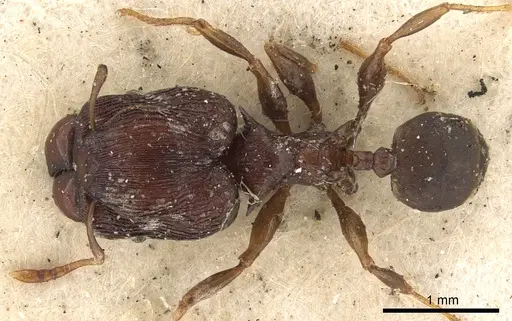
Literature
Loading distribution map...Loading products...