
Pheidole simplispinosa
- Sci. Name
- Pheidole simplispinosa
- Tribe
- Attini
- Subfamily
- Myrmicinae
- Author
- Sarnat, 2008
- Distribution
- Found in 2 countries
Introduction
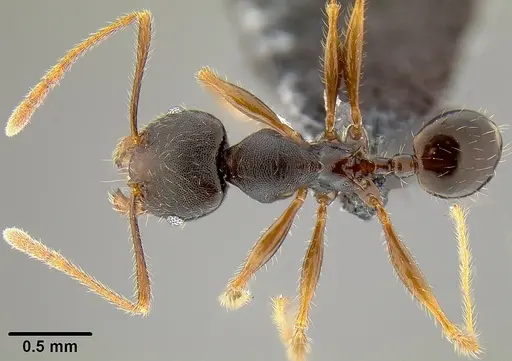
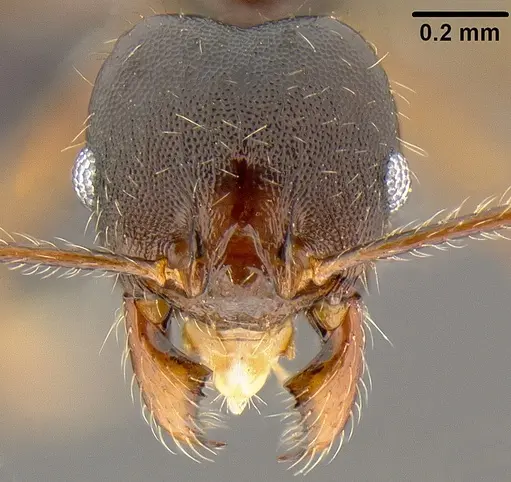
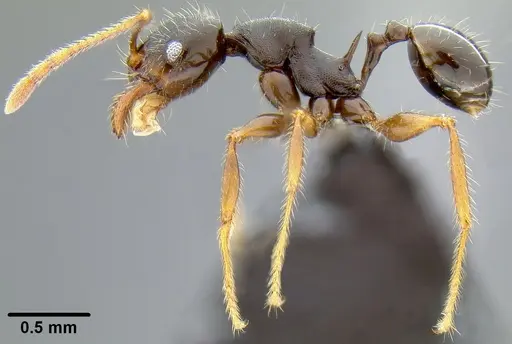
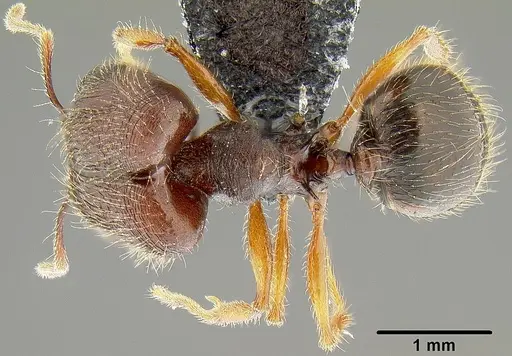
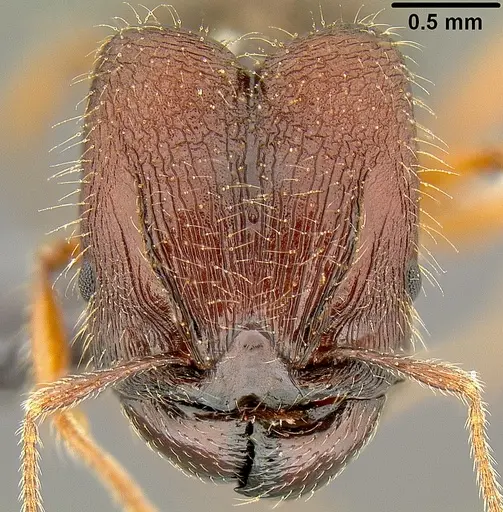
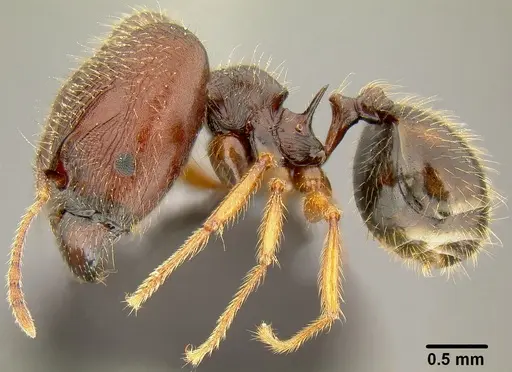
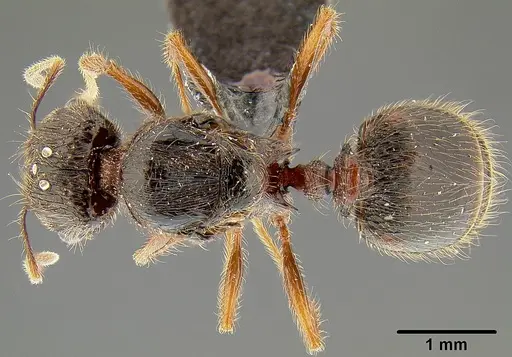
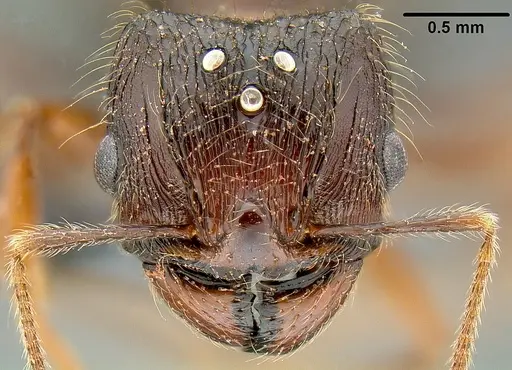
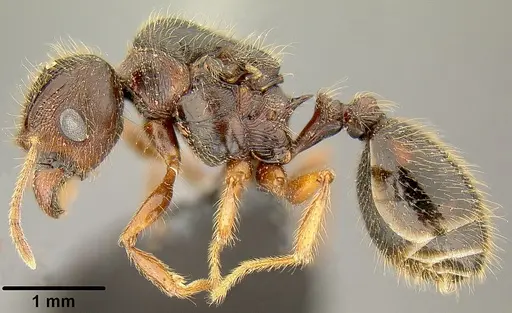
Pheidole simplispinosa is a small ant species endemic to the Fiji islands of Vanua Levu, Taveuni, and Koro . Workers come in two sizes: majors measure 5.65–6.78 mm while minor workers are much smaller at 2.96–3.41 mm, making it one of the smaller Pheidole species . Queens reach about 6.82 mm and have well-developed mesosomas (the middle body section) . The species gets its name from its most distinctive feature – simple, straight propodeal spines that don't fork or branch, unlike other members of the roosevelti-group . They nest in soil, building nests with either single or multiple turret entrances, and can create irregular mounds of excavated soil . What makes P. simplispinosa special is its evolutionary position within the roosevelti-group. It is one of the most primitive (basal) species in this group, showing a transitional form with simplified spines and a blunt mesonotal process rather than the more elaborate structures seen in derived species . This species is entirely allopatric with its closest relative Pheidole roosevelti – meaning they never overlap geographically. Pheidole roosevelti occupies the southern islands of Viti Levu and Ovalau, while Pheidole simplispinosa is found in the northern islands .
Quick Summary
- Difficulty: Expert
- Origin & Habitat: Endemic to the northern Fiji islands: Vanua Levu, Taveuni, and Koro [1][2]. Found in tropical rainforest habitats from sea level to around 470 m elevation, with tolerance for lower elevation areas that explains its wide range within the archipelago [2][1].
- Colony Type: Unconfirmed. Based on typical Pheidole patterns, it is likely monogyne (single-queen colonies), but no research has verified colony structure for this species.
- Size & Growth:
- Queen: 6.82 mm [1]
- Worker: Majors 5.65–6.78 mm, minors 2.96–3.41 mm [1]
- Colony: Unknown – no data for this species
- Growth: Unknown – estimated moderate based on typical Pheidole, but not confirmed
- Development: Unknown – no research data available. Based on genus patterns, possibly 6–8 weeks under warm conditions, but this is speculative. (No specific development data exists for this species. All timeline estimates are inferred from other tropical Pheidole and should be treated as guesses.)
- Antkeeping:
- Temperature: No specific research. As a tropical species from Fiji, it requires warm conditions. Keep at 24–28 °C – a heating cable on one side of the nest creates a suitable gradient.
- Humidity: Maintain high humidity similar to its natural rainforest habitat. Keep the nest substrate consistently moist but not waterlogged. Mist occasionally and provide a water tube.
- Diapause: No – Fiji has a tropical climate. These ants do not require hibernation or diapause.
- Nesting: Soil-nesting species. In captivity, a naturalistic setup with moist soil or a Y-tong (AAC) or plaster nest works well. They can build turret-like entrances, so some soil depth allows natural behavior. Avoid completely dry conditions.
- Behavior: Typical Pheidole behavior inferred from genus. Minor workers are very small (under 4 mm) and active foragers. Majors have large heads for seed-processing and defense. They are not particularly aggressive but will defend the nest. Because minor workers are tiny, escape prevention with fine mesh or barriers is essential. Foraging is ground-based.
- Common Issues: rare in the hobby – this species is endemic to Fiji and seldom available, making wild-caught colonies the main option, escape risk due to small minor workers – use fine mesh barriers and tight seals, no established captive breeding protocols – wild-caught colonies may struggle to adapt, mortality can be high, mold from high humidity if ventilation is poor – balance dampness with air exchange, temperature swings – tropical stability is needed, drops below 20°C can harm colony development
Housing and Nest Setup
Pheidole simplispinosa is a soil-nesting species that naturally builds turret-like nest entrances [1]. In captivity, a naturalistic setup with 2–3 cm of moist soil allows them to exhibit natural digging and turret-building behavior. A Y-tong (AAC) nest filled with moist grit or soil also works well. Because they come from a tropical rainforest environment, humidity is more important than for temperate species. Use a water tube attached to the nest to maintain moisture. The outworld can be simple – these ants are ground foragers that don't climb much, so a standard foraging area works fine. Escape prevention is critical: minor workers are tiny (under 4 mm) and can squeeze through standard gaps. Apply fluon to rim edges and use fine mesh on any ventilation holes.
Feeding and Diet
No specific dietary research exists for this species. Based on typical Pheidole, they are likely omnivorous with a preference for protein and seeds. Offer small live insects like fruit flies, pinhead crickets, or small mealworms as protein. They may also accept seeds – majors have large heads suited for seed processing in related species. Sugar water, honey, or diluted jam can be offered as an energy source. Remove uneaten protein after 24–48 hours to prevent mold. Observe your colony – pickiness is unknown, so adjust based on acceptance.
Temperature and Humidity
Being from tropical Fiji, these ants need warm and humid conditions. Maintain nest temperatures between 24–28 °C – use a heating cable on one side of the nest if your room temperature is below this range. Avoid placing the heating cable underneath the nest, as it can dry out the substrate. Humidity should be high – the nest substrate should feel consistently moist. A water tube connected to the nest provides a constant moisture source. In the outworld, occasional misting helps maintain humidity. Balance is important: too wet and mold becomes a problem, too dry and brood development suffers. Good ventilation prevents stagnant air while maintaining humidity.
Colony Development
There is no research data on colony development for this species. Based on typical Pheidole patterns, the queen may be claustral (seals herself in a chamber and raises first brood from stored reserves), but this is not confirmed. Expect slow initial growth – first workers likely appear after several weeks under warm conditions, but exact timelines are unknown. Majors appear later as the colony matures. Colony size at maturity is undocumented.
Behavior and Temperament
Behavioral data specific to this species is lacking. Based on similar Pheidole, expect clear caste differentiation: minor workers handle foraging, brood care, and nest tasks, while majors specialize in seed processing and defense. Majors are not present in very young colonies. They are not aggressive toward keepers but will defend the nest if threatened. The minor workers are small and active, using chemical trails to recruit to food sources. They are ground-nesting and do not climb smooth surfaces well, making standard barrier methods effective.
Frequently Asked Questions
How long does it take for Pheidole simplispinosa to have first workers?
Unknown – no research data exists. Based on genus patterns, possibly 6–8 weeks under warm conditions, but this is a guess.
What do Pheidole simplispinosa ants eat?
No specific data. They are likely omnivorous like other Pheidole. Offer small live insects (fruit flies, pinhead crickets) and sugar water or honey. They may also accept seeds. Remove uneaten protein after 24–48 hours.
Do Pheidole simplispinosa ants need hibernation?
No. Being from tropical Fiji, they do not require hibernation or diapause. Keep them warm year-round at 24–28 °C.
What size colony do Pheidole simplispinosa reach?
Not documented for this species. Typical Pheidole colonies can reach several thousand workers, but this has not been observed for P. simplispinosa.
Are Pheidole simplispinosa good for beginners?
No – this species is rated Expert. It is a rare Fiji endemic with no documented captive breeding protocols and very limited availability. Only experienced keepers with tropical ant experience should attempt raising them.
What nest type is best for Pheidole simplispinosa?
A naturalistic setup with moist soil (2–3 cm depth) works well, allowing them to build natural turret entrances. A Y-tong (AAC) nest filled with moist substrate is also suitable. They need high humidity.
Can I keep multiple queens together?
Not recommended. No research exists for this species, but Pheidole are typically monogyne (single queen). Combining unrelated queens would likely result in aggression and death of one queen.
Why are my Pheidole simplispinosa dying?
Common causes include: temperature too low (keep above 24 °C), humidity too low (substrate should be moist), mold from overwatering with poor ventilation, or stress from wild-caught collection. Since captive care is not established, mortality is common. Ensure stable warm and humid conditions with good ventilation.
Where is Pheidole simplispinosa found?
This species is endemic to the northern Fiji islands: Vanua Levu, Taveuni, and Koro. It does not occur anywhere else in the world [1][2].
Report an Issue
The current care sheet is based fully on literature. See inconsistencies, or something that's incorrect? Please , it will be resolved after review from an admin. Contributing to the blogs tab also helps providing information, to make us be able to further improve the caresheets. Thank you for your support!
References

This caresheet is licensed under CC BY-SA 4.0 .
Community Blogs
Literature
Loading distribution map...Loading products...