
Pheidole sensitiva
- Sci. Name
- Pheidole sensitiva
- Tribe
- Attini
- Subfamily
- Myrmicinae
- Author
- Borgmeier, 1959
- Distribution
- Found in 5 countries
Introduction
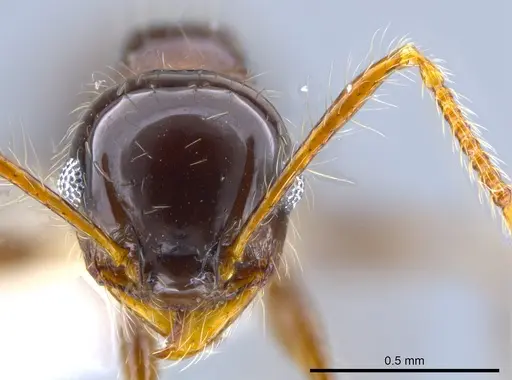
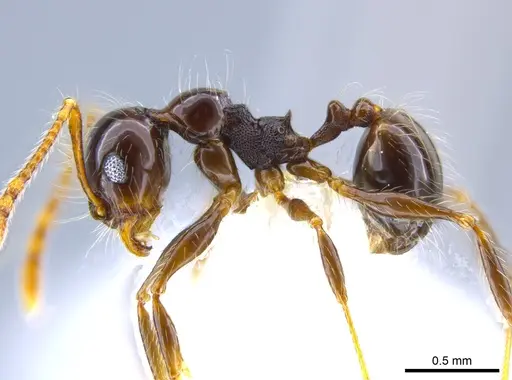
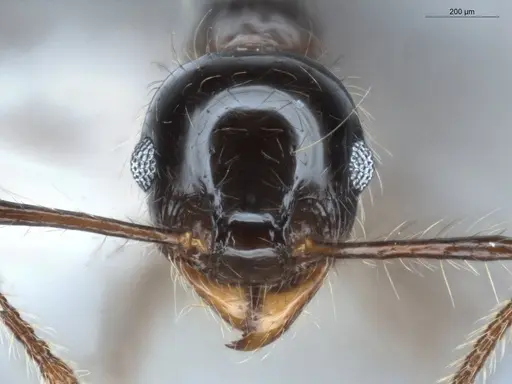
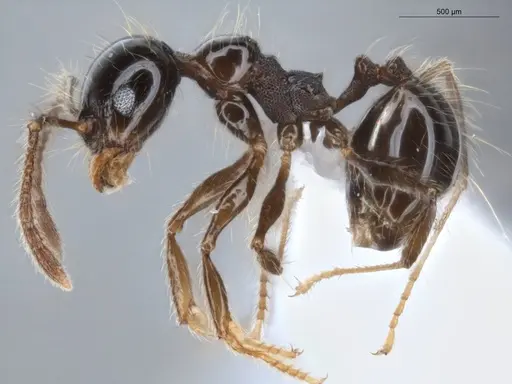
Pheidole sensitiva is a small, light reddish-brown ant from the Neotropical region, found in rainforest litter and recruiting to food baits on the forest floor . It has two worker castes, majors and minors, with long, curved hairs giving a fuzzy appearance. The name 'sensitiva' likely refers to these sensory hairs. Body size data is not available in the research, but based on Pheidole genus patterns, queens are around 6-8 mm and workers 2-5 mm [inferred from genus]. This species competes at food baits in tropical habitats, showing active foraging behavior .
Quick Summary
- Difficulty: Medium
- Origin & Habitat: Native to the Neotropical region: Honduras, Nicaragua, Costa Rica, Panama, Peru, Brazil, and Colombia. Found in rainforest litter up to 700 m elevation [1][2].
- Colony Type: Unconfirmed, no specific data on queen number for this species.
- Size & Growth:
- Queen: Size data unavailable, no total length measurements in research. Inferred from Pheidole genus as ~6-8 mm.
- Worker: Size data unavailable, no total length measurements. Inferred from Pheidole genus as ~2-5 mm.
- Colony: Unknown, no data on maximum colony size.
- Growth: Moderate, inferred from related Pheidole species.
- Development: Estimated 6-8 weeks at tropical temperatures. (Development time is inferred from typical Pheidole genus patterns. Tropical species generally develop faster due to year-round warm conditions.)
- Antkeeping:
- Temperature: Keep at 24-28°C, based on tropical rainforest habitat.
- Humidity: Keep substrate consistently moist but not waterlogged, as species lives in rainforest litter [1][2].
- Diapause: No, tropical species does not require hibernation.
- Nesting: Naturalistic setup with moist substrate, as species nests in litter [1][2]. Y-tong or plaster nests with tight chambers work well.
- Behavior: Ground-dwelling ant that forages in leaf litter. Not aggressive toward keepers but will defend the nest. Escape risk is high due to small size, use standard prevention measures like fluon on container edges.
- Common Issues: tropical humidity requirements mean colonies can suffer in dry indoor environments, monitor substrate moisture regularly., small size increases escape risk, ensure all gaps are sealed., sensitive to temperature drops below 20°C, avoid cold drafts.
Nest Preferences and Housing
Pheidole sensitiva naturally lives in rainforest litter and soil. In captivity, provide a moist, naturalistic setup. A test tube with a water reservoir works for founding colonies. As the colony grows, transfer to a naturalistic formicarium with moist soil or a Y-tong nest with tight chambers. Maintain consistent humidity without waterlogging [1][2].
Feeding and Diet
Pheidole species are generalist foragers. In captivity, offer protein sources like small insects 2-3 times per week and carbohydrates like sugar water or honey. Remove uneaten food after 24-48 hours to prevent mold [3].
Temperature and Seasonal Care
As a tropical species, keep temperatures between 24-28°C with a slight gradient. Avoid cold drafts or air conditioning. No hibernation is needed.
Behavior and Colony Dynamics
This species has majors and minors, with majors handling defense and minors foraging. It competes at food baits in tropical habitats, showing active recruitment [3]. Colonies grow over time, but specific dynamics are unconfirmed.
Growth and Development
Colony growth follows typical Pheidole patterns. The queen raises the first brood alone, with workers emerging in 6-8 weeks under optimal temperatures. Growth rate is moderate, but no specific data is available.
Frequently Asked Questions
How long does it take for Pheidole sensitiva to produce first workers?
Expect first workers in about 6-8 weeks at 24-28°C, based on typical Pheidole genus development.
What do Pheidole sensitiva ants eat?
Offer protein sources like small insects and carbohydrates like sugar water. They are generalist foragers [3].
Do Pheidole sensitiva ants need hibernation?
No, this is a tropical species and does not require hibernation.
What temperature is best for Pheidole sensitiva?
Keep them at 24-28°C, with a slight gradient for self-regulation.
Are Pheidole sensitiva ants good for beginners?
This species is rated Medium difficulty due to humidity and temperature needs.
How big do Pheidole sensitiva colonies get?
Colony size is unknown, as no data is available.
What type of nest should I use for Pheidole sensitiva?
A naturalistic setup with moist substrate works best, as they nest in litter [1][2].
Can I keep multiple Pheidole sensitiva queens together?
Colony type is unconfirmed, but Pheidole species are typically monogyne. Combining queens is not recommended without evidence.
Why is my Pheidole sensitiva colony not growing?
Common causes include low temperature, low humidity, or insufficient food. Ensure conditions are warm and moist.
Report an Issue
The current care sheet is based fully on literature. See inconsistencies, or something that's incorrect? Please , it will be resolved after review from an admin. Contributing to the blogs tab also helps providing information, to make us be able to further improve the caresheets. Thank you for your support!
References

This caresheet is licensed under CC BY-SA 4.0 .
Community Blogs
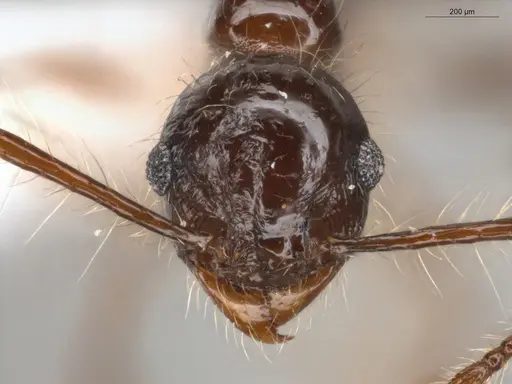
CASENT0628046
View on AntWeb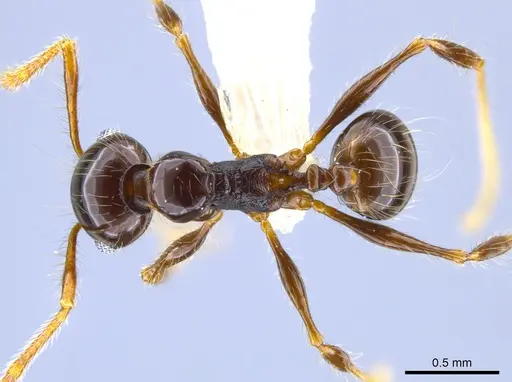
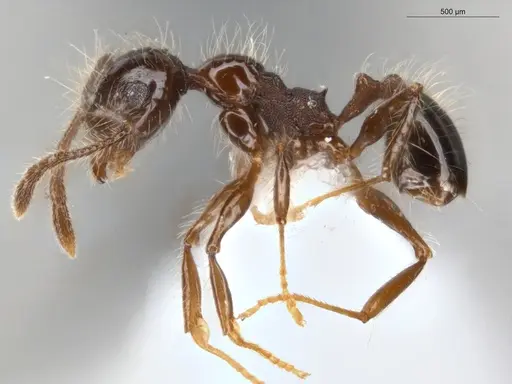
CASENT0635525
View on AntWeb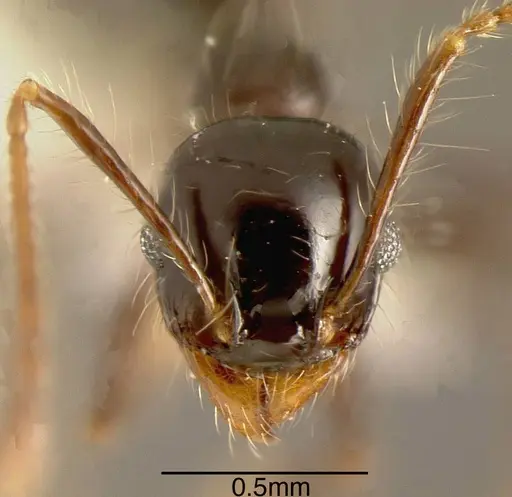
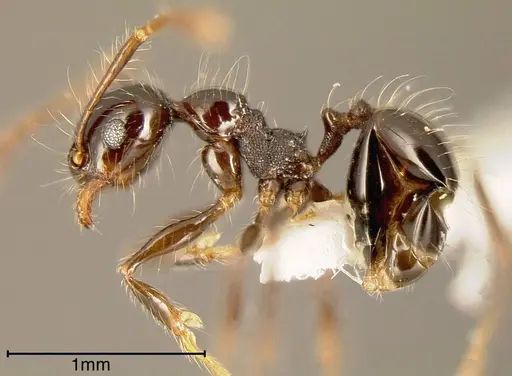
CBUMAGENT42051
View on AntWeb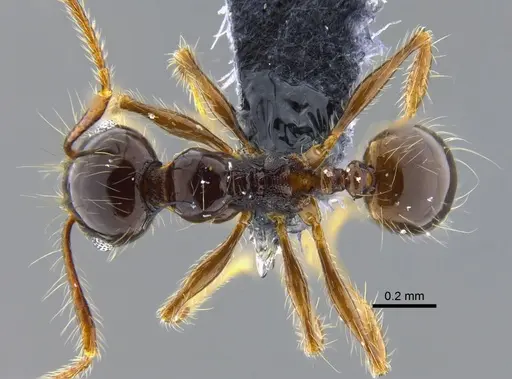
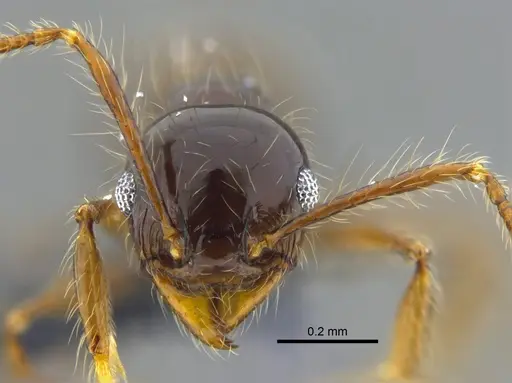
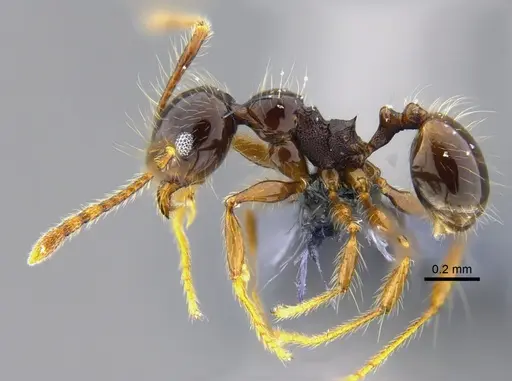
ECOFOG-BAF19-0049-03
View on AntWeb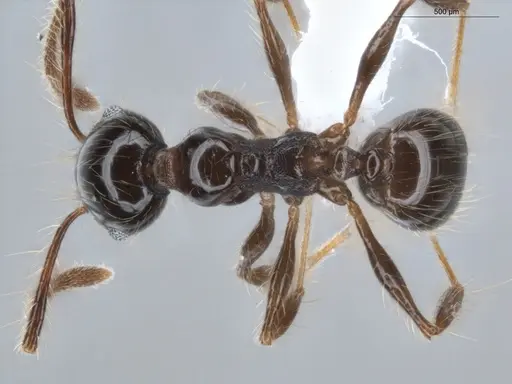
ECOFOG-IT14-1010-13
View on AntWeb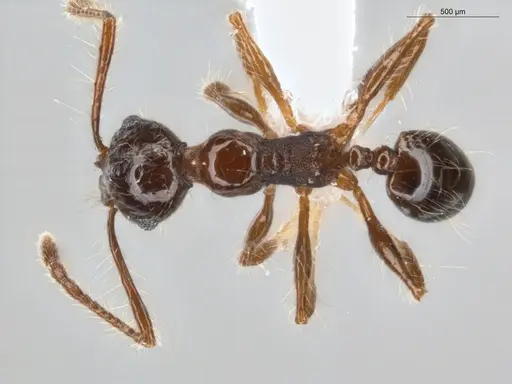
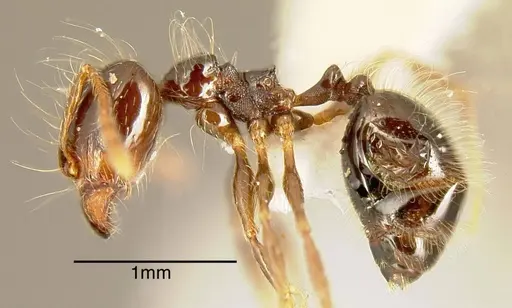
INBIOCRI001242794
View on AntWeb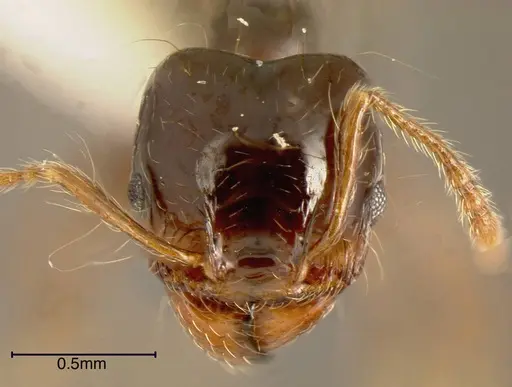
Literature
Loading distribution map...Loading products...