
Pheidole scolioceps
- Sci. Name
- Pheidole scolioceps
- Tribe
- Attini
- Subfamily
- Myrmicinae
- Author
- Wilson, 2003
- Distribution
- Found in 6 countries
Introduction
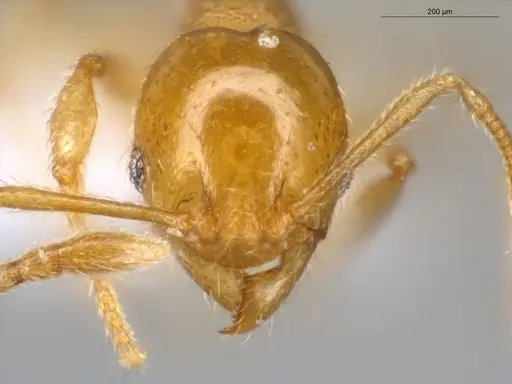
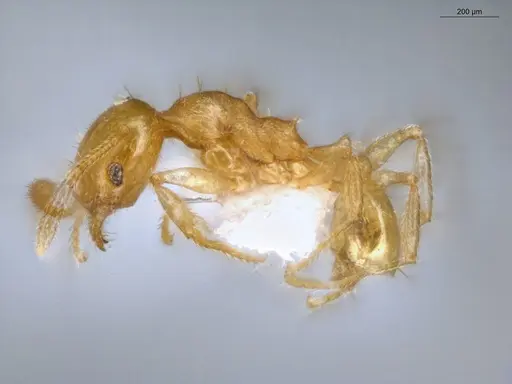
Pheidole scolioceps is a small yellow ant with major workers that have a broad band of transverse ridges on the posterior third of the head, giving a 'bent head' appearance. Minor workers are smaller, and both castes are clear medium yellow. This species is part of the transversostriata group and is closely related to Pheidole gnomus from Ecuador. It inhabits leaf litter in Amazonian rainforests across northern South America, including Brazil, Colombia, Ecuador, French Guiana, Guyana, and Peru .
Quick Summary
- Difficulty: Medium
- Origin & Habitat: Amazon Basin, found in terra firme forest and woodland transitional to seasonally flooded forest, nesting in clay soil or hollow rotten sticks on the forest floor [1].
- Colony Type: Colony structure is unconfirmed. Based on Pheidole genus patterns, likely single-queen colonies (monogyne).
- Size & Growth:
- Queen: Size data unavailable, no total length measurements in research context
- Worker: Size data unavailable, no total length measurements in research context
- Colony: Up to several hundred workers, estimated from genus patterns, but exact size unknown
- Growth: Moderate, based on typical tropical ant development
- Development: Estimated 5-8 weeks at tropical temperatures, inferred from Pheidole genus patterns (Development data specific to this species is not available)
- Antkeeping:
- Temperature: Keep warm, roughly 24-28°C, as a tropical species, inferred from habitat [2]
- Humidity: Keep nest substrate consistently moist but not waterlogged, mimicking damp forest floor [2]
- Diapause: No, tropical species does not require hibernation
- Nesting: Y-tong (AAC) or plaster nests work well, naturalistic setups with moist substrate suit their nesting habits [1]
- Behavior: Ground-foraging leaf-litter ants that participate in seed dispersal [3]. Flood-intolerant, avoid wet conditions that could flood the nest [2]. Escape prevention is critical due to small size, use fine mesh barriers. Generally non-aggressive but will defend the nest.
- Common Issues: tropical species needs constant warmth, cold drafts can kill colonies, small size means escapes are likely without fine mesh barriers, flood-intolerant, avoid overwatering that saturates the nest, slow founding means colonies can stall if conditions aren't optimal, wild-caught colonies may have parasites that kill them in captivity
Housing and Nest Setup
Pheidole scolioceps does well in Y-tong (AAC) nests or plaster formicariums. In the wild, they nest in clay soil or hollow rotten sticks, so provide a moist substrate to mimic the forest floor. Due to their tiny size, ensure excellent escape prevention with fine mesh on all openings. Transfer from a test tube to a proper nest once the colony reaches 20-30 workers, using small chambers scaled to their size [1].
Feeding and Diet
These ants are omnivorous and accept protein and sugar sources. Offer protein like small crickets or fruit flies twice weekly, and sugar via honey water regularly. Major workers help process larger food items and seeds [3]. Remove uneaten prey after 24-48 hours to prevent mold.
Temperature and Humidity
As a tropical species, keep temperatures warm around 24-28°C year-round. A heating cable can create a gradient for self-regulation. They are flood-intolerant, so maintain moderate moisture in the substrate without saturating it [2]. Provide a water tube for drinking.
Colony Development and Growth
Colonies grow through production of major and minor workers. This species is infrequent in the wild, so colonies may not reach enormous sizes [2]. Growth is moderate under optimal conditions, with majors aiding in food processing and defense. Founding may be slow, so patience is key.
Seasonal Care
No hibernation is needed for this tropical species. Maintain stable warm temperatures and humidity year-round. Avoid cold drafts or areas where temperatures drop below 20°C.
Frequently Asked Questions
How long does it take for Pheidole scolioceps to produce first workers?
Estimated 5-8 weeks at optimal tropical temperatures, based on genus patterns. Specific data for this species is not available.
Can I keep multiple queens together?
Not recommended, as colony structure is unconfirmed. Most Pheidole species are monogyne, and combining queens risks aggression.
What do Pheidole scolioceps eat?
They are omnivorous. Offer protein like fruit flies or crickets twice weekly and sugar sources regularly. Majors help process food [3].
Are Pheidole scolioceps good for beginners?
They are rated Medium difficulty. Care is straightforward but requires maintaining tropical temperatures and preventing escapes due to small size.
When should I move my colony to a formicarium?
Move from a test tube to a proper nest once the colony reaches 20-30 workers, ensuring the new nest is humidified and warm.
Why are my ants dying?
Common causes include temperatures below 20°C, flooding from overwatering, poor escape prevention, or parasites from wild-caught colonies. Check temperature and moisture first [2].
Do they need hibernation?
No. As a tropical species, they do not require hibernation and need warm temperatures year-round.
How big do colonies get?
Colonies can reach several hundred workers, but exact size is unknown. This species is infrequent in the wild [2].
What makes Pheidole scolioceps different from other Pheidole?
It has a distinctive broad band of transverse ridges on major worker heads and participates in seed dispersal, making it ecologically important [3].
Report an Issue
The current care sheet is based fully on literature. See inconsistencies, or something that's incorrect? Please , it will be resolved after review from an admin. Contributing to the blogs tab also helps providing information, to make us be able to further improve the caresheets. Thank you for your support!
References

This caresheet is licensed under CC BY-SA 4.0 .
Community Blogs
ECOFOG-MI15-0376-33-S
View on AntWeb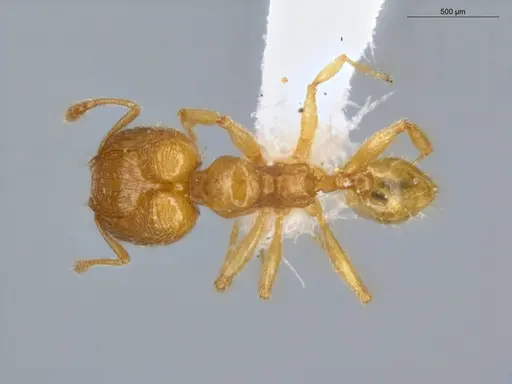
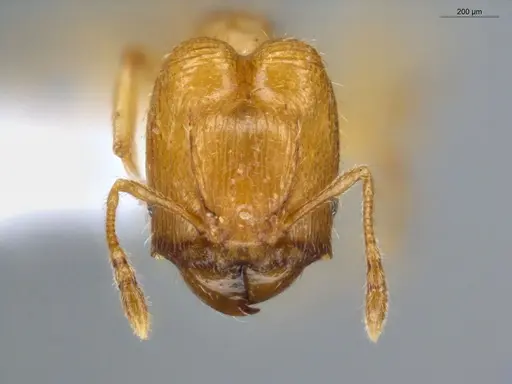
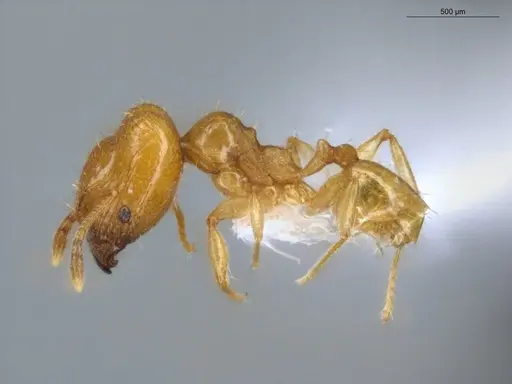
ECOFOG-MI15-0376-33
View on AntWeb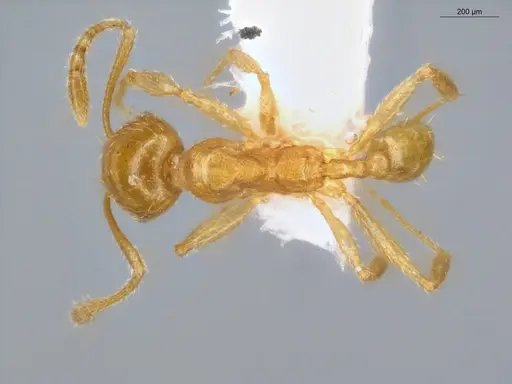
Literature
Loading distribution map...Loading products...