
Pheidole scimitara
- Sci. Name
- Pheidole scimitara
- Tribe
- Attini
- Subfamily
- Myrmicinae
- Author
- Wilson, 2003
- Distribution
- Found in 3 countries
Introduction
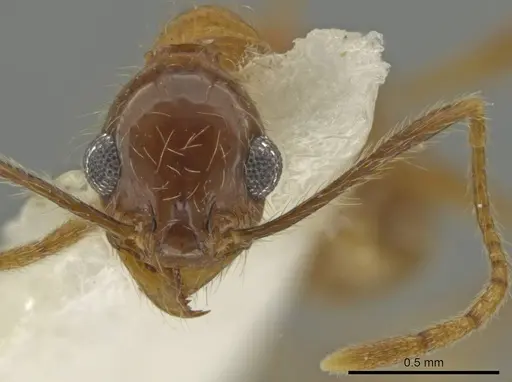
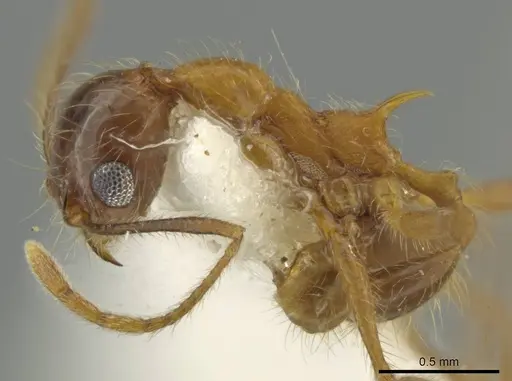
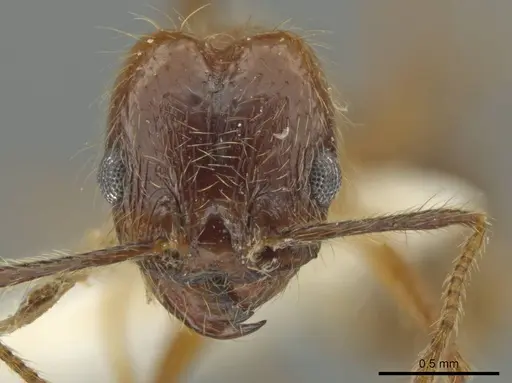
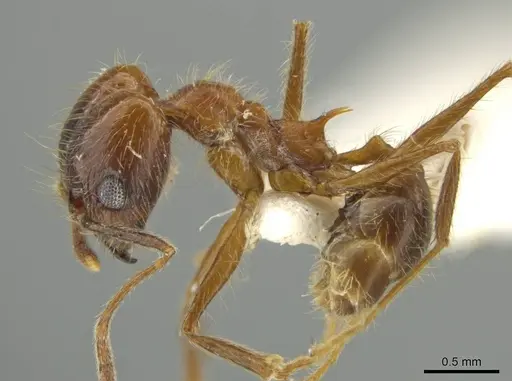
Pheidole scimitara is a distinctive Amazonian ant in the diligens group, named for its long propodeal spines resembling a curved sword. Major workers have reddish-brown heads and light yellowish-brown bodies, while minors are mostly yellow with lighter heads and gasters. This species has extremely large eyes and antennal scapes that extend beyond the occipital corner in majors. It is recorded in Peru and Brazil across the Amazon Basin , but its biology and colony structure remain unstudied .
Quick Summary
- Difficulty: Medium
- Origin & Habitat: Amazon Basin in Peru (Madre de Dios) and Brazil (Amazonas, Pará states) at low elevations around 400m, inhabiting tropical floodplain forests [4][5][2].
- Colony Type: Unconfirmed, no specific studies document queen number or social structure.
- Size & Growth:
- Queen: Size data unavailable, no total length measurements in described material
- Worker: Size data unavailable, no total length measurements in described material
- Colony: Unknown
- Growth: Unknown
- Development: Unknown, no direct measurements. Based on typical Pheidole patterns in tropical conditions, estimate 6-10 weeks from egg to first worker at optimal temperatures. (Development may vary with temperature and colony conditions.)
- Antkeeping:
- Temperature: Aim for 24-28°C, typical for Amazonian species. Use a heating cable to create a gradient if needed.
- Humidity: Keep substrate consistently moist but not waterlogged, similar to a damp forest floor.
- Diapause: Unknown, tropical species may not require true diapause, but some seasonal slow-down may occur.
- Nesting: Natural nesting behavior is unconfirmed. Based on Pheidole genus, likely nest in soil. Use test tube setups for founding colonies and Y-tong or plaster formicaria for established colonies.
- Behavior: Behavior is unstudied. Escape prevention should be moderate due to small size. Defense mechanisms are unconfirmed, but as a Myrmicinae, they likely have a sting.
- Common Issues: small size increases escape risk, ensure tight lids on outworld, lack of species-specific data may lead to improper care, monitor colony closely, humidity management is critical for tropical species, avoid mold by proper ventilation, growth rate is unknown, adjust feeding based on colony activity
Appearance and Identification
Pheidole scimitara is striking due to its very long propodeal spines. Major workers have medium to dark reddish-brown heads and mandibles with light yellowish-brown bodies, while minors are yellow with light yellowish-brown heads and gasters. The species has extremely large eyes and antennal scapes that extend beyond the occipital corner in majors. Size data is unavailable, but it belongs to the diligens group, distinguished by these features [3].
Distribution and Habitat
This species is recorded across more than 2000 km of Amazonian floodplain forest [4]. Originally from Peru, it is now confirmed in Brazil's Amazonas and Pará states [5][2]. It inhabits lowland tropical forests with high humidity and warm temperatures.
Nest Preferences and Housing
Specific nesting behavior is unconfirmed. Based on Pheidole genus, they likely nest in soil with underground chambers. For captive care, start in a test tube setup with a water reservoir, keeping it humid but not flooded. Transition to a Y-tong or plaster formicarium when the colony grows. Observe your colony's behavior to adjust moisture levels.
Feeding and Diet
Diet is unconfirmed, but Pheidole genus members are typically omnivorous with preferences for seeds and small insects. Offer varied diet: protein sources like small crickets or mealworms, seeds such as millet, and sugar water. Major workers may process larger prey. Feed protein 2-3 times weekly and provide constant sugar access.
Temperature and Seasonal Care
As an Amazonian species, aim for 24-28°C with a gentle gradient using a heating cable. Humidity should be high to mimic natural habitat. Diapause is unknown, tropical species may show reduced activity in cooler months without true hibernation.
Behavior and Colony Structure
Social structure is unstudied. Pheidole genus often has distinct worker castes, but no data for this species. Escape risk is moderate due to small size. Defense mechanisms are unconfirmed, but as a Myrmicinae, they likely have a sting.
Frequently Asked Questions
How long does it take for Pheidole scimitara to produce first workers?
The egg-to-worker timeline is unknown. Based on typical Pheidole patterns, estimate 6-10 weeks at optimal temperatures.
What do Pheidole scimitara ants eat?
Diet is unconfirmed, but based on genus patterns, offer small insects, seeds, and sugar water.
Are Pheidole scimitara ants good for beginners?
Difficulty is medium due to lack of species-specific data. Beginners may find it challenging without genus experience.
Do Pheidole scimitara ants need hibernation?
Diapause requirements are unknown. As a tropical species, they likely do not require true hibernation.
What temperature should I keep Pheidole scimitara at?
Aim for 24-28°C, typical for Amazonian species.
How big do Pheidole scimitara colonies get?
Colony size is unknown. Plan for medium-sized colonies and provide adequate space.
Can I keep multiple queens together?
Colony structure is unconfirmed. Most Pheidole species are polygyne, but this has not been documented for P. scimitara.
What type of nest should I use for Pheidole scimitara?
For founding, use a test tube setup. For established colonies, use Y-tong or plaster formicaria with moist substrate.
Where is Pheidole scimitara found in the wild?
Native to the Amazon Basin in Peru and Brazil, inhabiting tropical floodplain forests [4][5][2].
Report an Issue
The current care sheet is based fully on literature. See inconsistencies, or something that's incorrect? Please , it will be resolved after review from an admin. Contributing to the blogs tab also helps providing information, to make us be able to further improve the caresheets. Thank you for your support!
References

This caresheet is licensed under CC BY-SA 4.0 .
Community Blogs
CASENT0645867
View on AntWeb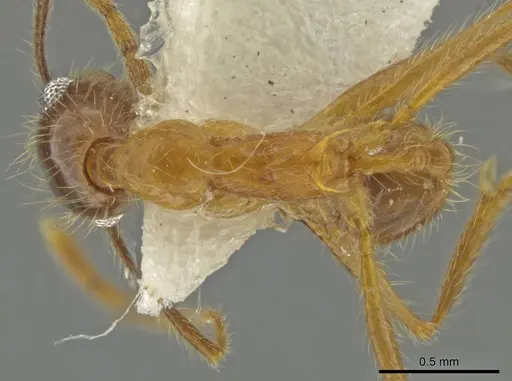
JTLC000016523
View on AntWeb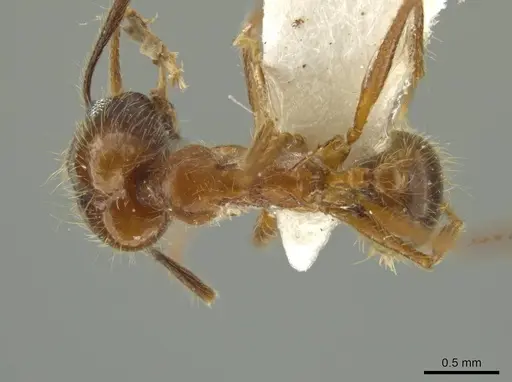
Literature
Loading distribution map...Loading products...