
Pheidole schwarzmaieri
- Sci. Name
- Pheidole schwarzmaieri
- Tribe
- Attini
- Subfamily
- Myrmicinae
- Author
- Borgmeier, 1939
- Distribution
- Found in 1 countries
Introduction
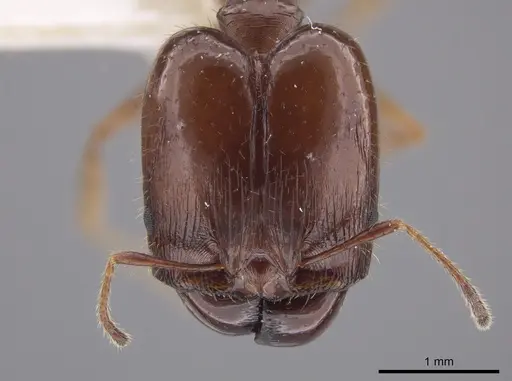
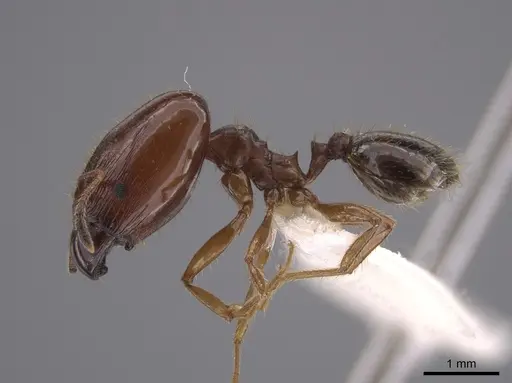
Pheidole schwarzmaieri is a Neotropical ant from southern Brazil and northern Argentina, found in savanna and forest habitats . It has the typical Pheidole two-caste system: major workers are large with a reddish-brown color and a distinctive head shape, while minor workers are much smaller and lighter brown. The species was first described in 1939,but practically nothing is known about its biology. It belongs to the Generalized Myrmicinae functional group, meaning it shares traits with many other myrmicine ants .
Quick Summary
- Difficulty: Unknown
- Origin & Habitat: Southern Brazil (Goiás, Mato Grosso, Minas Gerais, São Paulo) and northern Argentina (Misiones). Found in Neotropical savanna (Cerrado) and forest habitats [1][2].
- Colony Type: Unconfirmed, no data available. Most Pheidole are monogyne (single queen), but this has not been confirmed for this species.
- Size & Growth:
- Queen: Size data unavailable, no queen measurements recorded.
- Worker: Size data unavailable. Major workers have a head width of about 2.0 mm, minors about 0.6 mm (for identification purposes only, total length not measured) [1].
- Colony: Unknown, no colony size data exists.
- Growth: Unknown
- Development: Unconfirmed, no direct observations for this species. (Development timeline is entirely unknown. Any estimates would be speculative.)
- Antkeeping:
- Temperature: Based on Neotropical origin, likely prefers warm conditions. Start around 24-28°C and observe colony activity. Provide a temperature gradient if possible [1].
- Humidity: Based on savanna/forest habitat, likely moderate to high humidity. Keep nest substrate moist but not waterlogged. Provide a water tube [1].
- Diapause: Unconfirmed, Neotropical species may have reduced activity during cooler months but probably do not require true hibernation [1].
- Nesting: No specific nesting data. Most Pheidole nest in soil or rotting wood. In captivity, test tube setup or Y-tong nest with slightly moist substrate is a reasonable starting point [1].
- Behavior: No specific behavior data exists. Based on Pheidole genus patterns, workers are likely non-aggressive. Majors probably serve as seed processors and defenders, minors as foragers. Escape risk is moderate, minor workers are small, but standard escape prevention should work. They have a functional stinger (subfamily Myrmicinae, tribe Attini) but it is not medically significant.
- Common Issues: biology is completely unknown, no captive care guidelines exist, so all care is experimental, without documented care, colonies may fail unexpectedly from unknown causes, as a Neotropical species, temperature and humidity requirements may be specific and hard to replicate, wild-caught colonies may have parasites or diseases that are not understood, growth rate is unknown, making long-term planning impossible
Species Identification and Morphology
Pheidole schwarzmaieri shows the typical Pheidole dimorphism. Major workers are large with a subrectangular head, deep occipital cleft, and a lobe on the median clypeal carina. The head is partly smooth and shiny posteriorly and ridged anteriorly. The propodeal spines are large and vertical. Minor workers are much smaller, with a narrow occiput, a dull pitted body, and propodeal spines reduced to denticles. The gaster is smooth in both castes. Color: majors are rich reddish-brown with yellowish-brown legs, minors are medium to light brown [1].
Distribution and Habitat
This species is known from southeastern Brazil (Goiás, Mato Grosso, Minas Gerais, São Paulo) and Misiones province in northeastern Argentina [1][2]. It occurs in the Cerrado savanna and adjacent Atlantic Forest areas, which have a tropical climate with wet and dry seasons. The type specimens were collected in December 1933 in Campinas, Goiás [3]. It has been recorded at low frequency at sugar baits in an Amazonian study, suggesting it does attend sugar resources [4]. It is assigned to the Generalized Myrmicinae functional group, which includes many ground-dwelling species that forage in leaf litter and open areas [2].
Current State of Knowledge
It must be emphasized that nothing is known about the biology of Pheidole schwarzmaieri. No studies have addressed its colony structure, queen behavior, nuptial flight timing, diet, or development. The only available information is: its morphological description (1939), type specimen data, geographic records, and assignment to a functional group. Keeping this species in captivity would be entirely experimental. This species is not recommended for beginners, and even experienced keepers should treat it as a complete unknown. Any care suggestions below are inferences from related Pheidole species and general ecology. [1]
Inferred Care Guidelines
Based on the species' Neotropical distribution and typical Pheidole traits, we can offer starting points, but these are speculative. The species likely prefers warm temperatures (24-28°C) and moderate to high humidity. Nesting is probably in soil or rotting wood. Diet may include seeds (processed by majors), small insects, and sugar sources, sugar bait attraction was noted in one study [4]. However, these are guesses. Anyone attempting to keep this species should document their observations carefully, as they would be contributing new knowledge to ant biology.
Frequently Asked Questions
Is Pheidole schwarzmaieri a good species for beginners?
No. This species is not recommended for beginners or even most experienced antkeepers. The biology is completely unknown, and any captive care is purely experimental with a high risk of colony failure [1].
What do Pheidole schwarzmaieri ants eat?
This is unconfirmed. Based on related Pheidole species, they likely eat seeds (which majors can crack), small insects, and may attend sugar resources. One study found them at sugar baits [4]. However, no specific dietary observations exist for this species.
How long does it take for Pheidole schwarzmaieri to develop from egg to worker?
Unconfirmed. No development data exists for this species. Any estimate would be purely speculative.
Do Pheidole schwarzmaieri queens need to hibernate?
Unknown. As a Neotropical species, true hibernation is unlikely. The species may have reduced activity during cooler months but probably does not require a diapause period [1].
Can I keep multiple Pheidole schwarzmaieri queens together?
Unconfirmed. Most Pheidole species are monogyne (single queen), but some can be polygyne. No data exists for this species, so combining queens is not recommended.
What size colony do Pheidole schwarzmaieri reach?
Unknown. No colony size data exists for this species. Typical Pheidole colonies reach several hundred to a few thousand workers, but this is just a genus-level guess.
What temperature should I keep Pheidole schwarzmaieri at?
No specific data exists. Based on the species' Neotropical distribution, a starting point of 24-28°C is reasonable. Observe colony behavior and adjust. A temperature gradient allows the ants to choose their preferred zone [1].
When do Pheidole schwarzmaieri have nuptial flights?
Unknown. No nuptial flight data exists for this species. In the Neotropics, many ants have flights during the warm, wet season, but this is unconfirmed.
Is Pheidole schwarzmaieri safe to keep in captivity?
There are no known safety concerns. They are not aggressive and their sting is not medically significant. However, this species has never been kept in captivity, so the primary concern is providing proper care rather than any danger to the keeper [1].
Report an Issue
The current care sheet is based fully on literature. See inconsistencies, or something that's incorrect? Please , it will be resolved after review from an admin. Contributing to the blogs tab also helps providing information, to make us be able to further improve the caresheets. Thank you for your support!
References

This caresheet is licensed under CC BY-SA 4.0 .
Community Blogs
CASENT0652494
View on AntWeb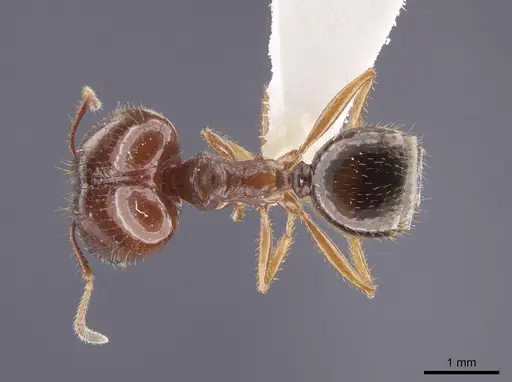
Literature
Loading distribution map...Loading products...