
Pheidole scabriuscula
- Sci. Name
- Pheidole scabriuscula
- Tribe
- Attini
- Subfamily
- Myrmicinae
- Author
- Gerstäcker, 1871
- Distribution
- Found in 1 countries
Introduction
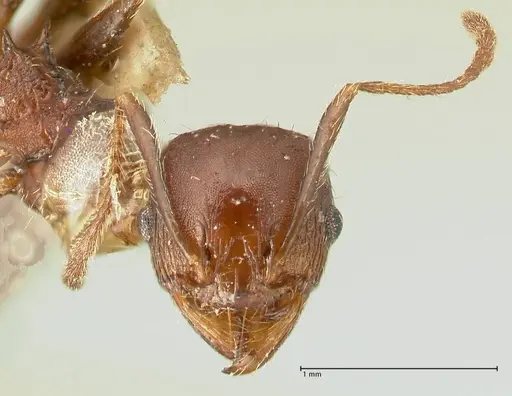
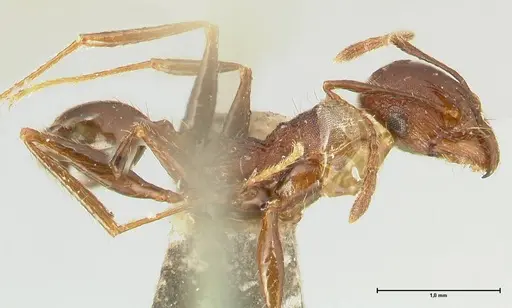
Pheidole scabriuscula is a small ant species native to East Africa, described from Kenya and Zanzibar. Workers measure approximately 3.75 mm in length, with a reddish-pitchy coloration, densely granulose surface, and a blackish, shiny abdomen. The prothorax is rounded with two callosities, and the metanotum is strongly rugose with two sharp spines . Like other Pheidole species, they have minor and major worker castes . This species belongs to the Attini tribe, which includes seed-harvesting ants, though their specific diet and behavior are not well-documented .
Quick Summary
- Difficulty: Medium
- Origin & Habitat: East Africa, Kenya and Zanzibar, in coastal tropical regions [1][2]
- Colony Type: Colony structure is unconfirmed, but based on Pheidole genus patterns, likely monogyne (single queen).
- Size & Growth:
- Queen: Size data unavailable. Inferred from Pheidole genus: queens are typically 7-10 mm.
- Worker: 3.75 mm [1]
- Colony: Unknown
- Growth: Moderate, based on typical Pheidole development patterns
- Development: 6-8 weeks estimated at optimal temperatures (Development time is inferred from genus-level data since no species-specific studies exist.)
- Antkeeping:
- Temperature: Maintain temperatures between 24-28°C, as this species is from tropical East Africa.
- Humidity: Keep nest substrate consistently moist but not waterlogged, based on habitat preferences.
- Diapause: No diapause required, as a tropical species.
- Nesting: Use test tube setups for founding colonies and Y-tong or plaster nests for established colonies [2].
- Behavior: Generally peaceful and non-aggressive. Minor workers handle foraging, while majors defend nest entrances. Their small size requires excellent escape prevention.
- Common Issues: escape prevention is critical due to their very small size, they can squeeze through tiny gaps., limited documentation means care requirements are estimates, individual colonies may vary., slow founding phase, queens may take weeks before first workers emerge., wild-caught colonies may harbor parasites or diseases., overfeeding can lead to mold problems, remove uneaten food promptly.
Nest Preferences and Setup
In the wild, Pheidole scabriuscula likely nests in soil in shaded or partially shaded locations [2]. For captive care, start with a test tube setup for the founding queen, fill a test tube one-third with water, plug with cotton, and place the queen in the tube. Once the colony reaches a small size, transition to a Y-tong or plaster nest with moist chambers. Maintain consistent humidity without flooding [2].
Feeding and Diet
As members of the Attini tribe, these ants are primarily granivorous, collecting and processing seeds [2]. In captivity, offer small seeds like millet or cracked grain, along with protein from small insects like fruit flies. Provide sugar sources like honey water constantly. Remove uneaten food after 24-48 hours to prevent mold [2].
Temperature and Seasonal Care
Maintain temperatures between 24-28°C for optimal development, as this species is from tropical East Africa. A temperature gradient can help ants self-regulate. Unlike temperate species, they do not require diapause [2].
Behavior and Colony Dynamics
Pheidole scabriuscula has a dimorphic caste system with minor and major workers. Minor workers handle foraging and nursing, while majors defend the nest and crack seeds [2]. The colony grows from a single queen into a multi-cohort society over time. These ants are not aggressive and rely on numbers for defense [2].
Frequently Asked Questions
How long does it take for Pheidole scabriuscula to get first workers?
Expect first workers to emerge 6-8 weeks after queen lays eggs at optimal temperatures, based on typical Pheidole development patterns.
What do Pheidole scabriuscula ants eat?
They eat seeds, small insects, and sugar sources like honey water. Offer protein twice weekly and keep sugar available constantly [2].
Can I keep multiple Pheidole scabriuscula queens together?
Not recommended, as Pheidole species are typically single-queen colonies, and combining queens may result in fighting.
How big do Pheidole scabriuscula colonies get?
Colony size is not documented. Based on related species, colonies may reach several hundred workers over time.
What temperature do Pheidole scabriuscula need?
Keep them warm at 24-28°C. This tropical species prefers consistent warmth and does not require hibernation.
Are Pheidole scabriuscula good for beginners?
They are moderately suitable, but their small size requires excellent escape prevention, and care is based on estimates.
When should I move Pheidole scabriuscula to a formicarium?
Move them once the colony has a small number of workers in a test tube. Use a Y-tong or plaster nest with moist chambers [2].
Why are my Pheidole scabriuscula escaping?
Their small size allows them to squeeze through tiny gaps. Use fine mesh and seal gaps larger than 1mm [1].
Do Pheidole scabriuscula need hibernation?
No, as a tropical species, they do not require diapause and remain active year-round.
Report an Issue
The current care sheet is based fully on literature. See inconsistencies, or something that's incorrect? Please , it will be resolved after review from an admin. Contributing to the blogs tab also helps providing information, to make us be able to further improve the caresheets. Thank you for your support!
References

This caresheet is licensed under CC BY-SA 4.0 .
Community Blogs
FOCOL1333
View on AntWeb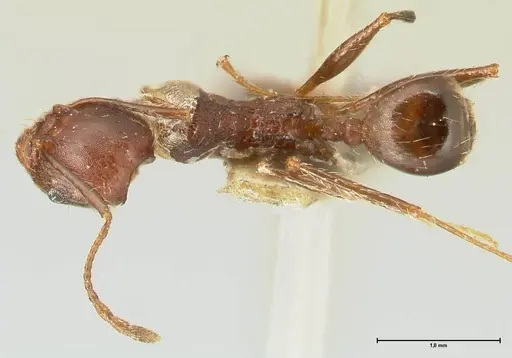
Literature
Loading distribution map...Loading products...