
Pheidole sarawakana
- Sci. Name
- Pheidole sarawakana
- Tribe
- Attini
- Subfamily
- Myrmicinae
- Author
- Forel, 1911
- Distribution
- Found in 1 countries
Introduction
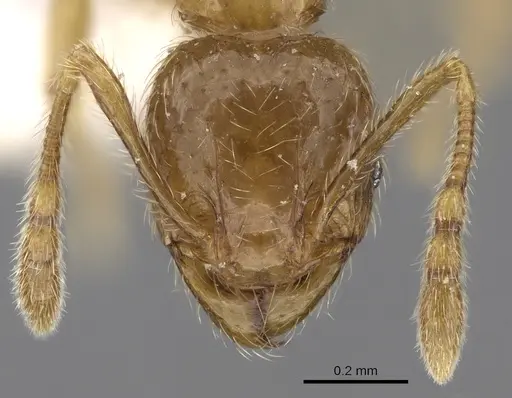
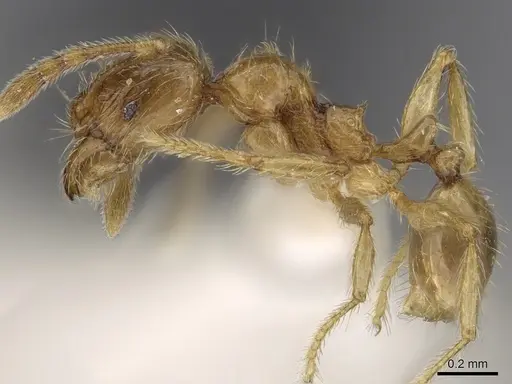
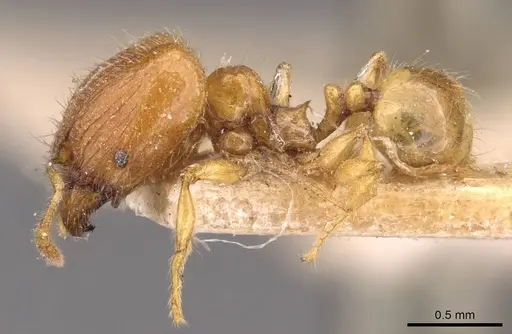
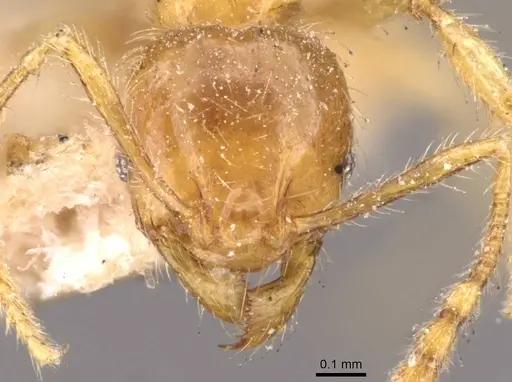
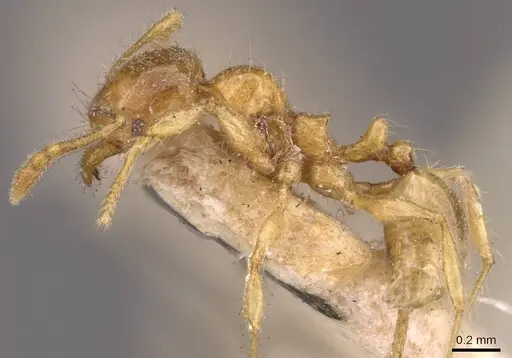
Pheidole sarawakana is a small big-headed ant native to Southeast Asia, found in Borneo, Indonesia, Malaysia, the Philippines, and Thailand . Workers have two castes: majors with enlarged heads and minors, with total lengths of 1.9-2.2 mm and 1.3-1.6 mm respectively . The body is light brown to yellowish-brown with a smooth appearance. This species inhabits lowland rainforests and nests in rotting wood blocks, thriving in humid, shaded environments . It is closely related to Pheidole elisae, Pheidole sauberi, and Pheidole tandjongensis, sharing range in Borneo .
Quick Summary
- Difficulty: Medium
- Origin & Habitat: Lowland rainforests of Southeast Asia (Borneo, Indonesia, Malaysia, Philippines, Thailand), nesting in rotting wood blocks [3][1][2].
- Colony Type: Based on Pheidole genus patterns, likely monogyne (single queen colonies) [3].
- Size & Growth:
- Queen: Size data unavailable, no total length measurements in research context
- Worker: Major: 1.9-2.2 mm, Minor: 1.3-1.6 mm total length [3]
- Colony: Up to several hundred workers, inferred from Pheidole genus patterns
- Growth: Moderate
- Development: Estimated 6-8 weeks based on related Pheidole species [3] (Development is temperature-dependent, warmer conditions speed up growth)
- Antkeeping:
- Temperature: Keep warm, roughly 24-28°C, based on tropical lowland habitat [3]
- Humidity: Keep nest substrate consistently moist but not waterlogged, mimicking humid forest environments [3]
- Diapause: No, tropical species from Southeast Asia do not require hibernation [3]
- Nesting: Y-tong (AAC) nests, plaster nests with wood inserts, or naturalistic setups with rotting wood pieces [3]
- Behavior: Generalist foragers that search for seeds, small insects, and sugar sources. Majors defend the colony and crack seeds. Not aggressive toward humans but will defend if threatened. Small size (under 2.5 mm) requires careful escape prevention [3].
- Common Issues: high humidity needs can lead to mold if ventilation is poor, balance with adequate airflow, small founding colonies are vulnerable to stress and disturbance, tiny size makes escape prevention critical, use fine mesh and tight barriers, rotting wood nests can dry out quickly, monitor moisture regularly, wild-caught colonies may carry parasites that can harm captive colonies
Nest Preferences
In the wild, Pheidole sarawakana nests in rotting wood blocks in lowland rainforests [3]. For captivity, use Y-tong (AAC) nests or plaster nests with wood inserts to mimic humid, dark conditions. Maintain consistent humidity without waterlogging. Avoid dry conditions or direct sunlight [3].
Feeding and Diet
This species is a generalist feeder. Offer protein sources like fruit flies or mealworms 2-3 times per week, and keep sugar water available constantly. Seeds are appreciated but not essential. Remove uneaten prey after 24-48 hours to prevent mold [3].
Temperature and Care
As a tropical species, keep temperatures around 24-28°C for optimal brood development. Use a heating cable on one side of the nest to create a gradient. Avoid air conditioning vents or dry rooms [3].
Behavior and Temperament
Active foragers that search ground and vegetation. Majors defend and crack seeds, while minors handle foraging and brood care. Not aggressive toward humans, may retreat when threatened. Small size requires excellent escape prevention with fine mesh and barriers [3].
Colony Founding
Founding behavior is unconfirmed. If queens are claustral, they would seal themselves in and raise first workers on stored fat reserves. Disturb founding chambers as little as possible [3].
Growth and Development
Colonies grow moderately. First workers may emerge in 6-8 weeks under warm conditions. Growth accelerates after initial workers, but maximum colony size is unknown, inferred to several hundred workers from genus patterns [3].
Frequently Asked Questions
How long does it take for Pheidole sarawakana to produce first workers?
Expect first workers in 6-8 weeks under optimal warm conditions (24-28°C), based on related Pheidole species [3].
What do Pheidole sarawakana ants eat?
They accept small insects, seeds, and sugar sources. Offer protein 2-3 times per week and keep sugar water available [3].
Can I keep multiple Pheidole sarawakana queens together?
Based on Pheidole patterns, this species is likely monogyne, so only keep one queen per colony [3].
What temperature do Pheidole sarawakana ants need?
Keep them warm at 24-28°C, as they are a tropical lowland species [3].
Do Pheidole sarawakana need hibernation?
No, as a tropical species from Southeast Asia, they do not require diapause [3].
What size colony does Pheidole sarawakana reach?
Colony size is not precisely documented, but inferred to reach several hundred workers based on genus patterns [3].
What nest type is best for Pheidole sarawakana?
Y-tong (AAC) nests or plaster nests with wood inserts work well, mimicking their natural rotting wood habitat [3].
Are Pheidole sarawakana good for beginners?
They are intermediate due to humidity maintenance and escape prevention needs. Experienced beginners can succeed [3].
Why are my Pheidole sarawakana dying?
Common causes include low humidity, poor escape prevention, disturbance during founding, or parasites from wild-caught colonies. Check moisture and barriers [3].
Report an Issue
The current care sheet is based fully on literature. See inconsistencies, or something that's incorrect? Please , it will be resolved after review from an admin. Contributing to the blogs tab also helps providing information, to make us be able to further improve the caresheets. Thank you for your support!
References

This caresheet is licensed under CC BY-SA 4.0 .
Community Blogs
CASENT0281716
View on AntWeb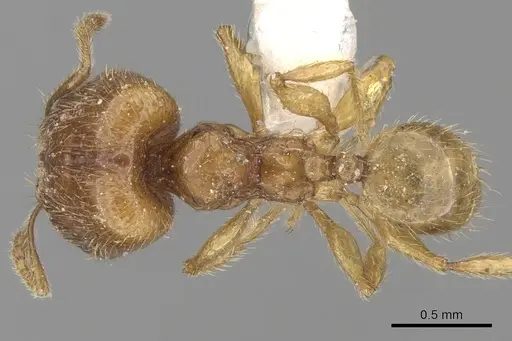
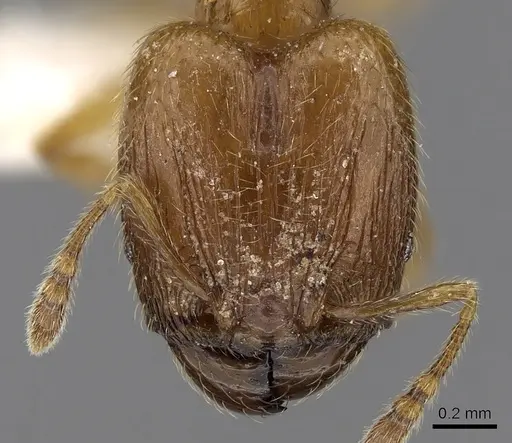
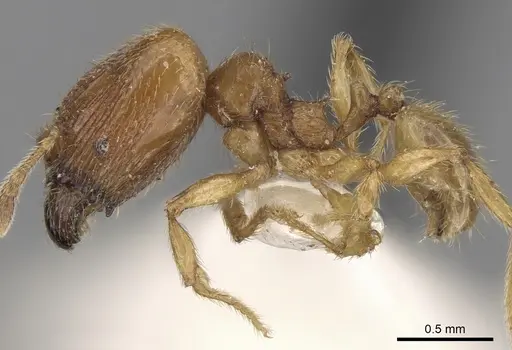
CASENT0281717
View on AntWeb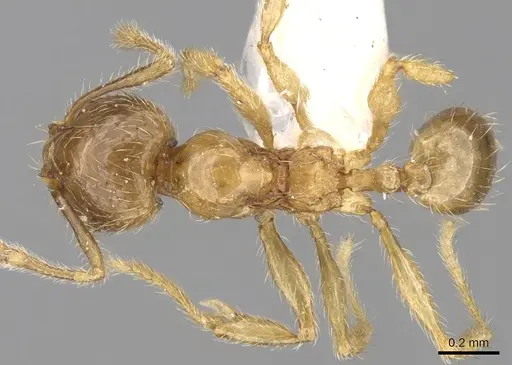
CASENT0907999
View on AntWeb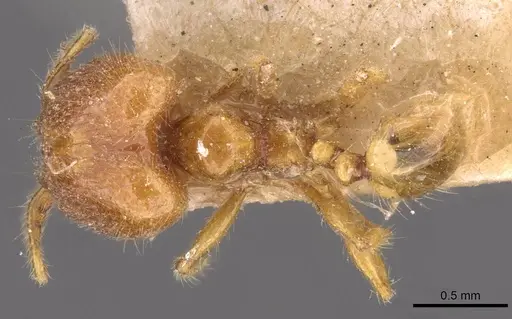
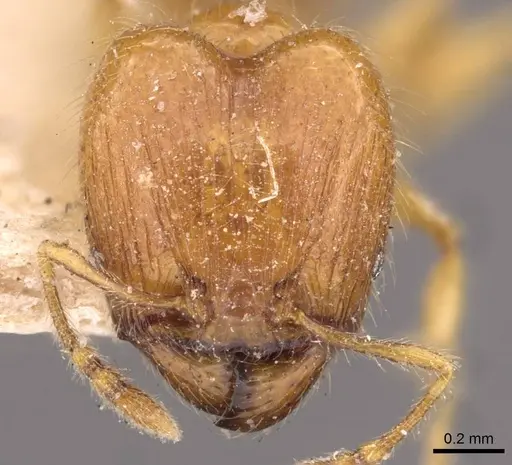
CASENT0908000
View on AntWeb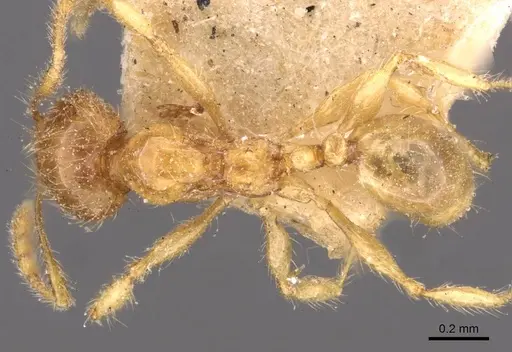
Literature
Loading distribution map...Loading products...