
Pheidole sagittaria
- Sci. Name
- Pheidole sagittaria
- Tribe
- Attini
- Subfamily
- Myrmicinae
- Author
- Wilson, 2003
- Distribution
- Found in 2 countries
Introduction
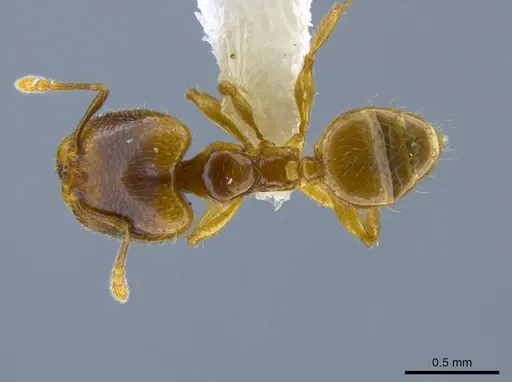
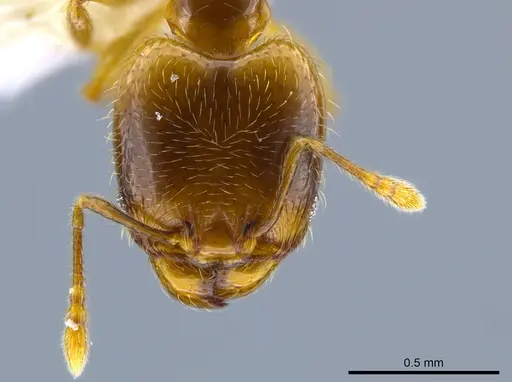
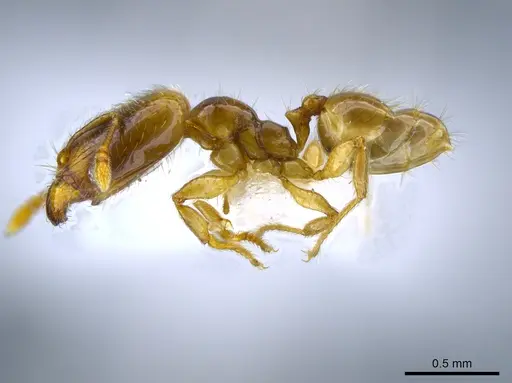
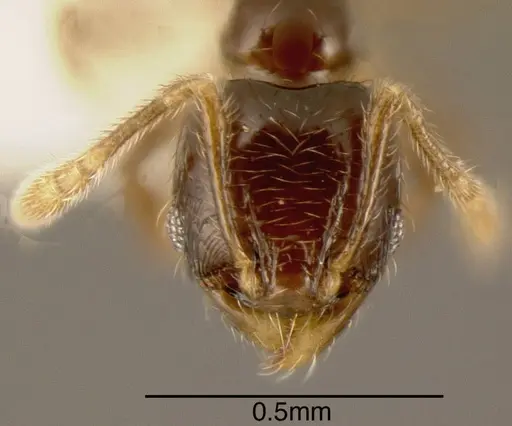
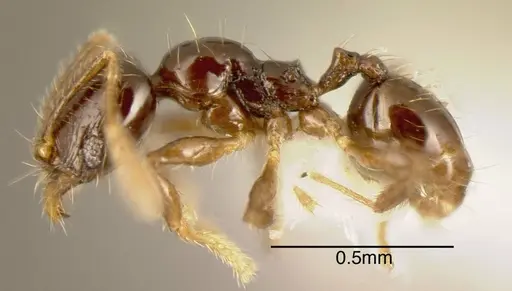
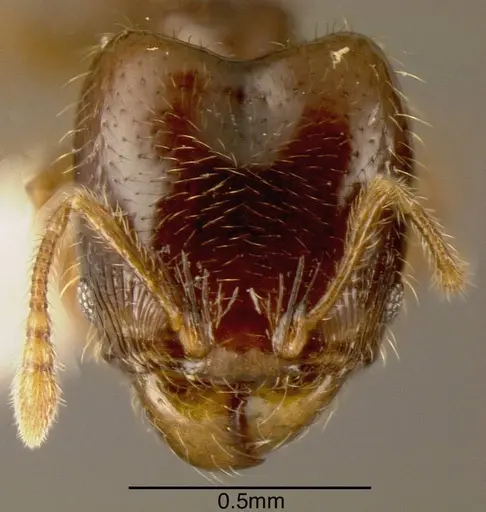
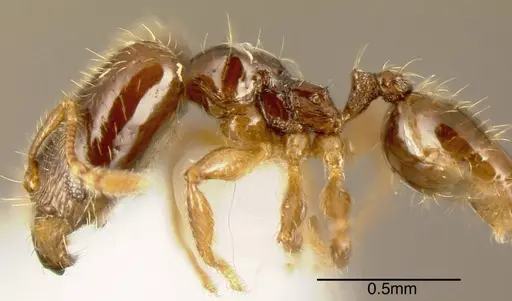
Pheidole sagittaria is a small neotropical ant native to montane forests of Costa Rica at elevations between 500 and 1600 meters . Major workers have light brown bodies with heart-shaped heads, while minor workers are yellowish brown with large oval eyes set far forward on their heads . The species nests in rotten wood on the forest floor or under loose bark on dead trees in wet forests . The name 'sagittaria' means arrow-related, referring to the major worker's arrowhead-shaped head .
Quick Summary
- Difficulty: Medium
- Origin & Habitat: Costa Rica, primarily in montane regions at 500-1600m elevation in mature wet forests [1].
- Colony Type: Based on Pheidole genus patterns, likely monogyne (single-queen colonies).
- Size & Growth:
- Queen: Size data unavailable for body length, inferred from Pheidole genus to be approximately 5-6 mm [1].
- Worker: Size data unavailable for body length, inferred from Pheidole genus to be approximately 2-4 mm [1].
- Colony: Up to several thousand workers.
- Growth: Moderate.
- Development: Estimated 6-8 weeks at 25-28°C. (Development time inferred from related Pheidole species, direct observations for this species are not available.)
- Antkeeping:
- Behavior: Pheidole sagittaria is generally peaceful and not aggressive toward keepers. Majors possess a stinger but rarely use it [1]. Workers forage for seeds and small insects, minors do most foraging while majors defend the nest. Escape risk is moderate due to small size, use fine barriers [1].
- Common Issues: high humidity management is critical, too dry causes colony failure, too wet promotes mold [1]., small workers can escape through standard barriers, use fine mesh and tight lids [1]., colonies grow slowly during founding, patience is required [1]., wild-caught colonies may contain parasites that harm captive colonies [1]., major workers develop slowly, colonies may remain minor-only for extended periods [1].
Nest Preferences and Housing
Pheidole sagittaria naturally nests in rotten wood or under bark in humid forests [1]. In captivity, use Y-tong (AAC) nests or plaster nests to maintain humidity and provide tight chambers [1]. For founding colonies, a test tube setup with a water reservoir works, but move to larger accommodations as the colony grows [1]. Avoid dry or overly spacious nests, these ants prefer enclosed, damp spaces [1].
Feeding and Diet
This species is an opportunistic omnivore. Offer seeds continuously for majors to crush, such as millet or chia [1]. Provide protein sources like fruit flies or pinhead crickets 2-3 times per week [1]. Use sugar water or honey for energy [1]. Remove uneaten food after 24 hours to prevent mold [1].
Temperature and Seasonal Care
Keep temperatures at 24-28°C for optimal growth [1]. Avoid extremes below 20°C or above 32°C [1]. As a tropical species, no diapause is needed, but a slight seasonal drop to 20-22°C during winter months is optional [1].
Behavior and Colony Dynamics
Colonies have distinct major and minor workers. Majors defend the nest with stingers, while minors handle foraging and brood care [1]. The species is not aggressive toward humans [1]. Minors have large forward-set eyes, suggesting visual orientation [1].
Colony Founding
Founding behavior is unconfirmed, but based on Pheidole patterns, queens may seal themselves in a chamber. Use a test tube setup with water and darkness [1]. First workers emerge in about 6-8 weeks at warm temperatures [1]. Do not disturb during founding to prevent brood abandonment [1].
Frequently Asked Questions
How long does it take for Pheidole sagittaria to produce first workers?
Expect first workers in about 6-8 weeks at 25-28°C, inferred from Pheidole genus patterns [1].
What do Pheidole sagittaria ants eat?
They eat seeds, small insects, and sugar sources. Offer seeds continuously and protein 2-3 times per week [1].
Are Pheidole sagittaria good for beginners?
They are intermediate due to humidity needs and escape risk, experience with other ants is helpful [1].
How big do Pheidole sagittaria colonies get?
Mature colonies can reach up to several thousand workers over time.
What temperature do Pheidole sagittaria need?
Keep them at 24-28°C, avoiding extremes [1].
Do Pheidole sagittaria need hibernation?
No, they do not require diapause as a tropical species.
What type of nest is best for Pheidole sagittaria?
Y-tong or plaster nests with humid chambers are best [1].
Why are my Pheidole sagittaria dying?
Common causes include low humidity, temperature stress, mold, or parasites from wild-caught colonies [1].
Can I keep multiple Pheidole sagittaria queens together?
This species is likely monogyne, combining queens is not recommended.
When should I move my colony to a formicarium?
Move when the test tube is crowded, with 50+ workers and low water [1].
What makes Pheidole sagittaria majors special?
Their heads are arrowhead-shaped, referring to the species name 'sagittaria' [1].
Report an Issue
The current care sheet is based fully on literature. See inconsistencies, or something that's incorrect? Please , it will be resolved after review from an admin. Contributing to the blogs tab also helps providing information, to make us be able to further improve the caresheets. Thank you for your support!
References

This caresheet is licensed under CC BY-SA 4.0 .
Community Blogs
Literature
Loading distribution map...Loading products...