
Pheidole ryukyuensis
- Sci. Name
- Pheidole ryukyuensis
- Tribe
- Attini
- Subfamily
- Myrmicinae
- Author
- Ogata, 1982
- Distribution
- Found in 1 countries
Introduction
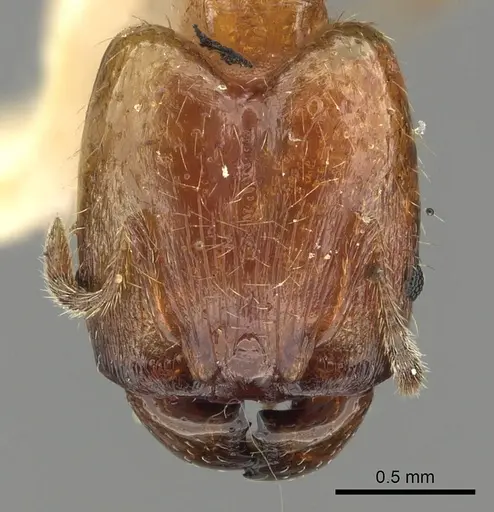
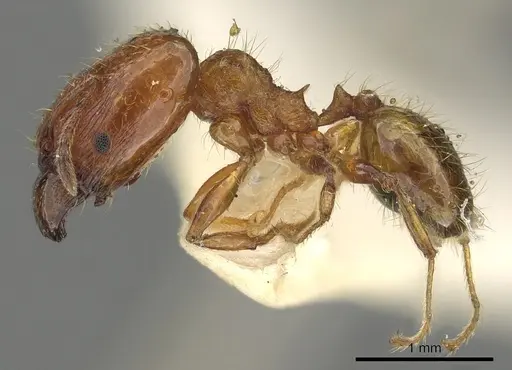
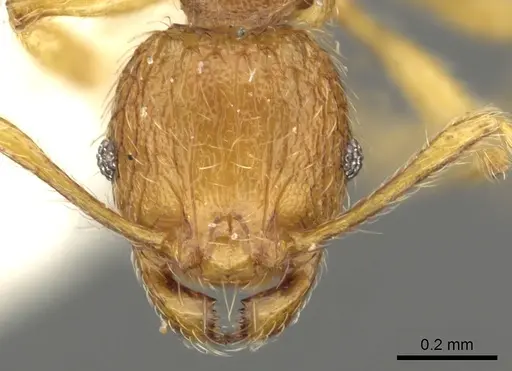
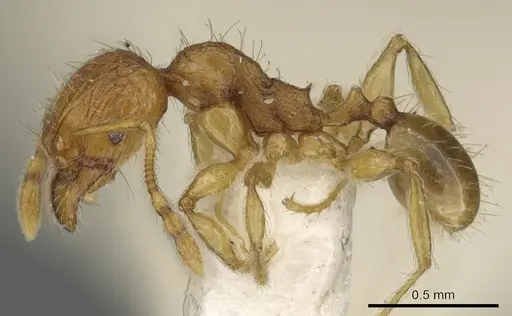
Pheidole ryukyuensis is a small, strongly dimorphic ant species endemic to the Ryukyu Islands of southern Japan . Workers are about 2 mm long, while major workers (soldiers) are larger at 3.5 mm with elongated heads . The species has a reddish-brown coloration and nests in moist habitats like decayed wood, soil, or under stones in woodlands . It is a forest-dwelling species that coexists with Pheidole pieli in its native range . A key trait is that soldiers can act as repletes, storing liquid food in their crops and redistributing it to nestmates during food shortages .
Quick Summary
- Difficulty: Easy
- Origin & Habitat: Ryukyu Islands (Okinawa and Yaeyama Islands), Japan, subtropical forested habitats [1][2]
- Colony Type: Unconfirmed, no specific literature on queen number, but based on Pheidole genus patterns, likely monogyne
- Size & Growth:
- Queen: ~5.5 mm [1]
- Worker: Minor workers ~2 mm, major workers ~3.5 mm [2]
- Colony: Size data unavailable, typical Pheidole colonies can be large, but no species-specific data
- Growth: Moderate
- Development: 6-10 weeks estimated based on genus patterns (Development time inferred from Pheidole genus as species-specific data unavailable)
- Antkeeping:
- Temperature: Keep warm and stable, roughly low-to-mid 20s°C, as this species is from subtropical islands [1][2]
- Humidity: Keep nest substrate consistently moist but not waterlogged [3]
- Diapause: No true diapause required, as subtropical species [1]
- Nesting: Prefers moist nests, test tubes with water reservoirs or Y-tong/plaster nests work well [3]
- Behavior: Generally peaceful and non-aggressive. Major workers defend the colony and store food as repletes. Escape risk is low due to small size. Defense mechanism is stinging, but less medically significant to humans.
- Common Issues: moisture management is critical, too dry or too wet can cause colony failure., colonies may grow slowly initially, patience is needed during founding., test tube setups must maintain proper humidity without flooding., wild-caught colonies may carry parasites that can harm captive populations., soldiers may die during stress, this is normal if queen and minor workers survive.
Housing and Nest Preferences
Pheidole ryukyuensis does well in standard test tube setups. Maintain moisture since they come from moist woodland habitats [3]. A test tube with a water reservoir plugged with damp cotton works well. For larger colonies, use Y-tong or plaster nests to hold moisture. Avoid dry environments, they naturally nest in decayed wood, soil, or under stones [3].
Feeding and Diet
These ants are omnivorous. Offer protein like small insects 2-3 times per week and sugar sources like honey water constantly. Soldiers act as repletes, storing liquid food in their crops [3][4]. Feed sugary liquids to observe this behavior.
Temperature and Seasonal Care
As a subtropical species, keep temperatures warm and stable, roughly low-to-mid 20s°C. Room temperature is often suitable. Avoid prolonged temperatures below 18°C. No true diapause is needed, but activity may reduce in cooler months [1][2].
Understanding the Soldier Caste
Soldiers are larger with enlarged heads and defend the colony, crack hard prey, and act as repletes [2][3][4]. When fed sugary liquids, their gasters swell, this is normal and they redistribute food during shortages.
Colony Development
Colonies grow through a caste system. Under optimal conditions, egg to worker development is estimated at 6-10 weeks based on genus patterns. First workers are nanitics, and majors appear as the colony grows. Growth rate is moderate.
Handling Common Problems
Moisture management is key, keep substrate damp but not waterlogged. Remove uneaten food to prevent mold. Wild-caught colonies may need quarantine for parasites. Soldiers may die during stress, which is normal if the queen survives [3].
Frequently Asked Questions
How long does it take for Pheidole ryukyuensis to produce first workers?
Expect 6-10 weeks from egg to first worker under optimal conditions, based on Pheidole genus patterns. The first workers will be smaller nanitics that start foraging and caring for brood.
Can I keep multiple Pheidole ryukyuensis queens together?
This is unconfirmed, but based on genus patterns, it is likely a monogyne species. Combining unrelated queens may result in fighting. Only keep one queen per colony unless evidence shows otherwise.
What do I feed Pheidole ryukyuensis?
Offer varied diet: protein like small insects 2-3 times per week, and sugar sources like honey water constantly. Soldiers store liquid food as repletes [3][4].
Are Pheidole ryukyuensis good for beginners?
Yes, this species is rated easy to keep. They are forgiving of minor care mistakes and do not require special heating in most homes.
Do Pheidole ryukyuensis need hibernation?
No, as a subtropical species, they do not require true hibernation. Activity may reduce in cooler months, but keep them at normal room temperature year-round [1].
When should I move my colony to a formicarium?
Move to a larger nest when the colony reaches 50-100 workers and the test tube is crowded. Key indicators are workers clustering near the water reservoir or cotton drying too quickly.
Why are my soldier ants so fat? Is something wrong?
This is normal, soldiers act as repletes, storing liquid food in their crops [3][4]. Their gasters swell when well-fed and shrink during food shortages.
How big do Pheidole ryukyuensis colonies get?
Size data is unavailable for this species, but typical Pheidole colonies can reach several hundred workers.
Where is Pheidole ryukyuensis native to?
This species is endemic to the Ryukyu Islands of Japan, specifically the Okinawa and Yaeyama Islands [1][2]. It inhabits moist forested areas.
Report an Issue
The current care sheet is based fully on literature. See inconsistencies, or something that's incorrect? Please , it will be resolved after review from an admin. Contributing to the blogs tab also helps providing information, to make us be able to further improve the caresheets. Thank you for your support!
References

This caresheet is licensed under CC BY-SA 4.0 .
Community Blogs
CASENT0901527
View on AntWeb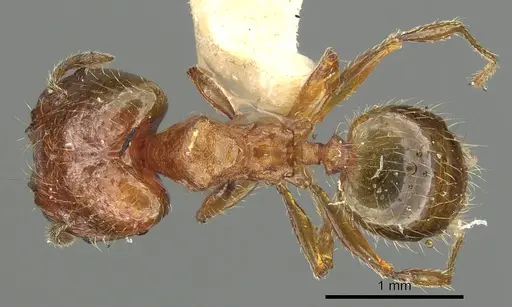
CASENT0901528
View on AntWeb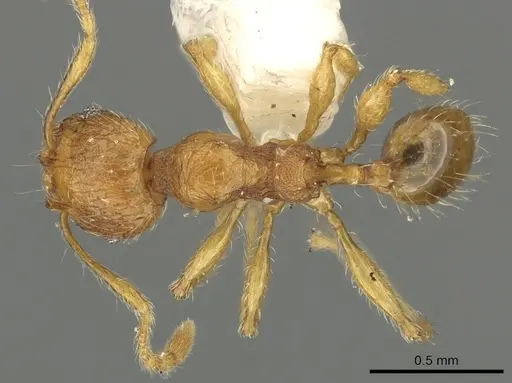
Literature
Loading distribution map...Loading products...