
Pheidole rugosa
- Sci. Name
- Pheidole rugosa
- Tribe
- Attini
- Subfamily
- Myrmicinae
- Author
- Smith, 1858
- Distribution
- Found in 0 countries
Introduction
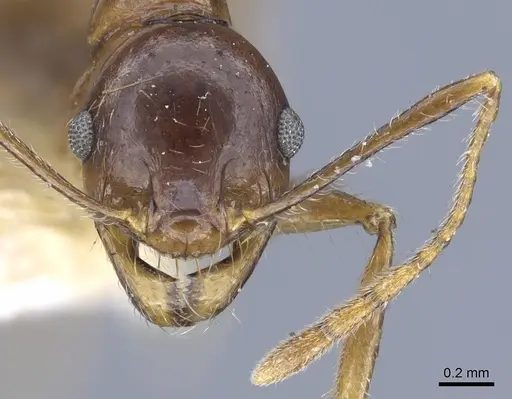
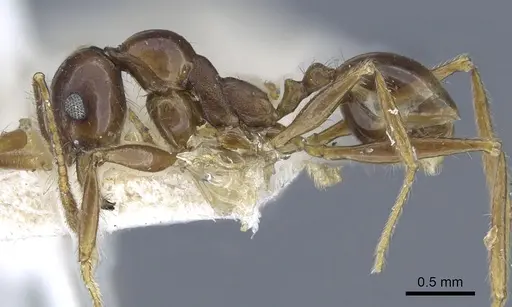
Pheidole rugosa is a small ant species native to Sri Lanka . It was first described by Frederick Smith in 1858 . Like other Pheidole species, it has two worker castes: major workers with enlarged heads for seed-crushing, and minor workers that handle foraging . The species name 'rugosa' means wrinkled, referring to its body texture . The most interesting feature is the major worker's specialized head for processing hard foods, making them unique among ants .
Quick Summary
- Difficulty: Easy
- Origin & Habitat: Sri Lanka (Ceylon), tropical island environment [1][2]
- Colony Type: Unconfirmed, based on typical Pheidole patterns, likely monogyne [2]
- Size & Growth:
- Queen: Size data unavailable, no total length measurements in research. Inferred from Pheidole genus as ~8-12 mm [2]
- Worker: Size data unavailable, inferred from Pheidole genus: majors ~4-6 mm, minors ~2-3 mm [2]
- Colony: Up to several hundred workers, estimated based on genus patterns [2]
- Growth: Moderate, inferred from tropical Pheidole patterns
- Development: Estimated 5-8 weeks at warm temperatures [2] (Development is faster in warm conditions, typical for tropical ants)
- Antkeeping:
- Behavior: Generally peaceful and not aggressive. Escape risk is moderate, use standard barriers [2]
- Common Issues: mold growth if humidity is too high and ventilation poor, colony slowdown if temperatures drop below 22°C, flooding risk in test tube setups if not monitored
Housing and Nest Setup
For founding colonies, a test tube setup works perfectly, fill it about one-third with water trapped behind a cotton plug, giving the queen a humid chamber to raise her first brood [2]. Once the colony reaches workers, move them to a formicarium. Y-tong or plaster nests are excellent because they hold humidity well [2]. Maintain consistent moisture without flooding [2].
Feeding and Diet
Pheidole rugosa is omnivorous. Offer protein sources like mealworms or crickets, and seeds for majors to process [2]. Provide sugar water or honey for carbohydrates [2]. Feed protein two to three times per week and keep sugar available [2]. Remove uneaten food after 24 hours to prevent mold [2].
Temperature and Humidity
Keep the nest area at 25-30°C for optimal brood development [2]. Use a heating cable for a temperature gradient [2]. Maintain high humidity around 60-80% by misting the outworld and keeping nest substrate moist [2]. No hibernation is needed for this tropical species [2].
Colony Development
A claustral founding queen seals herself in and raises first brood on stored fat reserves [2]. First workers appear in 5-8 weeks under warm conditions [2]. Colonies grow moderately to several hundred workers over time [2].
Behavior and Temperament
Pheidole rugosa is peaceful and not aggressive [2]. Major workers have enlarged heads for processing hard foods, while minors handle foraging [2]. They are active foragers but escape risk is moderate [2].
Frequently Asked Questions
How long does it take for Pheidole rugosa to have first workers?
Expect first workers in about 5-8 weeks at warm temperatures (25-30°C) [2].
What do I feed Pheidole rugosa?
Offer a varied diet: protein (insects), seeds, and sugar sources (honey water) [2].
Can I keep multiple Pheidole rugosa queens together?
Pheidole species are typically single-queen colonies, and combining queens is not recommended [2].
Do Pheidole rugosa need hibernation?
No, as a tropical species from Sri Lanka, they do not require hibernation [2].
How big do Pheidole rugosa colonies get?
Colonies likely reach up to several hundred workers, estimated from genus patterns [2].
What temperature is best for Pheidole rugosa?
Keep them at 25-30°C, with a temperature gradient for choice [2].
Are Pheidole rugosa good for beginners?
Yes, they are considered easy to keep, with moderate growth and non-aggressive behavior [2].
When should I move Pheidole rugosa to a formicarium?
Move them once the test tube colony has workers, ensuring the formicarium is set up with moist substrate [2].
Do Pheidole rugosa need escape prevention?
Standard barriers like fluon are sufficient due to moderate escape risk [2].
Report an Issue
The current care sheet is based fully on literature. See inconsistencies, or something that's incorrect? Please , it will be resolved after review from an admin. Contributing to the blogs tab also helps providing information, to make us be able to further improve the caresheets. Thank you for your support!
References

This caresheet is licensed under CC BY-SA 4.0 .
Community Blogs
CASENT0901525
View on AntWeb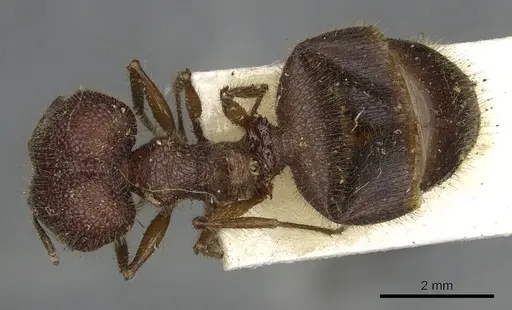
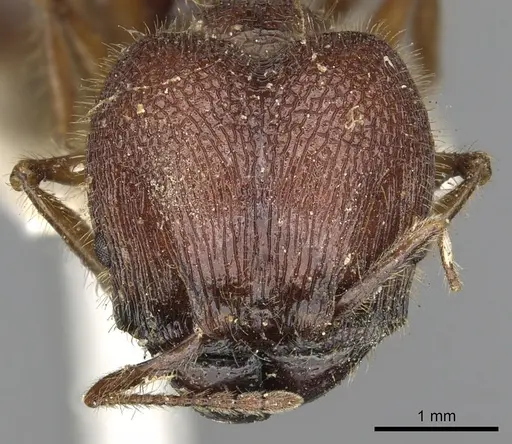
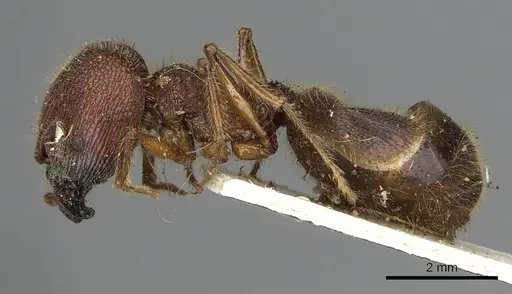
CASENT0901526
View on AntWeb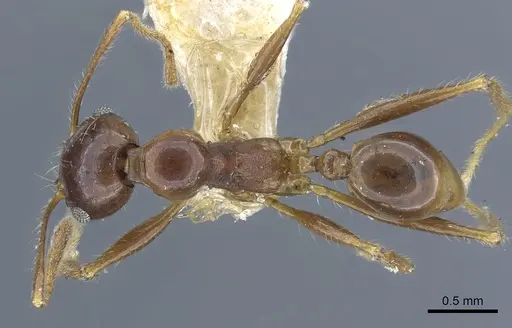
Literature
Loading distribution map...Loading products...