
Pheidole roosevelti
- Sci. Name
- Pheidole roosevelti
- Tribe
- Attini
- Subfamily
- Myrmicinae
- Author
- Mann, 1921
- Distribution
- Found in 1 countries
Introduction
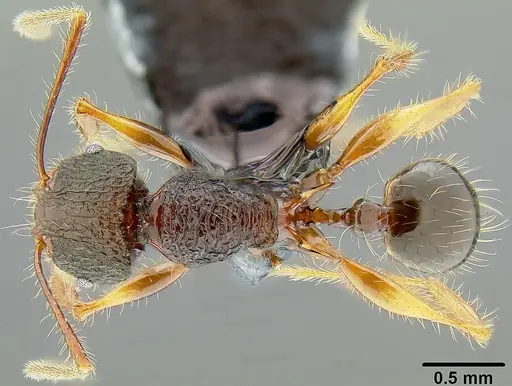
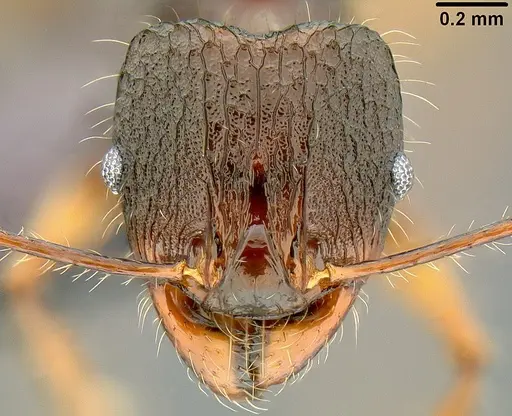
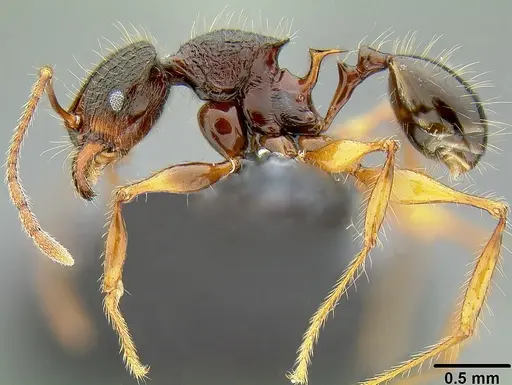
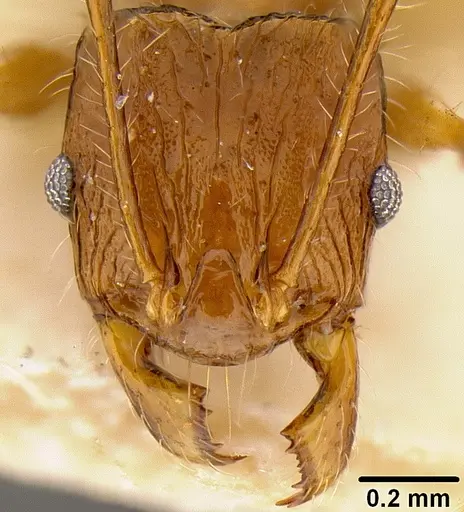
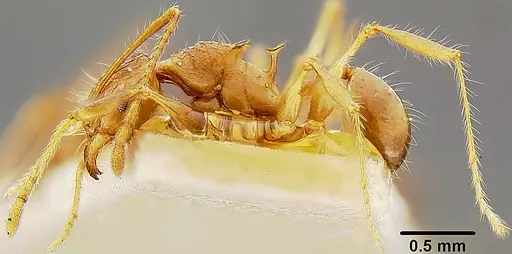
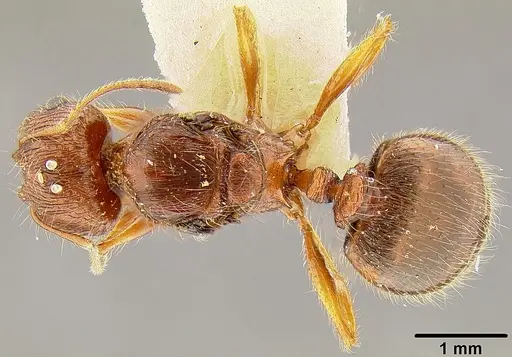
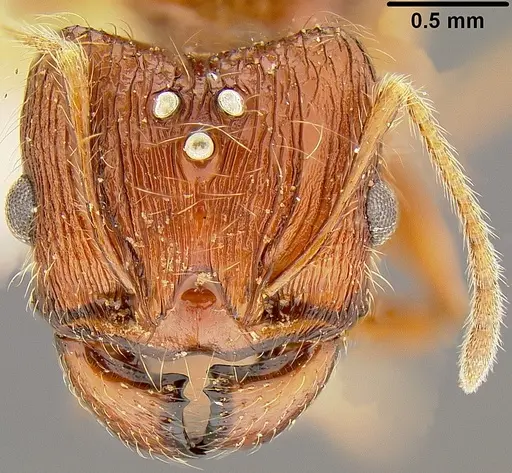
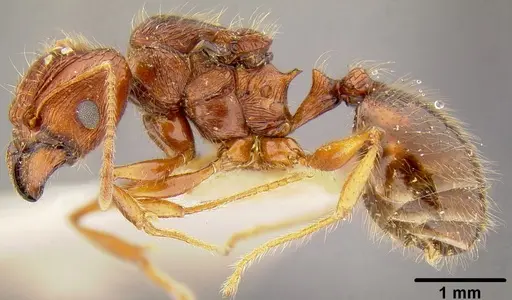
Pheidole roosevelti is a large ant species endemic to Fiji, with heavy sculpturing on the face and promesonotum. The face has a rugoreticulum overlying densely packed foveolae, and the mesosoma is thickly rugoreticulate. Major workers are 6.01-7.11 mm, minors 3.48-4.25 mm, and queens 7.43-8.01 mm in total length . It is found on Viti Levu, Ovalau, and Gau at elevations of 300-1000 m . This species is unique among Fijian Pheidole for nesting exclusively in bare soil with turret-shaped entrances made of soil pellets . Foragers are commonly observed on ground and vegetation .
Quick Summary
- Difficulty: Medium
- Origin & Habitat: Pheidole roosevelti is endemic to Fiji, found on Viti Levu, Ovalau, and Gau at elevations of 300-1000 m in high-elevation pristine forests [1][2][4].
- Colony Type: Colony structure is unconfirmed from research data.
- Size & Growth:
- Queen: 7.43-8.01 mm [1]
- Worker: Majors: 6.01-7.11 mm, Minors: 3.48-4.25 mm [1]
- Colony: Size data unavailable
- Growth: Moderate, inferred from tropical species patterns
- Development: Unknown, no specific data available (Development time is not documented, tropical species typically develop faster than temperate ones.)
- Antkeeping:
- Temperature: Keep warm, around 24-28°C, as inferred from tropical habitat [4][2]. Adjust based on colony activity.
- Humidity: Keep nest substrate consistently moist but not waterlogged, based on their natural soil nesting behavior [1][2].
- Diapause: No, this is a tropical species and does not require hibernation [2].
- Nesting: Provide deep, moist soil chambers for excavation, mimicking their natural turret entrances [4][3]. Y-tong or plaster nests with moisture reservoirs are suitable.
- Behavior: Foragers are active on ground and vegetation [2]. Colonies have major and minor workers, but specific defense behaviors are unconfirmed. Escape risk is moderate due to smaller minors, use standard barriers.
- Common Issues: humidity drops can cause colony stress, maintain moist substrate, temperatures below 20°C can slow metabolism and harm the colony, shallow setups may not allow natural digging behavior, wild-caught colonies may carry parasites from native habitat
Nest Preferences and Housing
Pheidole roosevelti excavates large nest chambers in stable soil with turret-shaped entrances about 2 cm tall and 0.5 cm wide, made from soil pellets [1][2]. This is the only Fijian Pheidole known to nest exclusively in bare soil with such entrances [3]. In captivity, use a naturalistic setup with deep, moist soil (at least 5-10 cm) or a Y-tong/plaster nest with a moisture reservoir to replicate their underground environment [4].
Feeding and Diet
Foragers are observed on ground and vegetation, suggesting generalist feeding habits [2]. Like other Pheidole, they likely collect protein from small insects and carbohydrates from honeydew or nectar. In captivity, offer varied protein sources like small crickets or mealworms 2-3 times per week, and constant sugar water. Remove uneaten food to prevent mold.
Temperature and Seasonal Care
As a tropical species from Fiji, keep temperatures warm year-round, around 24-28°C, with a gradient using a heating mat [4][2]. No diapause is needed. Avoid prolonged temperatures below 20°C.
Behavior and Colony Structure
Colonies have major and minor worker castes, but specific social structure is unconfirmed from research. Workers forage actively on ground and vegetation [2]. Intraspecific variation is high, with differences in spine length and sculpture even within colonies [1].
Growth and Development
No specific development data is available. Based on tropical Pheidole patterns, egg-to-worker development may take several weeks at optimal temperatures. Colony growth is moderate, but size estimates are unavailable.
Frequently Asked Questions
Can I keep Pheidole roosevelti in a test tube?
Test tubes are not ideal for long-term care due to their need for deep soil nesting. Use a naturalistic setup with moist soil or a Y-tong nest once the colony has 10-20 workers [1][3].
How long until first workers in Pheidole roosevelti?
Unknown, no specific data on development timeline. Estimate based on tropical Pheidole patterns, but observe colony activity for cues.
What do Pheidole roosevelti ants eat?
They are generalist feeders, likely consuming insects and carbohydrates. Offer protein sources like crickets and constant sugar water [2].
Are Pheidole roosevelti good for beginners?
This species is medium difficulty due to specific nesting and humidity needs. Better suited for keepers with some experience [1][2][3].
Do Pheidole roosevelti need hibernation?
No, as a tropical species from Fiji, it does not require diapause. Maintain warm conditions year-round [2].
How big do Pheidole roosevelti colonies get?
Colony size data is unavailable from research. Pheidole species typically form moderate-sized colonies, but no specific numbers are confirmed.
When should I move Pheidole roosevelti to a formicarium?
Move when the test tube is cramped, typically with 20+ workers. Use a setup with deep, moist soil for excavation [1][3].
Why is my Pheidole roosevelti colony not growing?
Common causes include low temperature (keep above 24°C), low humidity (maintain moist substrate), or poor nutrition. Check all parameters and ensure a quiet environment.
Can I keep multiple Pheidole roosevelti queens together?
Colony type is unconfirmed, but combining unrelated queens is not recommended and may lead to conflict.
What makes Pheidole roosevelti special compared to other ants?
This is the only Fijian Pheidole known to nest exclusively in bare soil with turret-shaped entrances, and it shows high intraspecific variation [3][1].
Report an Issue
The current care sheet is based fully on literature. See inconsistencies, or something that's incorrect? Please , it will be resolved after review from an admin. Contributing to the blogs tab also helps providing information, to make us be able to further improve the caresheets. Thank you for your support!
References

This caresheet is licensed under CC BY-SA 4.0 .
Community Blogs
Literature
Loading distribution map...Loading products...