
Pheidole retivertex
- Sci. Name
- Pheidole retivertex
- Tribe
- Attini
- Subfamily
- Myrmicinae
- Author
- Eguchi, 2001
- Distribution
- Found in 1 countries
Introduction
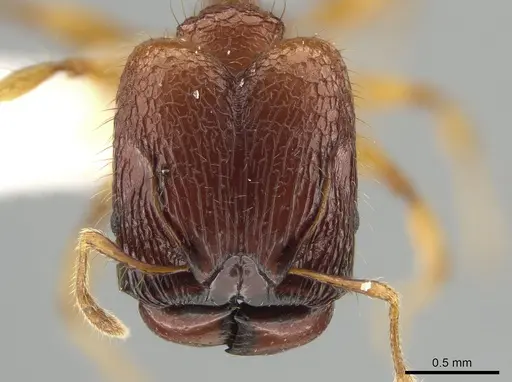
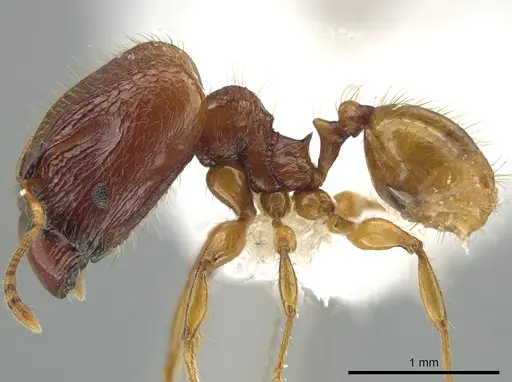
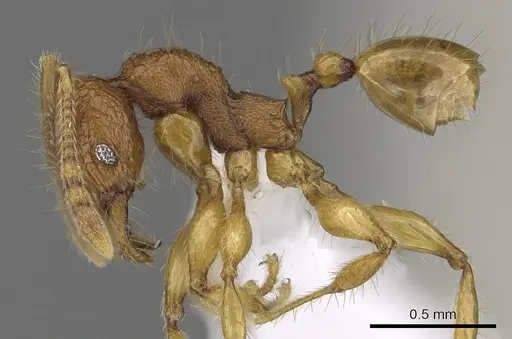
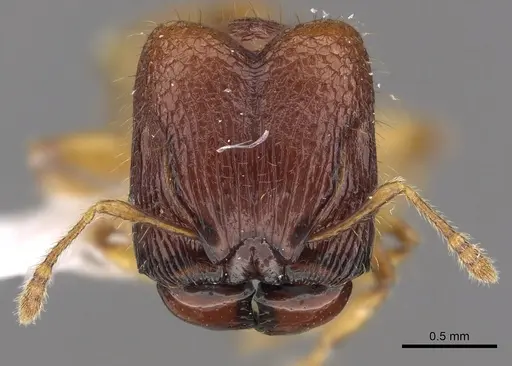
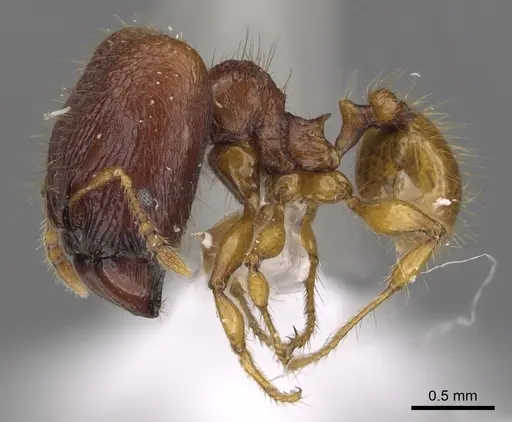
Pheidole retivertex is a small ant species native to Southeast Asia, found in Borneo, Indonesia, Malaysia, and the Philippines . Workers come in two sizes: majors (also called soldiers) measure 2.5-2.8 mm, while minor workers are 1.9-2.0 mm . The species is part of the P. aristotelis group and is closely related to P. magrettii, P. tjibodana, and P. sayapensis . This ant inhabits well-developed lowland rainforests, including kerangas and dipterocarp forests . They nest in rotting wood blocks and twigs, and have the unusual habit of storing seeds in their nest . Researchers have only found single-queen colonies in the wild .
Quick Summary
- Difficulty: Medium
- Origin & Habitat: Borneo, Indonesia, Malaysia, and the Philippines. Inhabits lowland rainforests, specifically kerangas and dipterocarp forest types, where they nest in rotting wood and twigs [2][1][3].
- Colony Type: Monogyne, only one dealate (winged, reproductive) queen has ever been found in a nest [3].
- Size & Growth:
- Queen: Not measured in available literature, queens of Pheidole are typically larger than majors (~6-8 mm estimated from genus patterns).
- Worker: Majors: 2.5-2.8 mm, minors: 1.9-2.0 mm [3]
- Colony: Unknown from direct studies, typical Pheidole colonies reach several hundred workers (estimated).
- Growth: Moderate, inferred from genus patterns
- Development: Unknown, estimated at 5-8 weeks based on similar tropical Pheidole, requires confirmation. (Development likely depends on temperature, warmer conditions (24-28°C) should speed it up.)
- Antkeeping:
- Temperature: Keep at 24-28°C year-round. As a tropical lowland species, they need warm conditions and cannot tolerate cold [2].
- Humidity: High, keep substrate consistently damp but not waterlogged. Good ventilation is essential to prevent mold.
- Diapause: No, as a tropical species from lowland Borneo, they do not hibernate [3].
- Nesting: Prefers rotting wood, Y‑tong (AAC) nests, plaster nests, or naturalistic setups with decaying wood pieces are suitable. Test tubes work for founding but add bark or wood for grip.
- Behavior: Generally non-aggressive towards humans. They possess a functional stinger (like many Myrmicinae) but rarely use it. Majors (soldiers) use their large heads to crack seeds for the colony. Workers forage on the ground in leaf litter. Escape risk is high due to their small size, seal all gaps.
- Common Issues: tropical temperature needs, they struggle in cool rooms or air conditioning, high humidity requirements can lead to mold if ventilation is poor, seed storage may cause mold if seeds are left uneaten, remove leftovers after a few days, slow colony growth, patience is needed, especially during founding, small size (minors
Nest Preferences and Housing
Pheidole retivertex naturally nests in rotting wood blocks and twigs in lowland rainforest environments [3]. In captivity, they adapt well to several housing types. Y‑tong (AAC) nests provide dark chambers that mimic rotting wood interiors. You can also use naturalistic setups with pieces of decaying wood in a container with moist substrate. Test tube setups work for founding colonies, but add small pieces of wood or bark as the colony grows. The key is providing high humidity while avoiding stagnant air that causes mold. Ensure the nest material can hold moisture without becoming waterlogged. These ants are small, so seal any gaps to prevent escapes.
Feeding and Diet
This species is unusual among Pheidole because it stores seeds in its nest [3]. They are granivorous, they collect and store seeds as a food source, similar to harvester ants. In captivity, offer small seeds appropriate to their size, such as grass seeds or millet. They also accept typical ant foods: sugar water or honey for energy, and small insects like fruit flies, pinhead crickets, or other soft‑bodied bugs for protein. Provide protein roughly twice per week, and keep a sugar source available at all times. Remove any uneaten seeds after a few days to prevent mold. The majors use their large heads to crack open seeds for the colony.
Temperature and Seasonal Care
As a tropical lowland species from Borneo, Pheidole retivertex requires warm temperatures year‑round. Keep the nest area between 24-28°C [2]. If your home is cooler, use a heating cable or mat placed on top of the nest (not underneath) to avoid drying the substrate. This species does not need hibernation, they are active all year when kept warm [3]. Watch for signs of temperature stress: if workers cluster away from heated areas, reduce heat, if they are sluggish and stop foraging, increase heat slightly. Stable temperatures help brood development.
Colony Development and Growth
Colonies start with a single queen. Although founding behavior has not been directly observed, it is likely claustral (queen seals herself in and raises the first brood from her body reserves), typical of Pheidole. The first workers (nanitics) appear after 5-8 weeks in warm conditions (estimated from related species). After that, the colony grows steadily but not rapidly. Majors (soldiers) appear once the colony is established. A mature colony likely holds a few hundred workers. Patience is required during the founding phase, as growth is slower than with some other pet ants.
Behavior and Temperament
Pheidole retivertex is generally calm toward keepers. Like most Myrmicinae, they possess a functional stinger, but they rarely use it on humans. Majors have large heads used for seed processing and nest defense, but they are not aggressive. Workers forage primarily in leaf litter, collecting seeds, small insects, and honeydew. Their seed‑storing behavior is particularly interesting, they hoard tiny seeds in the nest, much like harvester ants. Because minor workers are under 2 mm, escape risk is high, use fine mesh or fluon barriers. They are ground‑dwelling and do not climb smooth vertical surfaces well, but standard precautions are still needed. [3]
Frequently Asked Questions
How long does it take for Pheidole retivertex to produce first workers?
No precise data exists for this species. Based on similar tropical Pheidole, first workers (nanitics) likely emerge 5-8 weeks after the queen starts laying. Keep the temperature at 24-28°C to speed development.
Can I keep multiple Pheidole retivertex queens together?
No. This species is monogyne, only one dealate queen has ever been found in a colony [3]. Introducing multiple unrelated queens will lead to fighting.
What do Pheidole retivertex ants eat?
They store seeds in the nest, so offer small seeds like grass seeds or millet. They also need sugar water or honey for energy, and protein from small insects (fruit flies, pinhead crickets, mealworms). Provide protein twice weekly, keep sugar available, and remove uneaten seeds after a few days to prevent mold [3].
What temperature do Pheidole retivertex need?
Keep them at 24-28°C year‑round. As a tropical lowland species, they need warmth, cool conditions stress them [2]. Use a heating mat or cable if your room is cooler.
Do Pheidole retivertex need hibernation?
No. This tropical species does not hibernate. Keep them warm and active all year [3].
Are Pheidole retivertex good for beginners?
They are rated medium difficulty. They require steadiest warmth and high humidity, which can be tricky to maintain. Their seed‑storing behavior is interesting but requires vigilance against mold. Growth is moderate, so patience is needed. However, they are non‑aggressive and fascinating to watch.
When should I move Pheidole retivertex to a formicarium?
Keep them in a test tube or small container for the founding phase (first 6-12 months) until the colony has 30-50 workers. Once they regularly leave the tube to forage, transfer to a Y‑tong (AAC) or naturalistic setup with proper humidity control.
How big do Pheidole retivertex colonies get?
Not specifically known for this species, but typical Pheidole colonies reach several hundred workers. Estimate: up to 200-500 workers.
What type of nest is best for Pheidole retivertex?
They naturally nest in rotting wood, so Y‑tong (AAC) or naturalistic setups with decaying wood work well. The nest must maintain high humidity while allowing some ventilation to prevent mold [3].
Report an Issue
The current care sheet is based fully on literature. See inconsistencies, or something that's incorrect? Please , it will be resolved after review from an admin. Contributing to the blogs tab also helps providing information, to make us be able to further improve the caresheets. Thank you for your support!
References

This caresheet is licensed under CC BY-SA 4.0 .
Community Blogs
CASENT0179656
View on AntWeb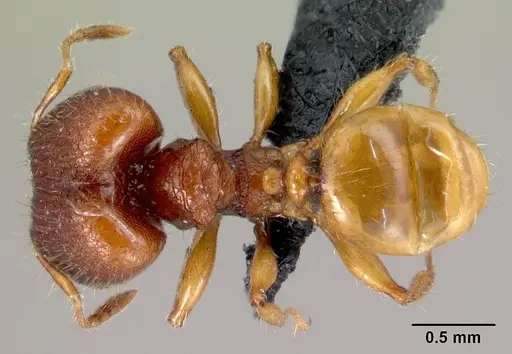
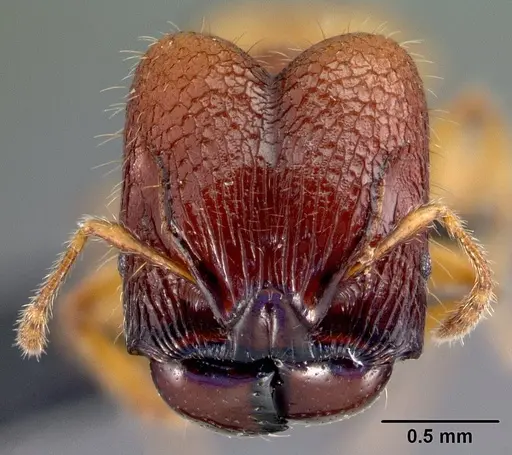
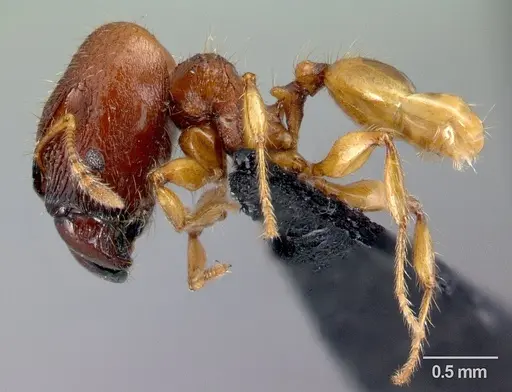
CASENT0616685
View on AntWeb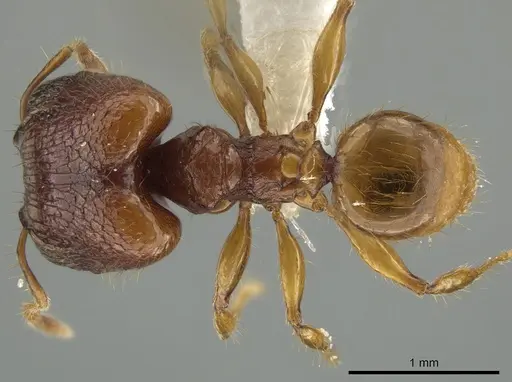
CASENT0901650
View on AntWeb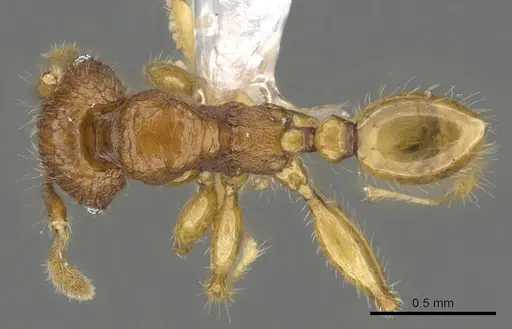
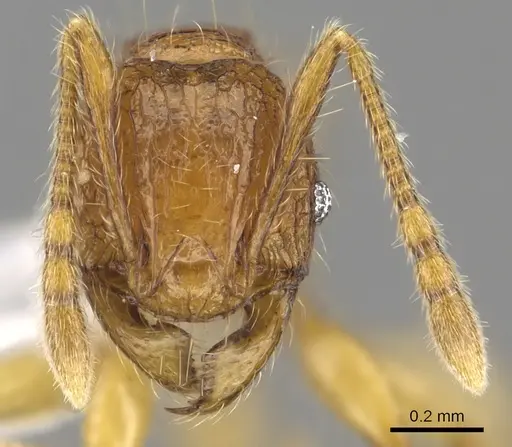
CASENT0901651
View on AntWeb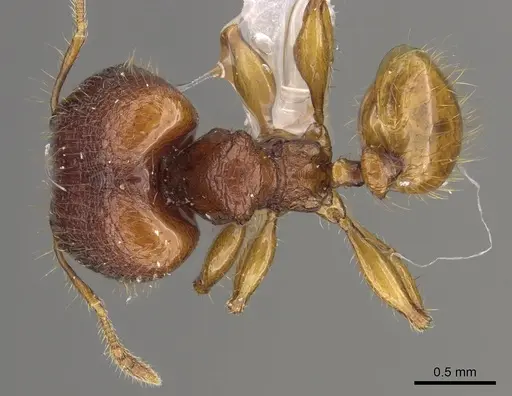
Literature
Loading distribution map...Loading products...