
Pheidole quadricuspis
- Sci. Name
- Pheidole quadricuspis
- Tribe
- Attini
- Subfamily
- Myrmicinae
- Author
- Emery, 1900
- Distribution
- Found in 3 countries
Introduction
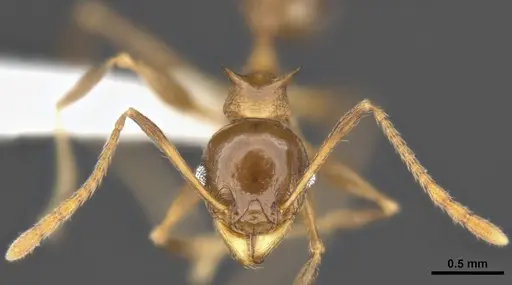
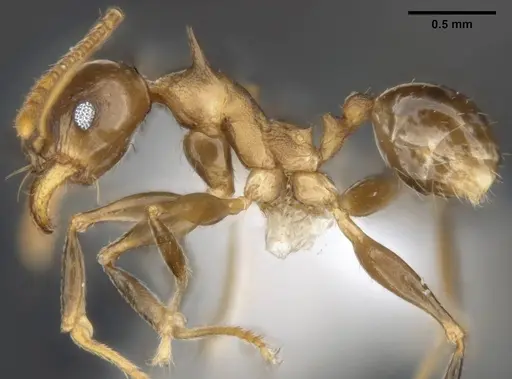
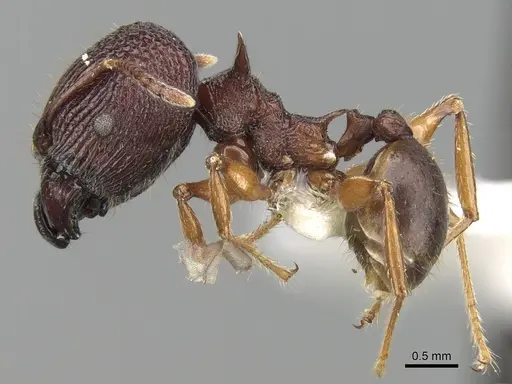
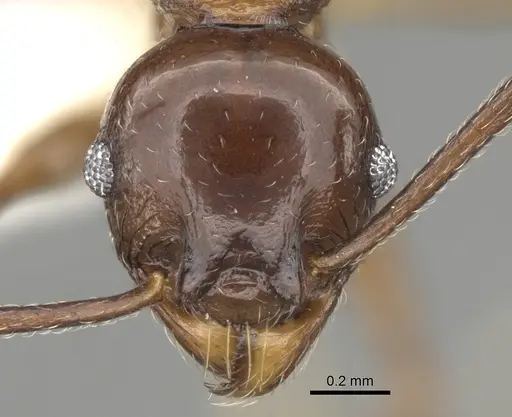
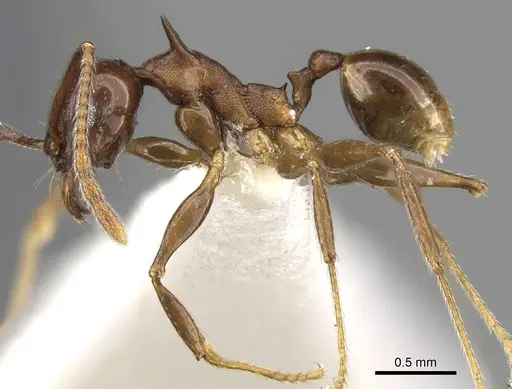
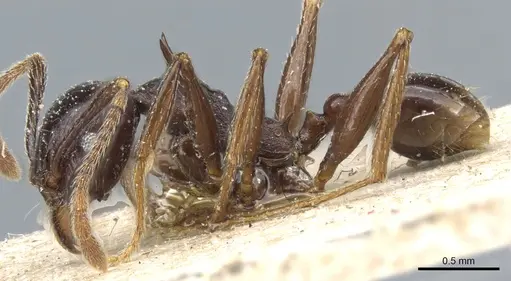
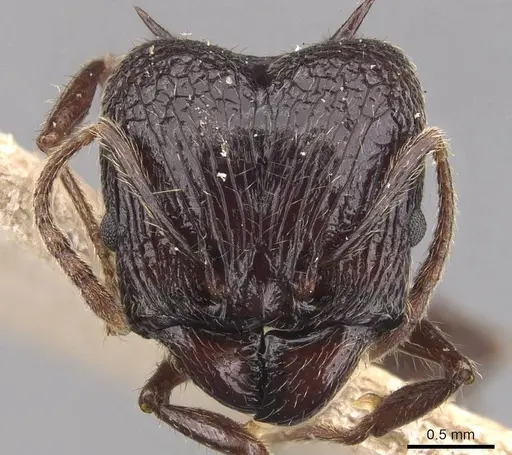
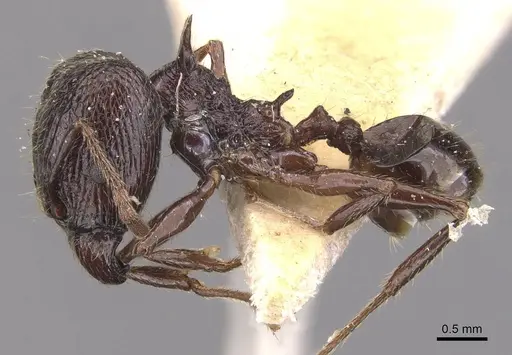
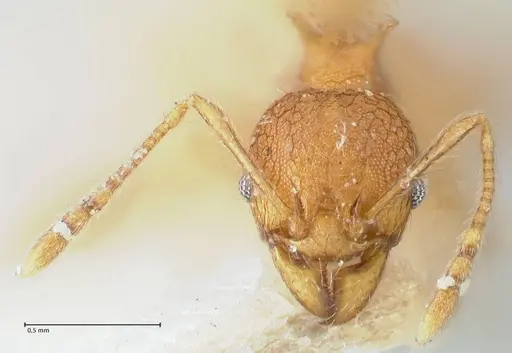
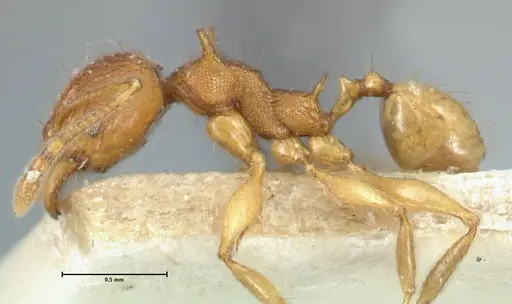
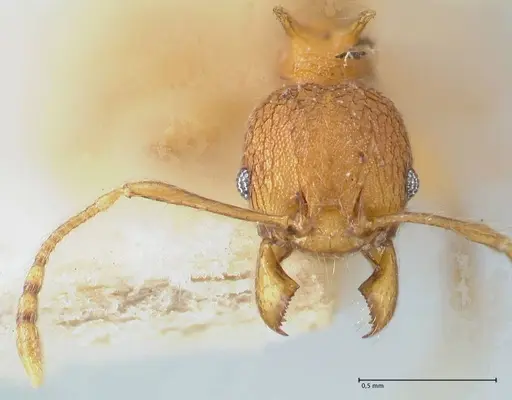
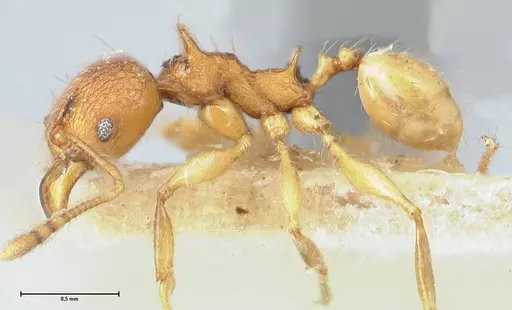
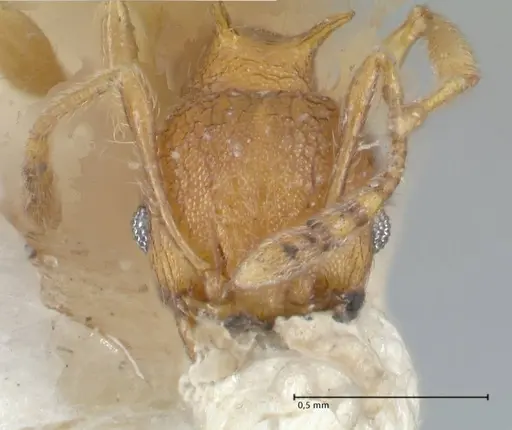
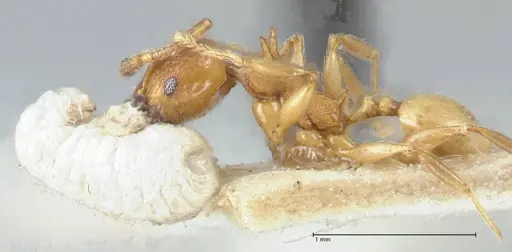
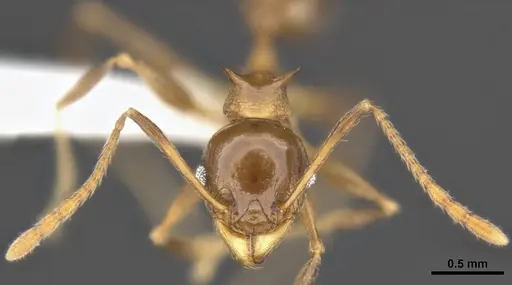
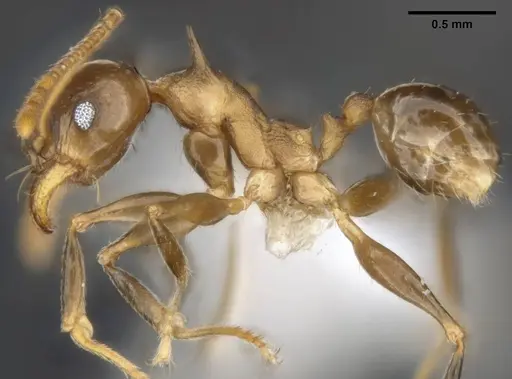
Pheidole quadricuspis is a medium-sized ant in the quadricuspis group, with a spinescent morphology including pronotal spines and extended propodeal spines . Major workers are 4.1-5.1 mm long, and minor workers are 2.4-2.5 mm long . This species inhabits lowland forests in Southeast Asia, including Borneo, Brunei, Indonesia, Malaysia, the Philippines, and Thailand . It nests in rotting twigs and wood blocks on the forest floor and stores tiny seeds in its nest, reflecting its position in the Attini tribe .
Quick Summary
- Difficulty: Medium
- Origin & Habitat: Lowland dipterocarp forests in Southeast Asia (Borneo, Brunei, Indonesia, Malaysia, Philippines, Thailand). Nests in rotting twigs and wood blocks on the forest floor [5][4].
- Colony Type: Monogyne, single queen colonies. Only one dealate queen has been observed in any colony examined [5].
- Size & Growth:
- Queen: Size data unavailable, no total length measurements in literature. Inferred from Pheidole genus as approximately 6-8 mm.
- Worker: Major: 4.1-5.1 mm, Minor: 2.4-2.5 mm [2].
- Colony: Unknown, no colony size data available in literature.
- Growth: Moderate, inferred from typical Pheidole development patterns.
- Development: Estimated 6-8 weeks at tropical temperatures based on genus-level patterns. (Direct development data unavailable, estimate based on related Pheidole species.)
- Antkeeping:
- Temperature: Keep warm, roughly 24-28°C, based on tropical lowland habitat.
- Humidity: Keep nest substrate consistently moist but not waterlogged, as they inhabit damp forest floor environments [5].
- Diapause: No, tropical species from Southeast Asian lowlands does not require hibernation.
- Nesting: Prefer tight, humid spaces with wood material, such as Y-tong or plaster nests with small chambers [5].
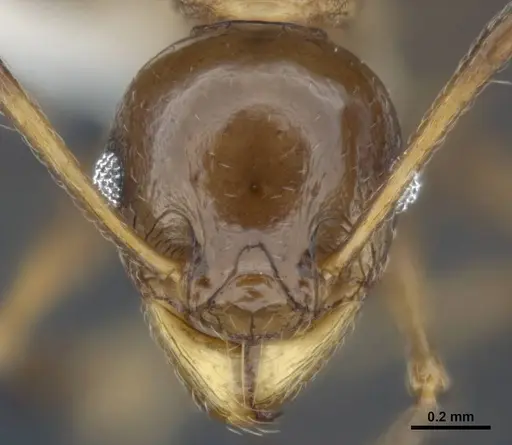
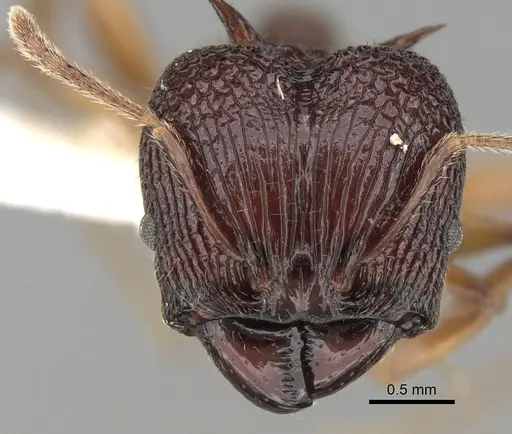
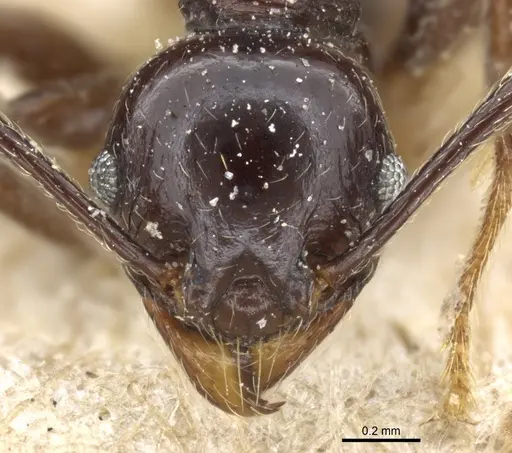
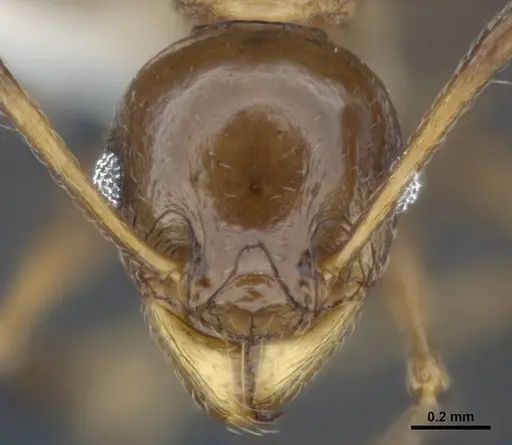
- Behavior: Diurnal ants active only during the day [6]. Minor workers are nearly smooth with few standing hairs, while majors have longitudinal rugose sculpture on the frons [2]. They are not aggressive but will defend the nest. Escape risk is moderate due to small worker size, standard barriers may need reinforcement.
- Common Issues: cold temperatures can be fatal, maintain above 24°C year-round., low humidity can cause dehydration, keep substrate moist but not waterlogged., small minor workers may escape through standard barriers, use fine mesh or fluon., wild-caught colonies may carry parasites, quarantine new collections.
Housing and Nest Preferences
Pheidole quadricuspis naturally nests in rotting twigs and wood blocks on the forest floor [5]. In captivity, use a Y-tong or plaster nest with small chambers to mimic tight, humid spaces. Connect to a small outworld for foraging. Since minor workers are only 2.4-2.5 mm, ensure escape barriers are tight, use fine mesh or fluon on test tube rims.
Feeding and Diet
As members of the Attini tribe, these ants store seeds but are opportunistic omnivores. Offer a varied diet including small seeds, protein sources like fruit flies or cricket parts, and sugar water or honey. Stable isotope data shows an omnivorous trophic position [7]. Feed protein 2-3 times per week and keep sugar water available constantly.
Temperature and Humidity
This tropical species requires warm, stable conditions. Keep the nest area at 24-28°C with a gentle gradient for self-regulation. Humidity should be maintained by keeping the nest substrate consistently moist but not waterlogged, as they inhabit damp forest floors. [5]
Colony Structure and Development
Colonies are monogyne with a single queen [5]. Major workers (4.1-5.1 mm) develop from larger larvae than minors (2.4-2.5 mm) [2]. Founding behavior is unconfirmed. Growth is moderate, with estimated 6-8 weeks from egg to first worker at tropical temperatures.
Behavior and Activity
These ants are strictly diurnal, active only during the day [6]. Minor workers are smooth with few hairs, while majors have rugose frons sculpture [2]. They are not aggressive but defend the nest. Their spinescent morphology is a key feature of the quadricuspis group [1].
Frequently Asked Questions
How long does it take for Pheidole quadricuspis to produce first workers?
Based on typical Pheidole development patterns, expect 6-8 weeks from egg to first worker at optimal tropical temperatures (24-28°C). Direct data for this species is unavailable.
Can I keep multiple Pheidole quadricuspis queens together?
No, this species is monogyne with only single queen colonies observed. Combining queens is not recommended.
What do Pheidole quadricuspis ants eat?
They are omnivorous with seed-storing behavior. Offer seeds, protein sources like insects, and sugar water or honey.
Do Pheidole quadricuspis ants need hibernation?
No, as a tropical species, they do not require hibernation. Maintain warm conditions year-round.
Are Pheidole quadricuspis good for beginners?
Rated Medium difficulty due to need for stable tropical conditions and escape prevention for small workers.
What size colony do Pheidole quadricuspis reach?
Colony size data is unavailable in literature.
When should I move Pheidole quadricuspis to a formicarium?
Start in a test tube setup. Once the colony has 20-30 workers and the queen is laying eggs, move to a Y-tong or plaster nest.
Why are my Pheidole quadricuspis workers dying?
Common causes include cold temperatures, low humidity, escape, or parasites from wild collection. Ensure stable tropical conditions.
Report an Issue
The current care sheet is based fully on literature. See inconsistencies, or something that's incorrect? Please , it will be resolved after review from an admin. Contributing to the blogs tab also helps providing information, to make us be able to further improve the caresheets. Thank you for your support!
References

This caresheet is licensed under CC BY-SA 4.0 .
Community Blogs
ANTWEB1008110
View on AntWeb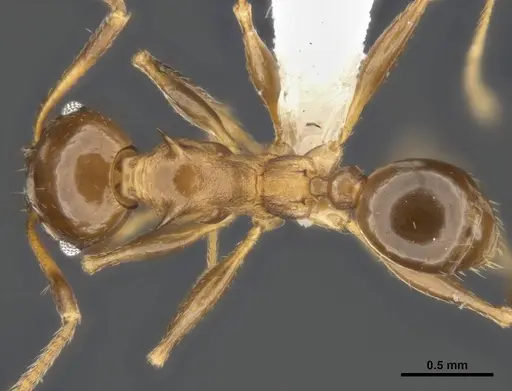
CASENT0281628
View on AntWeb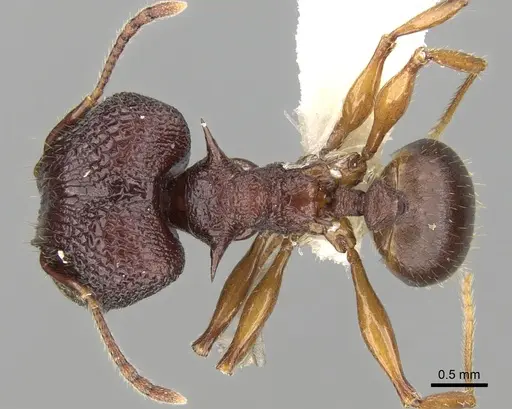
CASENT0281629
View on AntWeb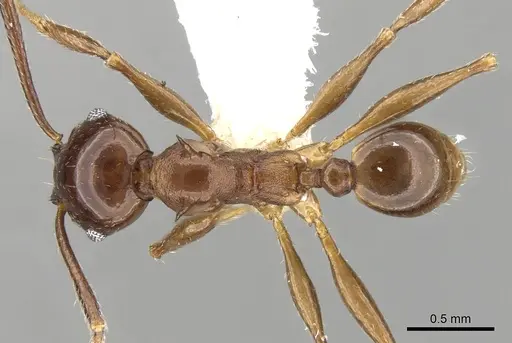
CASENT0904267
View on AntWeb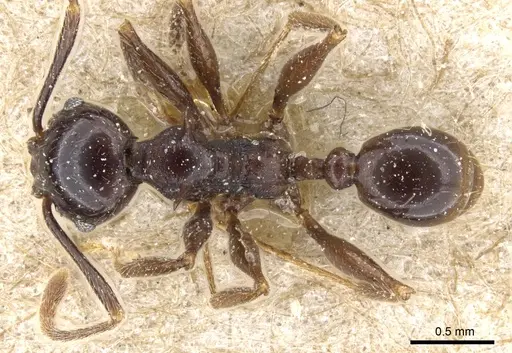
CASENT0905766
View on AntWeb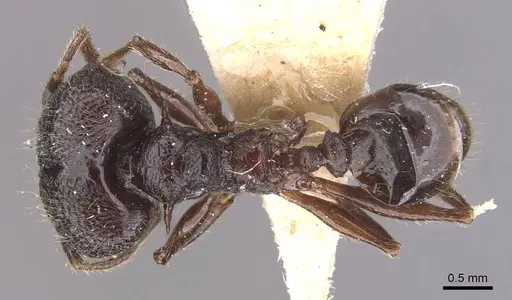
FOCOL1565
View on AntWeb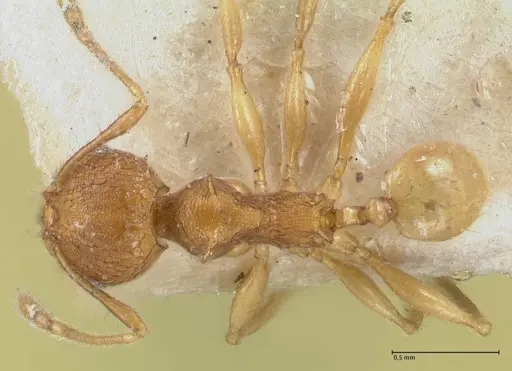
FOCOL1566
View on AntWeb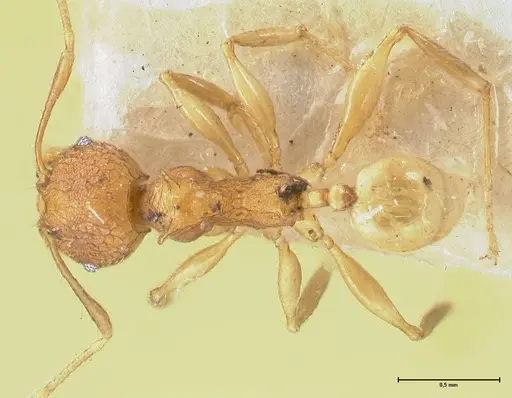
FOCOL1567
View on AntWeb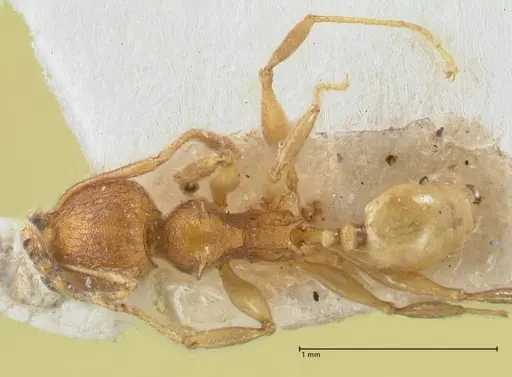
MCZ-ENT00511506
View on AntWeb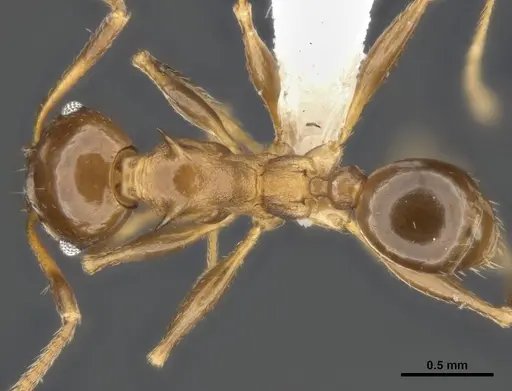
Literature
Loading distribution map...Loading products...